1900s (20th Century) Maps of Adams County, Mississippi
Explore 56 historic maps of Adams County from the 1900s (20th Century). These maps offer a rare glimpse into what life looked like during the 1900s — showing old roads, neighborhoods, homes, and landmarks that have changed or disappeared over time.
Whether you're researching your family's past, planning a metal detecting trip, or studying how Adams County's landscape evolved across the 1900s, these high-resolution maps are a powerful tool for exploring the history of this region.
- Focus on a specific era: All maps on this page are from the 1900s, giving you a focused view of this time period.
- See what’s changed: Compare century-old streets, trails, and buildings to today's modern landscape using overlays and satellite layers.
- Research with precision: Use these maps for genealogy, historical research, land use analysis, or educational projects.
- View, download, or print: Maps are fully viewable online in high resolution, and can be downloaded or printed for your own records.
Start exploring Adams County's history through authentic maps from the 1900s. This is your window into the past.
Adams County, MS maps
(56)- 1909 Map of Sycamore Landing
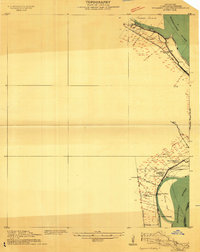 1909 Sycamore Landing1909 Print · USGSThe riverfront of Concordia Parish comes alive in the early twentieth century as plantations and rail lines intersect along the Mississippi. Genealogists and historians can trace family roots at Lucerna Plantation or locate community centers like Rufus Baptist Church and Morville.
 - 1909 Map of Vidalia
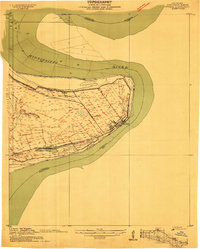 1909 Vidalia1909 Print · USGSConcordia Parish sits at a tight bend of the Mississippi River in the early 1900s, where plantation life and rail commerce intersect. Genealogists and local historians can trace the foundations of Vidalia or locate family-named sites like Taconey Plantation and Minorca Church.
 - 1921 Map of Natchez
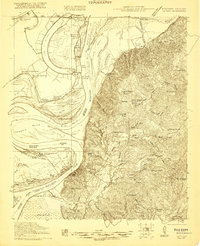 1921 Natchez1921 Print · USGSThe Mississippi River bluffs and floodplain come alive in this early 1920s survey of the Natchez region and its Louisiana neighbors. Genealogists can trace family roots through numerous sites like Taconey Plantation, the Adams County Poor Farm, and Quitman School.
 - 1922 Map of Natchez, 1938 Print
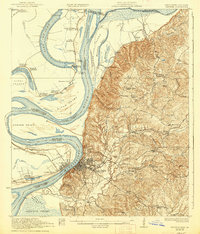 1922 Natchez1938 Print · USGSThe Mississippi River's shifting path at Natchez in the early twentieth century reveals a landscape of working plantations and thriving river ports. Researchers can trace land holdings at Windemere, locate rural sites like the Poor Farm, or follow the Yazoo and Mississippi Valley rail line.2 unique versions available
 - 1936 Map of Woodville, 1944 Print
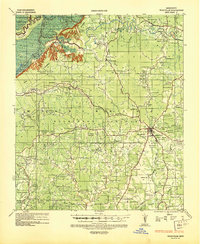 1936 Woodville1944 Print · USGSWilkinson County was a land of sprawling estates and quiet country crossroads in the mid-1930s. Genealogists can trace hundreds of family landmarks and community centers, from La Grange Plantation and Bells Store to Peach Grove Ch & Cem.
 - 1939 Map of Red Gum, 1941 Print
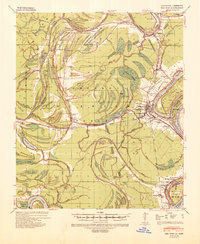 1939 Red Gum1941 Print · USGSConcordia Parish sits at a vital rail and river junction during the late thirties. Researchers can locate numerous historic landings and community pillars like the Rosenwald Sch, New St John Ch, and the crossroads at Ferriday.2 unique versions available
 - 1939 Map of Natchez, 1943 Print
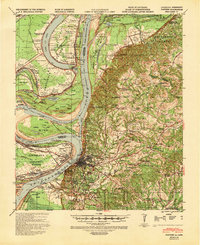 1939 Natchez1943 Print · USGSThe Mississippi River corridor and Natchez area appear in the late thirties as a landscape of river-bottom plantations and bluff-top estates. Genealogists can locate family landmarks like Hole in the Wall Plantation, Briars Plantation, and Gilfield Ch & Sch.3 unique versions available
 - 1939 Map of Kingston, 1944 Print
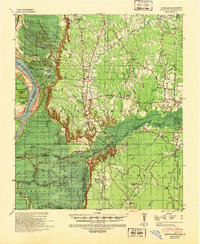 1939 Kingston1944 Print · USGSThe bluffs and bayous of Adams and Wilkinson Counties are captured here in the late 1930s just as the national forest was expanding. Genealogists and researchers can trace family landmarks like Beverly Plantation, Rose Hill Ch & Cem, and the community of Kingston.2 unique versions available
 - 1939 Map of Artonish, 1945 Print
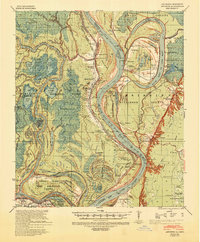 1939 Artonish1945 Print · USGSThe river-and-rail economy of the Louisiana-Mississippi border is frozen in time just before the mid-century, showing the dense settlement of the bottomlands. Genealogists can trace family roots through numerous local landmarks like Fort Adams, Singleton Chapel & Cem, and the Black Hawk Plantation.
 - 1939 Map of Deer Park, 1951 Print
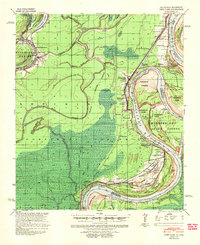 1939 Deer Park1951 Print · USGSThe Lower Mississippi River valley in the late thirties reveals a landscape of massive plantations and shifting river bends. Genealogists and historians can trace family land in Moro Plantation, locate schools like Central High School, or find small settlements such as Monterey and Arnot.
 - 1939 Map of Locust Ridge, 1965 Print
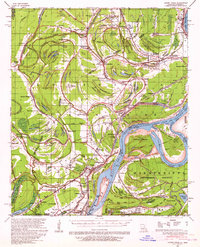 1939 Locust Ridge1965 Print · USGSThe Mississippi Delta in the late 1930s reveals a land of sprawling plantations and bayou settlements along the Louisiana border. Genealogists can trace family landmarks like the Mayflower Cem, Maryland Plantation Cem, and New St Mark Ch among the meanders of the river.
 - 1953 Map of Natchez, 1966 Print
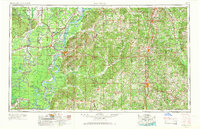 1953 Natchez1966 Print · USGSSouthwest Mississippi and the Louisiana border country come alive in this mid-century survey of the river valley and forest lands. Researchers can trace the rail lines of the Illinois Central RR and locate rural hubs like Gloster and Ferriday.3 unique versions available
 - 1954 Map of Artonish, 1966 Print
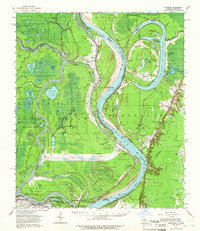 1954 Artonish1966 Print · USGSThe riverfronts of Concordia Parish and Wilkinson County are captured here in the mid-fifties, during a period of significant hydraulic engineering and transition. Genealogists and historians can trace family-named sites like Shaw Plantation, Singleton Cem, and the old military outpost at Fort Adams.
 - 1955 Map of Artonish
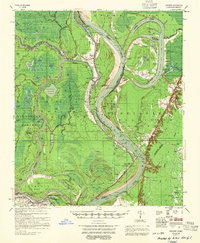 1955 Artonish1955 Print · USGSWilkinson County and Concordia Parish in the mid-fifties are defined here by the massive plantations and river landings along the winding Mississippi River. Genealogists can trace local roots through numerous sites like Royal Oak Ch & Cem, Fort Adams, and the Torras Community Sch.
 - 1956 Map of Natchez
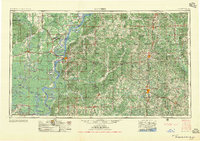 1956 Natchez1956 Print · USGSThe Mississippi River borderlands and the Pine Hills come alive in this mid-fifties study of the Natchez region. Genealogists and historians can trace rail-era towns along the Illinois Central RR and explore the oxbows of Lake Bruin and Lake Concordia.
 - 1958 Map of Artonish
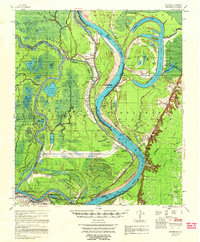 1958 Artonish1958 Print · USGSThe river bluffs of Mississippi and the bottomlands of Louisiana meet here in the late fifties as massive engineering projects began to reshape the landscape. Local historians can trace family-named sites like Stamps Plantation or locate rural landmarks such as Royal Oak Ch & Cem and the Texas and Pacific RR.
 - 1958 Map of Woodville, 1960 Print
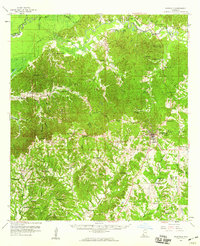 1958 Woodville1960 Print · USGSWoodville and the surrounding Wilkinson County countryside are captured here in the late fifties. Genealogists can trace family roots through numerous rural landmarks like St James Ch, Pickneyville, and the Bowling Green Cem.4 unique versions available
 - 1958 Map of Kingston, 1960 Print
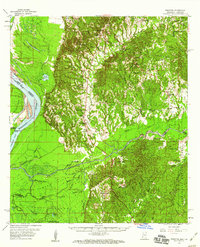 1958 Kingston1960 Print · USGSThe Mississippi riverfront south of Natchez was still a wilderness of bayous and cutoffs in the late fifties. Genealogists can trace rural communities around Kingston, find family names near Mars Hill Cem, or locate landmarks like Esperance Landing.2 unique versions available
 - 1959 Map of Natchez
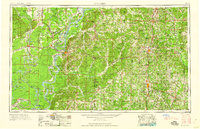 1959 Natchez1959 Print · USGSSouthwestern Mississippi and eastern Louisiana are captured in the late fifties, showing a landscape defined by the winding Mississippi River and the timbered Homochitto National Forest. Researchers can trace the sprawling Illinois Central RR and find rural landmarks like Union Church and Camp Van Dorn (Abandoned).
 - 1961 Map of Crosby, 1962 Print
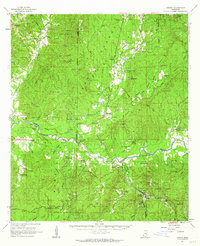 1961 Crosby1962 Print · USGSThe Homochitto River valley and its neighboring oil fields are captured here in the early sixties as they span four Mississippi counties. Researchers can trace rural lineages through numerous family sites like Dorsey Cem, Perrytown Ch, and the Illinois Central Railroad corridor.3 unique versions available
 - 1961 Map of Ferriday, 1962 Print
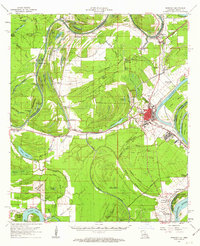 1961 Ferriday1962 Print · USGSConcordia Parish and the Mississippi River bottomlands are captured here in the early sixties, showing a landscape of bayous and rail towns. Researchers can locate many rural landmarks including St Peters Ch, Sevier High Sch, and family sites near Clayton and Frogmore.2 unique versions available
 - 1961 Map of Monterey, 1963 Print
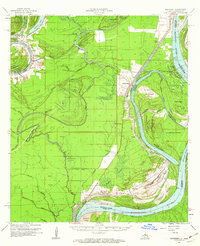 1961 Monterey1963 Print · USGSConcordia Parish in the early sixties is a landscape of winding bayous and active oil fields. Genealogists can locate family landmarks like Pt Pleasant Cem and Ashland Cem, or trace the path of the Old Railroad near Monterey.3 unique versions available
 - 1962 Map of Fayette, 1964 Print
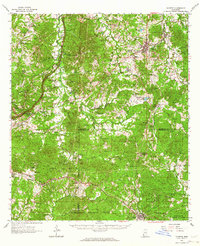 1962 Fayette1964 Print · USGSMississippi's river-country interior in the early sixties reveals a landscape of oil fields and ancient earthworks. Genealogists and historians can trace family-named sites like Emerald Mound, Hicks Cem, and the rural Daughters Temple.2 unique versions available
 - 1963 Map of Pine Ridge, 1964 Print
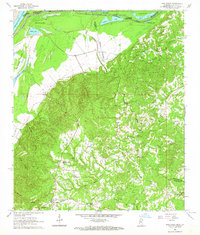 1963 Pine Ridge1964 Print · USGSThe Mississippi riverfront and the bluffs of Adams County are captured here in the early sixties as petroleum exploration expanded through the hills. Genealogists can locate numerous rural landmarks like Painters Cem, Linwood Ch, and Daughters of Zion Ch.3 unique versions available
 - 1963 Map of Natchez, 1964 Print
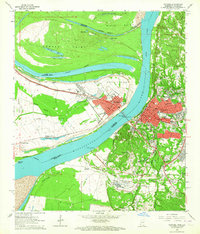 1963 Natchez1964 Print · USGSIn the early sixties, the riverfront at the Mississippi-Louisiana border was a hub of energy and rail transit. Researchers can trace historic properties like Whitehall Plantation, find small country churches like Pilgrim Ch, and locate active rail lines including the Illinois Central.3 unique versions available
Showing maps 1-25 of 56
Top cities of Adams County
Frequently asked questions
- What are the different types of historical maps available for Adams County?
- What is the oldest map of Adams County?
- Where can I purchase historical maps of Adams County for my home or office?
- Where can I download high-res historical maps of Adams County?
- Are there historical topographic maps available for Adams County?
- Is there historical aerial imagery available for Adams County?
- Where are historical maps of Adams County sourced from?