Old Maps of Wade, Mississippi for Metal Detecting
Plan your next treasure hunt with 17 historic maps of Wade. Find old homesites, ghost towns, trails, and gathering spots that may be lost to time — perfect for identifying promising metal detecting locations.
- Locate forgotten sites: Uncover places like long-lost settlements, abandoned rail lines, or gathering spots.
- Plan better hunts: Use map overlays combined with LiDAR or satellite views to narrow in on historically rich areas.
- Made for detectorists: Thousands of hobbyists use these maps to discover relics, coins, and hidden history.
Use these historic maps to boost your research and find new opportunities beneath the surface of Wade.
Wade, MS maps
(17)- 1941 Map of Vancleave, 1959 Print
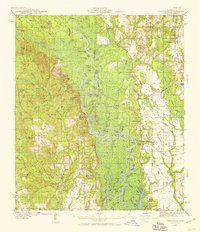 1941 Vancleave1959 Print · USGSThe Pascagoula River bottomlands in the early 1940s reveal a landscape of oxbow lakes and timber-reliant settlements. Trace family roots at Wolf Ridge Cem, Graham Ferry, or the historic crossroads of Vancleave and Old Americus.4 unique versions available
 - 1943 Map of Vancleave
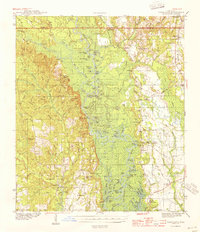 1943 Vancleave1943 Print · USGSCoastal Mississippi river life in the early 1940s centers on the sprawling basin of the Pascagoula River. Researchers can trace family history through numerous rural landmarks like Wolf Ridge Cem, Old Americus, and the Campmeeting Ground.
 - 1944 Map of Vancleave
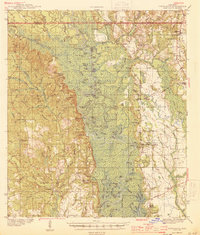 1944 Vancleave1944 Print · USGSThe Pascagoula River valley during the early 1940s reveals a landscape of river landings, ferries, and scattered timber-country settlements. Genealogists can trace family locations near Graham Ferry, Old Americus, and Sins Mill Pond.2 unique versions available
 - 1953 Map of Mobile, 1968 Print
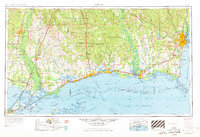 1953 Mobile1968 Print · USGSThe Gulf Coast comes alive in this mid-century survey, from the streets of Mobile to the marshes of New Orleans. Trace family roots in coastal towns like Pass Christian and Bayou La Batre or locate military landmarks including Keesler AFB.3 unique versions available
 - 1957 Map of Mobile
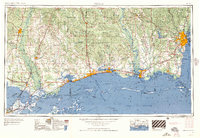 1957 Mobile1957 Print · USGSThe Gulf Coast in the mid-1950s reveals a bustling corridor of rail-and-river commerce connecting Alabama to Louisiana. Genealogists and historians can trace old settlements and military hubs from Keesler Afb to the coastal reaches of Ship Island and Bogalusa.3 unique versions available
 - 1960 Map of Mobile
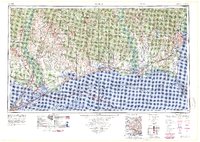 1960 Mobile1960 Print · USGSThe Gulf Coast at the dawn of the sixties shows a landscape of busy ports, military airbases, and barrier islands. Trace the rail lines of the Louisville & Nashville through BILOXI and Pascagoula or find family history in towns like Bayou La Batre and Poplarville.
 - 1963 Map of Mobile
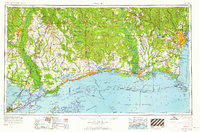 1963 Mobile1963 Print · USGSThe Gulf Coast at the dawn of the sixties shows a thriving maritime and military corridor from Louisiana to Alabama. Genealogists and historians can trace rail lines like the Louisville & Nashville RR and find landmarks from Brookley AFB to Fort Morgan.
 - 1965 Map of Mobile
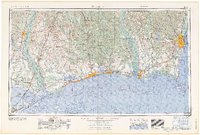 1965 Mobile1965 Print · USGSThe Gulf Coast at mid-century reveals a landscape of expanding ports and vital military installations from Louisiana to Alabama. Genealogists and historians can trace the growth of Biloxi, Pascagoula, and Mobile, alongside the sprawling De Soto National Forest.
 - 1982 Map of Harleston
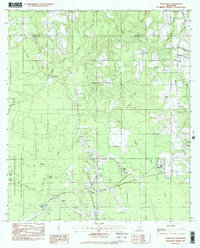 1982 Harleston1982 Print · USGSJackson County at the start of the 1980s reveals a landscape defined by the Pascagoula river bottomlands and rural crossroads. Trace family history through Old Americus Steede Cem, Johnson Chapel, and the community at Hurley.2 unique versions available
 - 1984 Map of Mobile
 1984 Mobile1984 Print · USGSMobile and its surrounding Gulf Coast backcountry appear in the mid-eighties as a hub of maritime industry and timber management. Genealogists and historians can trace the development of the riverfront near McDuffie Island or explore rural settlements like Lucedale and Chunchula.
 - 1984 Map of Mobile
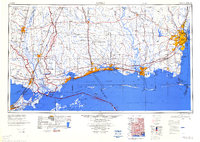 1984 Mobile1984 Print · USGSThe Gulf Coast at the height of the mid-eighties shows a landscape of rapid industrial growth and military significance. Researchers can trace the sprawling rail lines of the Illinois Central Gulf RR, locate the NASA Test Facility, or study the barrier island chain from Cat Island to Petit Bois Island.3 unique versions available
 - 1994 Map of Mobile
 1994 Mobile1994 Print · USGSMobile and its sprawling bay are captured in the mid-nineties as the industrial port and coastal wilderness found a modern balance. Genealogists and historians can trace rail lines like the Illinois Central Gulf RR and find landmarks such as Bonnie Chapel and Hollingers Island.
 - 2012 Map of Harleston, 2012 Print
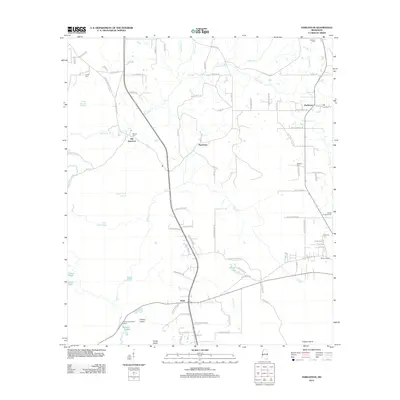 2012 Harleston2012 Print · USGSCoastal Mississippi riverlands come into focus in the early 2010s, showing the intricate sloughs and creek-side settlements of Jackson County. Trace the locations of rural communities like Old Americus and Wade, or locate family sites such as Steede Cem and Carter Cem.
 - 2015 Map of Harleston, 2015 Print
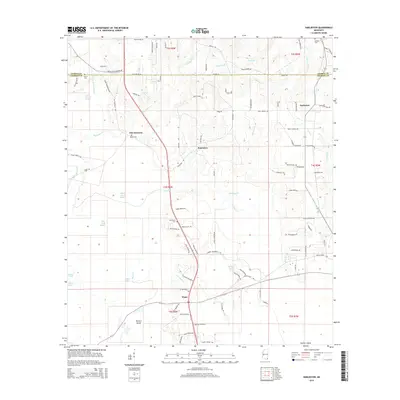 2015 Harleston2015 Print · USGSJackson County, Mississippi, is mapped here in the modern era as a network of creek-side settlements and rural homesteads. Genealogists can trace family landmarks and burial sites including Steede Cem, Oak Grove Cem, and the community of Old Americus.
 - 2018 Map of Harleston, 2018 Print
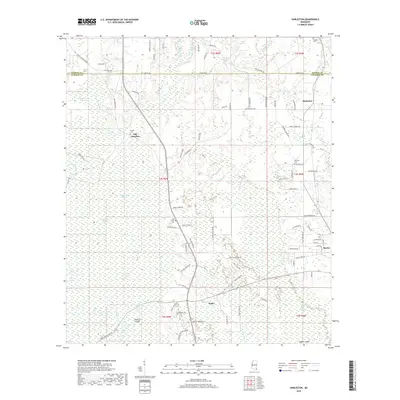 2018 Harleston2018 Print · USGSCoastal Mississippi river bottomlands meet rural settlement patterns in this recent study of Jackson County. Local researchers can trace family landmarks and historic sites from Old Americus to Harleston, including Steede Cem and Bethany Cem.
 - 2020 Map of Harleston, 2020 Print
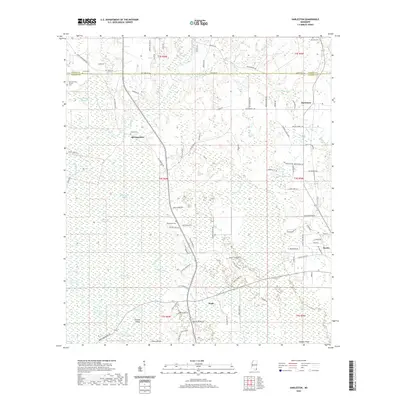 2020 Harleston2020 Print · USGSJackson County at the start of the 2020s shows a landscape of deep southern wetlands and historic rural settlements. Family historians can trace local roots through the Old Carter Historic Cem, Old Americus, and the Oak Grove Cem near Wade.
 - 2024 Map of Harleston, 2024 Print
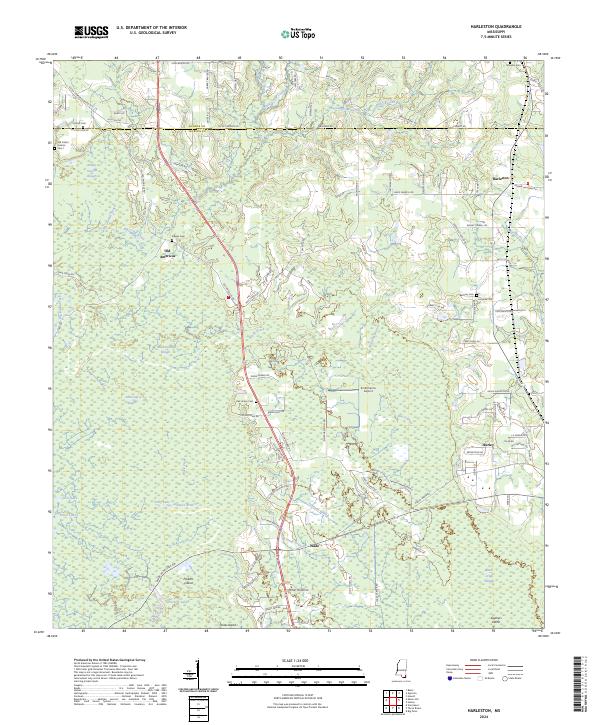 2024 Harleston2024 Print · USGSSpanning the border of George and Jackson Counties in the 2020s, this area shows a landscape defined by the winding waters of Black Creek and rural Mississippi life. Researchers can locate numerous family burial sites including Old Carter Historic Cem 1, Steede Cem, and the historic settlement site of Old Americus.
End of results
Showing maps 1-17 of 17
Top cities near Wade
Frequently asked questions
- What are the different types of historical maps available for Wade?
- What is the oldest map of Wade?
- Where can I purchase historical maps of Wade for my home or office?
- Where can I download high-res historical maps of Wade?
- Are there historical topographic maps available for Wade?
- Is there historical aerial imagery available for Wade?
- Where are historical maps of Wade sourced from?