Old Maps of Lamar County, Mississippi for Hiking & Exploration
Hike through history with 111 historic maps of Lamar County. Explore old trails, ghost towns, and forgotten backroads — perfect for outdoor adventurers and local explorers.
- Rediscover forgotten places: Map out old mining camps, roads, and footpaths that no longer exist on modern maps.
- Layer with modern tools: Combine with LiDAR or satellite views to plan hikes through historical terrain.
- Made for exploration: Popular among hikers, overlanders, and local history lovers.
Use these maps to find adventure and explore the hidden past of Lamar County.
Lamar County, MS maps
(111)- 1953 Map of Hattiesburg, 1965 Print
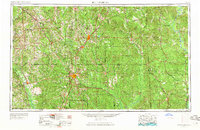 1953 Hattiesburg1965 Print · USGSSouth Mississippi and western Alabama are shown here during the mid-twentieth century as the timber and rail industries shaped the region. Genealogists and historians can trace rail lines like the Mississippi Central and locate rural centers such as Magee, Richton, and Mount Vernon.4 unique versions available
 - 1953 Map of Mobile, 1968 Print
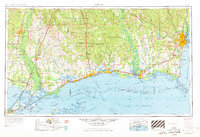 1953 Mobile1968 Print · USGSThe Gulf Coast comes alive in this mid-century survey, from the streets of Mobile to the marshes of New Orleans. Trace family roots in coastal towns like Pass Christian and Bayou La Batre or locate military landmarks including Keesler AFB.3 unique versions available
 - 1957 Map of Mobile
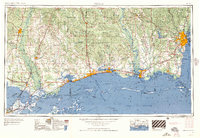 1957 Mobile1957 Print · USGSThe Gulf Coast in the mid-1950s reveals a bustling corridor of rail-and-river commerce connecting Alabama to Louisiana. Genealogists and historians can trace old settlements and military hubs from Keesler Afb to the coastal reaches of Ship Island and Bogalusa.3 unique versions available
 - 1958 Map of Hattiesburg
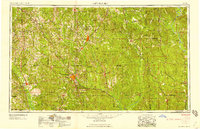 1958 Hattiesburg1958 Print · USGSSoutheastern Mississippi's timber and rail networks are at their peak during the late fifties, centered on the growing hubs of Hattiesburg and Laurel. Researchers can trace old family landmarks like Sims Chapel, the Busbey Game Refuge, and the vanished stops along the Mississippi Central railroad.2 unique versions available
 - 1958 Map of Carnes, 1959 Print
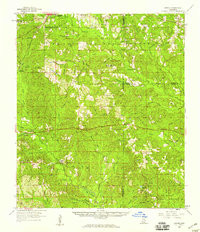 1958 Carnes1959 Print · USGSPearl River and Lamar counties are shown here during the late fifties as small timber and farming communities were consolidating. You can locate family burial plots like Rouse Field Cem and traces of local education at Bird Line Sch or Magnolia Sch.2 unique versions available
 - 1960 Map of Mobile
 1960 Mobile1960 Print · USGSThe Gulf Coast at the dawn of the sixties shows a landscape of busy ports, military airbases, and barrier islands. Trace the rail lines of the Louisville & Nashville through BILOXI and Pascagoula or find family history in towns like Bayou La Batre and Poplarville.
 - 1963 Map of Mobile
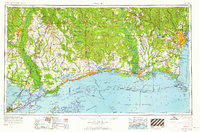 1963 Mobile1963 Print · USGSThe Gulf Coast at the dawn of the sixties shows a thriving maritime and military corridor from Louisiana to Alabama. Genealogists and historians can trace rail lines like the Louisville & Nashville RR and find landmarks from Brookley AFB to Fort Morgan.
 - 1963 Map of Rock Hill, 1965 Print
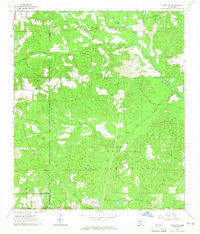 1963 Rock Hill1965 Print · USGSDeep in the Mississippi piney woods during the early sixties, this area shows a landscape defined by timber and rural faith. Researchers can trace family names and local landmarks like Rock Hill, Anderson Cem, and the Rock Hill Lookout Tower.3 unique versions available
 - 1964 Map of Purvis, 1965 Print
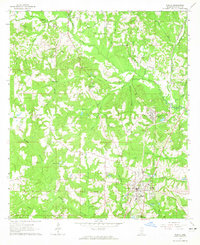 1964 Purvis1965 Print · USGSPurvis and the surrounding Lamar County countryside are captured here in the mid-1960s as a region of timbered ridges and rail-side industry. Researchers can trace family roots at Mt Hebron Ch Cem or explore the early operations at the Black Creek Refinery.3 unique versions available
 - 1964 Map of Hattiesburg, 1965 Print
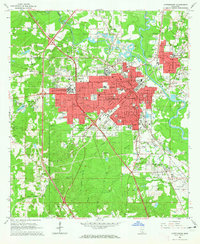 1964 Hattiesburg1965 Print · USGSHattiesburg flourished as a vital railway and educational crossroads in the mid-1960s. Genealogists and historians can trace the development of the University of Southern Mississippi and find vanished sites like Dixie Pine and Bonhomie.4 unique versions available
 - 1964 Map of Lumberton, 1968 Print
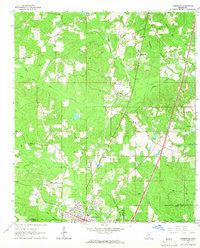 1964 Lumberton1968 Print · USGSLumberton and its surrounding South Mississippi piney woods are captured here in the early sixties as rural life centered on timber and the rail. Genealogy researchers can trace family landmarks like Wells Town, Talowah, and several local burial sites including Slade Cem.2 unique versions available
 - 1965 Map of Mobile
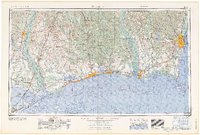 1965 Mobile1965 Print · USGSThe Gulf Coast at mid-century reveals a landscape of expanding ports and vital military installations from Louisiana to Alabama. Genealogists and historians can trace the growth of Biloxi, Pascagoula, and Mobile, alongside the sprawling De Soto National Forest.
 - 1965 Map of Hattiesburg SW, 1966 Print
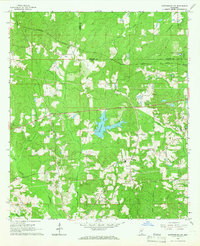 1965 Hattiesburg SW1966 Print · USGSLamar County in the mid-sixties shows the transition from rural timberland to growing communities along the MISSISSIPPI CENTRAL railroad. Researchers can trace family sites at Grantham Cem or explore early developments around Hennington Lake and Oak Grove.4 unique versions available
 - 1965 Map of Dixie, 1966 Print
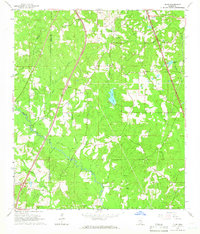 1965 Dixie1966 Print · USGSForrest and Lamar Counties are captured here in the mid-sixties, a time of transition between traditional rail routes and new interstate interchanges. Local historians can trace family roots through sites like Dixie Cem, Whites Chapel, and the Mineral Springs Church.3 unique versions available
 - 1965 Map of Sanford, 1966 Print
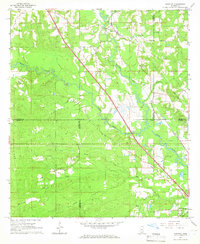 1965 Sanford1966 Print · USGSIn the mid-sixties, the confluence of Bowie Creek and Okatoma Creek anchored a rural landscape of dispersed settlements and rail-side hamlets. Genealogists can trace family landmarks like Byrd Cem and Lott Cem near the Illinois Central line.3 unique versions available
 - 1969 Map of Baxterville SW, 1971 Print
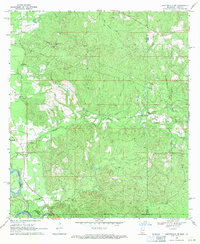 1969 Baxterville SW1971 Print · USGSThe Pearl River bottomlands and the sprawling Baxterville Oil and Gas Field meet here in the late sixties. Genealogists and local historians can trace rural roots at Sweet Home Ch, Howard Cem, and the small settlement of Rawls.4 unique versions available
 - 1969 Map of Baxterville, 1971 Print
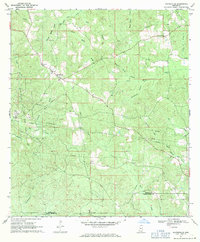 1969 Baxterville1971 Print · USGSSouth Mississippi's piney woods were a landscape of industry and tradition in the late sixties, centered on the Baxterville Oil and Gas Field. Researchers can trace old family footprints at Pleasant Home Ch or follow the legacy of the timber era along the old Railroad Grade.2 unique versions available
 - 1969 Map of Baxterville NE, 1971 Print
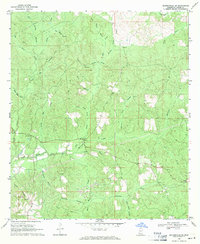 1969 Baxterville NE1971 Print · USGSLamar County's rural backcountry is documented here during the late sixties, showing a landscape shaped by creek branches and small congregations. Researchers can locate the Lamar Lookout Tower, trace the Old Railroad Grade, or find family roots near Greenville Ch and Bay Creek Ch.2 unique versions available
 - 1969 Map of Pinebur, 1971 Print
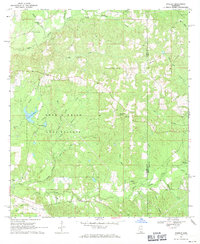 1969 Pinebur1971 Print · USGSMarion and Lamar Counties were primarily rural and forest-bound in the late sixties, centered on the Hugh L White Game Reserve. Genealogists and historians can trace the local landscape through landmarks like Breakfield Cem, Hollywood Spring, and the small community of Pinebur.2 unique versions available
 - 1974 Map of Sumrall, 1978 Print
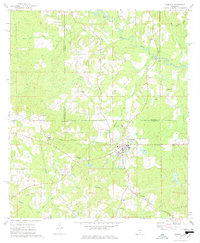 1974 Sumrall1978 Print · USGSSumrall and its surrounding rural communities are captured here in the mid-1970s as the rail-and-creek landscape of Lamar County remained largely unchanged. Researchers can pinpoint historic family sites like Presley Watts Cem, the Illinois Central Gulf corridor, and Bethlehem Ch.
 - 1974 Map of Oloh, 1978 Print
 1974 Oloh1978 Print · USGSLamar County in the mid-1970s is a landscape of creek-fed hollows and rural church communities. Genealogists and local historians can trace family roots at Russell Cem or Martin-Lott Cem and locate landmarks like the Oloh Lookout Tower.
 - 1974 Map of Bassfield, 1978 Print
 1974 Bassfield1978 Print · USGSJefferson Davis County and the surrounding timberlands appear in the mid-1970s as a landscape of rural churches and family homesteads. Trace the Illinois Central Gulf rail line past Bassfield or locate family sites like McPhail Cem and Raybourn Cem.
 - 1983 Map of Hillsdale
 1983 Hillsdale1983 Print · USGSThe Pearl River and Lamar county line in the early eighties shows a landscape of national forest and active energy extraction. Genealogists can locate family burial sites like Byrd Line Cem and Beall Cem near the Pistol Ridge Oil and Gas Field.
 - 1984 Map of Hattiesburg
 1984 Hattiesburg1984 Print · USGSSouth Mississippi’s Pine Belt is seen here in the mid-eighties, showing the region as a hub of timber production and petroleum extraction. Trace the rail lines of the Illinois Central Gulf RR through old settlements like Richton or the energy developments at the Heidelberg Oil Field.2 unique versions available
 - 1984 Map of Bogalusa
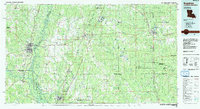 1984 Bogalusa1984 Print · USGSThe Pearl River basin on the Louisiana-Mississippi border comes into focus in the mid-1980s, showcasing a landscape of river-bottom swamps and timberlands. Local researchers can trace the growth of Bogalusa and Picayune or find rural landmarks like Macedonia Ch and Wheat Swamp.
Showing maps 1-25 of 111
Top cities of Lamar County
Frequently asked questions
- What are the different types of historical maps available for Lamar County?
- What is the oldest map of Lamar County?
- Where can I purchase historical maps of Lamar County for my home or office?
- Where can I download high-res historical maps of Lamar County?
- Are there historical topographic maps available for Lamar County?
- Is there historical aerial imagery available for Lamar County?
- Where are historical maps of Lamar County sourced from?