1900s (20th Century) Maps of Armour, Missouri
Explore 11 historic maps of Armour from the 1900s (20th Century). These maps offer a rare glimpse into what life looked like during the 1900s — showing old roads, neighborhoods, homes, and landmarks that have changed or disappeared over time.
Whether you're researching your family's past, planning a metal detecting trip, or studying how Armour's landscape evolved across the 1900s, these high-resolution maps are a powerful tool for exploring the history of this region.
- Focus on a specific era: All maps on this page are from the 1900s, giving you a focused view of this time period.
- See what’s changed: Compare century-old streets, trails, and buildings to today's modern landscape using overlays and satellite layers.
- Research with precision: Use these maps for genealogy, historical research, land use analysis, or educational projects.
- View, download, or print: Maps are fully viewable online in high resolution, and can be downloaded or printed for your own records.
Start exploring Armour's history through authentic maps from the 1900s. This is your window into the past.
Armour, MO maps
(11)- 1926 Map of Atchison
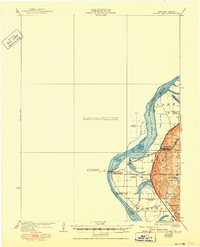 1926 Atchison1926 Print · USGSThe Missouri River floodplain comes to life in this mid-century survey of the Kansas-Missouri borderlands. Genealogists and local historians can trace the positions of old schoolhouses like Fairview School and Enterprise School, and the busy rail activity at East Atchison Winthrop Sta.5 unique versions available
 - 1950 Map of Kansas City
 1950 Kansas City1950 Print · USGSMid-century Kansas and Missouri are captured here during a period of industrial growth and shifting transportation. Genealogists and historians can trace rail lines like the Wabash RR or locate ancestral homes near the Potawatomi Indian Reservation and Horton.
 - 1951 Map of Rushville
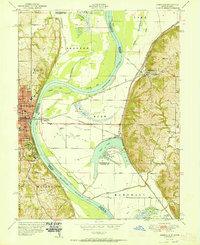 1951 Rushville1951 Print · USGSThe Missouri River floodplain near Atchison and Rushville is shown here in the early fifties, highlighting a landscape shaped by massive river bends and rail lines. Genealogists can trace family names at Armstrong Cem and locate rural landmarks like Pleasant Valley School or the State Orphan Home.2 unique versions available
 - 1954 Map of Kansas City
 1954 Kansas City1954 Print · USGSThe Missouri-Kansas borderlands flourished in the post-war era as river commerce and rail networks converged at the Missouri River. Genealogists and historians can trace the foundations of Kansas City and smaller rural hubs like Hiawatha or Sabetha.
 - 1956 Map of Kansas City, 1967 Print
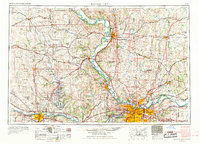 1956 Kansas City1967 Print · USGSThe Kansas-Missouri border region thrived during the mid-fifties, centered on the growing metropolitan cores and the busy river valleys. Researchers can trace the layout of significant government sites like Fort Leavenworth and the Lake City Army Ammunition Plant.4 unique versions available
 - 1960 Map of Kansas City
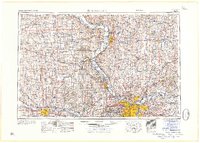 1960 Kansas City1960 Print · USGSMid-century Kansas and Missouri meet at the river forks, showing a sprawling rail-and-river economy during the 1950s growth era. Genealogists and researchers can trace tribal lands like the Kickapoo Indian Reservation or follow the early interstate corridors through Saint Joseph and Independence.3 unique versions available
 - 1960 Map of Atchison, 1961 Print
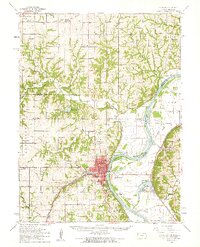 1960 Atchison1961 Print · USGSAtchison thrived as a Missouri River rail and education hub at the dawn of the sixties. Genealogists can trace family roots through numerous rural landmarks like Shannon Hill Sch, Mt Calvary Cem, and the riverfront settlement of Winthrop.2 unique versions available
 - 1960 Map of Atchison East, 1961 Print
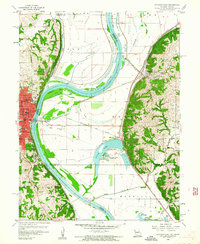 1960 Atchison East1961 Print · USGSThe Missouri River floodplain comes to life in the early 1960s, showing the intricate relationship between the river, rail lines, and border settlements. Genealogists and local historians can trace landmarks like St Benedicts College, Sugar Lake, and the vanished site of the Drive-in Theater.3 unique versions available
 - 1984 Map of Atchison East
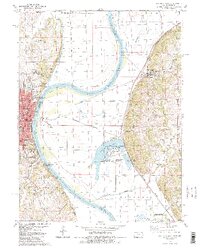 1984 Atchison East1984 Print · USGSThe Missouri River borderlands near Atchison show a mid-1980s landscape of river-bend settlements and agricultural bluffs. Genealogists can locate family names at Sumner Cem and Taylor Cem or trace the early campuses of Benedictine College.2 unique versions available
 - 1985 Map of Atchison
 1985 Atchison1985 Print · USGSNortheast Kansas at the mid-eighties shows a landscape of river-bend towns and expansive tribal lands during a period of steady agricultural and rail activity. Local researchers can locate family sites at Mt Hope Cemetery, trace the grounds of Highland College, or explore the limits of the Kickapoo Indian Reservation.
 - 1990 Map of Atchison
 1990 Atchison1990 Print · USGSNortheast Kansas and northwest Missouri meet at the winding Missouri River in this late twentieth-century record of a historic border region. Researchers can trace the paths of the Pony Express Trail and the Atchison Topeka and Santa Fe Railway while locating landmarks like St Benedicts College and Mount Vernon Cem.
End of results
Showing maps 1-11 of 11
Top cities near Armour
- Saint Joseph historical maps
- Leavenworth historical maps
- Atchison historical maps
- Kickapoo historical maps
- Shannon historical maps
- Weston historical maps
See more
Frequently asked questions
- What are the different types of historical maps available for Armour?
- What is the oldest map of Armour?
- Where can I purchase historical maps of Armour for my home or office?
- Where can I download high-res historical maps of Armour?
- Are there historical topographic maps available for Armour?
- Is there historical aerial imagery available for Armour?
- Where are historical maps of Armour sourced from?