Old Maps of Austin, Missouri for Academic Research
Study the evolution of Austin with 13 high-resolution historic maps. Whether you're teaching, researching, or modeling changes in land use, these maps provide essential visual documentation of urban, environmental, and geographic change.
- Analyze long-term change: Track patterns in development, transportation, and natural features.
- Ideal for environmental or urban studies: Support academic projects with primary historical map data.
- Use in the classroom or lab: Educators and researchers rely on these maps to bring historical context to life.
These maps are a powerful tool for teaching, research, and visualizing how Austin has changed over the decades.
Austin, MO maps
(13)- 1887 Map of Harrisonville
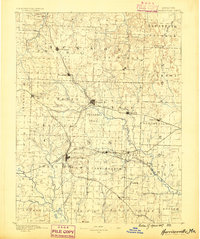 1887 Harrisonville1887 Print · USGSMissouri's western borderlands are seen here during the rail boom of the late nineteenth century. Genealogists and historians can trace the early development of Harrisonville and Lees Summit, alongside smaller settlements like Lone Jack, Peculiar, and Garden City.
 - 1892 Map of Harrisonville, 1902 Print
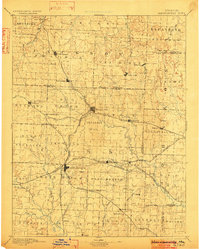 1892 Harrisonville1902 Print · USGSWestern Missouri comes into focus during the late nineteenth-century rail boom as new townships and post offices began to dot the prairie. Trace the development of early rail hubs like Harrisonville and Pleasant Hill or locate old community centers such as Chapel Hill and Daugherty (Eight Mile P. O.).2 unique versions available
 - 1894 Map of Harrisonville
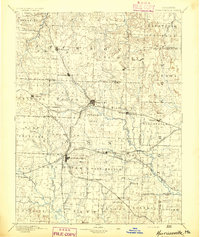 1894 Harrisonville1894 Print · USGSCass and Jackson counties come to life in the 1890s as a burgeoning rail network links remote prairie outposts. Genealogists can trace early homesteads and mail stops like Daugherty (Eight Mile P. O.), Peculiar, and Lone Jack.
 - 1947 Map of Lawrence, 1954 Print
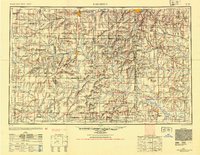 1947 Lawrence1954 Print · USGSEastern Kansas and western Missouri thrive in the late 1940s, showing a landscape defined by major river valleys and a dense railway network. Genealogists can trace family settlements from Lawrence to Greenwood and locate landmarks like Olathe Navy and Lake Lotawana.
 - 1950 Map of Lawrence
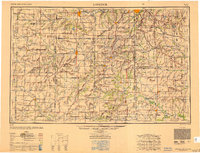 1950 Lawrence1950 Print · USGSMid-century Kansas and Missouri come alive in this map of the river-valley corridors just as the interstate era was beginning. Researchers can trace the legacy of major rail lines like the Union Pacific RR and locate ancestral roots in towns from Lawrence to Harrisonville.
 - 1954 Map of Austin, 1955 Print
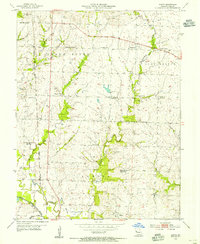 1954 Austin1955 Print · USGSCentral Missouri farmland in the mid-1950s is captured here in detail. Genealogists can trace family landmarks like Vansandt Cem and the Mid-West Landing Field, or find several rural schools including Belle Plain Sch and Eightmile Sch.2 unique versions available
 - 1956 Map of Lawrence, 1967 Print
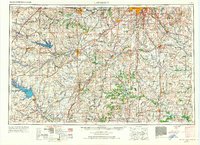 1956 Lawrence1967 Print · USGSEastern Kansas and the Missouri border country are captured here during the mid-century transition to the interstate era. Genealogists and local historians can trace family-named terrain like Summers Mound and the footprint of Sunflower Ordnance Works near Baldwin City.4 unique versions available
 - 1961 Map of Lawrence
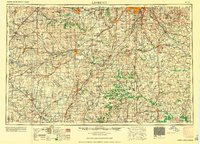 1961 Lawrence1961 Print · USGSThe Kansas-Missouri borderland shows its mid-century transition from a rail-dependent agricultural region to a suburbanizing landscape. Genealogists can trace family footprints through numerous Cem sites and distinctive terrain landmarks like Graves Mound and Summers Mound.
 - 1983 Map of Olathe, 1984 Print
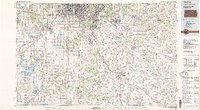 1983 Olathe1984 Print · USGSThe Kansas-Missouri borderlands hum with suburban growth and historic transit routes in the early eighties. Researchers can trace the Santa Fe Trail across a landscape featuring Richards-Gebaur Air Force Base and Hillsdale Lake.
 - 2012 Map of Austin, 2012 Print
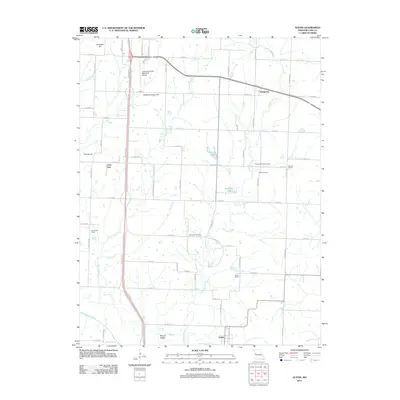 2012 Austin2012 Print · USGSCass County, Missouri, remains a landscape of quiet rural crossroads and family homesteads as seen in the early twenty-first century. Genealogists and local historians can trace old community anchors like Elm Branch School, Reed Cemetery, and the settlement of Daugherty.
 - 2014 Map of Austin, 2014 Print
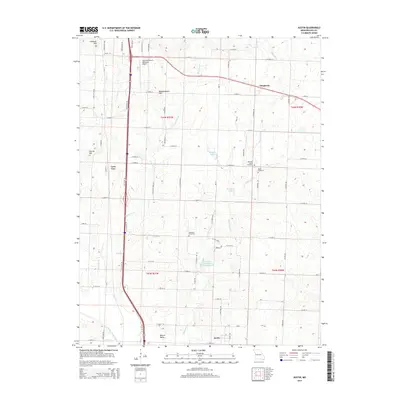 2014 Austin2014 Print · USGSCass County agricultural lands and rural settlements are documented here in the early twenty-first century. Researchers can locate the Lawrence Smith Memorial Airport and trace family heritage at Vansandt Cemetery or Reed Cemetery.
 - 2017 Map of Austin, 2017 Print
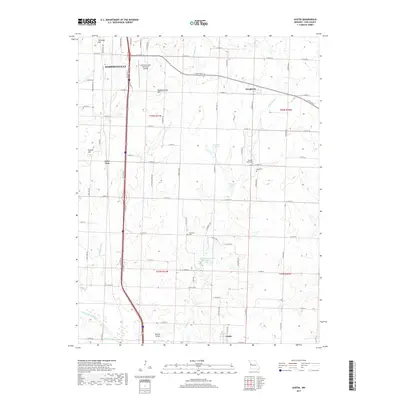 2017 Austin2017 Print · USGSCass County agriculture and small-town life define this region south of Kansas City in the 2010s. Genealogists and local historians can locate several rural burial grounds such as Reed Cem and Vansandt Cem or trace the early foundations of Austin and Daugherty.
 - 2021 Map of Austin, 2021 Print
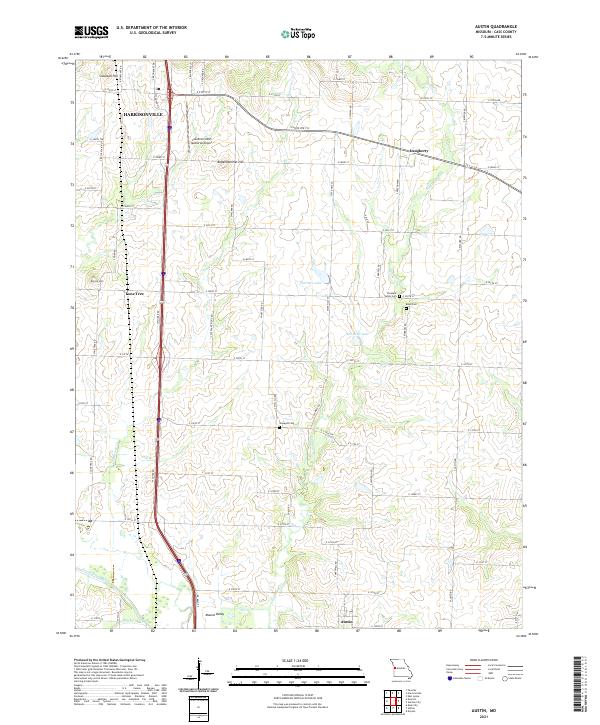 2021 Austin2021 Print · USGSSouth of Harrisonville in the early 2020s, the Cass County countryside reveals a network of historic rural settlements and family landmarks. Researchers can trace the heritage of Austin, Lone Tree, and ancestral burial sites like Vansandt Cem.
End of results
Showing maps 1-13 of 13
Top cities near Austin
- Harrisonville historical maps
- Peculiar historical maps
- Butler historical maps
- Adrian historical maps
- Garden City historical maps
- Archie historical maps
See more
Frequently asked questions
- What are the different types of historical maps available for Austin?
- What is the oldest map of Austin?
- Where can I purchase historical maps of Austin for my home or office?
- Where can I download high-res historical maps of Austin?
- Are there historical topographic maps available for Austin?
- Is there historical aerial imagery available for Austin?
- Where are historical maps of Austin sourced from?