1900s (20th Century) Maps of Newton County, Missouri
Explore 39 historic maps of Newton County from the 1900s (20th Century). These maps offer a rare glimpse into what life looked like during the 1900s — showing old roads, neighborhoods, homes, and landmarks that have changed or disappeared over time.
Whether you're researching your family's past, planning a metal detecting trip, or studying how Newton County's landscape evolved across the 1900s, these high-resolution maps are a powerful tool for exploring the history of this region.
- Focus on a specific era: All maps on this page are from the 1900s, giving you a focused view of this time period.
- See what’s changed: Compare century-old streets, trails, and buildings to today's modern landscape using overlays and satellite layers.
- Research with precision: Use these maps for genealogy, historical research, land use analysis, or educational projects.
- View, download, or print: Maps are fully viewable online in high resolution, and can be downloaded or printed for your own records.
Start exploring Newton County's history through authentic maps from the 1900s. This is your window into the past.
Newton County, MO maps
(39)- 1907 Map of Wyandotte, 1954 Print
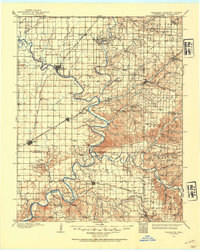 1907 Wyandotte1954 Print · USGSThe Tri-State border region at the start of the twentieth century shows a landscape of river ferries and early rail towns. Trace the locations of family landmarks like Hickory Grove Church, Goad Eagle Ferry, and rural schools from Afton to Seneca.2 unique versions available
 - 1909 Map of Wyandotte
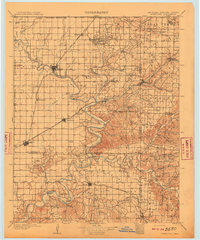 1909 Wyandotte1909 Print · USGSNortheastern Oklahoma’s river valleys and prairies are captured here just after statehood, during a period of rapid rail expansion and tribal land transition. Researchers can trace early river crossings like Rodwhite Ferry and locate historic community centers such as Hickory Grove Church or the Bluejacket School.2 unique versions available
 - 1916 Map of Neosho
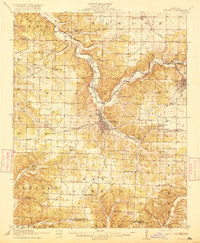 1916 Neosho1916 Print · USGSNewton County's rail and mining heart beat strong during the years before the Great War. Genealogists and local historians can trace forgotten rural schoolhouses like Possumtrot School and Jaybird School, or locate early lead workings such as the Tiger Mine near Granby.5 unique versions available
 - 1921 Map of Sarcoxie
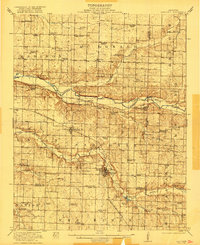 1921 Sarcoxie1921 Print · USGSJasper and Newton counties in the early 1920s reveal a flourishing agricultural landscape centered on the rail lines of the Pacific and Frisco. Genealogists and local historians can locate dozens of rural landmarks, from the Red Fox Mine to Union Chapel and Forest Mills.2 unique versions available
 - 1941 Map of Rocky Comfort, 1962 Print
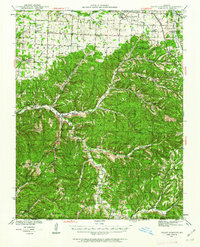 1941 Rocky Comfort1962 Print · USGSThe Missouri Ozarks are captured here in the early 1940s, showing a landscape defined by the winding Big Sugar Creek and the Missouri and Arkansas railroad. Researchers can trace rural life through dozens of local sites like Chitwood Cem, Rocky Comfort, and the Spring Hill Sch.2 unique versions available
 - 1943 Map of Ritchey
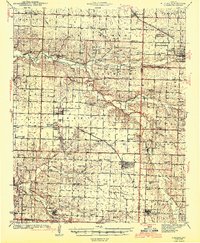 1943 Ritchey1943 Print · USGSSouthwest Missouri during the war years shows a landscape of busy railroads and emerging military sites. Genealogists can trace family roots through numerous local landmarks like Odd Fellows Cem, Dungy Mine, and rural centers such as Stark City.2 unique versions available
 - 1943 Map of Rocky Comfort
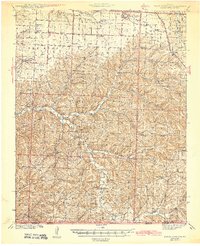 1943 Rocky Comfort1943 Print · USGSThe Ozark highlands of McDonald County come into sharp focus during the early 1940s, showing a landscape of deep hollows and high ridges. Genealogists can trace family roots through numerous rural landmarks like Seven Star Sch, Greason Cem, and the village of Powell.3 unique versions available
 - 1947 Map of Joplin, 1954 Print
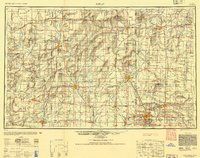 1947 Joplin1954 Print · USGSThe borderlands of Missouri, Kansas, and Oklahoma are shown here during the late 1940s, a period of heavy industrial and military activity. Researchers can trace the extensive Tri-State Mining District, the layout of Camp Crowder, and local landmarks like Mount Hope Cem.
 - 1949 Map of Joplin
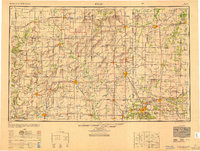 1949 Joplin1949 Print · USGSThe Kansas-Missouri borderlands thrive in the late 1940s, showing a robust network of railroad towns and river valleys. Researchers can trace historic rail lines like the Missouri Pacific RR and locate rural centers such as Chanute, Iola, and Fort Scott.
 - 1949 Map of Seneca, 1970 Print
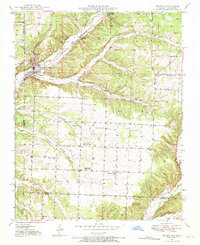 1949 Seneca1970 Print · USGSNewton County life in the late 1940s is centered on the town of Seneca and its proximity to the Oklahoma border. Genealogists can trace family footprints across several rural landmarks, including Gallemore Sch, Graves Cem, and Swars Prairie Baptist Ch.2 unique versions available
 - 1949 Map of Racine, 1973 Print
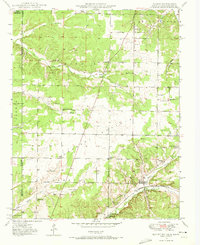 1949 Racine1973 Print · USGSNewton County was a crossroad of mining and agriculture in the late 1940s, situated at the junction of three states. Researchers can trace family history through dozens of landmarks like Tripoli Mines, Burkhart Ch, and the Gibson Cem.2 unique versions available
 - 1950 Map of Seneca
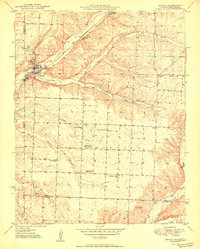 1950 Seneca1950 Print · USGSNewton County at the Missouri-Oklahoma line is shown here at mid-century, where the rail-linked town of Seneca meets the mineral-rich hills. Researchers can trace rural landmarks including the Tripoli Mine, Westview Sch, and Hollow Springs Ch.2 unique versions available
 - 1950 Map of Racine
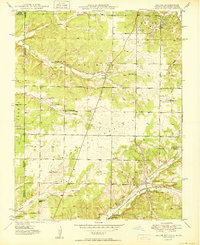 1950 Racine1950 Print · USGSNewton County's tri-state border region is captured here in the mid-century, showing a landscape shaped by mining and rural schooling. Researchers can locate family landmarks like Gibson Cem or trace the old St Louis San Francisco rail line through Racine.2 unique versions available
 - 1954 Map of Tulsa
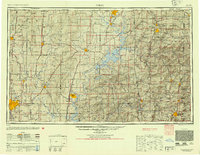 1954 Tulsa1954 Print · USGSNortheast Oklahoma and the Ozark border are shown here during a period of massive industrial and infrastructure growth. Researchers can trace the legacy of the Tri-State Mining District and the development of major reservoirs like Grand Lake O' The Cherokees.2 unique versions available
 - 1954 Map of Joplin, 1967 Print
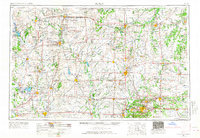 1954 Joplin1967 Print · USGSThe tri-state border region of Kansas, Missouri, and Oklahoma is captured here during a peak era of mid-century industrial and agricultural activity. Researchers can trace family history through dozens of rural cemeteries or locate landmarks like the Kansas Army Ammunition Plant and Pittsburg State University.3 unique versions available
 - 1958 Map of Joplin
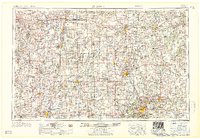 1958 Joplin1958 Print · USGSThe tri-state border region of Missouri, Kansas, and Oklahoma is shown during the late fifties, a time of heavy rail traffic and mining activity. Local historians can trace the industrial landscape through the Joplin & Pittsburg Ry or locate family sites like Zion Ch and Bender Mounds.
 - 1958 Map of Tulsa, 1968 Print
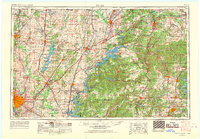 1958 Tulsa1968 Print · USGSNortheast Oklahoma and the Ozark borderlands are captured here during a massive era of reservoir construction and highway expansion. Researchers can trace the mid-century footprints of Tulsa, the sprawling Lake O' the Cherokees, and historical sites like Pea Ridge National Military Park.3 unique versions available
 - 1959 Map of Joplin
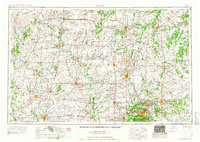 1959 Joplin1959 Print · USGSThe Tri-State region’s mining and rail-driven economy is on full display in the late fifties. Genealogists can locate Lead and Zinc Mines near Joplin, family markers at Oak Hill Cem, and military history at Camp Clark.
 - 1962 Map of Joplin West, 1964 Print
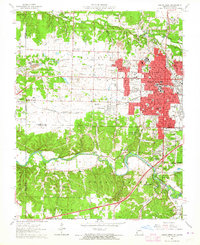 1962 Joplin West1964 Print · USGSJoplin and the Missouri-Kansas borderlands are shown here in the early sixties, still bearing the visible scars and structures of the region's mining boom. Genealogists and historians can trace local families through many sites including Fairview Cemetery, Peace Church, and the neighborhood of Chitwood.2 unique versions available
 - 1963 Map of Tulsa
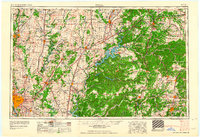 1963 Tulsa1963 Print · USGSThe Oklahoma and Arkansas borderlands are shown here in the early sixties, a time of massive reservoir construction and heavy mining. Genealogists can trace family roots through settlements like Nowata, Pryor, and Jay, or locate historical zinc and lead mines and coal mines.
 - 1963 Map of Joplin East, 1964 Print
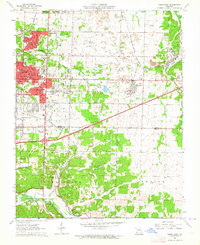 1963 Joplin East1964 Print · USGSJasper County in the early sixties shows the industrial transition of a major mining district. Trace the legacy of the lead belt through Tailings piles near Duenweg or find family landmarks like Underwood Sch and Harmony Grove Cem.3 unique versions available
 - 1963 Map of Fidelity, 1964 Print
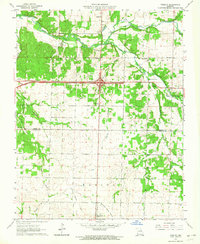 1963 Fidelity1964 Print · USGSJasper and Newton counties are captured here in the early sixties, showing the rural communities between Fidelity and Diamond. Local historians can trace family roots through several legacy sites, including Stone Cem, Fullerton Cem, and the Liberty Ch.2 unique versions available
 - 1971 Map of Sarcoxie, 1973 Print
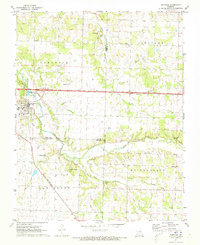 1971 Sarcoxie1973 Print · USGSSarcoxie and the surrounding townships in the early seventies sit at the intersection of three Missouri counties. Researchers can trace the St Louis - San Francisco rail line and locate rural landmarks like Cave Spring Cem, Clarkson Spring, and Bethany Ch.
 - 1971 Map of Reeds, 1973 Print
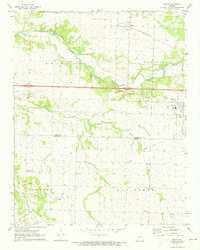 1971 Reeds1973 Print · USGSThe southwestern Missouri countryside comes into focus during the early 1970s, showing the rural networks of Jasper and Newton Counties. Genealogists and historians can trace family roots through landmarks like Dudman Springs Ch, Pepsin, and Gem Cem.
 - 1972 Map of Granby, 1973 Print
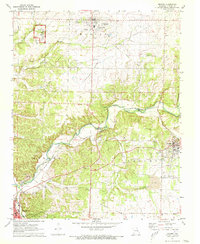 1972 Granby1973 Print · USGSNewton County in the early seventies shows a landscape defined by prairie agriculture, the legacy of lead mining, and the St Louis-San Francisco rail line. Genealogists can trace local roots at Granby Memorial Cem, Hazelwood Cem, and the childhood home of a famed scientist at George Washington Carver National Monument.
Showing maps 1-25 of 39
Top cities of Newton County
- Neosho historical maps
- Seneca historical maps
- Granby historical maps
- Leawood historical maps
- Diamond historical maps
- Silver Creek historical maps
See more
Frequently asked questions
- What are the different types of historical maps available for Newton County?
- What is the oldest map of Newton County?
- Where can I purchase historical maps of Newton County for my home or office?
- Where can I download high-res historical maps of Newton County?
- Are there historical topographic maps available for Newton County?
- Is there historical aerial imagery available for Newton County?
- Where are historical maps of Newton County sourced from?