1900s (20th Century) Maps of Mannix, Montana
Explore 7 historic maps of Mannix from the 1900s (20th Century). These maps offer a rare glimpse into what life looked like during the 1900s — showing old roads, neighborhoods, homes, and landmarks that have changed or disappeared over time.
Whether you're researching your family's past, planning a metal detecting trip, or studying how Mannix's landscape evolved across the 1900s, these high-resolution maps are a powerful tool for exploring the history of this region.
- Focus on a specific era: All maps on this page are from the 1900s, giving you a focused view of this time period.
- See what’s changed: Compare century-old streets, trails, and buildings to today's modern landscape using overlays and satellite layers.
- Research with precision: Use these maps for genealogy, historical research, land use analysis, or educational projects.
- View, download, or print: Maps are fully viewable online in high resolution, and can be downloaded or printed for your own records.
Start exploring Mannix's history through authentic maps from the 1900s. This is your window into the past.
Mannix, MT maps
(7)- 1903 Map of Helena
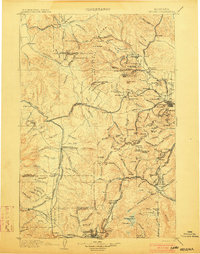 1903 Helena1903 Print · USGSMontana's mining heartland comes alive at the dawn of the new century, from the state capital to the copper-rich summits above the Silver Bow. Trace the early rail lines serving Marysville, locate the historic barracks of Ft. Harrison, and follow the mountain trails through Mullan Pass.4 unique versions available
 - 1947 Map of Butte, 1949 Print
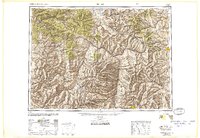 1947 Butte1949 Print · USGSWestern Montana at the peak of its rail-and-river era shows the vital connections between the mining and industrial centers of Butte and Helena. Researchers can trace the three major railroad lines serving mountain settlements like Garrison, Philipsburg, and Warm Springs.2 unique versions available
 - 1958 Map of Butte
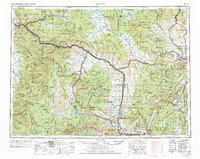 1958 Butte1958 Print · USGSWestern Montana's mining and rail corridors are captured in the late fifties, from the urban bustle of the Copper King cities to high mountain passes. Researchers can trace the path of the Milwaukee St Paul and Pacific through Deer Lodge and locate remote outposts like Potomac Post Office.5 unique versions available
 - 1960 Map of Butte
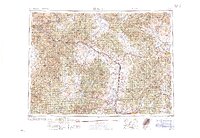 1960 Butte1960 Print · USGSWestern Montana at the dawn of the sixties is defined by its industrial mining hubs and the railroads that connect them. Genealogists and historians can trace the routes of the Milwaukee Road through Butte or locate smaller settlements like Southern Cross and Bearmouth.
 - 1962 Map of Butte
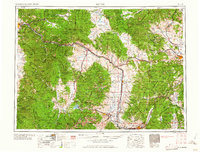 1962 Butte1962 Print · USGSWestern Montana in the early sixties remains a landscape of industrial muscle and high-mountain passes. Trace the rail lines of the Northern Pacific through Deer Lodge and the mining history around Anaconda and Philipsburg.
 - 1968 Map of Nevada Lake, 1971 Print
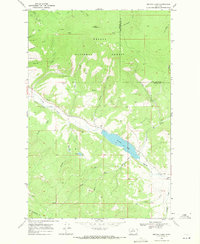 1968 Nevada Lake1971 Print · USGSThe mountains of Powell County meet the waters of Nevada Lake in the late sixties, a landscape defined by timber, water management, and mining. Trace old extraction sites at Ogden Mountain or follow the waters of Douglas Creek and Braziel Lake.2 unique versions available
 - 1975 Map of Elliston, 1993 Print
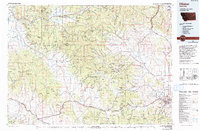 1975 Elliston1993 Print · USGSWestern Montana's rugged high-country comes into focus during the mid-seventies, showing the intersection of heavy industry and wilderness. Genealogists and historians can trace rail lines like the Milwaukee Road and locate remote sites such as the Swansea Mine or Wall City.
End of results
Showing maps 1-7 of 7
Frequently asked questions
- What are the different types of historical maps available for Mannix?
- What is the oldest map of Mannix?
- Where can I purchase historical maps of Mannix for my home or office?
- Where can I download high-res historical maps of Mannix?
- Are there historical topographic maps available for Mannix?
- Is there historical aerial imagery available for Mannix?
- Where are historical maps of Mannix sourced from?