1900s (20th Century) Maps of Clay County, Nebraska
Explore 31 historic maps of Clay County from the 1900s (20th Century). These maps offer a rare glimpse into what life looked like during the 1900s — showing old roads, neighborhoods, homes, and landmarks that have changed or disappeared over time.
Whether you're researching your family's past, planning a metal detecting trip, or studying how Clay County's landscape evolved across the 1900s, these high-resolution maps are a powerful tool for exploring the history of this region.
- Focus on a specific era: All maps on this page are from the 1900s, giving you a focused view of this time period.
- See what’s changed: Compare century-old streets, trails, and buildings to today's modern landscape using overlays and satellite layers.
- Research with precision: Use these maps for genealogy, historical research, land use analysis, or educational projects.
- View, download, or print: Maps are fully viewable online in high resolution, and can be downloaded or printed for your own records.
Start exploring Clay County's history through authentic maps from the 1900s. This is your window into the past.
Clay County, NE maps
(31)- 1955 Map of Lincoln, 1967 Print
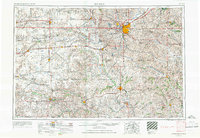 1955 Lincoln1967 Print · USGSSoutheast Nebraska in the mid-fifties presents a landscape of thriving railroad towns and the expanding footprint of the capital city. Researchers can trace the legacy of the pioneer era at the Homestead National Monument of America or locate mid-century military infrastructure like Lincoln Air Force Base.5 unique versions available
 - 1955 Map of Grand Island, 1967 Print
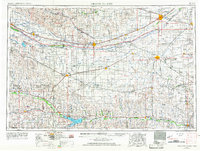 1955 Grand Island1967 Print · USGSCentral Nebraska is seen here during a period of industrial and agricultural growth, centered on the vital Platte River corridor. Researchers can trace the mid-century footprints of the U S Naval Ammunition Depot and the Cornhusker Ordnance Plant.3 unique versions available
 - 1957 Map of Lincoln
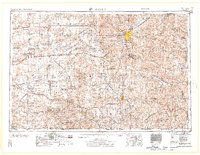 1957 Lincoln1957 Print · USGSSoutheastern Nebraska at mid-century shows a landscape of thriving rail towns and expanding infrastructure centered on Lincoln. Researchers can trace the path of the Chicago Burlington and Quincy railroad through communities like Weeping Water, Fairmont, and Seward.
 - 1957 Map of Grand Island
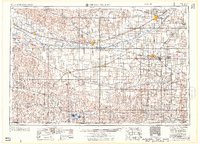 1957 Grand Island1957 Print · USGSCentral Nebraska and Northern Kansas are shown here during a period of massive hydraulic and military expansion in the mid-fifties. Researchers can trace the development of the Harlan County Reservoir and the massive wartime legacy of the Cornhusker Ordnance Plant.
 - 1958 Map of Grand Island
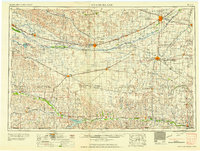 1958 Grand Island1958 Print · USGSSouth-central Nebraska thrived as a rail and industrial hub during the late fifties, shaped by the braided Platte River. Genealogists and historians can trace rail lines like the Union Pacific RR through towns such as Kearney or locate the sprawling Cornhusker Ordnance Plant.
 - 1958 Map of Lincoln
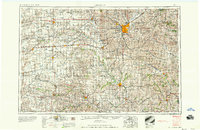 1958 Lincoln1958 Print · USGSSoutheast Nebraska at the end of the 1950s shows a region defined by agricultural trade and the expansion of the state capital. Genealogists can trace family footprints across the Blue Valley and locate landmarks like the Lincoln AFB or the U.S. Veterans Hospital.
 - 1960 Map of Edgar, 1961 Print
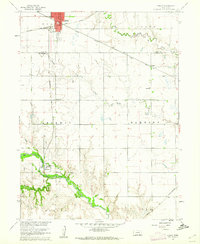 1960 Edgar1961 Print · USGSClay and Nuckolls Counties come to life at the turn of the 1960s as a hub of Nebraska rail commerce. Genealogists and historians can trace the foundations of local life through rural landmarks like Pioneer Sch, the town of Edgar, and the winding Little Blue River.
 - 1960 Map of Davenport, 1961 Print
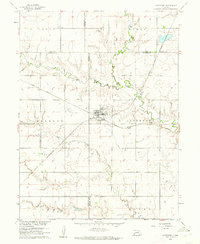 1960 Davenport1961 Print · USGSDavenport was a bustling rail crossroads in the early sixties where two major lines intersected amidst the creek valleys of southern Nebraska. Researchers can trace the town's original footprint, find the local Cem, and follow the Union Pacific and Chicago and North Western tracks.
 - 1960 Map of Fairfield SE, 1961 Print
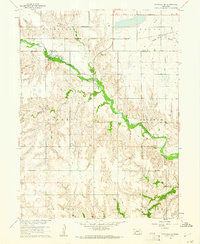 1960 Fairfield SE1961 Print · USGSThe rural landscapes of Clay and Nuckolls Counties come into focus here during the early sixties. Genealogists and local historians can trace the foundations of these prairie communities through sites like Pleasant Hill Cem, Oxbow Sch, and the Chicago Burlington and Quincy rail line.
 - 1960 Map of Deweese, 1962 Print
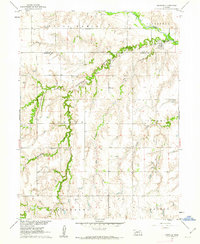 1960 Deweese1962 Print · USGSAgricultural life along the Little Blue River is captured in the early 1960s as Deweese thrived on the Chicago Burlington and Quincy line. Genealogists can locate family landmarks like Sacred Heart Cem and Roth Sch.
 - 1969 Map of Bixby
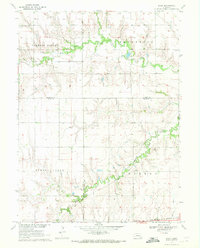 1969 Bixby1969 Print · USGSThe rural landscapes of Fillmore and York Counties are captured in the late sixties as the river-and-rail economy defined the region. Researchers can trace local heritage at Farmers Valley, locate the Salem Ch, or follow the Burlington Northern line.
 - 1969 Map of Ong, 1971 Print
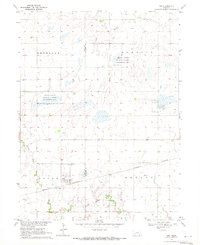 1969 Ong1971 Print · USGSClay and Fillmore counties at the end of the sixties reveal a landscape defined by rail-line villages and prairie wetlands. Genealogists and local historians can trace family locations near Ong, Stockholm Church, and the Swedish Cemetery.
 - 1969 Map of Hastings East, 1971 Print
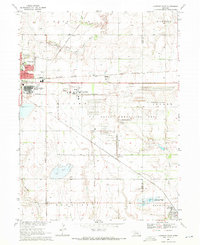 1969 Hastings East1971 Print · USGSThe prairie east of Hastings in the late sixties is dominated by a sprawling defense landscape and rail corridors. Trace the infrastructure of the U S Naval Ammunition Depot (Abandoned) or locate family sites like St Pauls Ch and Inland Cem.
 - 1969 Map of Fairfield NW, 1971 Print
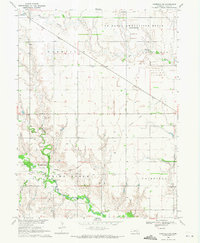 1969 Fairfield NW1971 Print · USGSClay County at the end of the sixties was a landscape of quiet prairie settlements and military remnants. Genealogists and historians can trace the Little Blue River past Spring Ranch Cem and explore the site of the U S Naval Ammunition Depot (Abandoned).
 - 1969 Map of Lawrence, 1971 Print
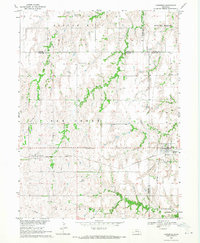 1969 Lawrence1971 Print · USGSLawrence and its neighboring rural communities are captured here in the late sixties at the junction of the Nebraska grain railways. Genealogists and local historians can trace family locations near St Stephens, Rosemont, and Oak Creek Cem.
 - 1969 Map of Trumbull, 1971 Print
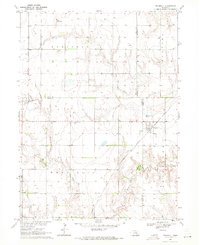 1969 Trumbull1971 Print · USGSNear the intersection of four Nebraska counties in the late sixties, this survey shows a thriving agricultural hub shaped by rail and river. Researchers can pinpoint School No 33, the Greenwood Cem, and the village of Trumbull along the Burlington Northern.
 - 1969 Map of Fairfield, 1971 Print
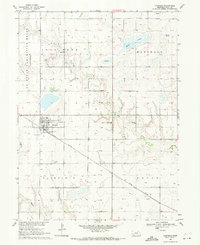 1969 Fairfield1971 Print · USGSClay County at the end of the sixties reveals a landscape of industrial transitions and deep-rooted prairie settlements. Researchers can trace the massive U S Naval Ammunition Depot, the Union Pacific rail line, and family sites like Eller Cem.
 - 1969 Map of Saronville, 1971 Print
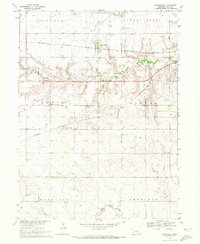 1969 Saronville1971 Print · USGSClay County at the end of the sixties reveals a landscape of structured section lines and rail-side villages. Genealogists can trace family names through the Saronville Cem, Verona Baptist Cem, and the rural Emmanuel Ch.
 - 1969 Map of Harvard NE, 1971 Print
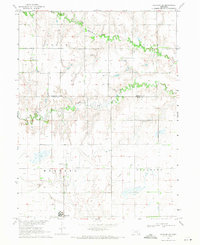 1969 Harvard NE1971 Print · USGSThe agricultural plains of Clay County are captured here in the late sixties, centered on the growing town of Harvard. Researchers can trace old family cemetery locations like Norwegian Cem or follow the path of a decommissioned Old Railroad Grade.2 unique versions available
 - 1969 Map of Stockham, 1971 Print
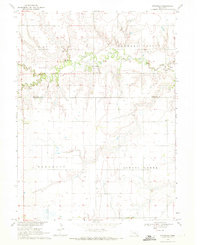 1969 Stockham1971 Print · USGSThe agricultural plains of Hamilton and Clay County are documented here in the late sixties, centered on the community of Stockham. Genealogists and local historians can trace the Old Railroad Grade and locate family landmarks like the Stockham Cem and Eldorado.
 - 1969 Map of Harvard, 1971 Print
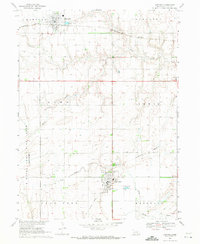 1969 Harvard1971 Print · USGSClay County at the end of the 1960s reveals a prairie landscape defined by the Burlington Northern rails and the legacy of the U S Naval Ammunition Depot (Abandoned). Trace family plots at Clay Center Cem or explore the grounds of the County Fairground.
 - 1969 Map of Harvard NW, 1971 Print
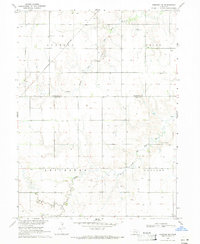 1969 Harvard NW1971 Print · USGSCentral Nebraska's agricultural heartland is documented here in the late sixties at the boundary of Hamilton and Clay counties. Genealogists and local historians can locate early burial sites like Case Cem and First Evangelical Cem or trace the path of the Burlington Northern railroad.
 - 1969 Map of Sutton, 1971 Print
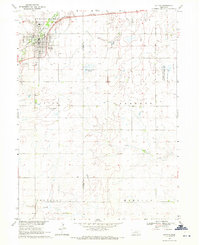 1969 Sutton1971 Print · USGSThe town of Sutton was a rail-centered community in the late 1960s, defined by its prairie lagoons and aviation strips. Genealogists can locate family names at Sutton Cem or trace rural aviation history at the Plettner Landing Strip.
 - 1969 Map of Inland, 1971 Print
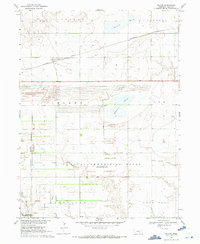 1969 Inland1971 Print · USGSClay County at the end of the 1960s shows a landscape shaped by both agriculture and the massive U S Naval Ammunition Depot (Abandoned). Genealogists can locate several key burial sites including Inland Cem and Zion Cem, or trace the rail routes of the Burlington Northern.
 - 1969 Map of Edgar NW, 1972 Print
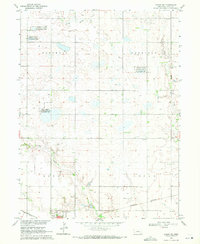 1969 Edgar NW1972 Print · USGSClay County agricultural lands and wildlife refuges are captured in the late sixties, highlighting the intersection of rail and prairie. Trace family roots at Evergreen Cem or follow the tracks of the Union Pacific and Burlington Northern near Edgar.
Showing maps 1-25 of 31
Top cities of Clay County
- Sutton historical maps
- Harvard historical maps
- Clay Center historical maps
- Edgar historical maps
- Fairfield historical maps
- Glenvil historical maps
See more
Frequently asked questions
- What are the different types of historical maps available for Clay County?
- What is the oldest map of Clay County?
- Where can I purchase historical maps of Clay County for my home or office?
- Where can I download high-res historical maps of Clay County?
- Are there historical topographic maps available for Clay County?
- Is there historical aerial imagery available for Clay County?
- Where are historical maps of Clay County sourced from?