Old Maps of Sullivan, New Hampshire for Metal Detecting
Plan your next treasure hunt with 42 historic maps of Sullivan. Find old homesites, ghost towns, trails, and gathering spots that may be lost to time — perfect for identifying promising metal detecting locations.
- Locate forgotten sites: Uncover places like long-lost settlements, abandoned rail lines, or gathering spots.
- Plan better hunts: Use map overlays combined with LiDAR or satellite views to narrow in on historically rich areas.
- Made for detectorists: Thousands of hobbyists use these maps to discover relics, coins, and hidden history.
Use these historic maps to boost your research and find new opportunities beneath the surface of Sullivan.
Sullivan, NH maps
(42)- 1898 Map of Monadnock
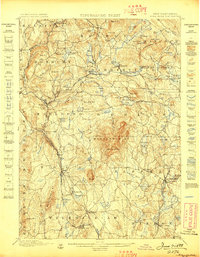 1898 Monadnock1898 Print · USGSThe peaks and valleys of Southwest New Hampshire are shown here during the late nineteenth-century railroad era. Genealogists and historians can trace the rail-dependent growth of towns like East Jaffrey and locate sites such as Mountain House or the Marlboro Depot.8 unique versions available
 - 1927 Map of Bellows Falls
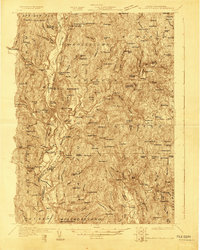 1927 Bellows Falls1927 Print · USGSThe borderlands of the Connecticut River valley are captured in the late 1920s, showing the vital rail links between Vermont and New Hampshire. Genealogists and local historians can trace rural schoolhouse districts like Mica Mine Sch, the grounds of the Kern-Hattin Home, and the layout of Westmoreland Depot.4 unique versions available
 - 1930 Map of Lovewell Mountain
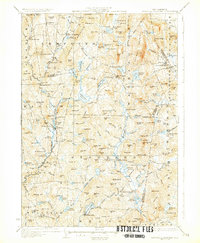 1930 Lovewell Mountain1930 Print · USGSThe Cheshire and Sullivan County borderlands come alive in this late 1920s survey of the New Hampshire highlands. Researchers can locate long-standing crossroads like East Lempster, find vanished rural education at Fifield Sch, or trace the old Loverens Mill site.4 unique versions available
 - 1930 Map of Bellows Falls
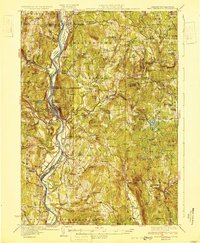 1930 Bellows Falls1930 Print · USGSThe Connecticut River valley thrives between Vermont and New Hampshire in the late twenties, anchored by the rail hub at Bellows Falls. Researchers can trace old district schools like Derry Hill Sch and find family-named landmarks such as Dodge Tavern.7 unique versions available
 - 1936 Map of Monadnock
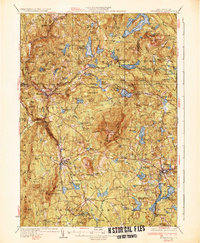 1936 Monadnock1936 Print · USGSCheshire County in the mid-thirties is a landscape of high summits and quiet mill towns connected by the rail and river. Genealogists and hikers can trace old homesteads near Bowkerville or follow the route to the Fire Lookout atop Monadnock Mtn.4 unique versions available
 - 1942 Map of Keene
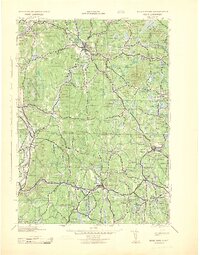 1942 Keene1942 Print · USGSCheshire County at the start of the war shows a landscape of busy river valleys and upland farms. You can trace the path of the Boston & Maine RR through towns like Westmoreland and find old district landmarks like Sch No 10 or the Rand Cem.
 - 1942 Map of Lovewell Mountain
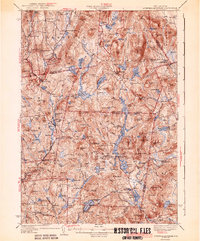 1942 Lovewell Mountain1942 Print · USGSSullivan and Cheshire Counties are shown in detail during the early 1940s, capturing the high-country pond and mill culture of the New Hampshire hills. Researchers can trace family roots through upland landmarks like Advent Ch, School No 5, and the old Meetinghouse.4 unique versions available
 - 1948 Map of Albany, 1951 Print
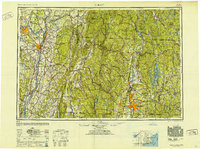 1948 Albany1951 Print · USGSThe Hudson and Connecticut River valleys are captured here in the late 1940s, showing the vital rail and water corridors of the Northeast. You can trace the Boston and Maine tracks past Mt Greylock or locate early settlements like Great Barrington and Bennington.
 - 1949 Map of Monadnock
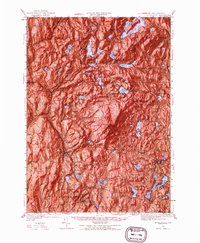 1949 Monadnock1949 Print · USGSCheshire County at the end of the 1940s is defined by the high peak of Monadnock Mtn and its many hiking paths. Genealogists and hikers can trace old rail lines like the Boston and Maine and find local landmarks such as Roxbury Sch and Hallway House.10 unique versions available
 - 1950 Map of Glens Falls
 1950 Glens Falls1950 Print · USGSThe Adirondacks and the Green Mountains meet in this mid-century survey of the New York and Vermont borderlands. Researchers can trace the industrial rail corridors of the Rutland RR and Delaware & Hudson RR connecting Glens Falls, Rutland, and the shores of Lake George.
 - 1956 Map of Albany, 1968 Print
 1956 Albany1968 Print · USGSThe industrial heart of the Northeast is revealed in the mid-1950s, from the Hudson Valley to the Connecticut River. Researchers can trace the legacy of the Quabbin Reservoir, locate Westover Air Force Base, or follow the Rutland RR through the Green Mountains.2 unique versions available
 - 1956 Map of Glens Falls, 1968 Print
 1956 Glens Falls1968 Print · USGSUpper New York and the Vermont mountains are captured here in the mid-fifties, showing the rugged rail-and-river network of the Northeast. Researchers can trace the paths of the Delaware and Hudson RR and Rutland RR as they wind through valley towns like Poultney and Whitehall.3 unique versions available
 - 1957 Map of Albany
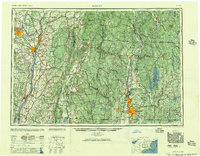 1957 Albany1957 Print · USGSThe Tri-State region and Connecticut River Valley are captured here during a period of significant postwar growth and infrastructure expansion. Genealogists and historians can trace the rail-and-river economy through landmarks like the Boston and Maine railroad, Quabbin Reservoir, and Westover Air Force Base.
 - 1957 Map of Lovewell Mountain, 1959 Print
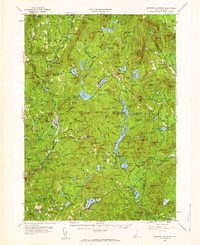 1957 Lovewell Mountain1959 Print · USGSThe hill country of southwestern New Hampshire is captured here in the mid-1950s, showing the intersection of Sullivan, Cheshire, and Hillsborough counties. Researchers can trace old routes like the Dartmouth College Highway and locate rural landmarks such as Advent Ch, Mill Village, and East Lempster.4 unique versions available
 - 1957 Map of Bellows Falls, 1960 Print
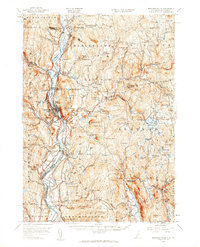 1957 Bellows Falls1960 Print · USGSThe Connecticut River valley and its border communities were defined by industry and rail at mid-century. Genealogists and historians can trace the paths of the Boston and Maine railroad, locate the Kurn Hattin Home, or find the historic Dodge Tavern.4 unique versions available
 - 1959 Map of Glens Falls
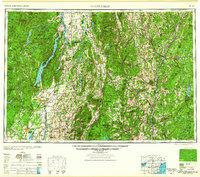 1959 Glens Falls1959 Print · USGSUpper New York and Vermont are captured here during the late 1950s, a period of transition for these mountain communities. Researchers can trace the legacy of the region's river-and-rail economy through landmarks like Lake George, Saratoga Springs, and Killington Peak.2 unique versions available
 - 1959 Map of Albany
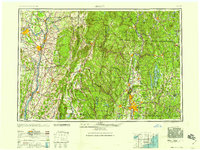 1959 Albany1959 Print · USGSThe Hudson and Connecticut River valleys are captured here during the late fifties, showing the region's dense rail networks and massive water projects. Researchers can trace the New York State Thruway or locate local landmarks like Mt Greylock and the Quabbin Reservoir.
 - 1962 Map of Albany
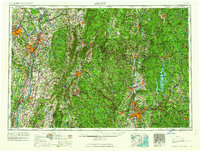 1962 Albany1962 Print · USGSThe Hudson and Connecticut River valleys meet the Green Mountains and Berkshires in this mid-century overview of the Northeast. Genealogists and historians can trace the industrial hearts of Albany and Springfield or locate features like Quabbin Reservoir and Westover Air Force Base.
 - 1964 Map of Glens Falls
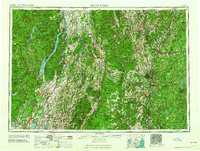 1964 Glens Falls1964 Print · USGSThe tri-state borderlands of New York, Vermont, and New Hampshire appear here in the mid-1960s. Researchers can trace the rail routes of the Rutland RR and find historic sites like Ticonderoga and Saratoga National Historical Park.
 - 1984 Map of Marlborough
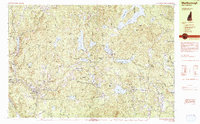 1984 Marlborough1984 Print · USGSCheshire County at the start of the eighties reveals a classic New England mix of mill villages and mountain ridges. Genealogists and local historians can trace legacy sites like Pine Grove Cemetery, St Francis Church, and the distinctive Dublin Spire.2 unique versions available
 - 1984 Map of Stoddard
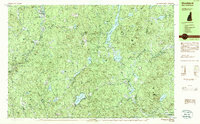 1984 Stoddard1984 Print · USGSCheshire County’s high country is captured here during the 1980s, showing a landscape defined by forest reserves and quiet lakeside hamlets. You can trace the historic Monadnock-Sunapee Trail past Stoddard Rocks or locate old family landmarks like the Joslin Cem.
 - 1985 Map of Walpole
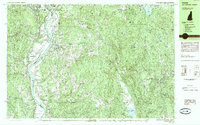 1985 Walpole1985 Print · USGSThe Connecticut River valley in the mid-1980s shows a landscape of upland villages and riverside rail connections along the Vermont and New Hampshire border. Genealogists and historians can trace family-named landmarks like Dodge Tavern, Kingsbury Hill, and St Peters Cem.2 unique versions available
 - 1985 Map of Claremont, 1986 Print
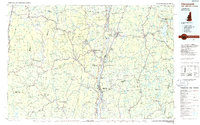 1985 Claremont1986 Print · USGSUpper Valley and Green Mountain life are captured here in the mid-eighties, centered on the river-linked hubs of Claremont and Springfield. Trace old family routes and rail lines like the Boston & Maine RR, or locate properties near Lake Sunapee and Mount Ascutney State Park.2 unique versions available
 - 1986 Map of Keene
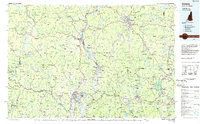 1986 Keene1986 Print · USGSThe tri-state borderlands of the Connecticut River Valley come alive in this mid-eighties survey of southern Vermont, New Hampshire, and Massachusetts. Genealogists and historians can trace rail-era villages like Ashuelot and Millers Falls alongside landmarks like Marlboro College and Monadnock Mountain.3 unique versions available
 - 1998 Map of Marlborough, 2002 Print
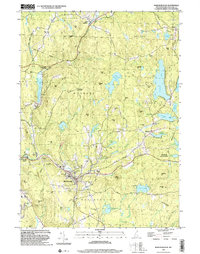 1998 Marlborough2002 Print · USGSCheshire County at the close of the millennium shows a landscape of small mill villages and dense forests. Genealogists can trace family sites at Meetinghouse Cem or Pine Grove Cem and locate landmarks from the County Fairground to Harrisville.
Showing maps 1-25 of 42
Top cities near Sullivan
- Keene historical maps
- Swanzey historical maps
- Rindge historical maps
- Peterborough historical maps
- Springfield historical maps
- Winchester historical maps
See more
Top neighborhoods of Sullivan
Frequently asked questions
- What are the different types of historical maps available for Sullivan?
- What is the oldest map of Sullivan?
- Where can I purchase historical maps of Sullivan for my home or office?
- Where can I download high-res historical maps of Sullivan?
- Are there historical topographic maps available for Sullivan?
- Is there historical aerial imagery available for Sullivan?
- Where are historical maps of Sullivan sourced from?