Old Maps of Wantage, New Jersey for Hiking & Exploration
Hike through history with 47 historic maps of Wantage. Explore old trails, ghost towns, and forgotten backroads — perfect for outdoor adventurers and local explorers.
- Rediscover forgotten places: Map out old mining camps, roads, and footpaths that no longer exist on modern maps.
- Layer with modern tools: Combine with LiDAR or satellite views to plan hikes through historical terrain.
- Made for exploration: Popular among hikers, overlanders, and local history lovers.
Use these maps to find adventure and explore the hidden past of Wantage.
Wantage, NJ maps
(47)- 1888 Map of Franklin
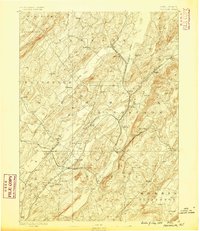 1888 Franklin1888 Print · USGSSussex County was a thriving hub of iron mining and rail commerce in the late nineteenth century. Genealogists and historians can trace the early industrial layout of Franklin Furnace, the remote Ogden Mine, and rural junctions like Branchville Junction.
 - 1894 Map of Franklin
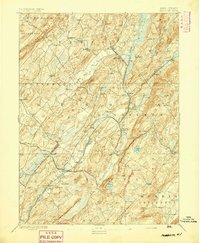 1894 Franklin1894 Print · USGSSussex County was a thriving industrial hub in the late nineteenth century, driven by the iron and zinc deposits of the Highlands. Genealogists and historians can trace the rail-to-mine connections between Franklin Furnace, Ogden Mine, and Deckertown.
 - 1897 Map of Franklin
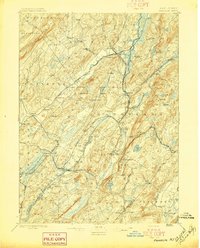 1897 Franklin1897 Print · USGSSussex County’s industrial and agricultural heartlands are captured in the late 1890s, centered on the vital mining district and its complex rail network. Genealogists and historians can trace the footprint of early iron and zinc works at Franklin Furnace or locate family homesteads near Branchville and Papakating.
 - 1903 Map of Franklin Furnace
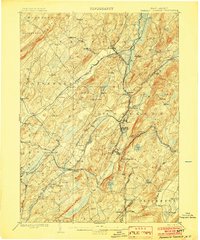 1903 Franklin Furnace1903 Print · USGSSussex County at the turn of the century is a landscape shaped by iron mining and a bustling rail network. Genealogists and historians can trace the early industrial roots of Franklin Furnace, locate rural landmarks like North Church, and follow the path of the Lehigh and Hudson River Railroad.4 unique versions available
 - 1906 Map of Port Jervis, 1956 Print
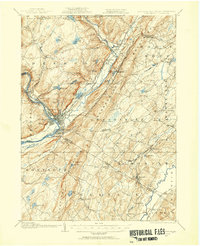 1906 Port Jervis1956 Print · USGSPort Jervis sits at the confluence of the Delaware and Neversink rivers during the height of the railroad era. Genealogists and local historians can trace the paths of the Erie RR, find vanished hamlets like Logtown, and locate the Old Bolton Basin along the river.
 - 1908 Map of Port Jervis
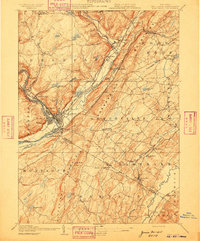 1908 Port Jervis1908 Print · USGSThe tri-state border region comes alive at the start of the twentieth century, focused on the rail-and-river hub of Port Jervis. Genealogists and historians can trace family locations across Matamoras, Unionville, and Westtown, or locate landmarks like Tristate Rock and Old Bolton Basin.4 unique versions available
 - 1943 Map of Unionville
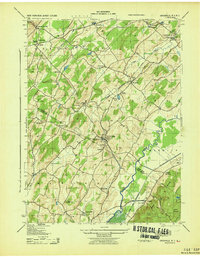 1943 Unionville1943 Print · USGSThe Orange County and Sussex County borderlands come alive in the early 1940s, showing a landscape shaped by rail lines and river valleys. Researchers can trace the industrial footprints of the American Silk Label Co or locate family roots near Minisink Cemetery and Westtown School.
 - 1943 Map of Branchville
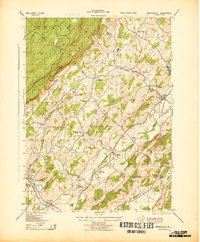 1943 Branchville1943 Print · USGSSussex County agriculture and rail networks are caught at a peak during the early 1940s. Genealogists can locate family landmarks like Maple Grove Farm and rural schoolhouses such as the Augusta School and Wykertown School.
 - 1943 Map of Port Jervis South
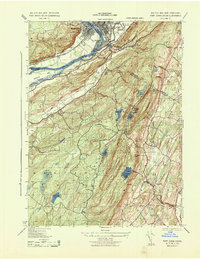 1943 Port Jervis South1943 Print · USGSThe tri-state borderlands during the Second World War reveal a landscape of river-valley industry and upland retreats. Researchers can trace the ERIE railroad through Port Jervis or locate historical sites like the Life Magazine Camp and Tristate Bible Camp.3 unique versions available
 - 1943 Map of Hamburg, 1944 Print
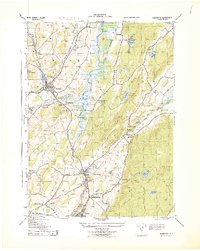 1943 Hamburg1944 Print · USGSSussex County's industrial and rail landscape comes alive in this mid-century survey of the Wallkill River valley. Researchers can trace the legacy of the Alderney Milk & Cream Co, various Stone Quarries, and long-standing cemeteries like Fairview Cemetery.
 - 1949 Map of Port Jervis South
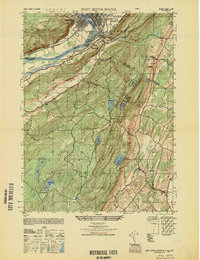 1949 Port Jervis South1949 Print · USGSThe Tri-State area at the close of the 1940s reveals a landscape of river-valley commerce and upland recreation. Genealogists and local historians can trace family-named landmarks and rural hubs like River School No 1, Duttonville, and the Life Magazine Camp.
 - 1950 Map of Scranton, 1952 Print
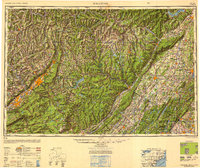 1950 Scranton1952 Print · USGSMid-century Northeast Pennsylvania and the Hudson Valley come alive in this survey of the tri-state region. Genealogists and historians can trace the dense rail networks of the Erie RR and DL&W RR between industrial hubs like Scranton and Wilkes-Barre.
 - 1953 Map of Unionville
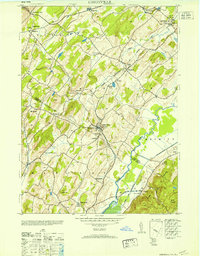 1953 Unionville1953 Print · USGSThe borderlands of New York and New Jersey are captured in the mid-fifties, centered on the village of Unionville and its surrounding rural hamlets. Local historians can trace industrial roots at the Sussex Distillery or locate historic schoolhouses like Westtown School and Johnson School.
 - 1953 Map of Scranton
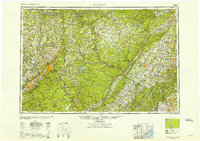 1953 Scranton1953 Print · USGSNortheastern Pennsylvania and the Catskills are shown in great detail during the early fifties, a time when rail lines and river valleys dictated the region's growth. Genealogists and historians can trace the industrial hearts of Scranton and Wilkes-Barre or locate remote landmarks like High Point and Lake Wallenpaupack.
 - 1953 Map of Port Jervis South
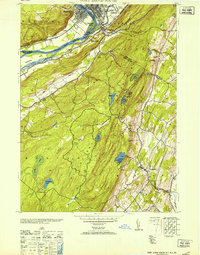 1953 Port Jervis South1953 Print · USGSThe Tri-State region comes alive in this mid-century survey of the Delaware River valley where three states meet. Genealogists and local historians can trace family-named sites and vanished institutions from Rock View House and River School No 1 to the Tristates Bible Camp.
 - 1954 Map of Branchville, 1955 Print
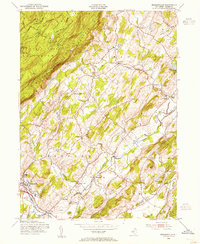 1954 Branchville1955 Print · USGSSussex County's rural character is preserved in this mid-century survey of the ridges and valleys between Branchville and Libertyville. Genealogists and local historians can trace family locations near Frankford Plains Ch, Augusta, and the Sussex Airport.6 unique versions available
 - 1954 Map of Hamburg, 1956 Print
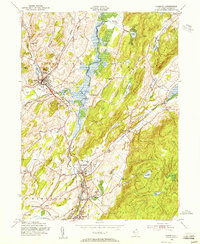 1954 Hamburg1956 Print · USGSMid-century Sussex County is defined here by its dense railroad junctions and mountain valleys during a period of steady industrial transition. Genealogists and rail historians can trace the paths of the Lehigh and Hudson River or locate local landmarks like Immaculate Conception Ch and Clove Cem.4 unique versions available
 - 1959 Map of Scranton
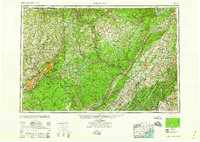 1959 Scranton1959 Print · USGSThe northern coalfields and the Hudson Valley meet in this mid-century survey of the Pennsylvania and New York borderlands. Genealogists and historians can trace the intricate rail networks of the Erie Railroad and the vast waters of Lake Wallenpaupack.2 unique versions available
 - 1962 Map of Scranton, 1977 Print
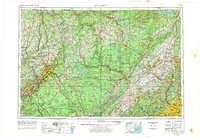 1962 Scranton1977 Print · USGSThe industrial heart of eastern Pennsylvania and the New York Catskills are captured here in the early sixties. Genealogists and historians can trace the dense valley settlements from Scranton to Wilkes-Barre and the rail lines of the Erie Lackawanna Railroad.2 unique versions available
 - 1963 Map of Unionville
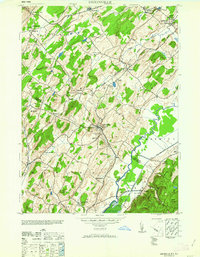 1963 Unionville1963 Print · USGSThe New York and New Jersey borderlands appear in detail during the early 1940s, showing a landscape shaped by rail lines and local industry. Researchers can trace family roots through sites like Westtown Cemetery or explore the era's commerce at the American Silk Label Co and Sussex Distillery.
 - 1965 Map of Scranton
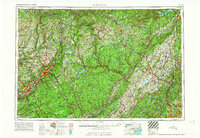 1965 Scranton1965 Print · USGSThe tri-state highlands of Pennsylvania, New York, and New Jersey come alive in the mid-sixties as industry and recreation converge. Trace the intricate rail lines of the Erie Lackawanna RR or locate landmarks like the U S Military Academy.2 unique versions available
 - 1967 Map of Unionville
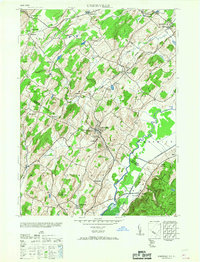 1967 Unionville1967 Print · USGSThe New York and New Jersey borderlands come to life in this mid-century survey of the valley south of Middletown. Genealogists and historians can trace the local economy through industrial sites like the Sussex Distillery and schools such as the Westtown School.
 - 1969 Map of Port Jervis South, 1972 Print
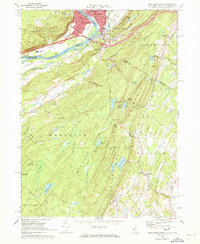 1969 Port Jervis South1972 Print · USGSThe tri-state border region comes alive in the late sixties, highlighting the urban density of Port Jervis against the crest of the Kittatinny Mountain. Genealogists can find St Marys Cem and Seeley Cem, while hikers can trace the Appalachian Trail through High Point State Park.3 unique versions available
 - 1969 Map of Unionville, 1972 Print
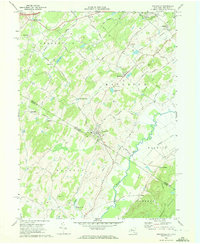 1969 Unionville1972 Print · USGSThe interstate borderlands of Orange and Sussex counties come to life in this survey taken at the end of the 1960s. Genealogists and local historians can trace family roots through Unionville and Westtown, locating sites like the Minisink Cem and Waterloo Mills.3 unique versions available
 - 1986 Map of Middletown
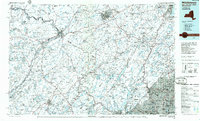 1986 Middletown1986 Print · USGSThe Tri-State region comes alive in the mid-1980s, documenting the corridor from the Hudson River to the Delaware Water Gap. Researchers can trace the sprawling grounds of West Point, the extensive Conrail rail network, and early suburban growth around Middletown and Suffern.2 unique versions available
Showing maps 1-25 of 47
Top cities near Wantage
- Warwick historical maps
- Wallkill historical maps
- Middletown historical maps
- West Milford historical maps
- Vernon Township historical maps
- Rockaway Township historical maps
See more
Top neighborhoods of Wantage
- Papakating historical maps
- Libertyville historical maps
- Plumbsock historical maps
- Mount Salem historical maps
- Quarryville historical maps
- Rockport historical maps
See more
Frequently asked questions
- What are the different types of historical maps available for Wantage?
- What is the oldest map of Wantage?
- Where can I purchase historical maps of Wantage for my home or office?
- Where can I download high-res historical maps of Wantage?
- Are there historical topographic maps available for Wantage?
- Is there historical aerial imagery available for Wantage?
- Where are historical maps of Wantage sourced from?