Old Maps of Rain Place, New Mexico for Genealogy
Trace your family roots with 8 historic maps of Rain Place. These high-res maps reveal old neighborhoods, homesites, landmarks, and streets — helping you uncover where your ancestors lived and how the area evolved over time.
- Explore historic neighborhoods: Identify where your relatives may have lived in the 1800s or 1900s.
- Compare maps over time: Trace the changes in streets, buildings, and landmarks for multi-generational research.
- Perfect for genealogy & ancestry research: Used by family historians and researchers to map out lineage and migration.
These maps are an incredible resource for exploring your personal connection to Rain Place's past.
Rain Place, NM maps
(8)- 1954 Map of Tucumcari, 1965 Print
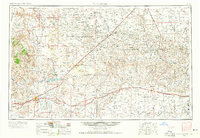 1954 Tucumcari1965 Print · USGSThe high plains along the New Mexico and Texas border come alive in this mid-century survey, just as the regional highway network was maturing. Trace the historic route of U.S. 66 through Glenrio and San Jon or locate remote rail sidings like Rehm Station and Obar.2 unique versions available
 - 1958 Map of Tucumcari
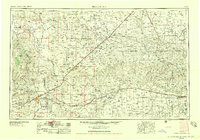 1958 Tucumcari1958 Print · USGSEastern New Mexico and the Texas Panhandle meet in this mid-century survey of the high plains ranching and rail corridor. Researchers can trace the path of Mother Road travelers through Tucumcari and Glenrio or locate remote rail stops like Nara Visa Station and Hartley Station.
 - 1968 Map of Martin Draw, 1972 Print
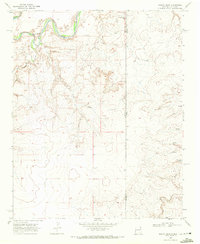 1968 Martin Draw1972 Print · USGSRanching life on the High Plains comes into focus in this late 1960s survey along the New Mexico and Texas border. Genealogists and historians can trace family-named water sources like Sissy Windmill and Buffalo Windmill near the Howdy Ranch.
 - 2010 Map of Martin Draw, 2010 Print
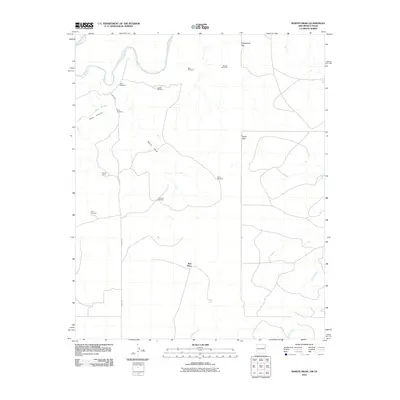 2010 Martin Draw2010 Print · USGSQuay County ranching territory is mapped here in the early twenty-first century, showcasing a landscape of high plains and deep canyons. Researchers can trace historic water sources and property boundaries through landmarks like Howdy Ranch, Stagecoach Gap, and Smithers Windmill.
 - 2013 Map of Martin Draw, 2013 Print
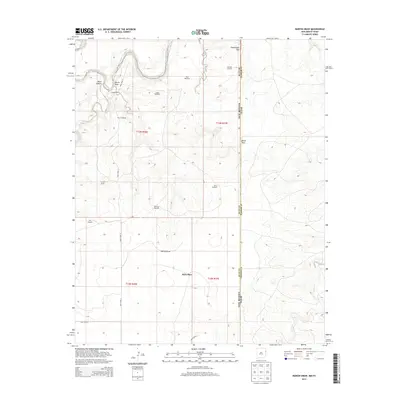 2013 Martin Draw2013 Print · USGSQuay County ranching and the breaks of the Canadian River are documented in this early 21st-century survey. Trace local land use through named ranching sites like Rain Place, historical passages at Stagecoach Gap, and numerous working landmarks such as Sissy Windmill.
 - 2017 Map of Martin Draw, 2017 Print
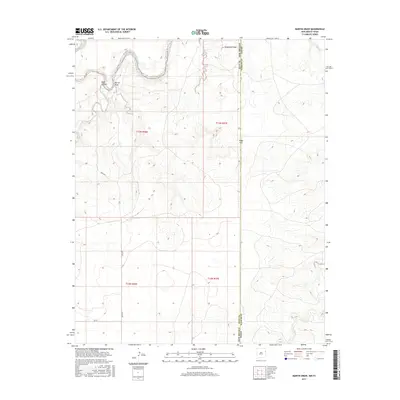 2017 Martin Draw2017 Print · USGSNear the New Mexico-Texas border during the mid-2010s, this landscape reveals the dramatic breaks of the Llano Estacado. Researchers can trace historic passage points through the rimrock at Stagecoach Gap and Texas Gap or follow the Canadian River and Trujillo Cr.
 - 2020 Map of Martin Draw, 2020 Print
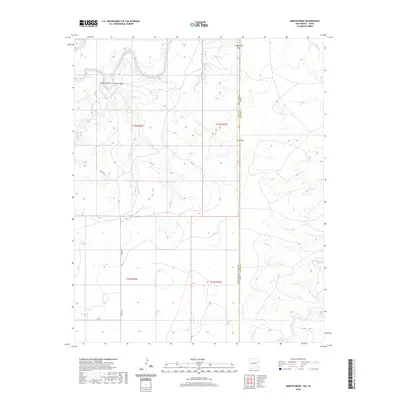 2020 Martin Draw2020 Print · USGSThe New Mexico and Texas state line meets along the Canadian River in this 2020 landscape survey. Researchers can trace historic transit routes through Stagecoach Gap and Texas Gap or follow the paths of Martin Draw and Trujillo Creek.
 - 2023 Map of Martin Draw, 2023 Print
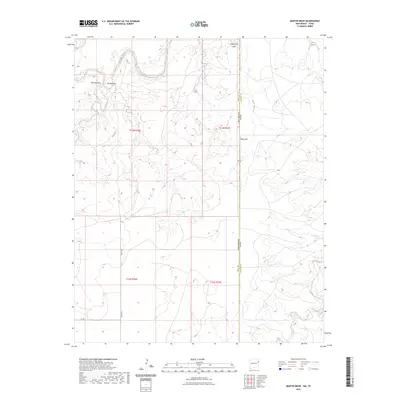 2023 Martin Draw2023 Print · USGSThe New Mexico and Texas borderlands come alive in this modern survey of the high plains. Researchers can trace the rugged transition from mesa to basin through Texas Gap and follow the paths of Martin Draw and the Canadian River.
End of results
Showing maps 1-8 of 8
Frequently asked questions
- What are the different types of historical maps available for Rain Place?
- What is the oldest map of Rain Place?
- Where can I purchase historical maps of Rain Place for my home or office?
- Where can I download high-res historical maps of Rain Place?
- Are there historical topographic maps available for Rain Place?
- Is there historical aerial imagery available for Rain Place?
- Where are historical maps of Rain Place sourced from?