1950s Maps of Santa Fe, New Mexico
Explore 10 historic maps of Santa Fe from the 1950s. These maps offer a rare glimpse into what life looked like during the 1950s — showing old roads, neighborhoods, homes, and landmarks that have changed or disappeared over time.
Whether you're researching your family's past, planning a metal detecting trip, or studying how Santa Fe's landscape evolved across the 1950s, these high-resolution maps are a powerful tool for exploring the history of this region.
- Focus on a specific era: All maps on this page are from the 1950s, giving you a focused view of this time period.
- See what’s changed: Compare century-old streets, trails, and buildings to today's modern landscape using overlays and satellite layers.
- Research with precision: Use these maps for genealogy, historical research, land use analysis, or educational projects.
- View, download, or print: Maps are fully viewable online in high resolution, and can be downloaded or printed for your own records.
Start exploring Santa Fe's history through authentic maps from the 1950s. This is your window into the past.
Santa Fe, NM maps
(10)- 1951 Map of Agua Fria, 1953 Print
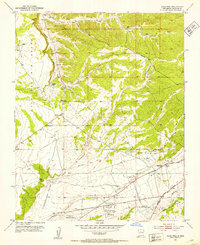 1951 Agua Fria1953 Print · USGSThe area west of the state capital is captured in the early fifties as old land grants met mid-century aviation and highway growth. Trace family history at San Isidro Cemetery or follow the historic path of El Camino Real and Agua Fria.7 unique versions available
 - 1951 Map of Turquoise Hill, 1987 Print
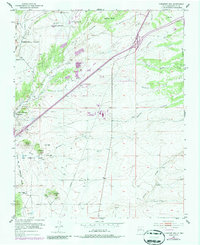 1951 Turquoise Hill1987 Print · USGSSanta Fe's high-desert outskirts appear in the mid-fifties, showing a mix of Spanish land grants and emerging state infrastructure. Genealogists and researchers can find old community landmarks like St Joseph Church, the Cienega School, and the Marshal Bonanza Mine.
 - 1952 Map of Santa Fe, 1953 Print
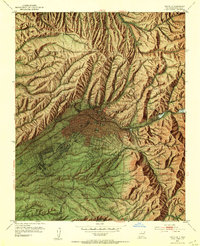 1952 Santa Fe1953 Print · USGSSanta Fe is shown mid-century just as its cultural and civic footprint began to expand beyond the traditional plaza area. Local historians can trace the grounds of the Brun General Hospital, Rosario Cem, and the path of the Atchison Topeka and Santa Fe railroad.4 unique versions available
 - 1952 Map of Turquoise Hill, 1953 Print
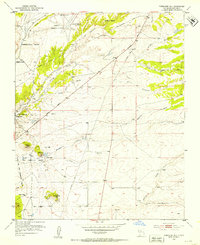 1952 Turquoise Hill1953 Print · USGSThe high desert southwest of Santa Fe in the early fifties shows a landscape of historic land grants and growing aviation infrastructure. Genealogists and historians can trace the foundations of local life at St Joseph Church, the Marshal Bonanza Mine, and along the historic El Camino Real.3 unique versions available
 - 1952 Map of Seton Village, 1953 Print
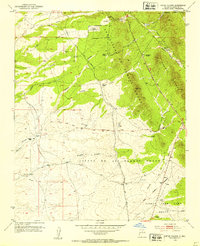 1952 Seton Village1953 Print · USGSSouth of Santa Fe in the early fifties, this landscape is defined by vast historic land grants and the steel of the railroad. Researchers can trace the borders of the Bishop John Lamy Grant or locate old outposts like Ninemile Ranch and Gallina Camp.5 unique versions available
 - 1953 Map of Tesuque
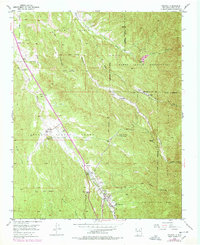 1953 Tesuque1953 Print · USGSNorth of Santa Fe in the early fifties, the high-desert landscape reveals a convergence of historic land grants and Pueblo life. Genealogists and historians can locate community centers like San Diego Ch, the Tesuque Pueblo Day Sch, and Rancho del Monte.6 unique versions available
 - 1953 Map of Agua Fria, 1956 Print
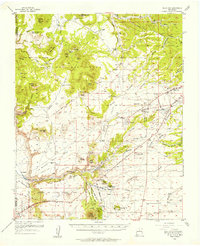 1953 Agua Fria1956 Print · USGSSanta Fe and the surrounding mesas in the mid-1950s reveal a mix of ancient Puebloan history and mid-century modern growth. Trace the path of El Camino Real, locate family roots near La Bajada, or find mining history at the Marshal Bonanza Mine.
 - 1954 Map of Santa Fe, 1963 Print
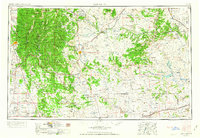 1954 Santa Fe1963 Print · USGSNew Mexico's high mountains and eastern plains meet in the mid-fifties, showing a landscape defined by the Sangre de Cristo Mountains and the Pecos River. Trace family roots and local history through San Christobal Church, Sena School, and the historic Las Vegas rail corridor.4 unique versions available
 - 1958 Map of Santa Fe
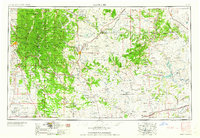 1958 Santa Fe1958 Print · USGSThe Sangre De Cristo Mountains meet the high plains in the late 1950s, showing a landscape defined by rail corridors and ranching. Genealogists can trace family-named sites like Upton Ranch or visit the Fort Union (Ruins) and Tuloso School.
 - 1958 Map of Albuquerque
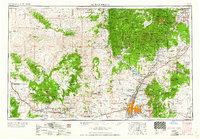 1958 Albuquerque1958 Print · USGSAlbuquerque and the surrounding high desert are captured here during a period of massive federal expansion and postwar growth. Researchers can trace the development of Kirtland Air Force Base, find ancestral homes in Pueblo de Santa Ana, or locate industrial sites like the Jackpile Mine.
End of results
Showing maps 1-10 of 10
Top cities near Santa Fe
Top neighborhoods of Santa Fe
- The Quad historical maps
- Las Qunitas de San Marcos historical maps
- Old Las Vegas Place historical maps
- Old Las Vegas Place historical maps
- Old Las Vegas Place historical maps
- Parkhill Condominiums historical maps
See more
Frequently asked questions
- What are the different types of historical maps available for Santa Fe?
- What is the oldest map of Santa Fe?
- Where can I purchase historical maps of Santa Fe for my home or office?
- Where can I download high-res historical maps of Santa Fe?
- Are there historical topographic maps available for Santa Fe?
- Is there historical aerial imagery available for Santa Fe?
- Where are historical maps of Santa Fe sourced from?