Old Maps of Red House, New York for Academic Research
Study the evolution of Red House with 59 high-resolution historic maps. Whether you're teaching, researching, or modeling changes in land use, these maps provide essential visual documentation of urban, environmental, and geographic change.
- Analyze long-term change: Track patterns in development, transportation, and natural features.
- Ideal for environmental or urban studies: Support academic projects with primary historical map data.
- Use in the classroom or lab: Educators and researchers rely on these maps to bring historical context to life.
These maps are a powerful tool for teaching, research, and visualizing how Red House has changed over the decades.
Red House, NY maps
(59)- 1900 Map of Salamanca
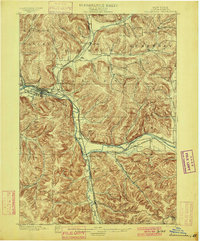 1900 Salamanca1900 Print · USGSCattaraugus County's rail and timber era is documented here as it appeared in the late 1890s, centered on the river-bend hub of Salamanca. Genealogists and historians can trace the early boundaries of the Allegheny Indian Reservation and locate vanished rail stops like Irvine Mills and Peth.6 unique versions available
 - 1922 Map of Randolph, 1955 Print
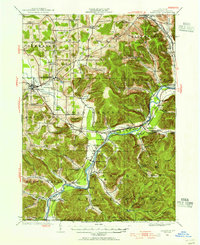 1922 Randolph1955 Print · USGSCattaraugus County in the early twenties shows a landscape of river-valley commerce and mountain parkland. Genealogists can locate dozens of country schoolhouses like Archer Hill School and vanished rail stops such as Onoville Sta and Elkdale Sta.2 unique versions available
 - 1923 Map of Randolph
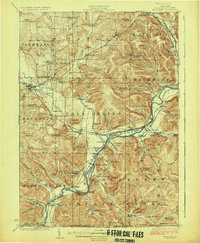 1923 Randolph1923 Print · USGSCattaraugus County's southern borderlands are captured here in the early 1920s, showing a landscape defined by the winding Allegheny River and burgeoning state park. Genealogists can trace family footprints at the Wolf Run Elko PO, Oldtown School, or the many rural schoolhouses like Bunker Hill School.4 unique versions available
 - 1924 Map of Bradford
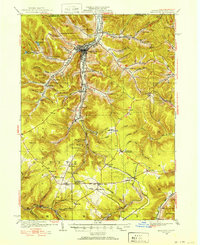 1924 Bradford1924 Print · USGSMcKean County's industrial heartland is captured here in the mid-1920s, showing a landscape defined by timber, chemicals, and heavy rail. Trace early infrastructure from the KINZUA VIADUCT to family-named landmarks like Corwins Corners and Bells Camp.2 unique versions available
 - 1926 Map of Bradford
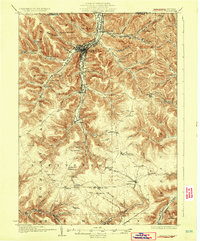 1926 Bradford1926 Print · USGSNorthwestern Pennsylvania's oil and timber country comes alive in the mid-twenties, centered on the bustling industrial valley of Bradford. Researchers can trace the path of the Bradford Electric Ry, find local homesteads near Custer City, or locate the famed Kinzua Viaduct.4 unique versions available
 - 1936 Map of Kinzua
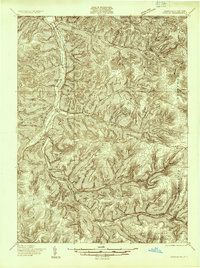 1936 Kinzua1936 Print · USGSThe Allegheny River valley remains in its natural state in the mid-1930s, long before the creation of the Allegheny Reservoir. Genealogists and historians can locate vanished riverfront settlements like Corydon and Kinzua, as well as the original boundaries of the Cornplanter Indian Reservation.
 - 1938 Map of Salamanca, 1954 Print
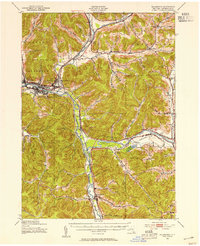 1938 Salamanca1954 Print · USGSIn the late 1930s, this portion of Cattaraugus County was a critical rail and river hub where the Allegheny River meets major transit lines. Researchers can trace the layout of the Allegheny Reservation and locate vanished stop points like Irvine Mills and Kill Buck.2 unique versions available
 - 1941 Map of Kinzua
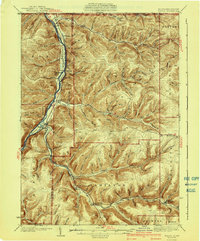 1941 Kinzua1941 Print · USGSThe Allegheny River valley and the Cornplanter Indian Reservation are shown here in the years before mid-century dam projects forever changed the landscape. Researchers can trace the river-level Pennsylvania Railroad, the Kinzua Coal Mine, and now-submerged settlements like Kinzua and Corydon.3 unique versions available
 - 1941 Map of Bradford, 1958 Print
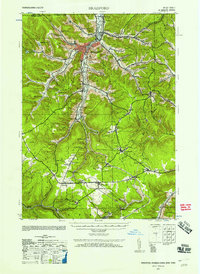 1941 Bradford1958 Print · USGSMcKean County's industrial landscape was at its peak during the early 1940s, marked by a dense network of mountain railroads and small oil-country settlements. Genealogists can trace family roots through numerous rural landmarks like Songbird Sch, Irishtown, and Davis Gifford PO.2 unique versions available
 - 1943 Map of Randolph
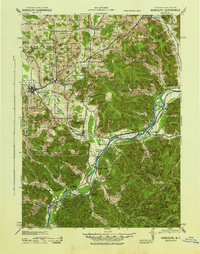 1943 Randolph1943 Print · USGSCattaraugus County's river-and-rail corridor is captured here in the 1940s, highlighting the Allegheny Indian Reservation and the rugged lands of South Valley. Genealogists and researchers can trace rural life through numerous district landmarks like the Bone Run School, Wolf Run Elko PO, and the chemical plant at Red House.
 - 1943 Map of Salamanca
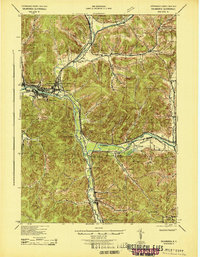 1943 Salamanca1943 Print · USGSCattaraugus County during the early 1940s reveals a landscape defined by the intersection of the Allegheny River and major rail lines. Genealogists and rail historians can trace the paths of the Erie and Baltimore and Ohio railroads through Salamanca and Killbuck.
 - 1944 Map of Bradford
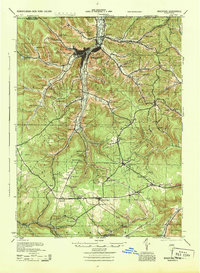 1944 Bradford1944 Print · USGSMcKean County and the New York borderlands are shown here during the mid-1940s, a period defined by heavy rail traffic and mountain settlements. You can trace old property lines and rural schoolhouses like Bolivar Run Sch, or find the Gifford PO and Big Shanty Sta along the timber and oil valleys.
 - 1949 Map of Kinzua, 1954 Print
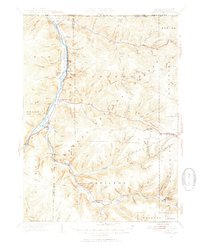 1949 Kinzua1954 Print · USGSThe Allegheny River valley remains the heart of this region in the late 1940s, just before major changes altered the landscape. Researchers can trace riverside life in Kinzua and Corydon or locate the historic Cornplanter Indian Reservation.4 unique versions available
 - 1957 Map of Warren, 1964 Print
 1957 Warren1964 Print · USGSThe northern Pennsylvania oil and timber country comes into focus in the mid-fifties, showing the region before modern highway expansions. Trace the industrial rail networks of the Pennsylvania RR and the early Allegheny River Reservoir near Warren and Oil City.4 unique versions available
 - 1958 Map of Warren
 1958 Warren1958 Print · USGSNorthern Pennsylvania’s timber and oil country is captured here during the late fifties, showing the interplay of industrial valleys and vast state forests. Genealogists can trace family connections across the Cornplanter Indian Reservation or through rail hubs like Oil City and Saint Marys.
 - 1959 Map of Warren
 1959 Warren1959 Print · USGSNorthern Pennsylvania's oil and timber country comes alive in this late-fifties study of the forest-clad plateaus. Trace the historic Cornplanter (Indian Reservation), the sprawling Oil Field, and the rail lines of the Pennsylvania RR.2 unique versions available
 - 1960 Map of Buffalo
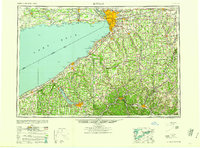 1960 Buffalo1960 Print · USGSWestern New York and the Niagara Peninsula thrive during the mid-twentieth century industrial peak. Genealogists and historians can trace family-named points and early settlements from Dunkirk Light to the Allegany Indian Reservation.
 - 1961 Map of Salamanca, 1963 Print
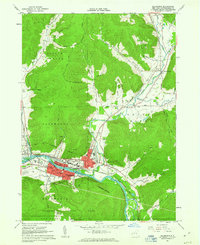 1961 Salamanca1963 Print · USGSSalamanca and the Allegheny River valley are shown here in the early sixties, a landscape defined by industrial rail lines and the surrounding reservation. Genealogists and historians can trace local landmarks like Wildwood Cem, School No 1, and the Whig St Ch.3 unique versions available
 - 1961 Map of Limestone, 1963 Print
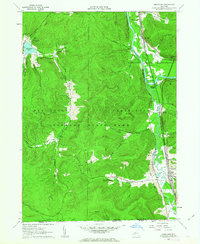 1961 Limestone1963 Print · USGSThe Cattaraugus County borderlands in the early sixties reveal a landscape of deep river valleys and intensive timber and mineral extraction. Genealogists and historians can locate Limestone and Irvine Mills, or trace the rail lines through Riverside Junction and Bradford Junction.4 unique versions available
 - 1962 Map of Little Valley, 1964 Print
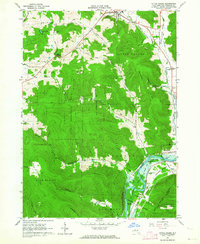 1962 Little Valley1964 Print · USGSCattaraugus County is shown in the early 1960s as the Allegheny Reservoir began to alter the river valley. Genealogists and researchers can trace the Allegany Indian Reservation boundary, locate the Jimmersontown Ch, and follow the Erie-Lackawanna rail lines.5 unique versions available
 - 1962 Map of Red House, 1964 Print
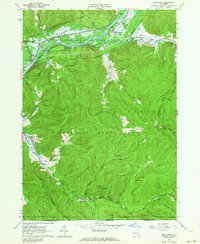 1962 Red House1964 Print · USGSCattaraugus County is shown here in the early sixties during the significant transition of the Allegheny River valley. Genealogists and local historians can trace family-named hollows and sites like the Red House Chapel, Seneca Ch, and the high ridges of Blacksnake Mountain.4 unique versions available
 - 1962 Map of Buffalo, 1980 Print
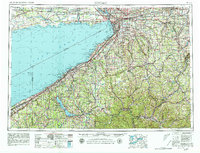 1962 Buffalo1980 Print · USGSThe Niagara Frontier and Western New York are captured here in the early sixties, showing the vital industrial and maritime nexus between the U.S. and Canada. Researchers can trace the path of the Welland Canal, locate the Allegany Indian Reservation, or find family sites near Chautauqua Lake.2 unique versions available
 - 1966 Map of Stickney, 1968 Print
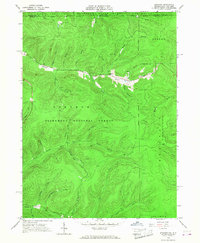 1966 Stickney1968 Print · USGSThe Pennsylvania and New York border highlands are captured here in the mid-sixties, dominated by the Allegheny National Forest. Researchers can find evidence of the regional energy economy through clusters of Oil Wells and trace old routes like Boatroad and Harlow Trail.3 unique versions available
 - 1967 Map of Buffalo
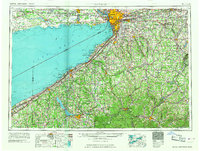 1967 Buffalo1967 Print · USGSWestern New York and the Lake Erie shoreline are shown here during the mid-1960s industrial peak. Researchers can trace the massive rail networks of the Erie Railroad, locate the Cattaraugus Indian Reservation, or find historic sites like Fort Erie.
 - 1969 Map of Bradford, 1973 Print
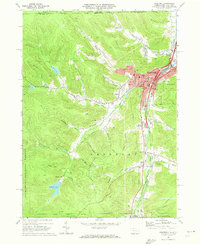 1969 Bradford1973 Print · USGSMcKean County's industrial landscape was still defined by its rail-and-oil economy during the late sixties. Genealogists and local historians can trace family roots through Willow Dale Cem, or locate long-standing landmarks like Hazelton Mills and Custer City.3 unique versions available
Showing maps 1-25 of 59
Top cities near Red House
- Bradford historical maps
- Allegany historical maps
- Salamanca historical maps
- Franklinville historical maps
- Randolph historical maps
- Lafayette Township historical maps
See more
Top neighborhoods of Red House
Frequently asked questions
- What are the different types of historical maps available for Red House?
- What is the oldest map of Red House?
- Where can I purchase historical maps of Red House for my home or office?
- Where can I download high-res historical maps of Red House?
- Are there historical topographic maps available for Red House?
- Is there historical aerial imagery available for Red House?
- Where are historical maps of Red House sourced from?