Old Maps of Pavilion, New York for Academic Research
Study the evolution of Pavilion with 41 high-resolution historic maps. Whether you're teaching, researching, or modeling changes in land use, these maps provide essential visual documentation of urban, environmental, and geographic change.
- Analyze long-term change: Track patterns in development, transportation, and natural features.
- Ideal for environmental or urban studies: Support academic projects with primary historical map data.
- Use in the classroom or lab: Educators and researchers rely on these maps to bring historical context to life.
These maps are a powerful tool for teaching, research, and visualizing how Pavilion has changed over the decades.
Pavilion, NY maps
(41)- 1904 Map of Batavia
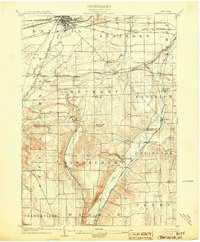 1904 Batavia1904 Print · USGSWestern New York at the turn of the century shows a landscape dominated by competing railroad interests and agricultural hamlets. Genealogists can trace family connections between Pearl Creek, Attica Center, and Stafford while following the routes of the Lehigh Valley and Erie R. R. through the valleys.7 unique versions available
 - 1904 Map of Caledonia
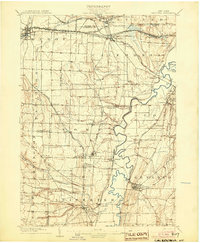 1904 Caledonia1904 Print · USGSLivingston County and its surrounding borders are shown here at the height of the early railroad era. Researchers can trace the complex rail junctions at Caledonia or locate vanished landmarks and post offices like Wadsworth P.O. S.Greigsville and Retsof.6 unique versions available
 - 1944 Map of Stafford
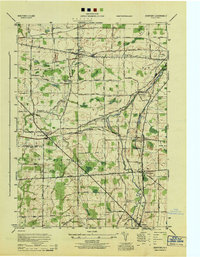 1944 Stafford1944 Print · USGSWestern New York’s rural landscape is captured here during the mid-1940s, showcasing the intersection of heavy rail and local farming life. Genealogists can locate family-named roads and several rural schoolhouses like School No 8 and School No 11.
 - 1944 Map of Le Roy
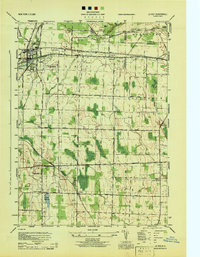 1944 Le Roy1944 Print · USGSLe Roy and its surrounding townships are shown at the height of the steam-to-diesel rail era, where three major lines intersect. Genealogists can locate family landmarks such as Machpelah Cemetery, Union Corners, and many rural schoolhouses like School No 7.
 - 1944 Map of Leicester
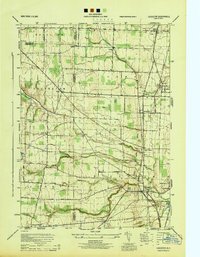 1944 Leicester1944 Print · USGSLivingston County’s Genesee Valley was a powerhouse of rail transport and rural industry in the mid-forties. Genealogists and industrial historians can trace early property lines near Olivet Cem, find School No 7, and follow the junction of the Genesee and Wyoming Railroad through Retsof and Leicester.
 - 1950 Map of Elmira
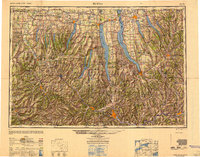 1950 Elmira1950 Print · USGSThe Finger Lakes region thrived in the late 1940s as a hub of industry and transport. Trace family roots and vanished landmarks near Seneca Lake or explore the rail lines of the Erie RR and the sprawling Seneca Ordnance Depot.2 unique versions available
 - 1950 Map of Batavia
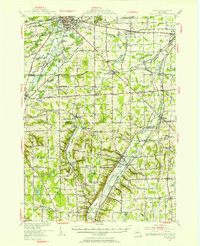 1950 Batavia1950 Print · USGSWestern New York at the mid-century shows a bustling landscape of rail hubs and rural crossroads. Researchers can trace the heritage of Batavia and Wyoming while locating local landmarks like the Pioneer Salt Well, Bethany Ch, and the Fairgrounds.
 - 1950 Map of Stafford, 1952 Print
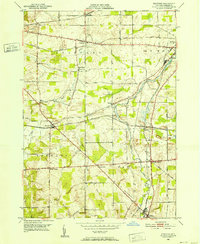 1950 Stafford1952 Print · USGSGenesee County at the mid-century was a bustling hub of New York rail traffic and small-town commerce. Researchers can trace family history through the Stafford Cem or locate vanished local landmarks like the Bel-air Ranch Health Camp and Suicide Corners.3 unique versions available
 - 1950 Map of Le Roy, 1952 Print
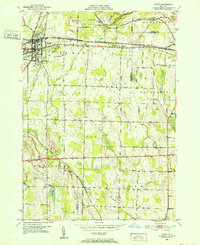 1950 Le Roy1952 Print · USGSWestern New York at mid-century reveals a landscape shaped by competing rail lines and rural settlements. You can trace the early industrial footprint of Le Roy and find family-named landmarks like Machpelah Cem, St Anthony Ch, and the GULF.4 unique versions available
 - 1951 Map of Wyoming
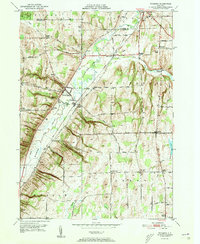 1951 Wyoming1951 Print · USGSWestern New York in the early fifties was a landscape of salt works and valley farms. Genealogists and local historians can trace family roots through landmarks like the Pioneer Salt Well, the Pioneer Cemetery, and crossroads such as Lambs Corner or Saltvale.4 unique versions available
 - 1951 Map of Leicester, 1952 Print
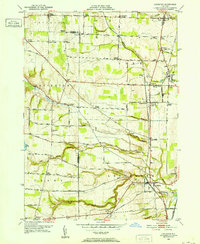 1951 Leicester1952 Print · USGSLivingston and Wyoming Counties are captured here in the early 1950s, showing a landscape of salt mining and rural crossroads. Researchers can trace family sites at Simmons Corners and Peoria, or locate community landmarks like Covington Ch and Mt Nash Cem.3 unique versions available
 - 1951 Map of Caledonia, 1956 Print
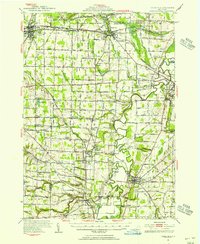 1951 Caledonia1956 Print · USGSThe Genesee Valley flourished as a rail crossroads in the early fifties, where five major lines converged near the river. Local historians can trace family-named corners and rural institutions like St Columbus Ch, Machpelah Cem, and Retsof Central Sch.2 unique versions available
 - 1958 Map of Elmira
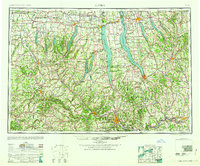 1958 Elmira1958 Print · USGSThe New York Finger Lakes during the late fifties reveal a complex landscape of glacial geology and industrial growth. Researchers can trace historic transport corridors like the Erie Canal and Erie RR, or locate institutional landmarks like Cornell University.2 unique versions available
 - 1960 Map of Buffalo
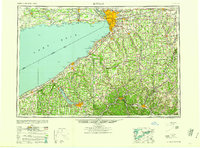 1960 Buffalo1960 Print · USGSWestern New York and the Niagara Peninsula thrive during the mid-twentieth century industrial peak. Genealogists and historians can trace family-named points and early settlements from Dunkirk Light to the Allegany Indian Reservation.
 - 1962 Map of Elmira, 1969 Print
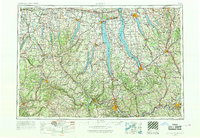 1962 Elmira1969 Print · USGSThe Finger Lakes region and Southern Tier are captured here during a period of industrial maturity and highway expansion. Researchers can trace the path of the Erie Canal, the footprint of the Seneca Army Depot, and legacy rail lines through Elmira and Ithaca.4 unique versions available
 - 1962 Map of Buffalo, 1980 Print
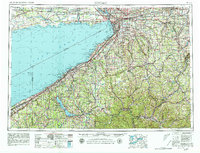 1962 Buffalo1980 Print · USGSThe Niagara Frontier and Western New York are captured here in the early sixties, showing the vital industrial and maritime nexus between the U.S. and Canada. Researchers can trace the path of the Welland Canal, locate the Allegany Indian Reservation, or find family sites near Chautauqua Lake.2 unique versions available
 - 1965 Map of Elmira
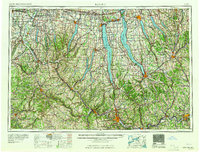 1965 Elmira1965 Print · USGSThe Finger Lakes and Southern Tier regions are captured in the mid-sixties, showcasing a landscape of deep glacial valleys and heavy rail infrastructure. Trace old railroad corridors like the Pennsylvania RR or visit landmarks like Letchworth State Park and the Seneca Army Depot.
 - 1967 Map of Buffalo
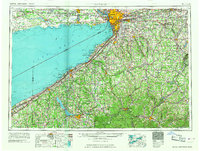 1967 Buffalo1967 Print · USGSWestern New York and the Lake Erie shoreline are shown here during the mid-1960s industrial peak. Researchers can trace the massive rail networks of the Erie Railroad, locate the Cattaraugus Indian Reservation, or find historic sites like Fort Erie.
 - 1973 Map of Buffalo
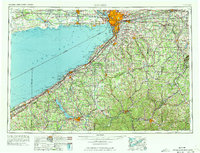 1973 Buffalo1973 Print · USGSWestern New York and Ontario's Golden Horseshoe meet in the early seventies, spanning from the industrial waterfronts of Buffalo to the hills of Allegany State Park. Trace the paths of the Welland Canal and Erie Lackawanna railroad through the lakefront towns of Dunkirk and Port Colborne.
 - 1983 Map of Canandaigua, 1985 Print
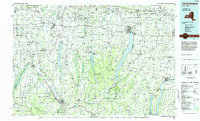 1983 Canandaigua1985 Print · USGSThe Finger Lakes and Genesee Valley appear in high detail in the early 1980s as the region's transport and academic centers reached a peak. Researchers can trace rail lines like the Lehigh Valley RR and find landmarks such as the Mount Morris Dam and Gannagaro State Historical Site.2 unique versions available
 - 1984 Map of Buffalo, 1985 Print
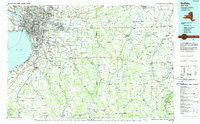 1984 Buffalo1985 Print · USGSWestern New York's industrial and transport hubs are in full view during the mid-eighties, from the Lake Erie waterfront to the Genesee Valley. Researchers can trace the legacy of the Erie Canal, find ancestral sites like Mount Calvary Cem, or locate the Attica Correctional Facility.2 unique versions available
 - 2010 Map of Leicester, 2010 Print
 2010 Leicester2010 Print · USGSThe rural landscape near Perry and the Genesee Valley appears here in the early twenty-first century, showing a region defined by its salt industry and historic crossroads. Genealogists can trace family landmarks like Retsof Salt Mine, Teed Corners, and Mount Nash Cemetery.
 - 2010 Map of Le Roy, 2010 Print
 2010 Le Roy2010 Print · USGSGenesee and Livingston counties are captured here at the start of the new millennium, showing the established rural character of the Finger Lakes region. Researchers can trace family plots at Machpelah Cemetery and Job Cemetery or explore the outskirts of Le Roy and Linwood.
 - 2010 Map of Stafford, 2010 Print
 2010 Stafford2010 Print · USGSGenesee County as it appeared in the early 21st century remains a landscape of traditional agriculture and quiet crossroads. Genealogists and local historians can trace family roots through numerous sites like Fargo Road Pioneer Cemetery, Suicide Corners, and Jug City Cemetery.
 - 2010 Map of Wyoming, 2010 Print
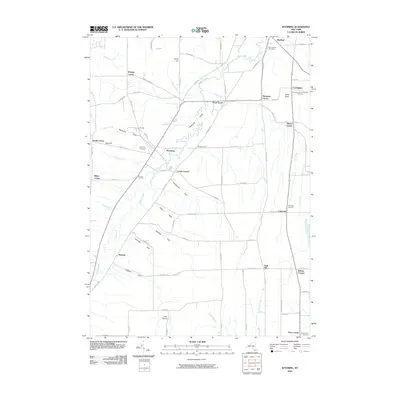 2010 Wyoming2010 Print · USGSWestern New York's Wyoming Valley is shown here in the early 2000s, where deep glacial gulfs meet established rural hamlets. Family historians can locate ancestral sites like the Covington Center Pioneer Cemetery, the Pioneer Salt Well, and the community of Wyoming.
Showing maps 1-25 of 41
Top cities near Pavilion
- Chili historical maps
- Ogden historical maps
- Batavia historical maps
- Geneseo historical maps
- LeRoy historical maps
- Geneseo historical maps
See more
Top neighborhoods of Pavilion
- Union Corners historical maps
- Junction historical maps
- Texaco Town historical maps
- Phelps Corners historical maps
- Bennetts Corners historical maps
- Pavilion Center historical maps
See more
Frequently asked questions
- What are the different types of historical maps available for Pavilion?
- What is the oldest map of Pavilion?
- Where can I purchase historical maps of Pavilion for my home or office?
- Where can I download high-res historical maps of Pavilion?
- Are there historical topographic maps available for Pavilion?
- Is there historical aerial imagery available for Pavilion?
- Where are historical maps of Pavilion sourced from?