1940s Maps of Orleans, New York
Explore 9 historic maps of Orleans from the 1940s. These maps offer a rare glimpse into what life looked like during the 1940s — showing old roads, neighborhoods, homes, and landmarks that have changed or disappeared over time.
Whether you're researching your family's past, planning a metal detecting trip, or studying how Orleans's landscape evolved across the 1940s, these high-resolution maps are a powerful tool for exploring the history of this region.
- Focus on a specific era: All maps on this page are from the 1940s, giving you a focused view of this time period.
- See what’s changed: Compare century-old streets, trails, and buildings to today's modern landscape using overlays and satellite layers.
- Research with precision: Use these maps for genealogy, historical research, land use analysis, or educational projects.
- View, download, or print: Maps are fully viewable online in high resolution, and can be downloaded or printed for your own records.
Start exploring Orleans's history through authentic maps from the 1940s. This is your window into the past.
Orleans, NY maps
(9)- 1942 Map of Clayton, 1957 Print
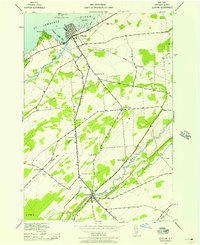 1942 Clayton1957 Print · USGSThe Thousand Islands region appears at a mid-century peak in this survey of the riverfront and agricultural interior. Local historians can trace the foundations of the community through its many numbered rural schools and family burial sites like Corbin Cem and Dutch Cem.
 - 1943 Map of Thousand Island Park
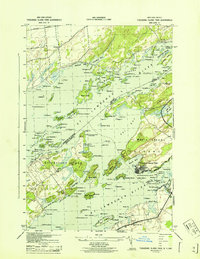 1943 Thousand Island Park1943 Print · USGSThe Thousand Islands region along the New York-Ontario border is captured here during the 1940s, showing the intricate island communities of the St. Lawrence River. Trace local history through landmark schools like Spicer Bay Sch and the distinct landings of Grindstone Island.
 - 1943 Map of Clayton
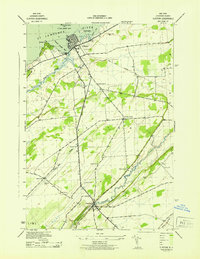 1943 Clayton1943 Print · USGSThe Thousand Islands region and the St. Lawrence riverfront are captured here in the early 1940s. Genealogists and local historians can trace the rural school system and family burial grounds, including School No 2, Dutch Cem, and the village of Depauville.
 - 1943 Map of Lafargeville
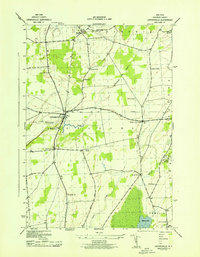 1943 Lafargeville1943 Print · USGSJefferson County was still a landscape of scattered rural schools and rail-fed hamlets during the early years of World War II. Researchers can trace ancestral locations through several family-named burial grounds like Hinman Cem and the rail corridors of the New York Central.
 - 1943 Map of Brownville
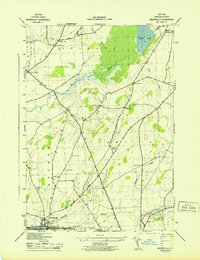 1943 Brownville1943 Print · USGSJefferson County during the mid-forties remains a landscape of traditional rural districts and small hamlets connected by the New York Central line. Researchers can trace the layout of early school districts and secluded burial sites like Taylor Cem or Sandy Loam Cem.
 - 1943 Map of Alexandria Bay
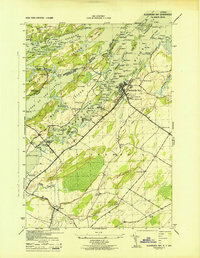 1943 Alexandria Bay1943 Print · USGSThe Thousand Islands region thrived as a cross-border hub in the early 1940s, shortly after the completion of the Thousand Island Bridge. Researchers can trace old school districts like School No 19, find small rural burial grounds like Omar Cem, and locate river landmarks from Westminster Park to the Coast Guard Sta.
 - 1948 Map of Theresa, 1953 Print
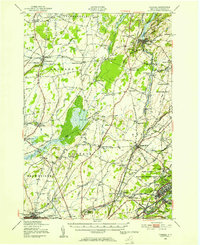 1948 Theresa1953 Print · USGSJefferson County's rural landscape is captured here in the late 1940s as military expansion and river-based industry shaped the region. Researchers can trace family roots through numerous sites like St Marys Cemetery, Bacon School, and the Pine Camp Military Reservation.
 - 1948 Map of Alexandria Bay, 1953 Print
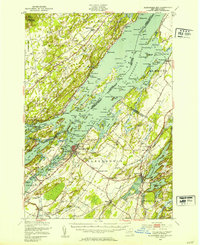 1948 Alexandria Bay1953 Print · USGSThe Thousand Islands region and the St. Lawrence River frontier are captured here in the late 1940s as international transit and local tourism flourished. Historians can trace the development of Alexandria Bay, the rural schools of Alexandria, and the lakeside settlements of Redwood and Plessis.2 unique versions available
 - 1948 Map of Ogdensburg, 1973 Print
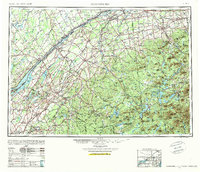 1948 Ogdensburg1973 Print · USGSThe international border along the St Lawrence River comes to life in the late 1940s, showing the vital rail and water connections between New York and Ontario. Researchers can trace the grounds of St Lawrence University, the massive Camp Drum military reservation, and the historic Rideau River and Canal.2 unique versions available
End of results
Showing maps 1-9 of 9
Top cities near Orleans
- Le Ray historical maps
- Watertown historical maps
- Watertown historical maps
- Brownville historical maps
- Clayton historical maps
- Champion historical maps
See more
Top neighborhoods of Orleans
- Orleans Four Corners historical maps
- Moore Landing historical maps
- Grandview Park historical maps
- Omar historical maps
- Fineview historical maps
- Stone Mills historical maps
See more
Frequently asked questions
- What are the different types of historical maps available for Orleans?
- What is the oldest map of Orleans?
- Where can I purchase historical maps of Orleans for my home or office?
- Where can I download high-res historical maps of Orleans?
- Are there historical topographic maps available for Orleans?
- Is there historical aerial imagery available for Orleans?
- Where are historical maps of Orleans sourced from?