1900s (20th Century) Maps of Orleans Four Corners, Orleans
Explore 10 historic maps of Orleans Four Corners from the 1900s (20th Century). These maps offer a rare glimpse into what life looked like during the 1900s — showing old roads, neighborhoods, homes, and landmarks that have changed or disappeared over time.
Whether you're researching your family's past, planning a metal detecting trip, or studying how Orleans Four Corners's landscape evolved across the 1900s, these high-resolution maps are a powerful tool for exploring the history of this region.
- Focus on a specific era: All maps on this page are from the 1900s, giving you a focused view of this time period.
- See what’s changed: Compare century-old streets, trails, and buildings to today's modern landscape using overlays and satellite layers.
- Research with precision: Use these maps for genealogy, historical research, land use analysis, or educational projects.
- View, download, or print: Maps are fully viewable online in high resolution, and can be downloaded or printed for your own records.
Start exploring Orleans Four Corners's history through authentic maps from the 1900s. This is your window into the past.
Orleans Four Corners, Orleans maps
(10)- 1903 Map of Theresa
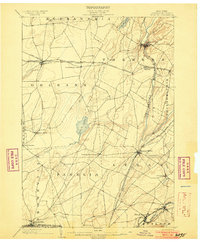 1903 Theresa1903 Print · USGSJefferson County at the turn of the century was a bustling network of dairy farms and rail junctions. You can trace the path of the Rome Watertown and Ogdensburg Div. through Evans Mills or locate early settlements like Stone Mills and Leraysville.8 unique versions available
 - 1943 Map of Lafargeville
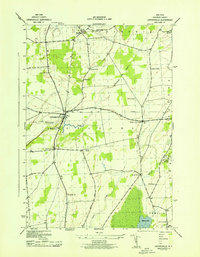 1943 Lafargeville1943 Print · USGSJefferson County was still a landscape of scattered rural schools and rail-fed hamlets during the early years of World War II. Researchers can trace ancestral locations through several family-named burial grounds like Hinman Cem and the rail corridors of the New York Central.
 - 1948 Map of Theresa, 1953 Print
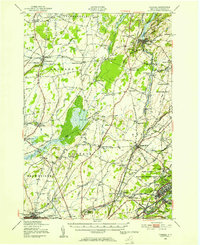 1948 Theresa1953 Print · USGSJefferson County's rural landscape is captured here in the late 1940s as military expansion and river-based industry shaped the region. Researchers can trace family roots through numerous sites like St Marys Cemetery, Bacon School, and the Pine Camp Military Reservation.
 - 1948 Map of Ogdensburg, 1973 Print
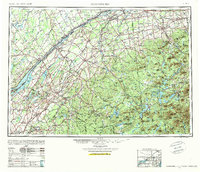 1948 Ogdensburg1973 Print · USGSThe international border along the St Lawrence River comes to life in the late 1940s, showing the vital rail and water connections between New York and Ontario. Researchers can trace the grounds of St Lawrence University, the massive Camp Drum military reservation, and the historic Rideau River and Canal.2 unique versions available
 - 1951 Map of Ogdensburg
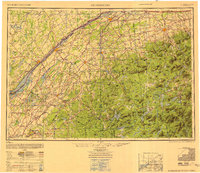 1951 Ogdensburg1951 Print · USGSThe St. Lawrence frontier and the North Country are captured here during the post-war era, from the river ports to the high Adirondacks. Genealogists and historians can trace the rail-and-river economy through Ogdensburg, the Rutland rail lines, and Potsdam.
 - 1953 Map of Ogdensburg
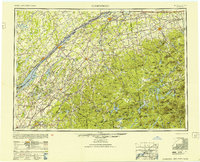 1953 Ogdensburg1953 Print · USGSThe North Country and St. Lawrence Valley are shown here in the early fifties, just as the region’s rail-and-river economy remained in full swing. Genealogists and historians can trace family-named corners and rural hubs along the Rutland railroad or locate heritage sites near Ogdensburg, Potsdam, and the St Regis Indian Reservation.
 - 1958 Map of La Fargeville, 1960 Print
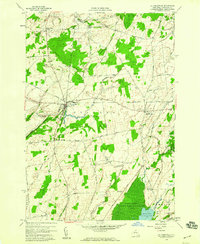 1958 La Fargeville1960 Print · USGSJefferson County farming and rail life are preserved here in the late fifties, centered on the crossroads of La Fargeville. Researchers can trace ancestral locations through numerous burial sites like St Johns Cem or follow the path of the New York Central railroad.
 - 1961 Map of Ogdensburg
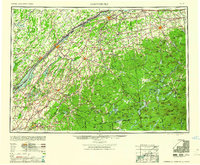 1961 Ogdensburg1961 Print · USGSThe St. Lawrence valley and the Adirondack high country meet in this early sixties survey during a peak era for rail and river commerce. Genealogists and historians can trace the paths of the New York Central railroad through remote settlements like Wanakena, Conifer, and Piercefield.
 - 1982 Map of La Fargeville, 1983 Print
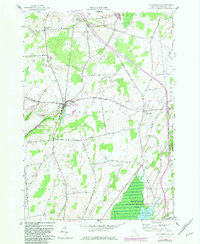 1982 La Fargeville1983 Print · USGSJefferson County agricultural life and conservation lands are captured here in the early eighties. Genealogists and local historians can trace family burial plots at Beech Ridge Cem or locate former rail routes like the Old Railroad Grade.
 - 1985 Map of Gouverneur
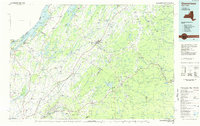 1985 Gouverneur1985 Print · USGSSt. Lawrence and Jefferson Counties are shown in the mid-eighties as a landscape of river-driven industry and expanding military grounds. Genealogists and historians can trace rail lines through Carthage, find local landmarks like Noble Hospital, and locate the boundaries of the Fort Drum Military Reservation.2 unique versions available
End of results
Showing maps 1-10 of 10
Top cities near Orleans Four Corners
- Le Ray historical maps
- Watertown historical maps
- Watertown historical maps
- Brownville historical maps
- Wilna historical maps
- Clayton historical maps
See more
Frequently asked questions
- What are the different types of historical maps available for Orleans Four Corners?
- What is the oldest map of Orleans Four Corners?
- Where can I purchase historical maps of Orleans Four Corners for my home or office?
- Where can I download high-res historical maps of Orleans Four Corners?
- Are there historical topographic maps available for Orleans Four Corners?
- Is there historical aerial imagery available for Orleans Four Corners?
- Where are historical maps of Orleans Four Corners sourced from?