Old Maps of Pamelia, New York for Academic Research
Study the evolution of Pamelia with 60 high-resolution historic maps. Whether you're teaching, researching, or modeling changes in land use, these maps provide essential visual documentation of urban, environmental, and geographic change.
- Analyze long-term change: Track patterns in development, transportation, and natural features.
- Ideal for environmental or urban studies: Support academic projects with primary historical map data.
- Use in the classroom or lab: Educators and researchers rely on these maps to bring historical context to life.
These maps are a powerful tool for teaching, research, and visualizing how Pamelia has changed over the decades.
Pamelia, NY maps
(60)- 1895 Map of Watertown
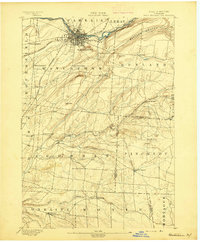 1895 Watertown1895 Print · USGSJefferson County in the 1890s centered on the industrial energy of the Black River and a complex web of iron rails. Genealogists and local researchers can trace historic crossroads such as Fields Settlement, Whitford Corner, and Burrs Mills.
 - 1898 Map of Watertown
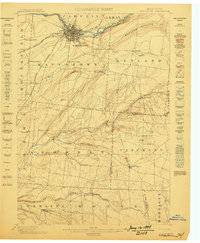 1898 Watertown1898 Print · USGSJefferson County at the close of the nineteenth century centers on the growing hub of Watertown and its intricate rail network. Researchers can trace the nineteenth-century landscape of rural hamlets, mills, and family landmarks like Burrs Mills, Honeyville, and Fields Settlement.2 unique versions available
 - 1903 Map of Theresa
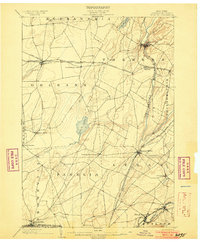 1903 Theresa1903 Print · USGSJefferson County at the turn of the century was a bustling network of dairy farms and rail junctions. You can trace the path of the Rome Watertown and Ogdensburg Div. through Evans Mills or locate early settlements like Stone Mills and Leraysville.8 unique versions available
 - 1908 Map of Watertown, 1955 Print
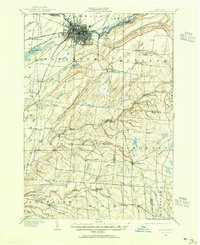 1908 Watertown1955 Print · USGSWatertown and the rural uplands of the Tug Hill region are captured here in the early twentieth century as the railroad era peaked. Genealogists can trace early post offices like Klondike and Whitesville, or locate family sites near Brookside Cemetery.
 - 1909 Map of Watertown
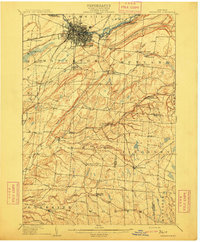 1909 Watertown1909 Print · USGSJefferson County was at its industrial and agrarian height in the early twentieth century, centered on the vital rail hub of Watertown. Local historians can trace family roots through the Middle Road Church or locate vanished post offices like Klondike Worth and Tylerville South Rutland.6 unique versions available
 - 1943 Map of Watertown
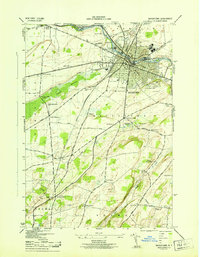 1943 Watertown1943 Print · USGSJefferson County during the early 1940s reveals a landscape defined by the manufacturing hubs of Watertown and the rural schools of the surrounding townships. Researchers can trace local lineages through detailed labels for Fields Settlement Cem, Talcott Corners, and the County Boys School.
 - 1943 Map of Lafargeville
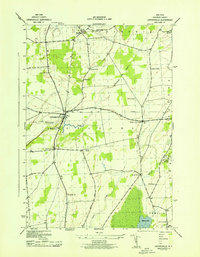 1943 Lafargeville1943 Print · USGSJefferson County was still a landscape of scattered rural schools and rail-fed hamlets during the early years of World War II. Researchers can trace ancestral locations through several family-named burial grounds like Hinman Cem and the rail corridors of the New York Central.
 - 1943 Map of Brownville
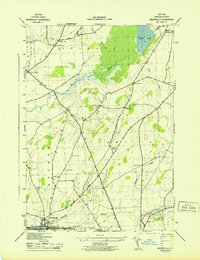 1943 Brownville1943 Print · USGSJefferson County during the mid-forties remains a landscape of traditional rural districts and small hamlets connected by the New York Central line. Researchers can trace the layout of early school districts and secluded burial sites like Taylor Cem or Sandy Loam Cem.
 - 1943 Map of South Rutland, 1954 Print
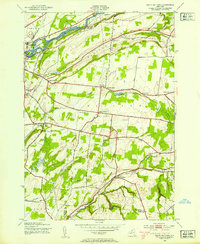 1943 South Rutland1954 Print · USGSJefferson County farming communities and the Black River valley are captured here in the 1940s. Genealogists can trace family footprints at Middle Road Ch, Maple Hill Cem, and numerous schoolhouses from Burrs Mills to South Rutland.2 unique versions available
 - 1948 Map of Theresa
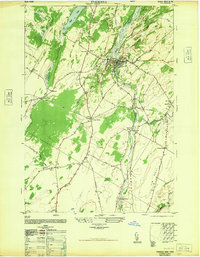 1948 Theresa1948 Print · USGSJefferson County in the late nineteen-forties centers on the village of Theresa and the winding Indian River as it passes through the limestone ledges. Genealogists can locate family-named landmarks like Chaufty Cem, Shurtleff Corners, and the tracks of the New York Central.
 - 1948 Map of Black River
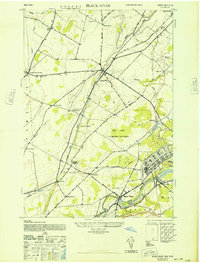 1948 Black River1948 Print · USGSJefferson County was undergoing significant transformation during the late 1940s as military expansion met established agricultural life. Researchers can trace historic family burial sites like Hoover Cem and the rail-side industry at Felts Mills and Evans Mills.
 - 1948 Map of Theresa, 1953 Print
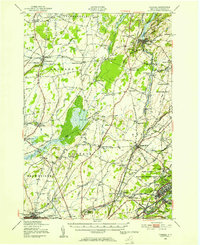 1948 Theresa1953 Print · USGSJefferson County's rural landscape is captured here in the late 1940s as military expansion and river-based industry shaped the region. Researchers can trace family roots through numerous sites like St Marys Cemetery, Bacon School, and the Pine Camp Military Reservation.
 - 1948 Map of Ogdensburg, 1973 Print
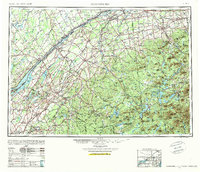 1948 Ogdensburg1973 Print · USGSThe international border along the St Lawrence River comes to life in the late 1940s, showing the vital rail and water connections between New York and Ontario. Researchers can trace the grounds of St Lawrence University, the massive Camp Drum military reservation, and the historic Rideau River and Canal.2 unique versions available
 - 1950 Map of Utica, 1951 Print
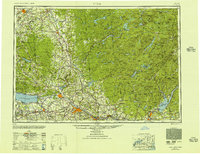 1950 Utica1951 Print · USGSCentral New York in the post-war era showcases the industrial Mohawk Valley and the pristine Adirondack interior. Researchers can trace transportation networks like the New York Central Railroad and find early Cold War sites such as Griffiss Air Force Base.
 - 1951 Map of Ogdensburg
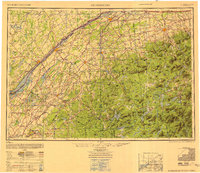 1951 Ogdensburg1951 Print · USGSThe St. Lawrence frontier and the North Country are captured here during the post-war era, from the river ports to the high Adirondacks. Genealogists and historians can trace the rail-and-river economy through Ogdensburg, the Rutland rail lines, and Potsdam.
 - 1953 Map of Ogdensburg
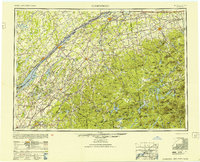 1953 Ogdensburg1953 Print · USGSThe North Country and St. Lawrence Valley are shown here in the early fifties, just as the region’s rail-and-river economy remained in full swing. Genealogists and historians can trace family-named corners and rural hubs along the Rutland railroad or locate heritage sites near Ogdensburg, Potsdam, and the St Regis Indian Reservation.
 - 1957 Map of Utica
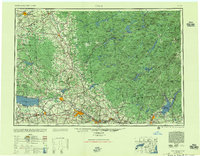 1957 Utica1957 Print · USGSCentral New York and the Adirondack foothills are captured here in the mid-fifties, showing a landscape defined by the Mohawk River corridor and the growing highway system. Genealogists and researchers can trace the rail lines of the New York Central and locate communities from Lowville to Gloversville.
 - 1958 Map of Theresa, 1960 Print
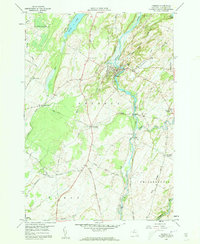 1958 Theresa1960 Print · USGSJefferson County's rural landscape is captured here in the late fifties, centered on the winding Indian River and its village of Theresa. Genealogists and historians can trace family roots at Chaufty Cem, the junction at Rivergate, or the local School No 7.2 unique versions available
 - 1958 Map of Black River, 1960 Print
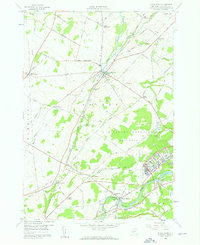 1958 Black River1960 Print · USGSJefferson County during the late fifties shows a landscape of military expansion and rural tradition. Genealogists and historians can trace family-named corners and landmarks like Leray Mansion, Felts Mills, and the Sanford Corners Cem.4 unique versions available
 - 1958 Map of Brownville, 1960 Print
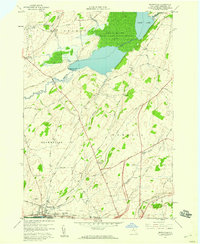 1958 Brownville1960 Print · USGSJefferson County’s agricultural and riverfront landscape is documented here during the late fifties, from the industrial Black River up to the marshy Perch Lake. Genealogists can locate family-named sites like Rouses Cem, Jenkins Sch, and the crossroads at Stone Mills.3 unique versions available
 - 1958 Map of La Fargeville, 1960 Print
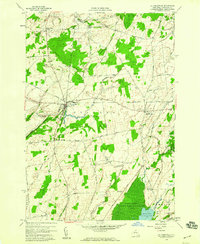 1958 La Fargeville1960 Print · USGSJefferson County farming and rail life are preserved here in the late fifties, centered on the crossroads of La Fargeville. Researchers can trace ancestral locations through numerous burial sites like St Johns Cem or follow the path of the New York Central railroad.
 - 1959 Map of Rutland Center, 1960 Print
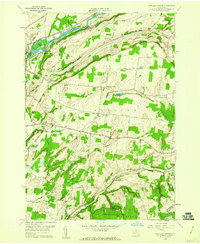 1959 Rutland Center1960 Print · USGSJefferson County dairy lands and upland hollows are captured here in the late fifties, as rural life centered on crossroads like Tylersville and Burrs Mills. Researchers can locate family homesteads near Maple Hill Cem or trace the old New York Central line along the Black River.2 unique versions available
 - 1959 Map of Watertown, 1961 Print
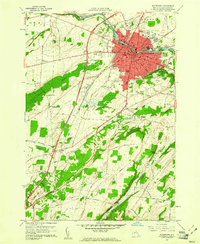 1959 Watertown1961 Print · USGSWatertown and its surrounding townships thrive along the Black River in the late fifties, showcasing a period of robust civic infrastructure and rural expansion. Genealogists can trace family names through the Fields Settlement Cem, locate the Cupertino Friary, or find old homesteads near Talcott Falls.3 unique versions available
 - 1961 Map of Ogdensburg
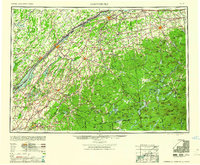 1961 Ogdensburg1961 Print · USGSThe St. Lawrence valley and the Adirondack high country meet in this early sixties survey during a peak era for rail and river commerce. Genealogists and historians can trace the paths of the New York Central railroad through remote settlements like Wanakena, Conifer, and Piercefield.
 - 1962 Map of Utica
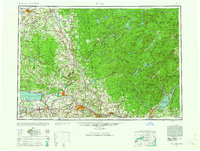 1962 Utica1962 Print · USGSCentral New York and the Adirondack wilderness are captured here during the mid-century era of highway and industrial expansion. Genealogists and historians can trace the development of the New York State Thruway and local rail lines connecting Utica, Rome, and Gloversville.3 unique versions available
Showing maps 1-25 of 60
Top cities near Pamelia
- Le Ray historical maps
- Watertown historical maps
- Watertown historical maps
- Brownville historical maps
- Wilna historical maps
- Adams historical maps
See more
Top neighborhoods of Pamelia
Frequently asked questions
- What are the different types of historical maps available for Pamelia?
- What is the oldest map of Pamelia?
- Where can I purchase historical maps of Pamelia for my home or office?
- Where can I download high-res historical maps of Pamelia?
- Are there historical topographic maps available for Pamelia?
- Is there historical aerial imagery available for Pamelia?
- Where are historical maps of Pamelia sourced from?