1940s Maps of Putnam County, New York
Explore 18 historic maps of Putnam County from the 1940s. These maps offer a rare glimpse into what life looked like during the 1940s — showing old roads, neighborhoods, homes, and landmarks that have changed or disappeared over time.
Whether you're researching your family's past, planning a metal detecting trip, or studying how Putnam County's landscape evolved across the 1940s, these high-resolution maps are a powerful tool for exploring the history of this region.
- Focus on a specific era: All maps on this page are from the 1940s, giving you a focused view of this time period.
- See what’s changed: Compare century-old streets, trails, and buildings to today's modern landscape using overlays and satellite layers.
- Research with precision: Use these maps for genealogy, historical research, land use analysis, or educational projects.
- View, download, or print: Maps are fully viewable online in high resolution, and can be downloaded or printed for your own records.
Start exploring Putnam County's history through authentic maps from the 1940s. This is your window into the past.
Putnam County, NY maps
(18)- 1941 Map of West Point
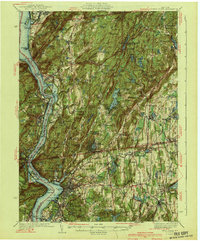 1941 West Point1941 Print · USGSThe Hudson Highlands were undergoing significant change in the years leading up to the war, blending heavy industry with expanding military installations. Genealogists can trace family lines through Continental Village, Hillside Cem, and the various schools like Manitou Sch.3 unique versions available
 - 1941 Map of West Point, 1951 Print
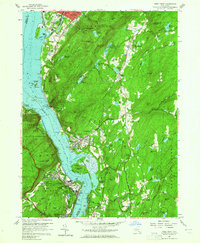 1941 West Point1951 Print · USGSThe Hudson Highlands are captured here in the mid-1950s as the river-and-rail economy defined life in Beacon and Cold Spring. Researchers can trace the grounds of the U S Military Academy West Point, locating the U S Silver Depository and Constitution Island.
 - 1943 Map of Poughkeepsie
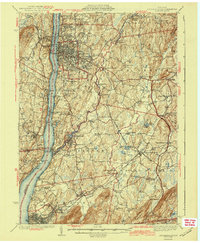 1943 Poughkeepsie1943 Print · USGSThe mid-Hudson valley is captured here in the years during the Second World War, showing the busy corridor between Poughkeepsie and Beacon. Researchers can trace old institutional lands like Vassar College or locate vanished rural schools such as Swede Sch and Devine Sch.3 unique versions available
 - 1943 Map of Brewster, 1956 Print
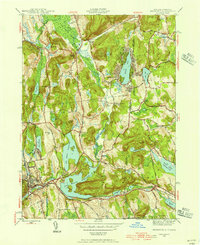 1943 Brewster1956 Print · USGSThe New York and Connecticut borderlands appear here in the 1940s, showcasing a landscape defined by the Croton Watershed's massive reservoirs. Researchers can trace ancestral locations from Sodom to Milltown, or locate landmarks like Big Elm Sch and Beaver Bog Ch.2 unique versions available
 - 1943 Map of Lake Carmel, 1958 Print
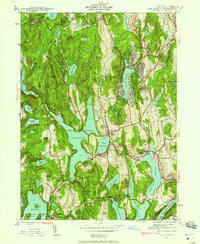 1943 Lake Carmel1958 Print · USGSPutnam County in the 1940s is defined by its massive reservoirs and the growth of lakeside communities like Lake Carmel. Researchers can trace old family lineages through the Raymond Hill Cem or locate industrial sites like the Tilly Foster Mine.
 - 1944 Map of Croton Falls
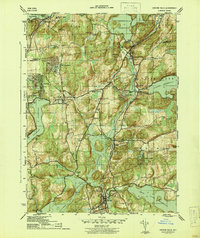 1944 Croton Falls1944 Print · USGSUpper Westchester and Putnam counties are seen here during the mid-forties, characterized by a vast network of reservoirs and the New York Central rail line. Researchers can locate family landmarks like the Wandell Cem, trace the early grounds of the Reformatory, and find community centers like Somers and Purdy.2 unique versions available
 - 1944 Map of Lake Carmel
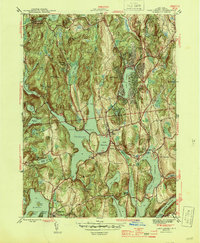 1944 Lake Carmel1944 Print · USGSPutnam County during the mid-1940s shows a landscape of deep reservoirs and rising recreational retreats. Genealogists and historians can trace the foundations of the area at Tilly Foster Mine, the Drew Seminary, and Raymond Hill Cem.2 unique versions available
 - 1945 Map of Peach Lake
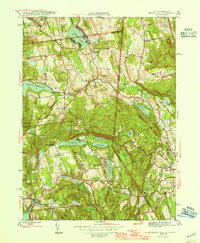 1945 Peach Lake1945 Print · USGSThe hills of Westchester and Fairfield counties appear in the mid-1940s, revealing a landscape defined by glacial lakes and old turnpike crossings. Genealogists can trace family lines through June Cem, the Peach Lake Meeting House, and landmarks in South Salem.3 unique versions available
 - 1945 Map of Pawling, 1956 Print
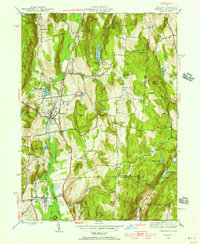 1945 Pawling1956 Print · USGSDutchess County at the close of the Second World War reveals a landscape of high ridges and significant wetlands along the New York-Connecticut border. Genealogists and local historians can trace legacy landmarks including the Quaker Hill Meeting House, the village of Pawling, and the vast expanse of The Great Swamp.2 unique versions available
 - 1946 Map of Peach Lake
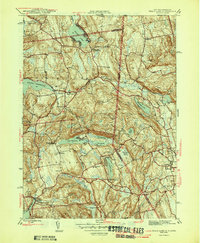 1946 Peach Lake1946 Print · USGSThe New York and Connecticut border country comes alive in the mid-1940s, showing a landscape of lakeside hamlets and rising reservoirs. Genealogists and historians can trace local roots through landmarks like the Peach Lake Meeting House, Lewisboro Sch, and Drews Cliff Cem.2 unique versions available
 - 1946 Map of Brewster
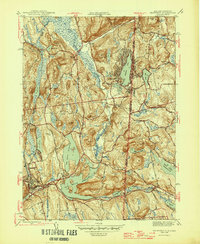 1946 Brewster1946 Print · USGSThe New York and Connecticut state line is defined by massive reservoirs and rural crossroads in the mid-forties. Genealogists can trace family legacies through Union Cem, Big Elm Sch, and the uniquely named settlement of Sodom.2 unique versions available
 - 1947 Map of West Point
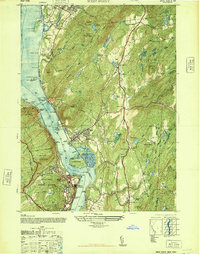 1947 West Point1947 Print · USGSPost-war Orange and Putnam Counties appear here during a period of steady highland growth along the river. Trace the old village footprints of Cold Spring and Garrison, or locate family landmarks like Mekeel Corners and St Marys Ch.
 - 1947 Map of West Point
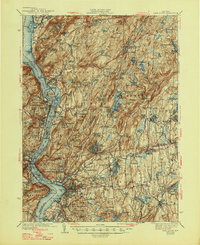 1947 West Point1947 Print · USGSThe Hudson Highlands and the Peekskill waterfront are captured just before the post-war boom, showing the critical junction of river, rail, and early parkways. Genealogists can trace family landmarks and burial sites like Cold Spring Cem, Amawalk Cem, and the historic Mahopac Mines.
 - 1947 Map of Pawling
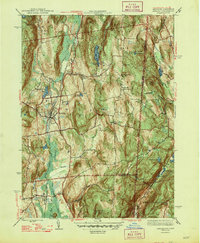 1947 Pawling1947 Print · USGSDutchess County at the edge of Connecticut was a landscape of highland ridges and river valleys in the late 1940s. Genealogists can locate family landmarks such as Hurd Sch, Akins Corners, and the historic Quaker Hill Meeting House.2 unique versions available
 - 1947 Map of Peekskill
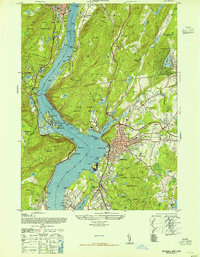 1947 Peekskill1947 Print · USGSThe Hudson Highlands were undergoing significant post-war development when this map was made, balancing heavy military presence with growing suburban settlements. Researchers can trace historic ruins at Fort Montgomery or locate family sites at Hillside Cemetery and Continental Village.
 - 1947 Map of Hartford, 1955 Print
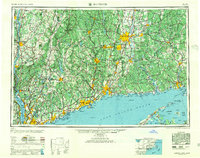 1947 Hartford1955 Print · USGSSouthern New England and the Hudson Valley are shown in detail during the post-war expansion era. Genealogists and researchers can trace local landmarks from the State Capitol and Yale University to the Stratford Lighthouse and Woodlawn Cem.2 unique versions available
 - 1948 Map of Poughquag
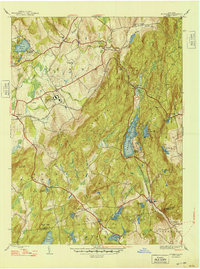 1948 Poughquag1948 Print · USGSDutchess and Putnam counties are captured here in the late 1940s, showing the early path of the Appalachian Trail through the New York highlands. Researchers can trace the massive Disciplinary Barracks at Green Haven and old schoolhouses like Gardner Hollow Sch.2 unique versions available
 - 1948 Map of Hartford
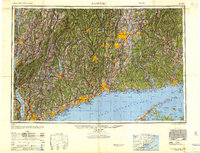 1948 Hartford1948 Print · USGSSouthern New England is captured here in the late 1940s, showcasing a landscape of thriving industrial cities and developing parkways. Genealogists and historians can trace the rail networks of the New York New Haven and Hartford RR or locate coastal defense sites like Fort Terry and Camp Shanks.2 unique versions available
End of results
Showing maps 1-18 of 18
Top cities of Putnam County
- Carmel historical maps
- Southeast historical maps
- Kent historical maps
- Putnam Valley historical maps
- Patterson historical maps
- Philipstown historical maps
Frequently asked questions
- What are the different types of historical maps available for Putnam County?
- What is the oldest map of Putnam County?
- Where can I purchase historical maps of Putnam County for my home or office?
- Where can I download high-res historical maps of Putnam County?
- Are there historical topographic maps available for Putnam County?
- Is there historical aerial imagery available for Putnam County?
- Where are historical maps of Putnam County sourced from?