1900s (20th Century) Maps of Stony Point, New York
Explore 36 historic maps of Stony Point from the 1900s (20th Century). These maps offer a rare glimpse into what life looked like during the 1900s — showing old roads, neighborhoods, homes, and landmarks that have changed or disappeared over time.
Whether you're researching your family's past, planning a metal detecting trip, or studying how Stony Point's landscape evolved across the 1900s, these high-resolution maps are a powerful tool for exploring the history of this region.
- Focus on a specific era: All maps on this page are from the 1900s, giving you a focused view of this time period.
- See what’s changed: Compare century-old streets, trails, and buildings to today's modern landscape using overlays and satellite layers.
- Research with precision: Use these maps for genealogy, historical research, land use analysis, or educational projects.
- View, download, or print: Maps are fully viewable online in high resolution, and can be downloaded or printed for your own records.
Start exploring Stony Point's history through authentic maps from the 1900s. This is your window into the past.
Stony Point, NY maps
(36)- 1901 Map of West Point
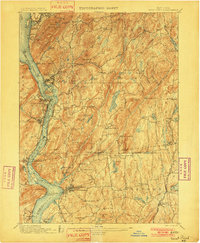 1901 West Point1901 Print · USGSThe Hudson Highlands and West Point are shown at the turn of the century, when river railroads and mountain mines defined the local economy. Genealogists can trace family landmarks and hamlets like Nelsonville, Mahopac Mines, and Yorktown Heights.12 unique versions available
 - 1902 Map of Tarrytown
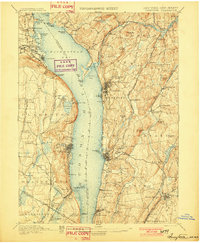 1902 Tarrytown1902 Print · USGSThe Hudson River valley at the turn of the century shows a landscape of busy river landings and nascent suburbs. Genealogists and historians can trace old homesteads and landmarks like Waldberg Landing, the State Prison at Ossining, and the Croton Aqueduct.11 unique versions available
 - 1902 Map of Schunemunk
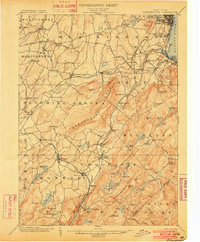 1902 Schunemunk1902 Print · USGSOrange County at the turn of the century shows a landscape defined by the rise of the railroad and the enduring presence of the Highlands. Genealogists and historians can trace old homesteads and industrial sites like Bull Mine, Oxford Depot, and the riverfront at Cornwall Landing.10 unique versions available
 - 1910 Map of Ramapo
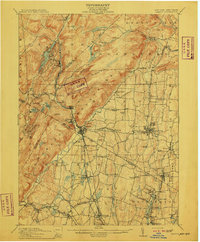 1910 Ramapo1910 Print · USGSThe Ramapo Valley at the turn of the century served as a vital transit corridor between New York and New Jersey, dominated by rail lines and river industry. Genealogists and local historians can trace the foundations of Sloatsburg, Suffern, and Pearl River, alongside landmarks like the Ramapo Cem. and the Powder Works.6 unique versions available
 - 1930 Map of Schunemunk
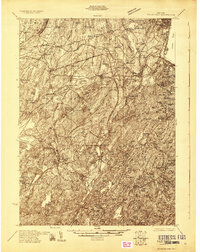 1930 Schunemunk1930 Print · USGSOrange County's rail and river landscapes come into sharp focus during the late Prohibition era. Researchers can trace historic district schoolhouses like Elmwood No. 6 School and the critical junction points of the ERIE RR near Vails Gate Junction.3 unique versions available
 - 1931 Map of Ramapo
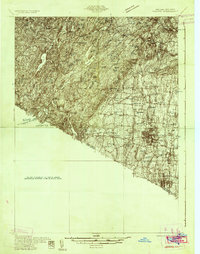 1931 Ramapo1931 Print · USGSRockland County in the late twenties and early thirties shows a unique mix of expanding suburban rail towns and state park wilderness. Genealogists and historians can trace Letchworth Village, the old Hogan Kamp Mine, and early schools like Bardonia Sch.3 unique versions available
 - 1935 Map of Schunemunk
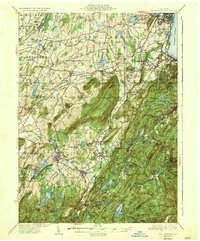 1935 Schunemunk1935 Print · USGSOrange County in the mid-1930s is a crossroads of heavy rail and Hudson River commerce. Genealogists and historians can trace defunct rail sidings, old school sites like Quaker Hill Sch, and industrial landmarks from Bull Mine to Firthcliffe.4 unique versions available
 - 1936 Map of West Point
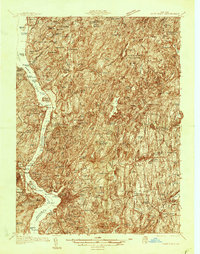 1936 West Point1936 Print · USGSThe Hudson Highlands in the mid-1930s reveal a landscape of strategic military grounds and evolving state parks. Genealogists and historians can trace old family burial grounds like Halstead Cem, the workings of the Mahopac Mines, and the early layout of West Point.2 unique versions available
 - 1937 Map of Tarrytown
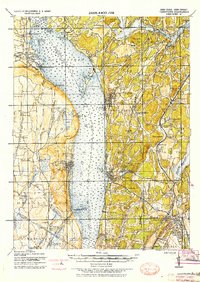 1937 Tarrytown1937 Print · USGSThe Hudson River valley during the 1930s serves as a busy corridor of rail, water, and infrastructure. Genealogists and local historians can trace the old landings at Waldberg Landing, the grounds of the State Prison in Ossining, and the rail lines through Nyack.
 - 1938 Map of Haverstraw
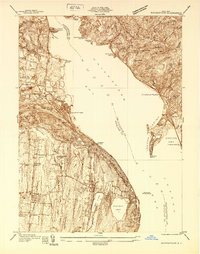 1938 Haverstraw1938 Print · USGSThe lower Hudson River corridor comes alive in this late 1930s survey of the bustling industrial and commuter towns along the riverbanks. Researchers can trace the path of the West Shore RR, find family roots at St Peters Cem, or locate the New York Reconstruction Home.
 - 1938 Map of Ramapo
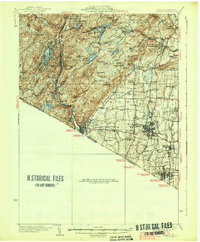 1938 Ramapo1938 Print · USGSRockland County in the late 1930s is revealed here as a landscape of institutional campuses, rail-side villages, and emerging parklands. Genealogists can trace family connections at Letchworth Village, St Agatha Home, and vanished hamlets like Sandyfield or Johnsontown.3 unique versions available
 - 1941 Map of West Point
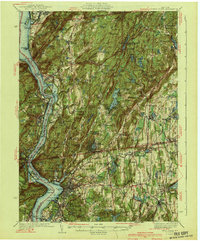 1941 West Point1941 Print · USGSThe Hudson Highlands were undergoing significant change in the years leading up to the war, blending heavy industry with expanding military installations. Genealogists can trace family lines through Continental Village, Hillside Cem, and the various schools like Manitou Sch.3 unique versions available
 - 1943 Map of Haverstraw
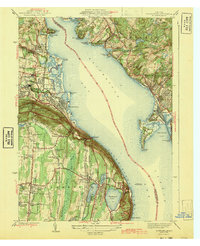 1943 Haverstraw1943 Print · USGSThe Hudson River's wide reach at the Tappan Zee is documented here during the early years of the war. Researchers can trace local heritage through the Rockland Lighthouse, family-named landings like Snedeker Landing, and early aviation at Christie Airport.2 unique versions available
 - 1946 Map of Popolopen Lake, 1947 Print
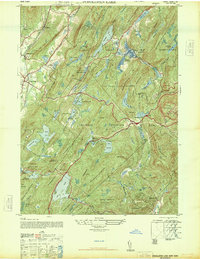 1946 Popolopen Lake1947 Print · USGSOrange County's highlands are captured here just after the war, showing the expansion of military and park lands. Researchers can trace the legacy of iron mining at the Forrest of Dean Mine or locate old settlements like Baileytown and Butsontown.
 - 1947 Map of West Point
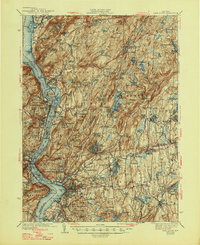 1947 West Point1947 Print · USGSThe Hudson Highlands and the Peekskill waterfront are captured just before the post-war boom, showing the critical junction of river, rail, and early parkways. Genealogists can trace family landmarks and burial sites like Cold Spring Cem, Amawalk Cem, and the historic Mahopac Mines.
 - 1947 Map of Popolopen Lake
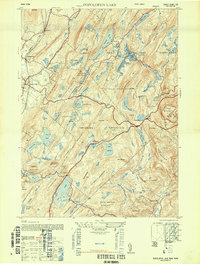 1947 Popolopen Lake1947 Print · USGSOrange County's highlands are seen here in the late 1940s, split between military grounds and expansive parkland. Researchers can trace the layout of West Point Military Reservation or locate the historic Forrest of Dean mine and Baileytown.
 - 1947 Map of Peekskill
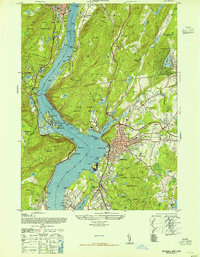 1947 Peekskill1947 Print · USGSThe Hudson Highlands were undergoing significant post-war development when this map was made, balancing heavy military presence with growing suburban settlements. Researchers can trace historic ruins at Fort Montgomery or locate family sites at Hillside Cemetery and Continental Village.
 - 1947 Map of Hartford, 1955 Print
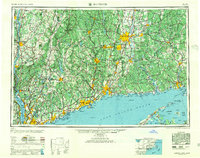 1947 Hartford1955 Print · USGSSouthern New England and the Hudson Valley are shown in detail during the post-war expansion era. Genealogists and researchers can trace local landmarks from the State Capitol and Yale University to the Stratford Lighthouse and Woodlawn Cem.2 unique versions available
 - 1948 Map of Hartford
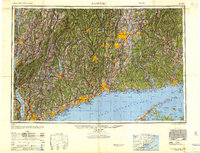 1948 Hartford1948 Print · USGSSouthern New England is captured here in the late 1940s, showcasing a landscape of thriving industrial cities and developing parkways. Genealogists and historians can trace the rail networks of the New York New Haven and Hartford RR or locate coastal defense sites like Fort Terry and Camp Shanks.2 unique versions available
 - 1950 Map of Scranton, 1952 Print
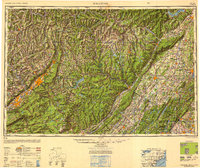 1950 Scranton1952 Print · USGSMid-century Northeast Pennsylvania and the Hudson Valley come alive in this survey of the tri-state region. Genealogists and historians can trace the dense rail networks of the Erie RR and DL&W RR between industrial hubs like Scranton and Wilkes-Barre.
 - 1953 Map of Scranton
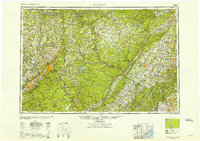 1953 Scranton1953 Print · USGSNortheastern Pennsylvania and the Catskills are shown in great detail during the early fifties, a time when rail lines and river valleys dictated the region's growth. Genealogists and historians can trace the industrial hearts of Scranton and Wilkes-Barre or locate remote landmarks like High Point and Lake Wallenpaupack.
 - 1955 Map of Thiells, 1957 Print
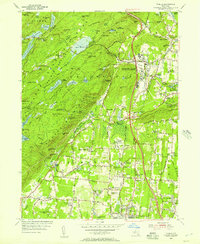 1955 Thiells1957 Print · USGSMid-century Rockland County was a landscape of dense woodlands and significant public institutions as the postwar era began. Researchers can trace the grounds of the Letchworth Village State Mental Institution, locate the Hogencamp Mine, and find historic congregations at Wesley Chapel.4 unique versions available
 - 1955 Map of Haverstraw, 1958 Print
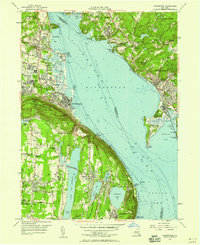 1955 Haverstraw1958 Print · USGSThe Hudson River valley during the mid-1950s shows a region of rising suburban life and deep-seated river history. Genealogists and local historians can locate the State Rehabilitation Hospital, Mount Repose Cemetery, and the riverfront Rockland Lighthouse.2 unique versions available
 - 1957 Map of Peekskill, 1959 Print
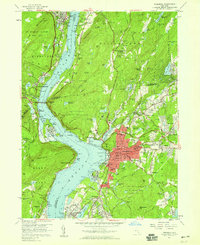 1957 Peekskill1959 Print · USGSThe Hudson Highlands and Peekskill waterfront are captured here in the late fifties, showcasing a landscape of river-borne industry and established institutions. Researchers can trace historic cemeteries and schools such as Hillside Cemetery, Ladycliff College, and the National Guard Armory.6 unique versions available
 - 1957 Map of Popolopen Lake, 1959 Print
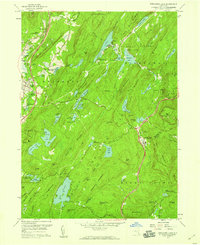 1957 Popolopen Lake1959 Print · USGSThe Hudson Highlands in the late fifties show a landscape of military grounds and public forest just as the modern thruway era arrived. Researchers can locate the historic Quaker Meetinghouse, trace the original Appalachian Trail route, and find settlements like Doodletown and Barleytown.5 unique versions available
Showing maps 1-25 of 36
Top cities near Stony Point
- Ramapo historical maps
- Greenburgh historical maps
- Clarkstown historical maps
- Orangetown historical maps
- Mount Pleasant historical maps
- Cortlandt historical maps
See more
Top neighborhoods of Stony Point
- Bulsontown historical maps
- Fort Clinton historical maps
- Jones Point historical maps
- Cedar Flats historical maps
- Buckberg historical maps
- Tomkins Cove historical maps
See more
Frequently asked questions
- What are the different types of historical maps available for Stony Point?
- What is the oldest map of Stony Point?
- Where can I purchase historical maps of Stony Point for my home or office?
- Where can I download high-res historical maps of Stony Point?
- Are there historical topographic maps available for Stony Point?
- Is there historical aerial imagery available for Stony Point?
- Where are historical maps of Stony Point sourced from?