1900s (20th Century) Maps of Tuckahoe, Southampton
Explore 11 historic maps of Tuckahoe from the 1900s (20th Century). These maps offer a rare glimpse into what life looked like during the 1900s — showing old roads, neighborhoods, homes, and landmarks that have changed or disappeared over time.
Whether you're researching your family's past, planning a metal detecting trip, or studying how Tuckahoe's landscape evolved across the 1900s, these high-resolution maps are a powerful tool for exploring the history of this region.
- Focus on a specific era: All maps on this page are from the 1900s, giving you a focused view of this time period.
- See what’s changed: Compare century-old streets, trails, and buildings to today's modern landscape using overlays and satellite layers.
- Research with precision: Use these maps for genealogy, historical research, land use analysis, or educational projects.
- View, download, or print: Maps are fully viewable online in high resolution, and can be downloaded or printed for your own records.
Start exploring Tuckahoe's history through authentic maps from the 1900s. This is your window into the past.
Tuckahoe, Southampton maps
(11)- 1903 Map of Sag Harbor, 1961 Print
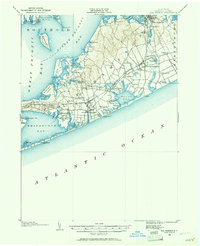 1903 Sag Harbor1961 Print · USGSThe South Fork of Long Island at the start of the century reveals a coastal landscape of rail-linked hamlets and active life-saving stations. Researchers can trace the early layout of the Shinnecock Indian Reservation and locate historic stops like Wainscott Sta along the Long Island Railroad.
 - 1904 Map of Sag Harbor
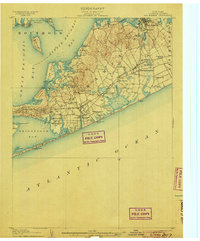 1904 Sag Harbor1904 Print · USGSThe South Fork of Long Island at the dawn of the 1900s reveals a maritime landscape of life-saving stations and rail-connected villages. Genealogists and historians can trace the early layout of Sag Harbor, the Montauk Division railroad stops, and the Shinnecock Indian Reservation.6 unique versions available
 - 1947 Map of Southampton
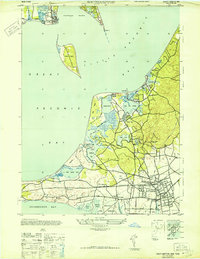 1947 Southampton1947 Print · USGSCoastal Suffolk County at mid-century reveals a landscape of deep colonial history and growing seasonal prominence. Trace local landmarks like the Old Fort 1777-79 in Southampton, the Shinnecock Indian Reservation, and the coastal hamlets of New Suffolk and Art Village.
 - 1949 Map of New York, 1951 Print
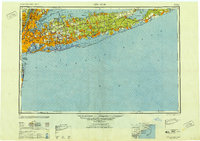 1949 New York1951 Print · USGSLong Island and its surrounding waters are documented here in the late 1940s, just as the postwar suburban boom began to transform the region. Genealogists and historians can trace the early layouts of Idlewild Airport, Mitchell Field, and the established routes of the Long Island RR.
 - 1954 Map of New York
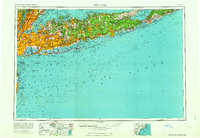 1954 New York1954 Print · USGSLong Island and the New York metropolitan area are shown during the height of post-war suburbanization. Genealogists and historians can trace the growth of Levittown, the infrastructure of the Long Island Rail Road, and landmarks like Mitchel Afb.2 unique versions available
 - 1956 Map of Southampton, 1957 Print
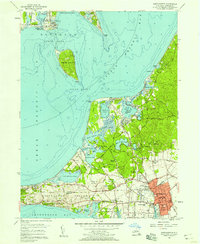 1956 Southampton1957 Print · USGSThe Hamptons of the mid-1950s reveal a coastal landscape of elite sporting clubs and deep-rooted heritage. Genealogists and local historians can trace the foundations of Southampton through its many burial grounds, including Old Southampton Cem, and the historic Shinnecock Indian Reservation.2 unique versions available
 - 1957 Map of New York, 1975 Print
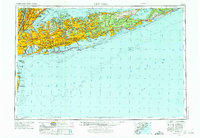 1957 New York1975 Print · USGSLong Island and the New York metropolitan area are shown in this mid-century survey during a period of massive suburban growth and industrial expansion. Researchers can trace the Long Island RR network and locate landmarks like Fort Tilden or the Brookhaven National Laboratory.
 - 1958 Map of New York
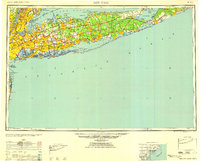 1958 New York1958 Print · USGSLong Island at the height of its postwar expansion reveals a landscape of rapidly growing suburbs and critical military installations. Genealogists and historians can trace the early footprints of Levittown, the terminals of Idlewild Airport, and the grounds of Brookhaven National Laboratory.3 unique versions available
 - 1960 Map of New York, 1979 Print
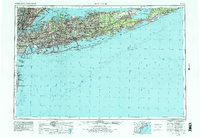 1960 New York1979 Print · USGSLong Island and the five boroughs are shown at a transformative moment mid-century as suburban expansion reshaped the landscape. Researchers can trace family roots through evolving neighborhoods from Rockville Centre to Sayville, or locate historic maritime landmarks like Eatons Neck and Montauk Point.2 unique versions available
 - 1969 Map of New York
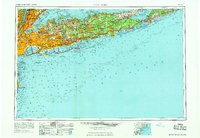 1969 New York1969 Print · USGSLong Island and the New York harbor area are shown here during a peak era of suburban expansion and Cold War defense. Trace the growth of Levittown, the infrastructure of Idlewild NY International Airport, and the reach of the Long Island RR.
 - 1984 Map of Long Island East, 1985 Print
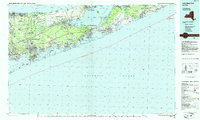 1984 Long Island East1985 Print · USGSEastern Long Island in the 1980s reveals a landscape of suburban growth and coastal preservation. Trace the mid-century development of Hampton Bays alongside Calverton National Cemetery and the Long Island Rail Road.3 unique versions available
End of results
Showing maps 1-11 of 11
Top cities near Tuckahoe
- Southampton historical maps
- Riverhead historical maps
- East Hampton historical maps
- Southold historical maps
- Hampton Bays historical maps
- Riverhead historical maps
See more
Frequently asked questions
- What are the different types of historical maps available for Tuckahoe?
- What is the oldest map of Tuckahoe?
- Where can I purchase historical maps of Tuckahoe for my home or office?
- Where can I download high-res historical maps of Tuckahoe?
- Are there historical topographic maps available for Tuckahoe?
- Is there historical aerial imagery available for Tuckahoe?
- Where are historical maps of Tuckahoe sourced from?