Old Maps of New Hanover County, North Carolina
Explore 116 old maps of New Hanover County, spanning from 1942 to today. These high-resolution historic maps reveal how streets, neighborhoods, landmarks, and natural features evolved over time — perfect for genealogy, metal detecting, research, and local history exploration.
What you can do with these maps:
- See how New Hanover County changed over time: Compare historical maps to modern-day views to trace roads, homesites, rail lines & more.
- View detailed metadata: Each map includes creators, publishers, year, scale, and archive source.
- Overlay maps with satellite & LiDAR: Visualize the past alongside modern tools to explore terrain & human change.
- Trusted historical sources: Maps sourced from the USGS, Library of Congress, and other archives.
- Access maps your way: View online, download high-res files, or order prints for personal or research use.
Start exploring old maps of New Hanover County to uncover forgotten places, hidden landmarks, and the deep history beneath your feet.
New Hanover County, NC maps
(116)- 1942 Map of Topsail
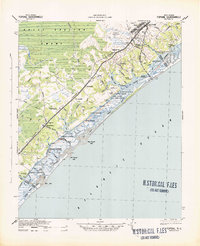 1942 Topsail1942 Print · USGSThe Pender County coast was undergoing a military transformation in the early 1940s as infrastructure expanded around Camp Davis. Genealogists and historians can trace dozens of family-named water access points like Howard Landing and Edens Landing along the edge of Topsail Sound.
 - 1942 Map of Wilmington
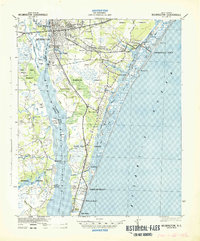 1942 Wilmington1942 Print · USGSWilmington and its coastal sounds are shown during the early years of the war, when the riverfront and beach communities were expanding. Researchers can trace family-named landmarks like Everett Creek, the riverside Ruins Anderson Landing, and the seaside Seabreeze resort.
 - 1942 Map of Cape Fear, 1956 Print
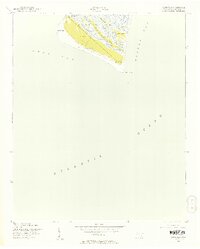 1942 Cape Fear1956 Print · USGSCape Fear and Smith Island are captured here during the early 1940s, serving as a critical coastal outpost. Researchers can trace the wartime infrastructure of the Atlantic coast, from the Cape Fear Lighthouse to the Coast Guard Tower and Signal Mast.
 - 1946 Map of Snow Marsh
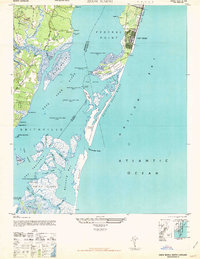 1946 Snow Marsh1946 Print · USGSThe Lower Cape Fear region just after the war reveals a complex network of maritime defenses and tidal marshes. Researchers can trace the layout of Fort Fisher, locate the Old Lighthouse, and explore the vanished geography of Corncake Inlet.
 - 1947 Map of Rocky Point
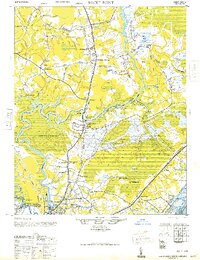 1947 Rocky Point1947 Print · USGSCoastal North Carolina just after the war shows a landscape of river-bend settlements and expanding rail lines. You can trace old family routes along Merricks Lane Road, locate historic sites like St. James Ch, and see the early industry at Castle Hayne.
 - 1948 Map of Topsail
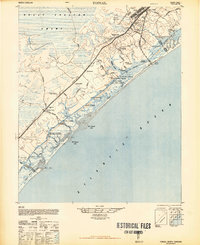 1948 Topsail1948 Print · USGSThe Pender County coastline is shown here in the late 1940s, when the maritime economy was centered on small inlets and landings. Researchers can trace the military history of Camp Davis or locate family sites at Edens Landing and Hampstead.2 unique versions available
 - 1948 Map of Wilmington
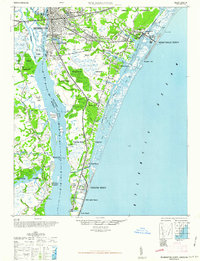 1948 Wilmington1948 Print · USGSWilmington and the New Hanover coast are captured here in the late 1940s, as the region's river-based industry and beach communities began their post-war expansion. Researchers can trace historical sites from the Ruins Anderson Landing to urban landmarks like Union Station and Customs House.2 unique versions available
 - 1949 Map of Georgetown, 1953 Print
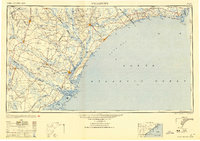 1949 Georgetown1953 Print · USGSThe South Carolina coast and North Carolina borderlands appear here in the mid-century, prior to the major modern development of the Grand Strand. Genealogists and historians can trace the rail networks of the Seaboard Air Line Railroad and locate coastal landmarks from Fort Caswell to McClellanville.
 - 1953 Map of Florence, 1964 Print
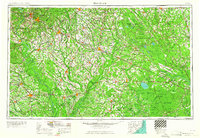 1953 Florence1964 Print · USGSThe Carolina borderlands in the mid-fifties were a landscape of vast river swamps and rising rail towns. Trace the legacy of the Seaboard Air Line through Florence or explore the wetlands surrounding Lake Waccamaw and the Green Swamp.3 unique versions available
 - 1953 Map of Beaufort, 1965 Print
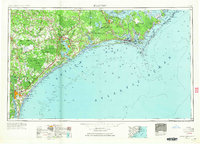 1953 Beaufort1965 Print · USGSThe North Carolina coastline in the mid-fifties reveals an era of massive military expansion alongside traditional maritime life. Genealogists can trace family names and small settlements from Sealevel to Sneads Ferry or locate landmarks like Fort Macon.3 unique versions available
 - 1954 Map of Florence
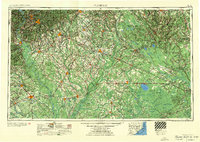 1954 Florence1954 Print · USGSThe Carolinas borderlands come alive in the early fifties, showing the vital rail-and-river networks of the coastal plain. Genealogists can trace family footprints across the Green Swamp or through settlements like Red Springs, Chadbourn, and McColl.
 - 1954 Map of Beaufort
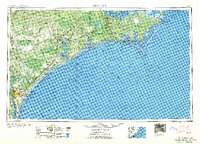 1954 Beaufort1954 Print · USGSCoastal North Carolina in the mid-fifties reveals a landscape of strategic military installations, sprawling wetlands, and thriving rail towns. Genealogists and historians can trace the foundations of Wilmington, the rural reaches of Duplin County, and shoreline landmarks like Cape Lookout and Carolina Beach.
 - 1954 Map of Acme, 1957 Print
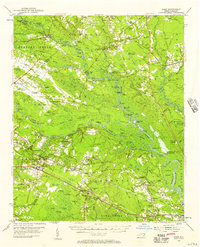 1954 Acme1957 Print · USGSCoastal North Carolina river life in the mid-fifties centered on the confluence of the Cape Fear and the Black River. Genealogists can trace family names at Still Bluff and Maultbys Point, or locate the historic Lincoln High Sch and Farmers Chapel.2 unique versions available
 - 1967 Map of Georgetown
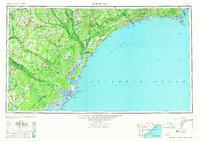 1967 Georgetown1967 Print · USGSThe South Carolina Lowcountry and Grand Strand meet in the late sixties, showcasing a coastal landscape transitioning from river-based industry to seaside tourism. Researchers can trace the Intracoastal Waterway past Georgetown or locate historical sites like Fort Fisher and Murrells Inlet.
 - 1970 Map of Kure Beach, 1972 Print
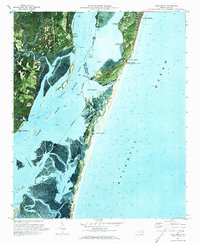 1970 Kure Beach1972 Print · USGSThe Lower Cape Fear region in the early seventies shows a landscape defined by military logistics and coastal history. Researchers can trace the layout of the Military Ocean Terminal Sunny Point or locate the Fort Fisher State Historic Site and The Rocks along the river.2 unique versions available
 - 1970 Map of Cape Fear, 1972 Print
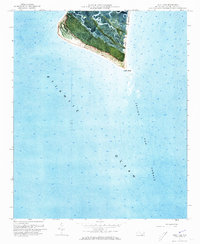 1970 Cape Fear1972 Print · USGSThe North Carolina coast at the dawn of the seventies is preserved in this orthophotomap of the Cape Fear point. Maritime historians and researchers can study the intricate Tidal Flat systems, the historic Bald Head Lighthouse, and the reaching Frying Pan Shoals.
 - 1970 Map of Hampstead, 1972 Print
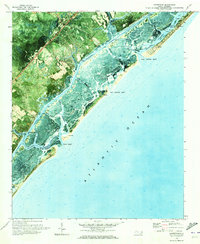 1970 Hampstead1972 Print · USGSCoastal Pender County at the start of the 1970s reveals a landscape of quiet sounds and growing shoreline communities. Genealogists and local historians can trace the foundations of Hampstead or locate family markers near Topsail Beach and Mallory.2 unique versions available
 - 1970 Map of Wrightsville Beach, 1972 Print
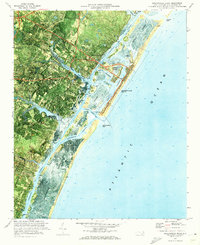 1970 Wrightsville Beach1972 Print · USGSCoastal New Hanover County comes into focus in the early seventies, showing the development of beach communities and mainland neighborhoods. Researchers can locate the University of North Carolina at Wilmington and trace waterways like Banks Channel and the Intracoastal Waterway.
 - 1970 Map of Carolina Beach, 1973 Print
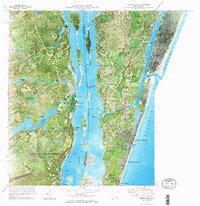 1970 Carolina Beach1973 Print · USGSThe Cape Fear River and the Atlantic coast meet in this 1970s orthophoto, showing the region during a period of significant military and coastal development. Genealogists and historians can trace family-named sites like Freeman Cem or explore the grounds of Orton Plantation and Snows Cut.2 unique versions available
 - 1970 Map of Scotts Hill, 1973 Print
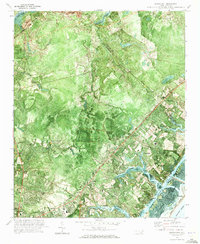 1970 Scotts Hill1973 Print · USGSCoastal New Hanover and Pender Counties appear in the early 1970s as a landscape of tidal creeks and growing mainland settlements. Genealogists can locate family landmarks like Prospect Cem, Oak Grove Ch, and the grounds of Blair Sch.3 unique versions available
 - 1970 Map of Castle Hayne, 1973 Print
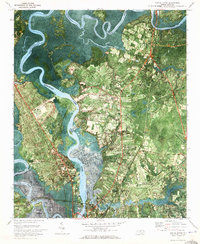 1970 Castle Hayne1973 Print · USGSThe riverfront north of Wilmington comes into focus in the early 1970s as industrial growth meets rural North Carolina. Researchers can trace family roots at Wrightsboro or explore landmarks like St Stanislaus Ch and the New Hanover County Airport.2 unique versions available
 - 1970 Map of Mooretown, 1973 Print
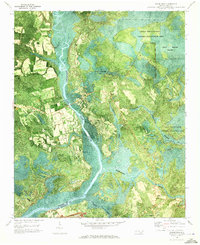 1970 Mooretown1973 Print · USGSCoastal Pender County is documented here in the early seventies, showing a landscape of deep river swamps and scattered rural industry. Genealogists can locate Ashe Cem and Union Chapel Cem or trace the riverbank near Mooretown.
 - 1970 Map of Rocky Point, 1973 Print
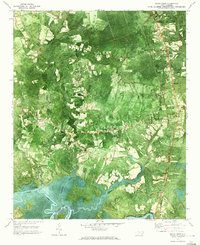 1970 Rocky Point1973 Print · USGSCoastal Pender County comes into focus in the early 1970s, showing the intersection of river life and rail transport. Researchers can trace family roots through sites like Pender Academy, Rileys Creek Cem, and the settlement at Rocky Point.2 unique versions available
 - 1970 Map of Wilmington, 1973 Print
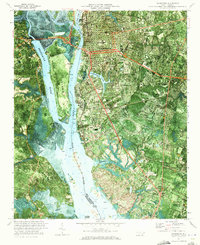 1970 Wilmington1973 Print · USGSWilmington and its busy riverfront appear at a point of significant post-war growth in the early seventies. Trace the industrial footprint of the State Ports Authority, the location of Myrtle Grove, and community hubs like Legion Stadium.3 unique versions available
 - 1972 Map of Beaufort, 1975 Print
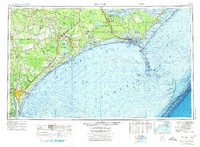 1972 Beaufort1975 Print · USGSThe North Carolina coast in the early seventies shows a landscape defined by massive military bases and coastal sounds. Trace rural family roots at Sarecta and Catherine Lake or explore the barrier islands of the Cape Lookout National Seashore.
Showing maps 1-25 of 116
Top cities of New Hanover County
- Wilmington historical maps
- Carolina Beach historical maps
- Wrightsville Beach historical maps
- Kure Beach historical maps
Frequently asked questions
- What are the different types of historical maps available for New Hanover County?
- What is the oldest map of New Hanover County?
- Where can I purchase historical maps of New Hanover County for my home or office?
- Where can I download high-res historical maps of New Hanover County?
- Are there historical topographic maps available for New Hanover County?
- Is there historical aerial imagery available for New Hanover County?
- Where are historical maps of New Hanover County sourced from?