Old Maps of Falls, North Carolina for Academic Research
Study the evolution of Falls with 13 high-resolution historic maps. Whether you're teaching, researching, or modeling changes in land use, these maps provide essential visual documentation of urban, environmental, and geographic change.
- Analyze long-term change: Track patterns in development, transportation, and natural features.
- Ideal for environmental or urban studies: Support academic projects with primary historical map data.
- Use in the classroom or lab: Educators and researchers rely on these maps to bring historical context to life.
These maps are a powerful tool for teaching, research, and visualizing how Falls has changed over the decades.
Falls, NC maps
(13)- 1943 Map of Raleigh
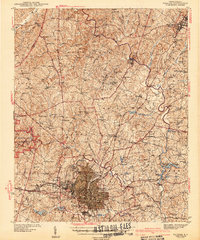 1943 Raleigh1943 Print · USGSRaleigh and its surrounding Wake County townships are captured here in the early 1940s as a bustling nexus of rail and industry. Genealogists can trace family names through rural landmarks like Lassiters Mill, Method, and numerous country churches like Mt Bethel Church.2 unique versions available
 - 1951 Map of Raleigh, 1952 Print
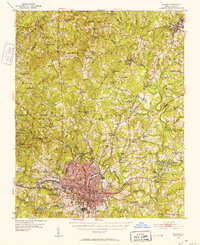 1951 Raleigh1952 Print · USGSMid-century Raleigh and its surrounding rural townships are shown here as the capital city expanded toward the Neuse River. Genealogists can trace family-named schools and crossroads like Lovely Hill Sch, Six Forks, and the historic mill at Lassiters Mill.3 unique versions available
 - 1953 Map of Raleigh, 1965 Print
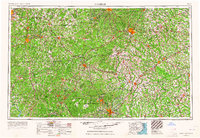 1953 Raleigh1965 Print · USGSCentral North Carolina in the early sixties shows a landscape of growing towns and military hubs before the full expansion of the interstate system. Genealogists can trace family footprints across the Piedmont through Wake Forest, Siler City, and the large Fort Bragg Military Reservation.4 unique versions available
 - 1954 Map of Raleigh
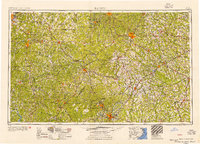 1954 Raleigh1954 Print · USGSThe North Carolina Piedmont and Sandhills are captured in the mid-fifties during a period of steady regional growth. Genealogists and historians can trace the development of towns like Siler City or locate landmarks such as Falls of Neuse and Camp Mackall.
 - 1967 Map of Wake Forest, 1972 Print
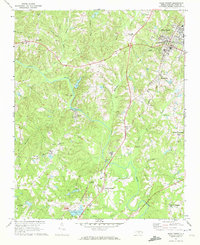 1967 Wake Forest1972 Print · USGSNorthern Wake County in the late sixties shows a landscape of growing crossroads and river communities centered around Wake Forest. Genealogists can locate family landmarks at Stony Hill Ch, Forestville, and the historic Southeastern Theological Seminary campus.6 unique versions available
 - 1984 Map of Raleigh, 1985 Print
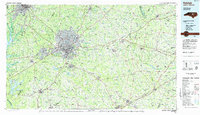 1984 Raleigh1985 Print · USGSThe North Carolina Research Triangle is shown during a decade of rapid growth, from the sprawl of Raleigh to the expanding waters of Falls Lake. Genealogists and historians can trace rail lines like the Seaboard Coast Line or locate landmark sites like Dorothea Dix State Hospital and Fuquay-Varina.
 - 1990 Map of Raleigh, 1991 Print
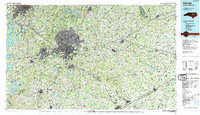 1990 Raleigh1991 Print · USGSGreater Raleigh and the Research Triangle entered a period of significant suburban growth during the 1990s. Researchers can trace the development of towns like Fuquay-Varina and Wake Forest or locate landmarks such as the State Prison and Harris Reservoir.2 unique versions available
 - 1993 Map of Wake Forest, 1999 Print
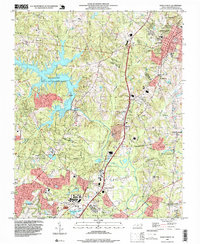 1993 Wake Forest1999 Print · USGSThe area surrounding Wake Forest and northern Raleigh is shown here as suburban expansion met rural crossroads in the early nineties. Researchers can trace family-named landmarks like Walkers Crossroads and local centers including Mt Pleasant Ch.
 - 2010 Map of Wake Forest, 2010 Print
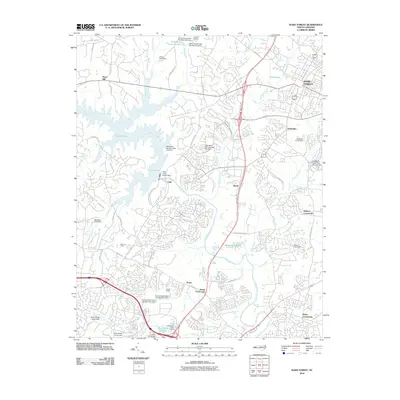 2010 Wake Forest2010 Print · USGSWake County at the start of the 2010s shows a landscape of growing residential networks surrounding the historic center of Wake Forest. Genealogists and local historians can trace legacy landmarks like Forestville, Stony Hill, and the Falls of the Neuse Dam.
 - 2013 Map of Wake Forest, 2013 Print
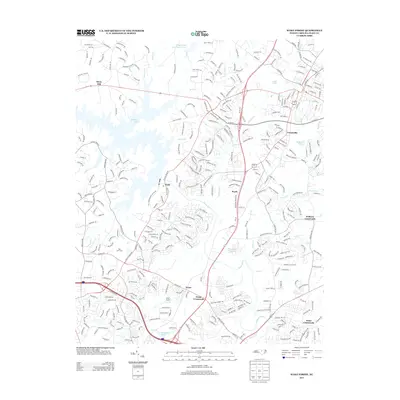 2013 Wake Forest2013 Print · USGSThe northern Wake County suburbs and rural crossroads are captured here during a period of rapid growth. Researchers can trace historic community hubs and local landmarks like Falls, Forestville, and the youth camps at Camp Kanata and Camp Durant.
 - 2016 Map of Wake Forest, 2016 Print
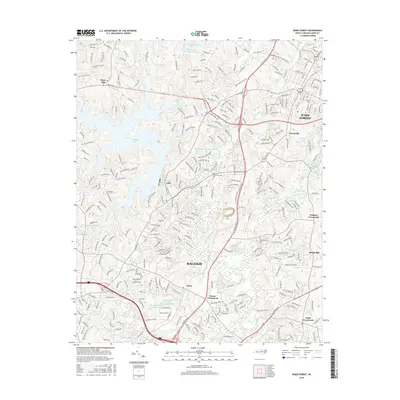 2016 Wake Forest2016 Print · USGSWake County's northern corridor comes into focus in this contemporary survey, capturing the suburban growth between the capital and the historic college town. Genealogists and residents can trace evolving neighborhoods near Wake Forest, Rolesville, and the historic Falls settlement along the river.
 - 2019 Map of Wake Forest, 2019 Print
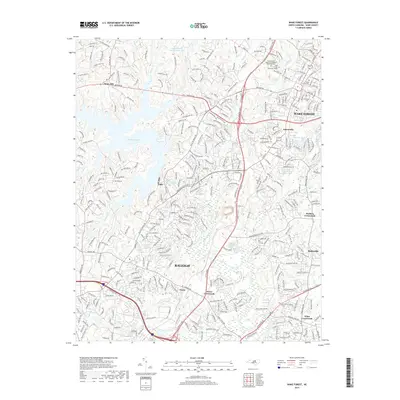 2019 Wake Forest2019 Print · USGSWake County's northern corridor comes into focus in this late 2010s survey, showing the residential evolution between the capital and its outlying towns. Genealogists and historians can trace the grounds of Wake Forest, the Wake Forest Cem, and small-town crossroads like Walkers Crossroads.
 - 2022 Map of Wake Forest, 2022 Print
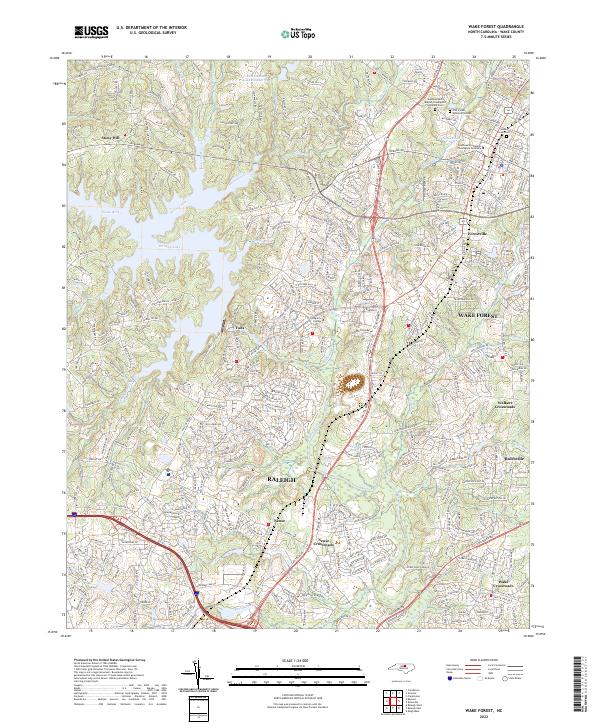 2022 Wake Forest2022 Print · USGSWake County's northern corridor comes into sharp focus during this period of significant growth and suburban expansion. Genealogists and historians can trace the evolution of Wake Forest and Rolesville, while locating landmarks like Stony Hill and the Southeastern Baptist Theological Seminary.
End of results
Showing maps 1-13 of 13
Top cities near Falls
- Raleigh historical maps
- Durham historical maps
- Cary historical maps
- Apex historical maps
- Wake Forest historical maps
- Clayton historical maps
See more
Frequently asked questions
- What are the different types of historical maps available for Falls?
- What is the oldest map of Falls?
- Where can I purchase historical maps of Falls for my home or office?
- Where can I download high-res historical maps of Falls?
- Are there historical topographic maps available for Falls?
- Is there historical aerial imagery available for Falls?
- Where are historical maps of Falls sourced from?