Old Maps of Barnes County, North Dakota for Academic Research
Study the evolution of Barnes County with 227 high-resolution historic maps. Whether you're teaching, researching, or modeling changes in land use, these maps provide essential visual documentation of urban, environmental, and geographic change.
- Analyze long-term change: Track patterns in development, transportation, and natural features.
- Ideal for environmental or urban studies: Support academic projects with primary historical map data.
- Use in the classroom or lab: Educators and researchers rely on these maps to bring historical context to life.
These maps are a powerful tool for teaching, research, and visualizing how Barnes County has changed over the decades.
Barnes County, ND maps
(227)- 1897 Map of Tower
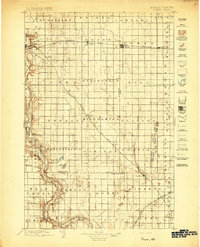 1897 Tower1897 Print · USGSIn the late nineteenth century, the expansion of the northern plains centered on the intersection of the Sheyenne River and the arriving railroads. Genealogists and historians can trace early township plats and rail-stop settlements like Valley City, Fingal, and Enderlin.3 unique versions available
 - 1897 Map of Eckelson
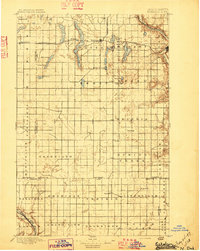 1897 Eckelson1897 Print · USGSEastern North Dakota in the late nineteenth century was a land defined by the iron rail and a network of glacial lakes. Genealogists can trace early homesteads and rail stops near Valley City, Sanborn, and the isolated post office at Svea.3 unique versions available
 - 1952 Map of Grand Forks, 1967 Print
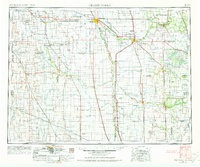 1952 Grand Forks1967 Print · USGSThe Red River Valley in the early fifties is shown here at the height of its rail-and-river agricultural economy. Researchers can locate small-town landmarks like the Pleasant View School, the Immanuel Lutheran Church, and trace the path of the Soo Line Railroad.3 unique versions available
 - 1952 Map of New Rockford, 1968 Print
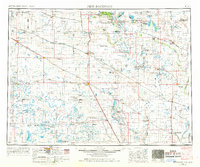 1952 New Rockford1968 Print · USGSThe North Dakota prairie during the mid-1950s was a landscape of rail-dependent farm towns and vast wildlife refuges. Genealogists and historians can trace the foundations of local communities at Fort Totten Indian Agenc, Concordia Lutheran Church, and the Bowdon Country Church and Cemetery.3 unique versions available
 - 1953 Map of Jamestown
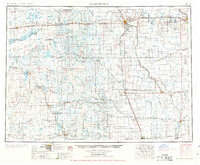 1953 Jamestown1953 Print · USGSSoutheastern North Dakota was a thriving rail and agricultural corridor in the early fifties, anchored by the James River. Researchers can trace the footprints of institutional landmarks like the North Dakota State Hospital and historic sites such as Whitestone Hill Battlefield Park.3 unique versions available
 - 1953 Map of Fargo, 1965 Print
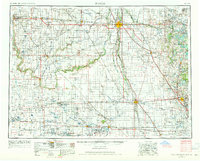 1953 Fargo1965 Print · USGSThe Red River Valley in the mid-fifties was a bustling rail and agricultural corridor during a period of steady prairie growth. Genealogists and historians can trace the intricate rail networks of the Great Northern and Soo Line connecting local hubs like Casselton and Wahpeton.2 unique versions available
 - 1956 Map of New Rockford
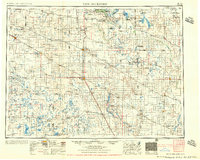 1956 New Rockford1956 Print · USGSMid-century central North Dakota is captured here as a landscape of prairie rail towns and vast wildlife refuges. Trace family roots at the Bowdon Country Church and Cemetery or locate the old St Michael Mission School and Fort Totten.
 - 1956 Map of Fargo
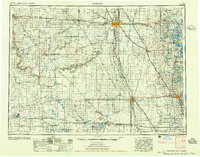 1956 Fargo1956 Print · USGSThe Red River Valley's agricultural heartland is documented here in the mid-fifties as the rail-and-road network expanded across the plains. Genealogists can trace family roots through numerous small railroad towns and local landmarks like Casselton, Sheyenne Valley Church, and Sisseton Indian Res.
 - 1956 Map of Jamestown
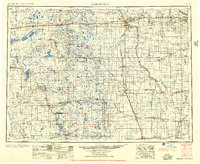 1956 Jamestown1956 Print · USGSThe James River valley and the vast alkali lake country of south-central North Dakota are captured here in the mid-fifties. Genealogists can trace family farms across several counties, locating small rail stops like Medberry and monuments like Whitestone Hill Battlefield Park.
 - 1956 Map of Grand Forks
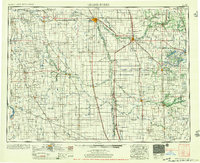 1956 Grand Forks1956 Print · USGSThe Red River Valley in the mid-fifties is captured here as a thriving corridor of grain elevators and rail-linked towns along the North Dakota and Minnesota border. Researchers can trace historic church sites like Immanuel Lutheran Church, vanished rail stops at Tilde Junction, and the boundaries of the White Earth Indian Reservation.
 - 1961 Map of Valley City East, 1962 Print
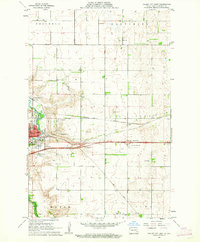 1961 Valley City East1962 Print · USGSThe Sheyenne River valley and the expanding rail-and-highway corridor of Barnes County are captured here in the early sixties. Genealogists can locate several family resting places such as Hillside Cem and Memory Gardens Cem, or trace the tracks of the Soo Line.
 - 1961 Map of Leal, 1963 Print
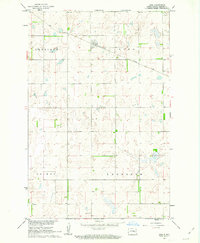 1961 Leal1963 Print · USGSNorth Dakota's prairie landscape comes into focus in the early sixties as the Soo Line cuts through Barnes County. Genealogists can locate the rural Townhall, the community Cem, and the small rail-side settlement of Leal.
 - 1961 Map of Baldhill Dam, 1963 Print
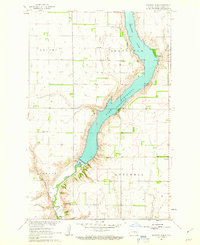 1961 Baldhill Dam1963 Print · USGSThe Sheyenne River valley was undergoing major changes in the early sixties as the Missouri River Basin development took shape. Genealogists and historians can locate rural landmarks like Zion Ch, Logan Sch, and the operations at the Baldhill Dam.
 - 1961 Map of Wimbledon, 1963 Print
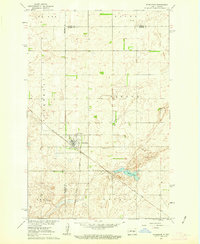 1961 Wimbledon1963 Print · USGSWimbledon serves as a vital rail junction on the North Dakota prairie during the early sixties. Genealogists and local historians can trace the intersection of the Midland Continental and Soo Line railroads near St Boniface Cem and Mud Lake.2 unique versions available
 - 1961 Map of Valley City West, 1963 Print
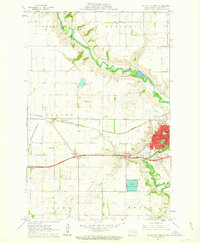 1961 Valley City West1963 Print · USGSValley City and its surrounding townships are shown here during the early sixties as a bustling rail and educational center. Genealogists can locate family landmarks such as Heimes Sch, Woodbine Cem, and the campus of the State Teachers College.2 unique versions available
 - 1961 Map of Wimbledon NE, 1963 Print
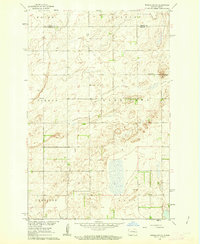 1961 Wimbledon NE1963 Print · USGSThe Griggs and Barnes County line in the early sixties showcases a classic North Dakota township system defined by isolated farmsteads and prairie wetlands. Local historians can trace early schoolhouse sites like Pierce Sch and Laketown Sch or industrial Gravel Pits.
 - 1961 Map of Rogers, 1963 Print
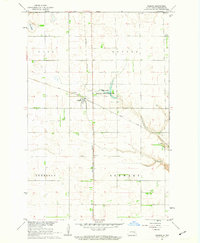 1961 Rogers1963 Print · USGSThe Barnes County prairie comes into focus in the early sixties at the intersection of two major rail lines. Genealogists and local historians can locate the Coleman Sch, the township of Stewart, and the Tomahawk National Wildlife Refuge.
 - 1961 Map of Dazey NE, 1963 Print
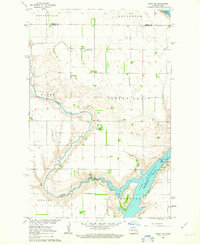 1961 Dazey NE1963 Print · USGSThe Sheyenne River valley in Barnes County appears here just as the landscape was adapting to the creation of Lake Ashtabula. Researchers can trace the historical Sibley Trail and locate rural landmarks like St Marys Ch, Sunnyside Cem, and School No 25.
 - 1961 Map of Dazey, 1963 Print
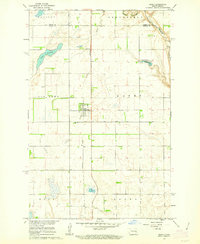 1961 Dazey1963 Print · USGSThe town of Dazey sits at a rail junction in eastern North Dakota during the early 1960s, surrounded by a landscape of prairie potholes and farmsteads. Researchers can trace the Northern Pacific rail line and locate landmarks like the Dazey Cemetery and Lake Benson.
 - 1965 Map of Lucca, 1967 Print
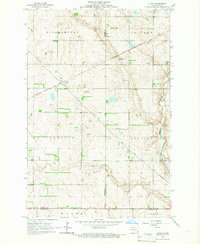 1965 Lucca1967 Print · USGSThe intersection of the Northern Pacific and Soo Line railroads defines the rural landscape of Barnes County in the 1960s. Trace the small settlement of Lucca, the Cem cemetery, and the winding course of the Maple River.
 - 1965 Map of Tower City SW, 1967 Print
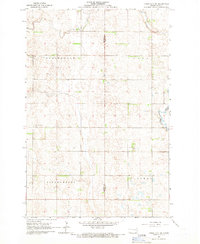 1965 Tower City SW1967 Print · USGSThe Barnes and Cass County line in the mid-sixties reveals a landscape of organized townships and prairie riverbends. Genealogists and local historians can trace landmarks like Holy Trinity Cem and the path of the Maple River through Springvale.
 - 1966 Map of Grand Forks
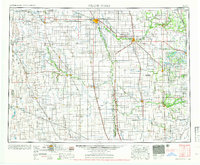 1966 Grand Forks1966 Print · USGSThe Red River Valley in the mid-sixties shows a landscape shaped by rail-line commerce and complex water management. Genealogists and historians can trace rail-side towns like Emerado and Hunter or locate rural landmarks like the Pleasant View Church.
 - 1967 Map of Tower City, 1969 Print
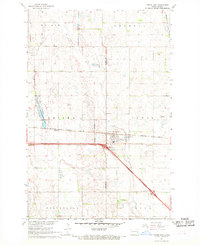 1967 Tower City1969 Print · USGSThe intersection of the Northern Pacific railroad and the modern interstate era defines this late-1960s North Dakota landscape. Researchers can trace the layout of Tower City and Koldok, or locate family sites near Greenwood Cem and several local Sandpit operations.
 - 1967 Map of Pillsbury SE, 1969 Print
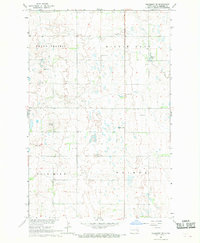 1967 Pillsbury SE1969 Print · USGSThe glacial wetlands and high plains of Barnes County are documented here in the late sixties. Genealogists and researchers can locate the Morton Cem, the community Townhall, and the landmark Minnie Lake Ch near the waters of Minnie Lake.
 - 1967 Map of Fingal, 1969 Print
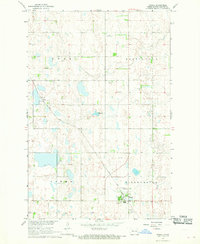 1967 Fingal1969 Print · USGSSoutheast Barnes County is captured here in the late sixties as a network of rail-side settlements and prairie townships. Genealogists and local historians can locate specific landmarks like the High Sch in Fingal, the Townhall at Cuba, and Holy Trinity Cem.
Showing maps 1-25 of 227
Top cities of Barnes County
- Valley City historical maps
- Wimbledon historical maps
- Sanborn historical maps
- Litchville historical maps
- Fingal historical maps
- Oriska historical maps
See more
Frequently asked questions
- What are the different types of historical maps available for Barnes County?
- What is the oldest map of Barnes County?
- Where can I purchase historical maps of Barnes County for my home or office?
- Where can I download high-res historical maps of Barnes County?
- Are there historical topographic maps available for Barnes County?
- Is there historical aerial imagery available for Barnes County?
- Where are historical maps of Barnes County sourced from?