Old Maps of Fort Totten District, North Dakota
Explore 58 old maps of Fort Totten District, spanning from 1928 to today. These high-resolution historic maps reveal how streets, neighborhoods, landmarks, and natural features evolved over time — perfect for genealogy, metal detecting, research, and local history exploration.
What you can do with these maps:
- See how Fort Totten District changed over time: Compare historical maps to modern-day views to trace roads, homesites, rail lines & more.
- View detailed metadata: Each map includes creators, publishers, year, scale, and archive source.
- Overlay maps with satellite & LiDAR: Visualize the past alongside modern tools to explore terrain & human change.
- Trusted historical sources: Maps sourced from the USGS, Library of Congress, and other archives.
- Access maps your way: View online, download high-res files, or order prints for personal or research use.
Start exploring old maps of Fort Totten District to uncover forgotten places, hidden landmarks, and the deep history beneath your feet.
Fort Totten District, ND maps
(58)- 1928 Map of Tokio, 1954 Print
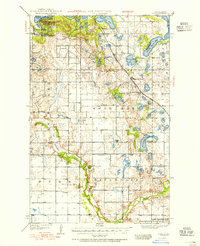 1928 Tokio1954 Print · USGSThe Devils Lake Indian Reservation and the shores of Devils Lake are captured here in the late 1920s. Genealogists and local historians can trace the Great Northern rail line through Tokio or locate rural landmarks like Wood Lake Ch and Fort Totten P O.
 - 1931 Map of Oberon
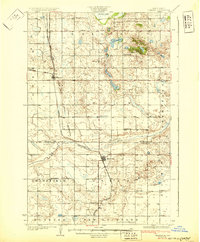 1931 Oberon1931 Print · USGSThe North Dakota prairie unfolds in the late twenties as a network of rail-side towns and rural townships north of the Sheyenne River. Genealogists and historians can trace the exact locations of Grandfield Ch, St Gertrudes Ch, and several numbered country schools.2 unique versions available
 - 1931 Map of Tokio
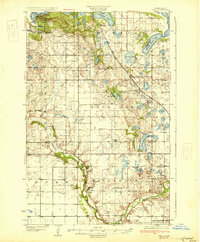 1931 Tokio1931 Print · USGSThe southern shores of Devils Lake come into focus in the late twenties, detailing the area around Fort Totten P O and the Devils Lake Indian Reservation. Genealogists can trace local landmarks like Devils Heart and numerous rural schoolhouses including School No 2 and School No 4.2 unique versions available
 - 1931 Map of Devils Lake
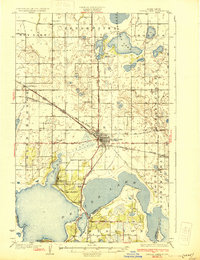 1931 Devils Lake1931 Print · USGSThe North Dakota prairie and its complex lake systems are captured here in the late 1920s. Genealogists and historians can trace early rural life at Grand Harbor, the military grounds of CAMP GRAFTON, and numerous local sites like Consolidated School No 1.3 unique versions available
 - 1932 Map of Grahams Island
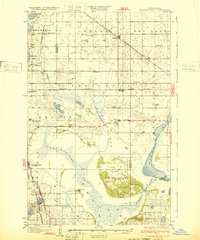 1932 Grahams Island1932 Print · USGSDevils Lake and Grahams Island are seen here in the early 1930s as a complex network of prairie schools and railroads. Genealogists can locate family landmarks like St Paul Cem, Antiochia Ch, and the many numbered schools scattered across Normania and Coulee.
 - 1950 Map of Sheyenne
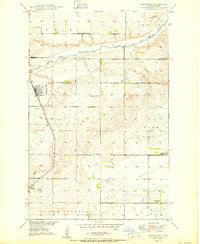 1950 Sheyenne1950 Print · USGSMid-century Eddy County comes into focus as a network of rural schools and rail-side settlements in the years following the war. Genealogists and historians can trace the foundations of Sheyenne and Divide, along with local landmarks like Holy Cross Cem and Rose Hill Sch.3 unique versions available
 - 1950 Map of Tokio SW
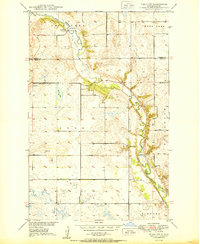 1950 Tokio SW1950 Print · USGSMid-century Eddy County is captured here as a landscape of prairie schoolhouses and river bends before modern consolidation. Family researchers can trace local landmarks like Bourett Cem, School No 4, and the winding Sheyenne River.
 - 1950 Map of Grahams Island, 1959 Print
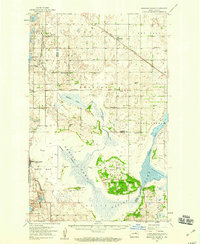 1950 Grahams Island1959 Print · USGSDevils Lake and its rugged shoreline dominate this mid-century survey of Benson and Ramsey counties. Local historians can trace the legacy of rural education and faith at School No 5, St Paul Cem, and the Old Military Reservation.2 unique versions available
 - 1950 Map of Devils Lake, 1959 Print
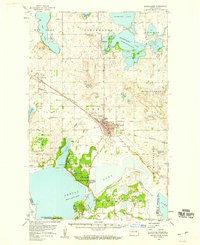 1950 Devils Lake1959 Print · USGSDevils Lake and the surrounding North Dakota prairies are captured mid-century, showing a landscape shaped by rail lines and regional institutions. Genealogists can locate several schools and cemeteries, including the Grand Harbor Cem, Grove Sch, and the military grounds at Camp Grafton.2 unique versions available
 - 1950 Map of Oberon, 1960 Print
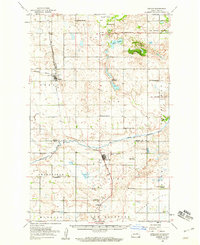 1950 Oberon1960 Print · USGSBenson and Eddy Counties are captured here at mid-century, defined by a landscape of prairie schoolhouses and the winding Sheyenne River. Genealogists can trace the locations of family landmarks like Holy Cross Cem, St Jerome Ch, and the town of Oberon along the Northern Pacific rail line.
 - 1951 Map of Crow Hill
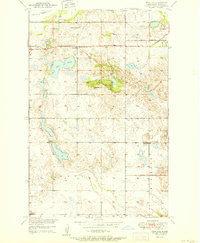 1951 Crow Hill1951 Print · USGSBenson County was a landscape of small school districts and rural parishes in the early fifties. Genealogists and historians can trace the foundations of this community through landmarks like St Jerome Ch, Plainview Sch No 2, and the shores of Twin Lakes.2 unique versions available
 - 1951 Map of Grahams Island
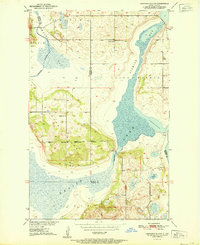 1951 Grahams Island1951 Print · USGSGrahams Island and the intricate bays of Devils Lake are captured here in the early fifties, showing the region's rural character. Trace the Old Military Reservation Boundary or locate local landmarks like School No 1 and School No 2.2 unique versions available
 - 1951 Map of Camp Grafton
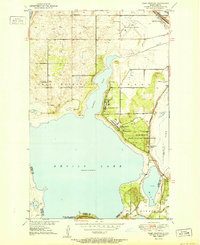 1951 Camp Grafton1951 Print · USGSDevils Lake at the mid-century reveals a landscape of military training and conservation efforts on the shores of Ramsey and Benson counties. Researchers can trace the Great Northern rail line past Fort Totten Station and find local landmarks like Grove Sch and Camp Grafton.2 unique versions available
 - 1951 Map of Fort Totten, 1953 Print
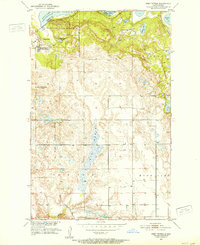 1951 Fort Totten1953 Print · USGSBenson and Ramsey Counties were undergoing significant transitions in the early fifties along the shores of Devils Lake. Genealogists and local historians can locate the Fort Totten Indian Agency, the Great Northern rail line, and rural landmarks like Lone Tree Sch No 1.2 unique versions available
 - 1951 Map of Tokio, 1959 Print
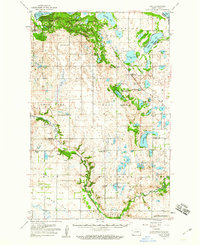 1951 Tokio1959 Print · USGSBenson County in the early 1950s is a landscape defined by the intersection of military history, tribal lands, and glacial lakes. Genealogists and historians can trace old routes like the Old Indian Military Road or locate family sites near Tokio, Saint Michael, and Wood Lake Ch.
 - 1952 Map of New Rockford, 1968 Print
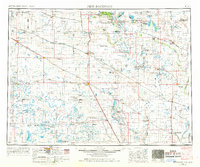 1952 New Rockford1968 Print · USGSThe North Dakota prairie during the mid-1950s was a landscape of rail-dependent farm towns and vast wildlife refuges. Genealogists and historians can trace the foundations of local communities at Fort Totten Indian Agenc, Concordia Lutheran Church, and the Bowdon Country Church and Cemetery.3 unique versions available
 - 1953 Map of Devils Lake, 1968 Print
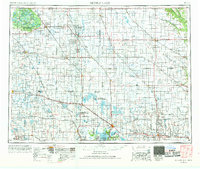 1953 Devils Lake1968 Print · USGSNorth Dakota's northern plains are captured here in the mid-fifties, showing a landscape of rail-fed grain elevators and prairie wetlands. Genealogists can locate family landmarks like Rose Hill School, Hurricane Lake Church, and the Turtle Mountain Indian Reservation.3 unique versions available
 - 1956 Map of New Rockford
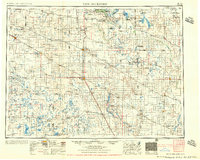 1956 New Rockford1956 Print · USGSMid-century central North Dakota is captured here as a landscape of prairie rail towns and vast wildlife refuges. Trace family roots at the Bowdon Country Church and Cemetery or locate the old St Michael Mission School and Fort Totten.
 - 1956 Map of Devils Lake
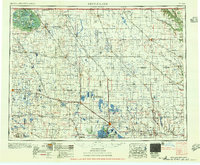 1956 Devils Lake1956 Print · USGSNorthern North Dakota is shown at a mid-century peak of rail-driven agriculture, where the Soo Line and Great Northern railroads cross the prairie. Trace the borders of the Turtle Mountain Indian Reservation and locate local landmarks like Rose Hill School or Camp Grafton.
 - 1971 Map of New Rockford, 1974 Print
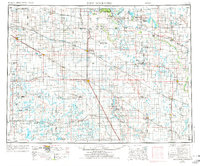 1971 New Rockford1974 Print · USGSCentral North Dakota was a landscape of wildlife refuges and rail-linked agricultural towns in the early seventies. Genealogists and local historians can trace the development of the Fort Totten Indian Reservation and locate old railway points like Maddock, Hamal, and Kloten.
 - 1975 Map of Tokio SW, 1977 Print
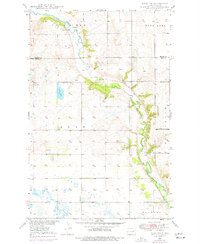 1975 Tokio SW1977 Print · USGSThe Sheyenne River valley in Eddy County is captured here in the mid-seventies, showing a landscape defined by the Old Indian Reservation Bdy. Researchers can locate Bourett Cem, trace the Jackson Truck Trail, and find the site of School No 1.
 - 1981 Map of New Rockford
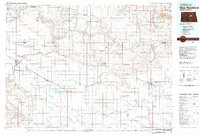 1981 New Rockford1981 Print · USGSCentral North Dakota's prairie heartland is captured here in the early eighties, showing a landscape defined by the Burlington Northern rail lines and sprawling waterfowl refuges. Genealogists and local historians can trace the foundations of New Rockford, Maddock, and Fessenden, alongside landmarks like Tomlinson Field and the Fort Totten Indian Reservation.
 - 1985 Map of Devils Lake
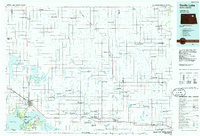 1985 Devils Lake1985 Print · USGSThe Ramsey County lake region is captured here in the mid-1980s as a vital hub of wildlife management and grain transport. Researchers can trace the sprawling boundaries of the Fort Totten Indian Reservation and locate local landmarks like Lake Region Jr College and Whitman Dam.
 - 1985 Map of Stump Lake
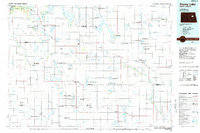 1985 Stump Lake1985 Print · USGSNorth Dakota's lake country in the mid-eighties shows a landscape shaped by the Burlington Northern rail line and tribal lands. Genealogists and historians can locate family sites near Warwick, Tokio, and the Fort Totten Indian Reservation.2 unique versions available
 - 1985 Map of Leeds, 1994 Print
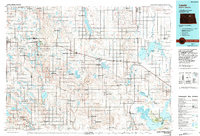 1985 Leeds1994 Print · USGSBenson and Ramsey counties are shown during the mid-eighties as a patchwork of prairie agriculture and vital wetland habitats. Researchers can locate family roots at Knox Cem, trace the Soo Line rail corridors, or explore the fringes of Devils Lake.
Showing maps 1-25 of 58
Top cities near Fort Totten District
Top neighborhoods of Fort Totten District
Frequently asked questions
- What are the different types of historical maps available for Fort Totten District?
- What is the oldest map of Fort Totten District?
- Where can I purchase historical maps of Fort Totten District for my home or office?
- Where can I download high-res historical maps of Fort Totten District?
- Are there historical topographic maps available for Fort Totten District?
- Is there historical aerial imagery available for Fort Totten District?
- Where are historical maps of Fort Totten District sourced from?