Old Maps of Johnston County, Oklahoma for Genealogy
Trace your family roots with 134 historic maps of Johnston County. These high-res maps reveal old neighborhoods, homesites, landmarks, and streets — helping you uncover where your ancestors lived and how the area evolved over time.
- Explore historic neighborhoods: Identify where your relatives may have lived in the 1800s or 1900s.
- Compare maps over time: Trace the changes in streets, buildings, and landmarks for multi-generational research.
- Perfect for genealogy & ancestry research: Used by family historians and researchers to map out lineage and migration.
These maps are an incredible resource for exploring your personal connection to Johnston County's past.
Johnston County, OK maps
(134)- 1899 Map of Atoka
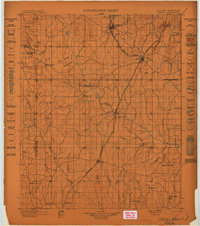 1899 Atoka1899 Print · USGSIn the final years of the Indian Territory, this map details the complex border between the Chickasaw and Choctaw Nations. Genealogists can trace early homesteads near Old Boggy Depot, the Buffalo Creek Church, and the Chickasaw Rock Academy.
 - 1900 Map of Atoka
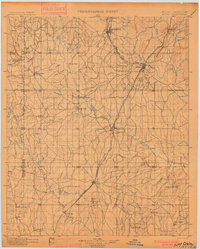 1900 Atoka1900 Print · USGSIndian Territory at the turn of the century shows the developing rail-and-river network before Oklahoma statehood. Genealogists and historians can trace original settlements like Old Boggy Depot, find the Chickasaw Rock Academy, and follow the Missouri Kansas and Texas R.R. through Atoka.4 unique versions available
 - 1901 Map of Stonewall
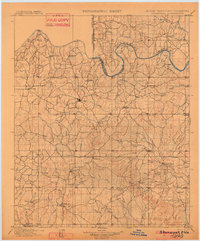 1901 Stonewall1901 Print · USGSBefore Oklahoma statehood, this late-century survey captures the Chickasaw Nation and Seminole Nation borderlands in high detail. Researchers can locate early schools like Collins Institute and trace the paths between settlements such as Stonewall, Ada, and Fitzhugh.4 unique versions available
 - 1901 Map of Tishomingo
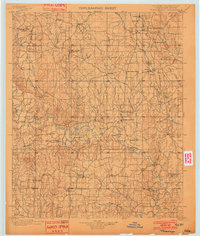 1901 Tishomingo1901 Print · USGSThe Chickasaw Nation comes to life in this late-frontier survey of Johnston County and the surrounding Indian Territory. Genealogists and historians can locate early industrial sites like the Asphalt Mines, the landmark Harley Institute, and the site of Fort Washita.4 unique versions available
 - 1957 Map of Ardmore, 1968 Print
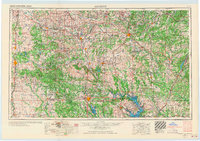 1957 Ardmore1968 Print · USGSSouth-central Oklahoma in the late fifties was a landscape of rising reservoir waters and expanding rail lines. Genealogists and historians can trace the foundations of Ardmore and Duncan or locate early recreation sites at Platt National Park and Lake Murray State Park.3 unique versions available
 - 1963 Map of Ardmore
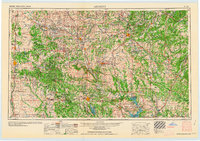 1963 Ardmore1963 Print · USGSSouthern Oklahoma during the early sixties shows a landscape defined by the Arbuckle Mountains and a booming energy economy. Genealogists and historians can trace family-named sites across the Ardmore Oil Field, find old schools like Southeastern State College, or locate historic markers such as Boggy Depot State Park.2 unique versions available
 - 1963 Map of Mannsville, 1964 Print
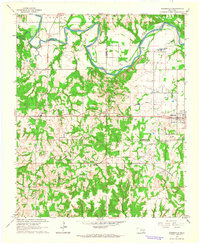 1963 Mannsville1964 Print · USGSSouthern Oklahoma's river valleys and rail corridors are documented here in the early sixties, centered on the community of Mannsville. Researchers can trace old family sites and rural landmarks like Durwood Sch, Nelda Cem, and the St Louis - San Francisco line.2 unique versions available
 - 1963 Map of Sulphur South, 1964 Print
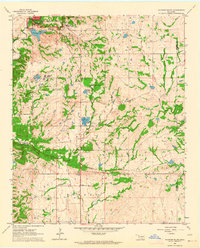 1963 Sulphur South1964 Print · USGSMurray County's rolling landscape and mineral springs are documented here in the early sixties as the area around Sulphur developed. Researchers can trace rural life through landmarks like Fletcher Cem, the Fish Hatchery, and the old settlement of Drake.2 unique versions available
 - 1963 Map of Mill Creek, 1964 Print
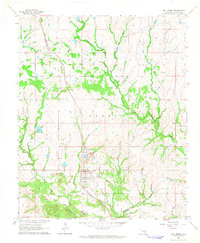 1963 Mill Creek1964 Print · USGSMill Creek and the surrounding Johnston County landscape are captured in the early sixties as a hub of rail transport and local industry. Researchers can trace the ST LOUIS - SAN FRANCISCO railroad line, locate the Mill Creek Cem, and identify active Quarry and Gravel Pits sites.3 unique versions available
 - 1963 Map of Troy, 1964 Print
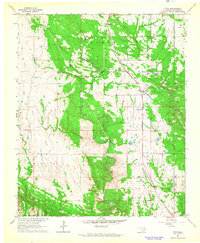 1963 Troy1964 Print · USGSThe rail-and-quarry landscape of Johnston County comes into focus in the early sixties. Researchers can trace the path of the ST LOUIS - SAN FRANCISCO railroad past Troy and locate numerous Gravel Pits and a rural Cem.3 unique versions available
 - 1963 Map of Ravia, 1964 Print
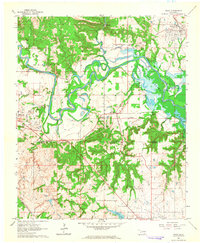 1963 Ravia1964 Print · USGSJohnston County at the start of the 1960s shows a landscape of river meanders and growing infrastructure along the Washita River. Researchers can locate family landmarks like Cedar Hill Cem, trace the St Louis-San Francisco line, or explore the small settlement of Russett.2 unique versions available
 - 1963 Map of Nebo, 1964 Print
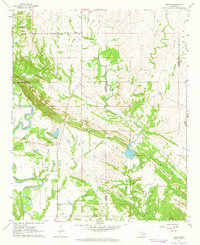 1963 Nebo1964 Print · USGSOklahoma's Arbuckle Mountains region is documented here in the early sixties, showing a landscape defined by the winding Washita River. Researchers can locate old community landmarks like the Nebo Sch and several family burial sites, including Hutchins Cem and Lone Cedar Cem.2 unique versions available
 - 1966 Map of Harden City, 1968 Print
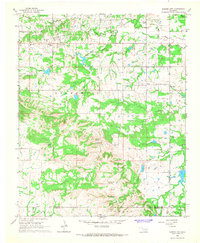 1966 Harden City1968 Print · USGSOklahoma's oil and cattle country comes to life in the late sixties at the junction of Pontotoc and Coal Counties. Trace the rural landscape through family landmarks like Atkins Cem, the McLish Sch, and industrial sites including a local Refinery.
 - 1967 Map of Roff South, 1968 Print
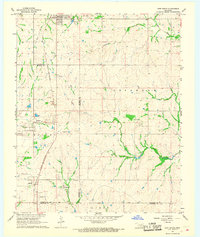 1967 Roff South1968 Print · USGSPontotoc and Murray counties are captured here in the late sixties as the local economy balanced ranching, rail transit, and resource extraction. Researchers can trace the St Louis - San Francisco line through Scullin, locate family plots at Hickory Cem, and explore the grounds of Winrock Farms.3 unique versions available
 - 1967 Map of Connerville SE, 1968 Print
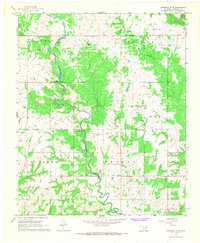 1967 Connerville SE1968 Print · USGSThe Blue River corridor in Johnston County is captured here in the late 1960s, showing a landscape defined by its waterways and small rural communities. Genealogists can locate several family-linked landmarks and country churches, including Ballard Chapel, Fillmore Cem, and the Old Railroad Grade.
 - 1967 Map of Connerville, 1968 Print
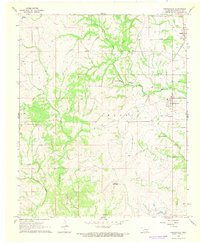 1967 Connerville1968 Print · USGSConnerville and the surrounding Johnston County countryside are captured here in the late sixties, showcasing a landscape of springs and stream-fed valleys. Researchers can locate Blue Ch, trace the Quarries near Diamond Spring, and explore the terrain near Lookout Mountain.
 - 1967 Map of Connerville NE, 1968 Print
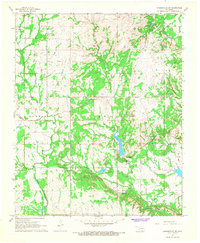 1967 Connerville NE1968 Print · USGSJohnston and Coal County show a landscape of remote springs and rural settlements during the late 1960s. Genealogists can trace family sites at Seely Cem and Pilgrim Cem or locate the community hubs of Pontotoc and Bromide.
 - 1967 Map of Tishomingo, 1968 Print
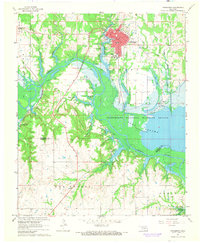 1967 Tishomingo1968 Print · USGSTishomingo and the Washita River valley are captured in the late sixties as the local landscape transitioned toward recreation and conservation. Genealogists and researchers can locate Teller Cem, Murray State College, and traces of the St Louis-San Francisco Railroad.
 - 1967 Map of Reagan, 1968 Print
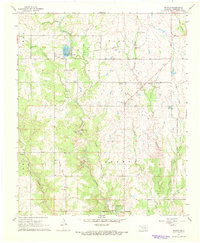 1967 Reagan1968 Print · USGSJohnston County settlement and industry are captured here during the late sixties, centered on the village of Reagan. Genealogists and local historians can locate family landmarks such as Bullet Prairie Cem and the Tishomingo National Fish Hatchery.2 unique versions available
 - 1967 Map of Fittstown, 1968 Print
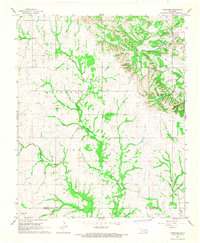 1967 Fittstown1968 Print · USGSOklahoma's oil and stone industries define the landscape around Fittstown during the late sixties. Researchers can trace rural lineages at Franks Cem and Sunshine Ch or locate the sprawling Fittstown Oil Field.2 unique versions available
 - 1967 Map of Sulphur North, 1968 Print
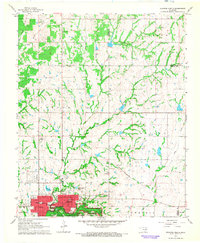 1967 Sulphur North1968 Print · USGSMurray County's landscape in the late sixties reveals the organized street grid of Sulphur just as it bordered the Platt National Park. Researchers can trace the St Louis-San Francisco railroad and locate historic sites like Oaklawn Cemetery, Washington Sch, and the Flowing Well.3 unique versions available
 - 1967 Map of Little City, 1968 Print
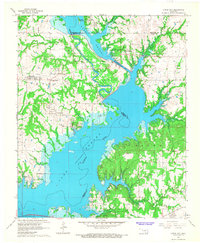 1967 Little City1968 Print · USGSThe northern reaches of Lake Texoma are captured here in the late sixties, where the Washita River was engineered to protect local industry. Researchers can find Fort Washita, the Confederate Cem, and the rerouted Old Channel near Cumberland.
 - 1967 Map of Milburn, 1968 Print
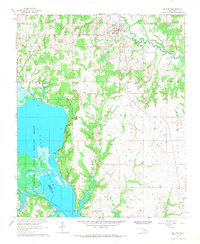 1967 Milburn1968 Print · USGSThe Oklahoma heartland meets the northern reaches of the reservoir during the late sixties. Genealogists and local historians can trace rural burial sites like Condon Grove Cem and follow the Old Railroad Grade near Milburn.
 - 1968 Map of Wapanucka South, 1971 Print
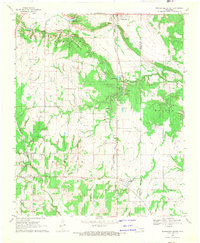 1968 Wapanucka South1971 Print · USGSSoutheast Oklahoma at the end of the sixties shows a landscape shaped by historical borders and industrial rail transit. Researchers can trace the Old Indian Treaty Boundary and locate local landmarks like Sandy Creek Ch and Lake Ream.
 - 1968 Map of Caddo NW, 1971 Print
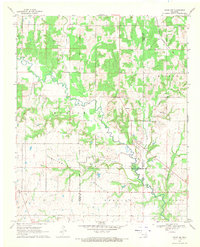 1968 Caddo NW1971 Print · USGSSouthern Oklahoma at the end of the 1960s reveals a landscape defined by ranching, river systems, and early territorial lines. Genealogists and local historians can trace family locations through Oak Grove Cem, the settlement of Folsom, and the Old Indian Treaty Boundary.
Showing maps 1-25 of 134
Top cities of Johnston County
- Tishomingo historical maps
- Mannsville historical maps
- Ravia historical maps
- Wapanucka historical maps
- Mill Creek historical maps
- Milburn historical maps
Frequently asked questions
- What are the different types of historical maps available for Johnston County?
- What is the oldest map of Johnston County?
- Where can I purchase historical maps of Johnston County for my home or office?
- Where can I download high-res historical maps of Johnston County?
- Are there historical topographic maps available for Johnston County?
- Is there historical aerial imagery available for Johnston County?
- Where are historical maps of Johnston County sourced from?