Old Maps of Two Rivers, Oregon City for Academic Research
Study the evolution of Two Rivers with 25 high-resolution historic maps. Whether you're teaching, researching, or modeling changes in land use, these maps provide essential visual documentation of urban, environmental, and geographic change.
- Analyze long-term change: Track patterns in development, transportation, and natural features.
- Ideal for environmental or urban studies: Support academic projects with primary historical map data.
- Use in the classroom or lab: Educators and researchers rely on these maps to bring historical context to life.
These maps are a powerful tool for teaching, research, and visualizing how Two Rivers has changed over the decades.
Two Rivers, Oregon City maps
(25)- 1914 Map of Oregon City
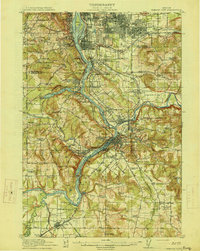 1914 Oregon City1914 Print · USGSThe Willamette Valley at the start of the twentieth century was a landscape of rapid rail expansion and river-based industry. Researchers can trace early rural life through Wichita School and Lions Mill, or explore the growth of Oswego and Milwaukie.4 unique versions available
 - 1939 Map of Oregon City, 1958 Print
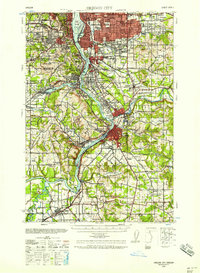 1939 Oregon City1958 Print · USGSThe Willamette Valley during the late thirties shows a landscape defined by river industry and competing rail lines. Genealogists and historians can trace family-named sites and rural institutions like the Ten O'clock Church, Linns Mill, and Reed College.
 - 1941 Map of Oregon City
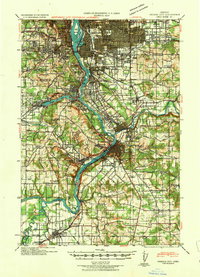 1941 Oregon City1941 Print · USGSThe Lower Willamette Valley thrived on a mix of river power and rail transit in the early 1940s. Genealogists can trace family footprints across dozens of local school districts, from Petes Mountain School to Harmony School, and locate landmarks like Willamette Falls and the Ten O'clock Church.
 - 1948 Map of Vancouver, 1957 Print
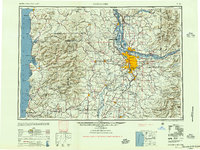 1948 Vancouver1957 Print · USGSPost-war growth transforms the river valleys of the Pacific Northwest as the timber and rail economy thrives. Trace family roots in Tillamook or Oregon City, and locate vanished landmarks like the spit at Bayocean or the Skamania Mine.
 - 1950 Map of Vancouver
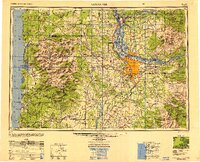 1950 Vancouver1950 Print · USGSCoastal Oregon and the lower Columbia River valley are captured in detail just after the war. Researchers can trace historic rail routes like the Southern Pacific or locate early settlements such as Vernonia, Gaston, and the Grand Ronde Indian Reservation.
 - 1950 Map of Vancouver, 1951 Print
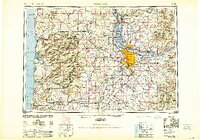 1950 Vancouver1951 Print · USGSThe Pacific Northwest urban corridor meets the rugged coast in the years following the war, showing the expansion of Portland and Vancouver. Genealogists and historians can trace the reach of the Southern Pacific RR and locate coastal communities like Tillamook, Seaside, and Tolovana Park.
 - 1954 Map of Oregon City, 1956 Print
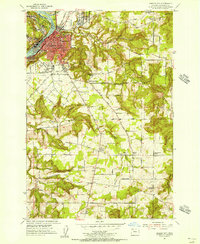 1954 Oregon City1956 Print · USGSOregon City and the Willamette River banks are captured in the mid-1950s, showing the area's transition from industrial river hub to expanding suburban plateau. Historians can trace established neighborhoods like Canemah or find rural landmarks like Maple Lane Grange and Ten O'Clock Church.
 - 1954 Map of Gladstone, 1956 Print
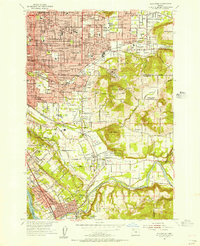 1954 Gladstone1956 Print · USGSSoutheast Portland and its Clackamas County suburbs are captured here during a period of rapid post-war growth in the mid-fifties. Researchers can trace family roots through numerous local schools and cemeteries or locate defunct aviation sites like Dwyer Landing Field and Wells Airport.
 - 1958 Map of Vancouver, 1968 Print
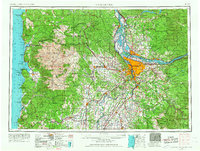 1958 Vancouver1968 Print · USGSThe Lower Columbia and Willamette valleys thrive in the late sixties as major rail and river hubs. Genealogists and historians can trace the development of Portland, identify the grounds of Camp Withycombe, and locate coastal landmarks from Tillamook Head to Garibaldi.3 unique versions available
 - 1961 Map of Oregon City
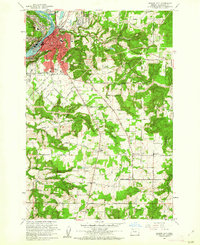 1961 Oregon City1961 Print · USGSOregon City and the Willamette River corridor are captured here in the early sixties as industrial rail networks and rural school districts still defined the local landscape. Genealogists can locate family landmarks from Mountain View Cemetery to Beaver Creek School and Fishers Corner.3 unique versions available
 - 1961 Map of Gladstone, 1962 Print
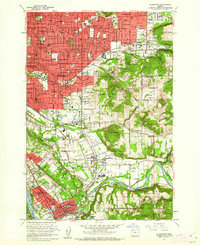 1961 Gladstone1962 Print · USGSClackamas and Multnomah Counties are seen here during a period of rapid suburban expansion in the early sixties. Genealogists and local historians can trace family roots through numerous neighborhood schools and cemeteries, or locate landmarks like Lents Junction, Gladstone Sta, and the Watson Dwyer Landing Field.6 unique versions available
 - 1961 Map of Oregon City, 1963 Print
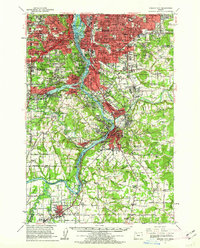 1961 Oregon City1963 Print · USGSThe Willamette River corridor south of Portland is seen here in the early sixties as suburban growth meets long-standing river towns. Genealogists and historians can trace the foundations of Oregon City, Milwaukie, and Canemah, alongside landmarks like Willamette National Cem and Camp Withycombe.
 - 1964 Map of Vancouver
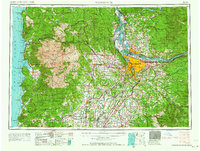 1964 Vancouver1964 Print · USGSThe Pacific Northwest interior and coast are shown here in the 1960s, from the Portland metropolitan hub to the rugged Pacific shoreline. Researchers can trace the legacy of the Grand Ronde Indian Reservation, the early layout of McMinnville, and the maritime approaches near Tillamook Head.
 - 1975 Map of Gladstone, 1977 Print
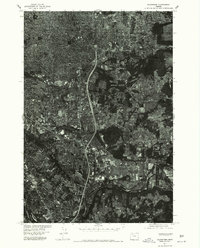 1975 Gladstone1977 Print · USGSGreater Portland and the riverside communities of Clackamas County are captured in high-detail aerial imagery during the mid-seventies. Researchers can trace the development of Gladstone near the Willamette River or study the terrain around Mount Scott.
 - 1982 Map of Oregon City, 1983 Print
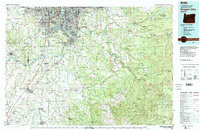 1982 Oregon City1983 Print · USGSGreater Portland and the Willamette Valley are shown in the early eighties as the region's urban and rural landscapes converged. Genealogists and historians can trace family-named sites across French Prairie, visit St Paul Ch, or locate the grounds of Dammasch State Hospital.
 - 2011 Map of Gladstone, 2011 Print
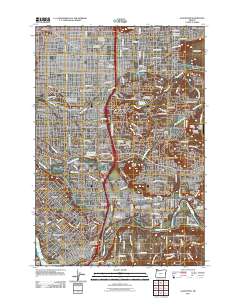 2011 Gladstone2011 Print · USGSSoutheast Portland and its suburban neighbors appear in great detail during the early 2010s. Genealogists and historians can trace memorial sites like Willamette National Cemetery or locate landmarks such as the Gladstone Post Office and Johnson City.
 - 2011 Map of Oregon City, 2011 Print
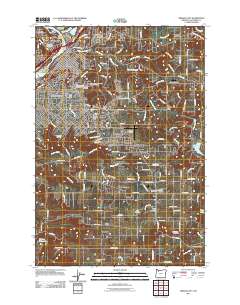 2011 Oregon City2011 Print · USGSThe Clackamas and Willamette river confluence is captured here in the early twenty-first century, showing the dense development of the falls area. Genealogists can locate several historic burial grounds like Mountain View Cemetery and Saint Pauls Cemetery.
 - 2014 Map of Gladstone, 2014 Print
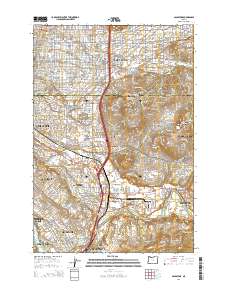 2014 Gladstone2014 Print · USGSSoutheast Portland and its Clackamas County neighbors are shown in the mid-2010s during a period of established suburban growth. Researchers can trace family history at Willamette National Cemetery or locate historic river landmarks like Beebe Island and Lovawalla Spring.
 - 2014 Map of Oregon City, 2014 Print
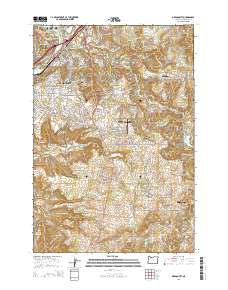 2014 Oregon City2014 Print · USGSOregon City and the surrounding communities of Gladstone and West Linn are shown in the early twenty-first century as they flank the Willamette River. Genealogists and local historians can trace family plots at Mountain View Cemetery or explore the settlements of Canemah and Henrici.
 - 2017 Map of Gladstone, 2017 Print
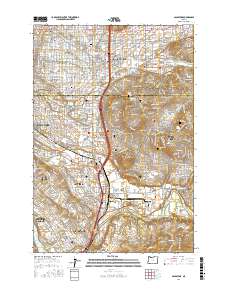 2017 Gladstone2017 Print · USGSThe suburbs south of Portland are captured in the late twenty-teens, showing the dense residential growth between the Willamette and the Clackamas hills. Researchers can trace local history through Lincoln Memorial Cem, the Happy Valley Airport, and the small enclave of Johnson City.
 - 2017 Map of Oregon City, 2017 Print
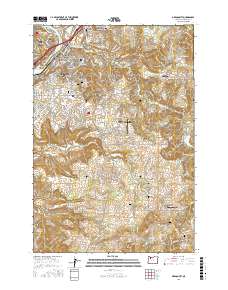 2017 Oregon City2017 Print · USGSOregon City and the Willamette River are shown in detail as they appeared in 2017, documenting the area's transition from urban center to rural farmland. Researchers can trace historic burial sites like Straight Pioneer Cem and Schuebel Cem or locate Willamette Falls.
 - 2020 Map of Gladstone, 2020 Print
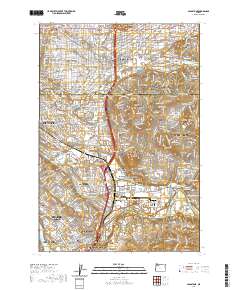 2020 Gladstone2020 Print · USGSGreater Portland and the Clackamas River valley are captured in this recent survey during a period of significant suburban expansion. Genealogists and local historians can trace the borders of Johnson City, Battin, and the historic Cristilla Pioneer Cem.
 - 2020 Map of Oregon City, 2020 Print
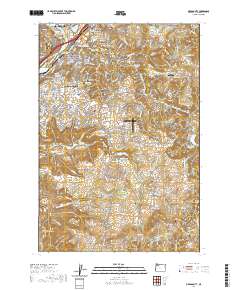 2020 Oregon City2020 Print · USGSOregon City and the surrounding Clackamas County settlements are shown here at a peak of modern development along the Willamette River. Local historians can trace family plots at Mountain View Cem or explore the geography of Canemah and the Fort Vancouver National Historic Site.
 - 2024 Map of Oregon City, 2024 Print
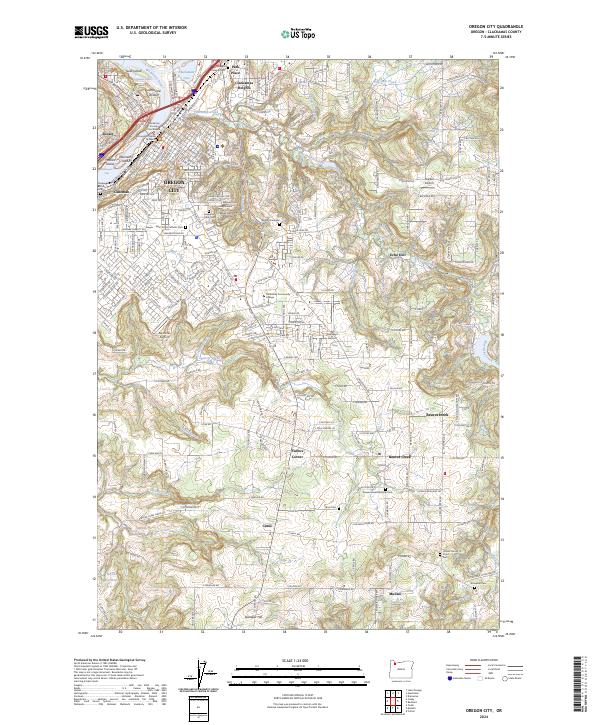 2024 Oregon City2024 Print · USGSThe Willamette River and its rapids meet the historic seat of Oregon City in this 2024 survey. Researchers can trace numerous burial sites like Straight Pioneer Cem and Masonic Cem alongside the winding Abernethy Creek.
 - 2024 Map of Gladstone, 2024 Print
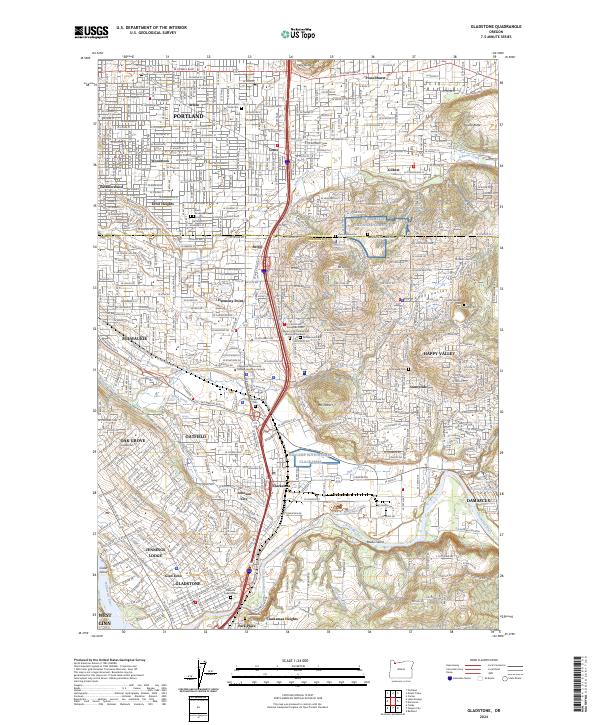 2024 Gladstone2024 Print · USGSThe confluence of the Clackamas and Willamette rivers provides the backdrop for this modern look at the Portland suburbs. Genealogists can trace family sites at Willamette National Cemetery or the Israel and Shaarie Torah Cem.
End of results
Showing maps 1-25 of 25
Frequently asked questions
- What are the different types of historical maps available for Two Rivers?
- What is the oldest map of Two Rivers?
- Where can I purchase historical maps of Two Rivers for my home or office?
- Where can I download high-res historical maps of Two Rivers?
- Are there historical topographic maps available for Two Rivers?
- Is there historical aerial imagery available for Two Rivers?
- Where are historical maps of Two Rivers sourced from?