Old Maps of Centennial, Portland for Metal Detecting
Plan your next treasure hunt with 60 historic maps of Centennial. Find old homesites, ghost towns, trails, and gathering spots that may be lost to time — perfect for identifying promising metal detecting locations.
- Locate forgotten sites: Uncover places like long-lost settlements, abandoned rail lines, or gathering spots.
- Plan better hunts: Use map overlays combined with LiDAR or satellite views to narrow in on historically rich areas.
- Made for detectorists: Thousands of hobbyists use these maps to discover relics, coins, and hidden history.
Use these historic maps to boost your research and find new opportunities beneath the surface of Centennial.
Centennial, Portland maps
(60)- 1897 Map of Portland
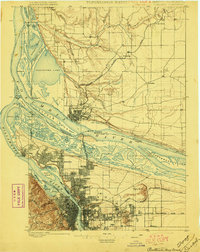 1897 Portland1897 Print · USGSThe Portland and Vancouver riverfronts appear here at a pivotal moment in the 1890s. Trace the early city street grids and rail terminals alongside landmark sites like Vancouver Barracks, Portland University, and Swan Island.2 unique versions available
 - 1905 Map of Portland
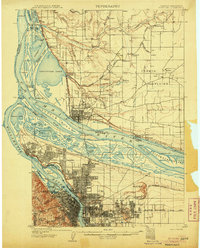 1905 Portland1905 Print · USGSGreater Portland and Vancouver are seen here during the era of the Lewis and Clark Exposition, when river traffic and early electric rail lines defined the region. Researchers can locate the Lewis and Clark Centennial Exposition, the historic Vancouver Barracks, and Munday's Ferry.8 unique versions available
 - 1911 Map of Boring
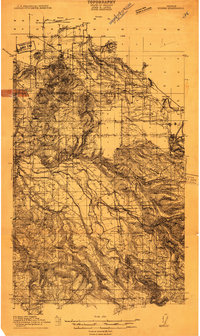 1911 Boring1911 Print · USGSClackamas County was a patchwork of small farming communities and emerging rail hubs in the decade before the First World War. Researchers can trace the early footprints of settlements like Boring and Gresham, alongside family landmarks such as Peterson Crossroads and Sycamore School.
 - 1914 Map of Boring
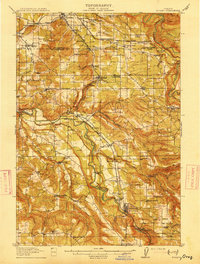 1914 Boring1914 Print · USGSThe Clackamas River valley was a hub of early twentieth-century logging and electric rail expansion between Gresham and Estacada. Genealogists and historians can trace defunct river crossings like McMurray Ferry and rural landmarks such as Fishers Mill and Stone School.3 unique versions available
 - 1914 Map of Oregon City
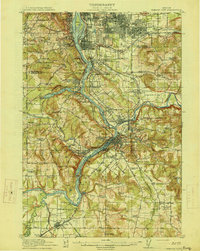 1914 Oregon City1914 Print · USGSThe Willamette Valley at the start of the twentieth century was a landscape of rapid rail expansion and river-based industry. Researchers can trace early rural life through Wichita School and Lions Mill, or explore the growth of Oswego and Milwaukie.4 unique versions available
 - 1916 Map of Estacada
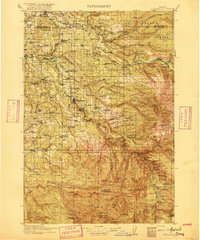 1916 Estacada1916 Print · USGSClackamas County is captured here during a period of rapid hydroelectric and rail development just before the First World War. Researchers can trace early family homesteads near Fishers Mill, the old Feldbimer Ferry crossing, and the rail line serving Boring and Estacada.5 unique versions available
 - 1918 Map of Troutdale
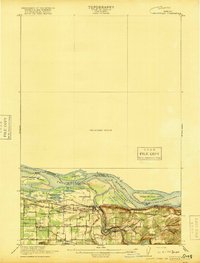 1918 Troutdale1918 Print · USGSEast of Portland in the late nineteen-teens, the riverfront and rail lines were transforming the landscape of Multnomah County. Genealogists and historians can trace family roots at the Multnomah County Farm, Sundial Ranch, and small rural schools like Cedar School.2 unique versions available
 - 1934 Map of Troutdale
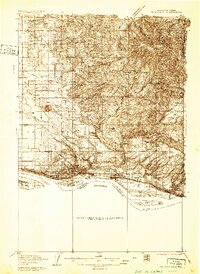 1934 Troutdale1934 Print · USGSThe Columbia River shoreline and the wooded hills of Clark County come alive in this mid-1930s survey of the riverfront. Researchers can trace early rural life through Washougal and local landmarks like Fern Prairie Grange, Lackamas Lake, and the Silver Star Mine.
 - 1939 Map of Oregon City, 1958 Print
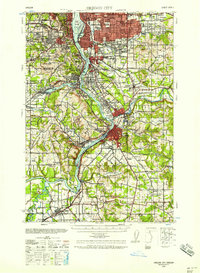 1939 Oregon City1958 Print · USGSThe Willamette Valley during the late thirties shows a landscape defined by river industry and competing rail lines. Genealogists and historians can trace family-named sites and rural institutions like the Ten O'clock Church, Linns Mill, and Reed College.
 - 1940 Map of Boring
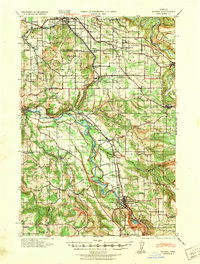 1940 Boring1940 Print · USGSClackamas and Multnomah Counties are captured in the late thirties, documenting a landscape shaped by the Clackamas River and electric rail lines. Trace the route of the Cazadero Line or locate family roots at Mt Zion Cem and Lusted School.
 - 1940 Map of Portland
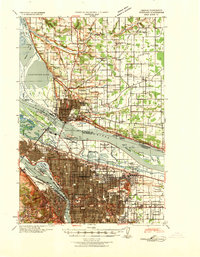 1940 Portland1940 Print · USGSThe Portland and Vancouver riverfronts are captured here just before the massive industrial shifts of the mid-century. Genealogists and historians can locate early landmarks like Vancouver Barracks, the University of Portland, and Mundays Ferry.4 unique versions available
 - 1941 Map of Oregon City
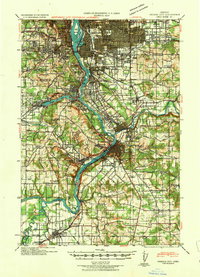 1941 Oregon City1941 Print · USGSThe Lower Willamette Valley thrived on a mix of river power and rail transit in the early 1940s. Genealogists can trace family footprints across dozens of local school districts, from Petes Mountain School to Harmony School, and locate landmarks like Willamette Falls and the Ten O'clock Church.
 - 1941 Map of Camas
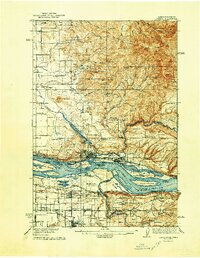 1941 Camas1941 Print · USGSThe Columbia River corridor is captured here just before the mid-century, showing the bustling industrial towns of Camas and Washougal alongside a rural network of country schools. Genealogists and historians can trace family roots through landmarks like the Silver Star Mine, Cemetery Hill, and dozens of local schoolhouses such as Harmony Sch.
 - 1942 Map of Camas
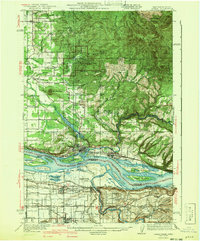 1942 Camas1942 Print · USGSThe Columbia River corridor is captured here in the early 1940s, showing the industrial heart of Camas and the rural outskirts of Gresham. Genealogists and historians can trace early schools like Twelvemile Corner Sch and the location of the Silver Star Mine.2 unique versions available
 - 1948 Map of Vancouver, 1957 Print
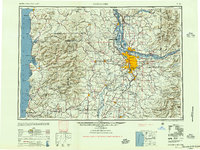 1948 Vancouver1957 Print · USGSPost-war growth transforms the river valleys of the Pacific Northwest as the timber and rail economy thrives. Trace family roots in Tillamook or Oregon City, and locate vanished landmarks like the spit at Bayocean or the Skamania Mine.
 - 1950 Map of Vancouver
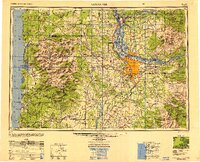 1950 Vancouver1950 Print · USGSCoastal Oregon and the lower Columbia River valley are captured in detail just after the war. Researchers can trace historic rail routes like the Southern Pacific or locate early settlements such as Vernonia, Gaston, and the Grand Ronde Indian Reservation.
 - 1950 Map of Vancouver, 1951 Print
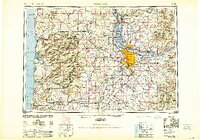 1950 Vancouver1951 Print · USGSThe Pacific Northwest urban corridor meets the rugged coast in the years following the war, showing the expansion of Portland and Vancouver. Genealogists and historians can trace the reach of the Southern Pacific RR and locate coastal communities like Tillamook, Seaside, and Tolovana Park.
 - 1954 Map of Damascus, 1956 Print
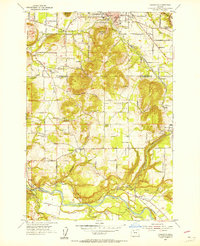 1954 Damascus1956 Print · USGSClackamas and Multnomah counties appear in the mid-1950s as a landscape of rural schools and river-valley settlements. Researchers can trace the Portland Traction Co line through Boring or locate family landmarks like the Baker Cabin and Union School.
 - 1954 Map of Mount Tabor, 1956 Print
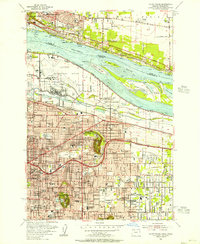 1954 Mount Tabor1956 Print · USGSEast Portland and Vancouver are captured in the mid-fifties as suburban grids expanded around volcanic landmarks. Trace early neighborhoods near Mount Tabor and Rocky Butte, or locate family sites by Rose City Cemetery and Parkrose.
 - 1954 Map of Gladstone, 1956 Print
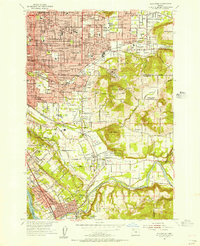 1954 Gladstone1956 Print · USGSSoutheast Portland and its Clackamas County suburbs are captured here during a period of rapid post-war growth in the mid-fifties. Researchers can trace family roots through numerous local schools and cemeteries or locate defunct aviation sites like Dwyer Landing Field and Wells Airport.
 - 1954 Map of Camas, 1957 Print
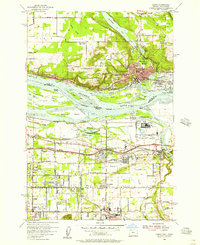 1954 Camas1957 Print · USGSThe Columbia River corridor hums with post-war activity in the mid-fifties as industrial sites and new expressways reshape the borderlands. Genealogists and local historians can locate early landmarks like Fern Prairie Cemetery and several abandoned schoolhouses including Grass Valley Sch (Aban'd).
 - 1954 Map of Camas, 1958 Print
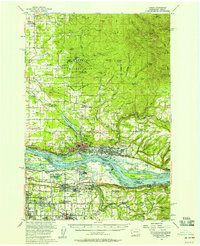 1954 Camas1958 Print · USGSThe Columbia River corridor in the mid-fifties shows the industrial growth of Camas and Washougal alongside the evolving suburbs of Gresham and Troutdale. Researchers can trace old school districts like Norway Sch and follow the S P & S RY through the river valley.3 unique versions available
 - 1958 Map of Vancouver, 1968 Print
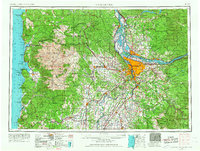 1958 Vancouver1968 Print · USGSThe Lower Columbia and Willamette valleys thrive in the late sixties as major rail and river hubs. Genealogists and historians can trace the development of Portland, identify the grounds of Camp Withycombe, and locate coastal landmarks from Tillamook Head to Garibaldi.3 unique versions available
 - 1961 Map of Damascus
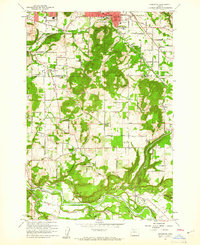 1961 Damascus1961 Print · USGSSoutheast of Portland in the early sixties, this area shows the suburban transition between Gresham and Boring. Genealogists and historians can locate the Sunnyside Church, trace the Portland Traction Co rail line, or find family-named landmarks like Walters Hill.4 unique versions available
 - 1961 Map of Gladstone, 1962 Print
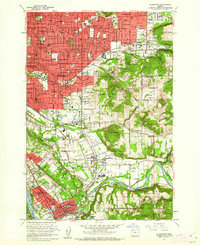 1961 Gladstone1962 Print · USGSClackamas and Multnomah Counties are seen here during a period of rapid suburban expansion in the early sixties. Genealogists and local historians can trace family roots through numerous neighborhood schools and cemeteries, or locate landmarks like Lents Junction, Gladstone Sta, and the Watson Dwyer Landing Field.6 unique versions available
Showing maps 1-25 of 60
Frequently asked questions
- What are the different types of historical maps available for Centennial?
- What is the oldest map of Centennial?
- Where can I purchase historical maps of Centennial for my home or office?
- Where can I download high-res historical maps of Centennial?
- Are there historical topographic maps available for Centennial?
- Is there historical aerial imagery available for Centennial?
- Where are historical maps of Centennial sourced from?