1900s (20th Century) Maps of Lee's Camp, Oregon
Explore 10 historic maps of Lee's Camp from the 1900s (20th Century). These maps offer a rare glimpse into what life looked like during the 1900s — showing old roads, neighborhoods, homes, and landmarks that have changed or disappeared over time.
Whether you're researching your family's past, planning a metal detecting trip, or studying how Lee's Camp's landscape evolved across the 1900s, these high-resolution maps are a powerful tool for exploring the history of this region.
- Focus on a specific era: All maps on this page are from the 1900s, giving you a focused view of this time period.
- See what’s changed: Compare century-old streets, trails, and buildings to today's modern landscape using overlays and satellite layers.
- Research with precision: Use these maps for genealogy, historical research, land use analysis, or educational projects.
- View, download, or print: Maps are fully viewable online in high resolution, and can be downloaded or printed for your own records.
Start exploring Lee's Camp's history through authentic maps from the 1900s. This is your window into the past.
Lee's Camp, OR maps
(10)- 1937 Map of Enright, 1956 Print
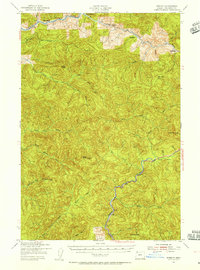 1937 Enright1956 Print · USGSTillamook County's interior mountains are shown in the late 1930s, an era when the Southern Pacific railroad served as the lifeline for canyon settlements. Researchers can trace the old rail stops at Enright and Belfort or locate the Fish Hatchery near Lees Camp.
 - 1941 Map of Enright
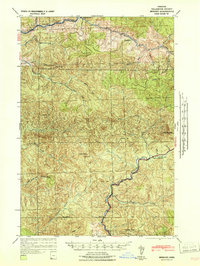 1941 Enright1941 Print · USGSTimber and rail operations define the Tillamook backcountry in the early 1940s just after the Great Fire. Trace the Southern Pacific line past Enright and Belfort, or locate Lees Camp Ground and the Cedar Butte Lookout.
 - 1948 Map of Vancouver, 1957 Print
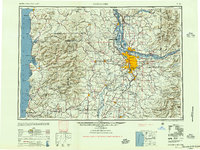 1948 Vancouver1957 Print · USGSPost-war growth transforms the river valleys of the Pacific Northwest as the timber and rail economy thrives. Trace family roots in Tillamook or Oregon City, and locate vanished landmarks like the spit at Bayocean or the Skamania Mine.
 - 1950 Map of Vancouver
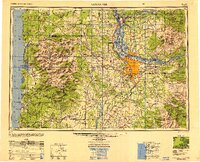 1950 Vancouver1950 Print · USGSCoastal Oregon and the lower Columbia River valley are captured in detail just after the war. Researchers can trace historic rail routes like the Southern Pacific or locate early settlements such as Vernonia, Gaston, and the Grand Ronde Indian Reservation.
 - 1950 Map of Vancouver, 1951 Print
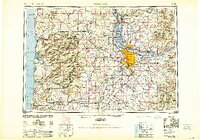 1950 Vancouver1951 Print · USGSThe Pacific Northwest urban corridor meets the rugged coast in the years following the war, showing the expansion of Portland and Vancouver. Genealogists and historians can trace the reach of the Southern Pacific RR and locate coastal communities like Tillamook, Seaside, and Tolovana Park.
 - 1955 Map of Enright, 1957 Print
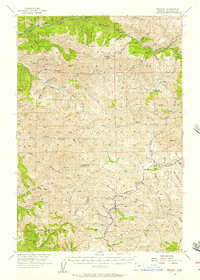 1955 Enright1957 Print · USGSMid-century Tillamook County is defined here by the steep timberlands of the Coast Range and the rail-dependent camps of the 1950s. Genealogists and historians can trace the Southern Pacific line to Enright, locate the Rector (Site), or find isolated stations like Blue Lake Guard Sta.2 unique versions available
 - 1958 Map of Vancouver, 1968 Print
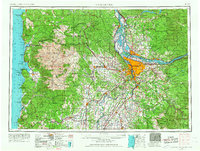 1958 Vancouver1968 Print · USGSThe Lower Columbia and Willamette valleys thrive in the late sixties as major rail and river hubs. Genealogists and historians can trace the development of Portland, identify the grounds of Camp Withycombe, and locate coastal landmarks from Tillamook Head to Garibaldi.3 unique versions available
 - 1964 Map of Vancouver
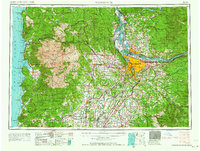 1964 Vancouver1964 Print · USGSThe Pacific Northwest interior and coast are shown here in the 1960s, from the Portland metropolitan hub to the rugged Pacific shoreline. Researchers can trace the legacy of the Grand Ronde Indian Reservation, the early layout of McMinnville, and the maritime approaches near Tillamook Head.
 - 1979 Map of Nehalem River, 1980 Print
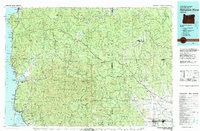 1979 Nehalem River1980 Print · USGSThe northern Oregon coast and its timber-rich interior are captured here in the late seventies, showing the vital connection between sea and forest. Researchers can trace the rail lines of the Southern Pacific and Burlington Northern through historic logging hubs like Vernonia, Timber, and Nehalem.3 unique versions available
 - 1984 Map of Jordan Creek
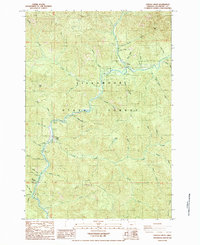 1984 Jordan Creek1984 Print · USGSThe Tillamook State Forest comes alive in this mid-1980s record of the Wilson River corridor. Researchers can trace the layout of Lees Camp, locate the Jordan Creek Trailer Park, and find recreational landmarks like Diamond Mill Park Campground and Kings Mtn.
End of results
Showing maps 1-10 of 10
Frequently asked questions
- What are the different types of historical maps available for Lee's Camp?
- What is the oldest map of Lee's Camp?
- Where can I purchase historical maps of Lee's Camp for my home or office?
- Where can I download high-res historical maps of Lee's Camp?
- Are there historical topographic maps available for Lee's Camp?
- Is there historical aerial imagery available for Lee's Camp?
- Where are historical maps of Lee's Camp sourced from?