Old Maps of Fawn Township, Pennsylvania for Genealogy
Trace your family roots with 40 historic maps of Fawn Township. These high-res maps reveal old neighborhoods, homesites, landmarks, and streets — helping you uncover where your ancestors lived and how the area evolved over time.
- Explore historic neighborhoods: Identify where your relatives may have lived in the 1800s or 1900s.
- Compare maps over time: Trace the changes in streets, buildings, and landmarks for multi-generational research.
- Perfect for genealogy & ancestry research: Used by family historians and researchers to map out lineage and migration.
These maps are an incredible resource for exploring your personal connection to Fawn Township's past.
Fawn Township, PA maps
(40)- 1907 Map of Freeport, 1956 Print
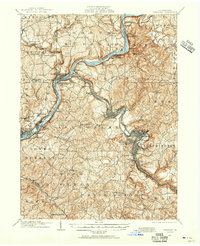 1907 Freeport1956 Print · USGSThe industrial river valleys of Armstrong, Westmoreland, and Butler counties come alive in this early 1900s survey. Genealogists and researchers can trace the rail-and-river network through Freeport and Schenley, locating old post offices at Garvers Ferry and Dime.
 - 1908 Map of New Kensington, 1956 Print
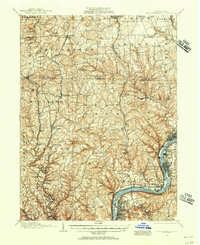 1908 New Kensington1956 Print · USGSThe Allegheny River valley and its surrounding townships are captured here at the start of the twentieth century. Researchers can trace early railroad stops at Allison Park Sta, find rural landmarks like Sandy Hill School, and locate the Fulton Ferry crossing.
 - 1909 Map of Freeport
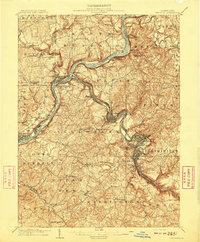 1909 Freeport1909 Print · USGSThe industrial river valleys of the Allegheny and Kiskiminitas are captured here during the peak of Pennsylvania's rail-and-river era. Researchers can trace the early layouts of Freeport and Leechburg or locate vanished sites like the Lucesco PO.5 unique versions available
 - 1910 Map of New Kensington
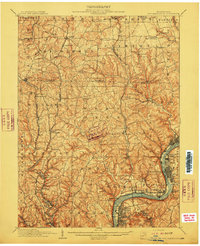 1910 New Kensington1910 Print · USGSThe industrial Allegheny River corridor and its rugged hinterlands come alive in this 1910 survey of the Westmoreland and Butler County borders. Genealogists and historians can trace family roots through labels for Sandy Hill School, Clinton Church, and the settlement at Saxonburg.7 unique versions available
 - 1953 Map of Pittsburgh
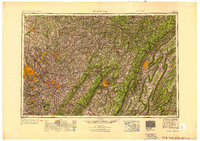 1953 Pittsburgh1953 Print · USGSWestern Pennsylvania's industrial landscape at the start of the fifties shows the steel and rail corridors between Pittsburgh and Altoona. Trace family roots in river towns like Tarentum or follow the Pennsylvania Turnpike across Laurel Hill.
 - 1953 Map of New Kensington East, 1955 Print
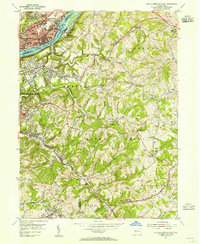 1953 New Kensington East1955 Print · USGSWestmoreland County and the Allegheny River valley are captured here in the early fifties during a peak of industrial and suburban growth. Genealogists and local historians can trace family locations near Natrona, Edgecliff, and the Har Brack High Sch.4 unique versions available
 - 1953 Map of Curtisville, 1955 Print
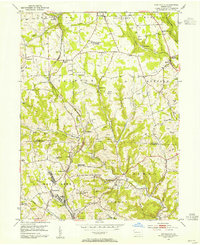 1953 Curtisville1955 Print · USGSThe mining and railroad culture of northern Allegheny County is captured here in the mid-1950s. Trace the Bessemer and Lake Erie rail line through Curtisville and Culmerville to find family-named churches, Mine No 1, and the Culmerville Airport.3 unique versions available
 - 1953 Map of New Kensington West, 1955 Print
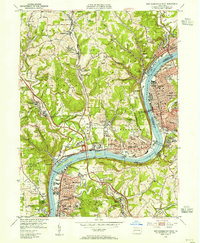 1953 New Kensington West1955 Print · USGSThe Allegheny River corridor hums with industrial life in the early fifties, from the shipyards and mills to the busy rail lines. Researchers can trace the legacy of river towns and vanished landmarks like the Russellton Mine, Lock and Dam No 3, and Milltown (Haffey PO).
 - 1953 Map of Freeport, 1955 Print
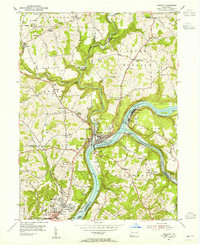 1953 Freeport1955 Print · USGSThe confluence of the Allegheny and Kiskiminetas rivers defines this mid-century industrial corridor. Trace the rail-and-river economy through Schenley, Butler Junction, and the vanished site of Garvers Ferry.4 unique versions available
 - 1954 Map of Pittsburgh
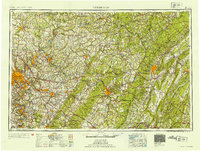 1954 Pittsburgh1954 Print · USGSWestern Pennsylvania in the early fifties remains a powerhouse of heavy industry and vital transit corridors. Genealogists and historians can trace the rail-and-river network connecting Pittsburgh, Johnstown, and Altoona via the Pennsylvania RR and the Lincoln Highway.2 unique versions available
 - 1958 Map of Pittsburgh
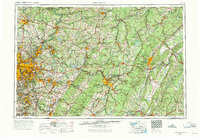 1958 Pittsburgh1958 Print · USGSWestern Pennsylvania in the late fifties shows an industrial heartland defined by the confluence of the Allegheny River and Monongahela River. Researchers can trace the sprawling rail networks of the Pennsylvania RR and find established towns like Butler, Latrobe, and Windber.5 unique versions available
 - 1959 Map of Pittsburgh
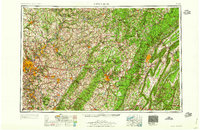 1959 Pittsburgh1959 Print · USGSWestern Pennsylvania in the late fifties is captured here at the height of its industrial era. Genealogists and historians can trace the riverfront growth of Pittsburgh, the rail works at Altoona, and the mountain gaps of Laurel Hill.
 - 1960 Map of New Kensington West, 1961 Print
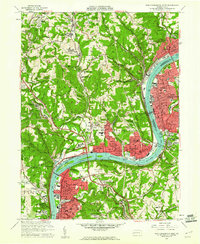 1960 New Kensington West1961 Print · USGSThe industrial Allegheny River corridor hums with activity in the 1960s, anchoring a chain of river towns and rail hubs. Researchers can trace the mid-century development of Oakmont, Cheswick, and New Kensington alongside landmarks like Lock and Dam No 3 and Remich Airport.4 unique versions available
 - 1964 Map of Pittsburgh
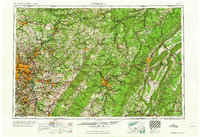 1964 Pittsburgh1964 Print · USGSWestern Pennsylvania in the late fifties and early sixties shows a landscape of powerful river industries and expanding highways. Genealogists and historians can trace the rail corridors of the Pennsylvania RR through industrial hubs like Johnstown, Altoona, and Nanty Glo.
 - 1983 Map of Indiana
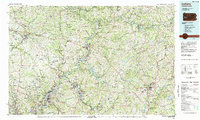 1983 Indiana1983 Print · USGSWestern Pennsylvania in the early eighties shows a landscape of industrial river towns and expanding university campuses. Genealogists can trace family roots through Lucernemines and Spring Church, or locate ancestors in Oakland Cemetery.
 - 1993 Map of New Kensington West
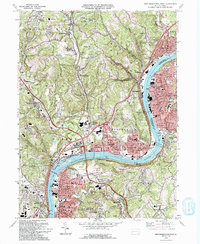 1993 New Kensington West1993 Print · USGSThe industrial corridor along the Allegheny River north of Pittsburgh shows its mature residential and commercial footprint in the 1990s. Researchers can trace family roots through numerous parish sites like St Nicholas Cem or locate industrial landmarks like Lock and Dam No 3.2 unique versions available
 - 1993 Map of Freeport
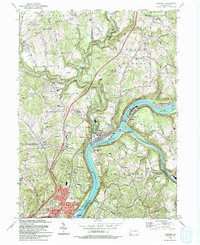 1993 Freeport1993 Print · USGSThe confluence of the Allegheny and Kiskiminetas Rivers defines the industrial landscape of southwestern Pennsylvania in the early nineties. Researchers can trace the riverfront rail lines of CONRAIL, find old family burial grounds like Mud Church Cem, and locate the historic Garvers Ferry site.
 - 1993 Map of New Kensington East
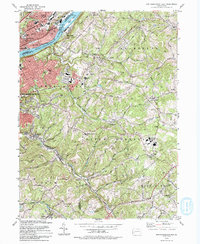 1993 New Kensington East1993 Print · USGSWestmoreland and Allegheny counties meet here in the early nineties, where the river valley's industrial heritage is clearly mapped. Genealogists can trace family landmarks like Mt Hope Cem and St Josephs High Sch among the hills of Natrona Heights and Braeburn.
 - 1998 Map of Freeport, 2000 Print
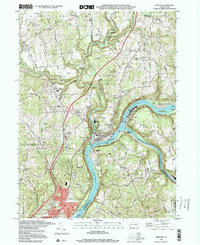 1998 Freeport2000 Print · USGSThe confluence of the Allegheny and Kiskiminetas rivers at the end of the century shows a landscape of deep rail history and industrial riverfronts. Trace family roots at Mount Airy Cemetery or locate old valley crossings like Garvers Ferry and Butler Junction.
 - 1998 Map of New Kensington East, 2000 Print
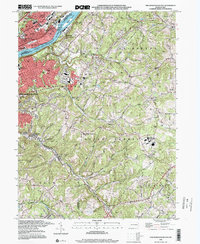 1998 New Kensington East2000 Print · USGSThe Allegheny River valley at the close of the century shows a landscape shaped by industry and suburban growth. Genealogists can trace family landmarks like Greenwood Memorial Park Cemetery, St Marys Cem, and Alcoa Center.
 - 2010 Map of New Kensington East, 2010 Print
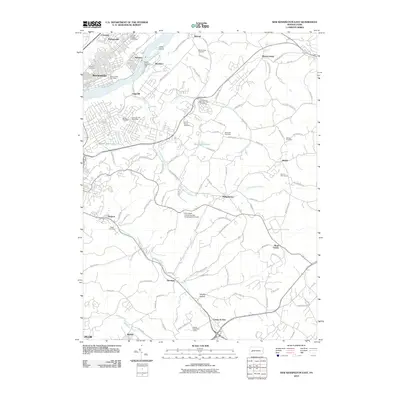 2010 New Kensington East2010 Print · USGSCovers Fawn Township, including Plum, New Kensington, and other nearby areas
 - 2010 Map of Freeport, 2010 Print
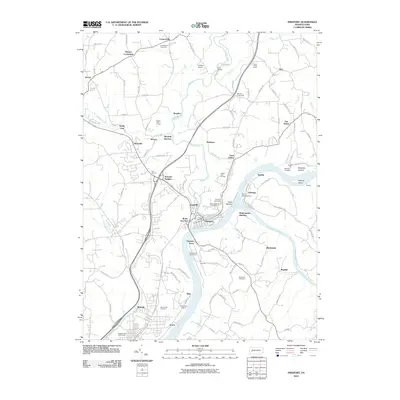 2010 Freeport2010 Print · USGSCovers Fawn Township, including Harrison Township, Freeport, and other nearby areas
 - 2010 Map of New Kensington West, 2010 Print
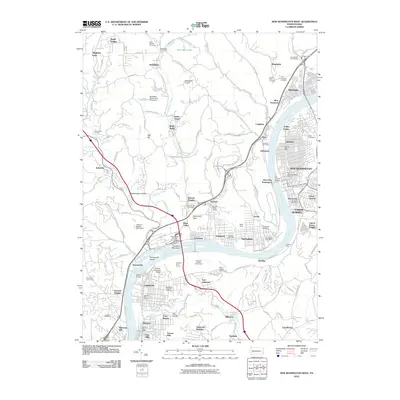 2010 New Kensington West2010 Print · USGSCovers Fawn Township, including Penn Hills, New Kensington, and other nearby areas
 - 2010 Map of Curtisville, 2010 Print
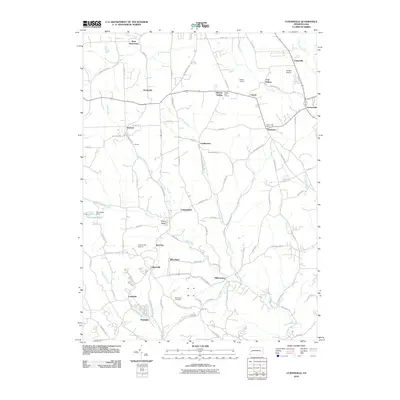 2010 Curtisville2010 Print · USGSCovers Fawn Township, including Clinton Township, Curtisville, and other nearby areas
 - 2013 Map of New Kensington East, 2013 Print
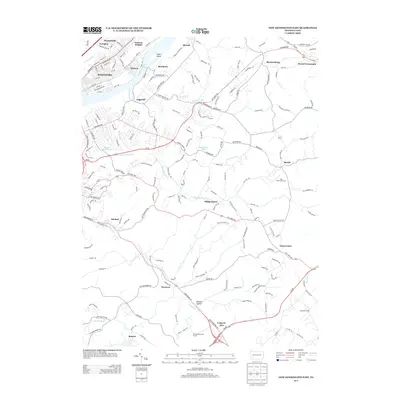 2013 New Kensington East2013 Print · USGSCovers Fawn Township, including Plum, New Kensington, and other nearby areas
Showing maps 1-25 of 40
Top cities near Fawn Township
- Pittsburgh historical maps
- Penn Hills historical maps
- Ross Township historical maps
- McCandless historical maps
- Monroeville historical maps
- Plum historical maps
See more
Top neighborhoods of Fawn Township
Frequently asked questions
- What are the different types of historical maps available for Fawn Township?
- What is the oldest map of Fawn Township?
- Where can I purchase historical maps of Fawn Township for my home or office?
- Where can I download high-res historical maps of Fawn Township?
- Are there historical topographic maps available for Fawn Township?
- Is there historical aerial imagery available for Fawn Township?
- Where are historical maps of Fawn Township sourced from?