1900s (20th Century) Maps of Villa Maria Infirmary, South Heidelberg Township
Explore 11 historic maps of Villa Maria Infirmary from the 1900s (20th Century). These maps offer a rare glimpse into what life looked like during the 1900s — showing old roads, neighborhoods, homes, and landmarks that have changed or disappeared over time.
Whether you're researching your family's past, planning a metal detecting trip, or studying how Villa Maria Infirmary's landscape evolved across the 1900s, these high-resolution maps are a powerful tool for exploring the history of this region.
- Focus on a specific era: All maps on this page are from the 1900s, giving you a focused view of this time period.
- See what’s changed: Compare century-old streets, trails, and buildings to today's modern landscape using overlays and satellite layers.
- Research with precision: Use these maps for genealogy, historical research, land use analysis, or educational projects.
- View, download, or print: Maps are fully viewable online in high resolution, and can be downloaded or printed for your own records.
Start exploring Villa Maria Infirmary's history through authentic maps from the 1900s. This is your window into the past.
Villa Maria Infirmary, South Heidelberg Township maps
(11)- 1902 Map of Wernersville
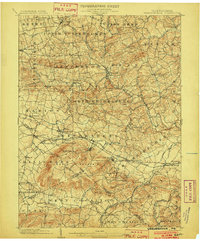 1902 Wernersville1902 Print · USGSBerks and Lebanon counties at the start of the twentieth century show a landscape defined by industrial rail lines and agricultural valleys. Trace family roots at the Orphans Home or locate landmarks like Krick's Mill and Eagle Peak.8 unique versions available
 - 1943 Map of Wernersville
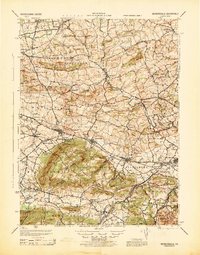 1943 Wernersville1943 Print · USGSSoutheastern Pennsylvania farmland and rail towns are captured here during the wartime era, showing the intersection of Berks, Lebanon, and Lancaster counties. Genealogists and local researchers can trace historic institutions like Bethany Orphans Home or the Blue Meeting House.2 unique versions available
 - 1950 Map of Harrisburg, 1952 Print
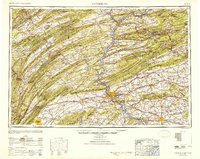 1950 Harrisburg1952 Print · USGSMid-century Central Pennsylvania comes alive through its dense rail networks and river valley settlements during the post-war industrial era. Genealogists and historians can trace family roots through hubs like Harrisburg, locate Carlisle Barracks, or follow the Pennsylvania RR through the Lebanon Valley.
 - 1953 Map of Wernersville
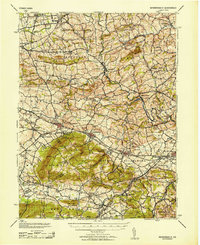 1953 Wernersville1953 Print · USGSBerks and Lebanon counties are shown in detail during the early 1950s, highlighting a landscape of institutional growth and deep-rooted rural settlements. Genealogists can locate family landmarks like the Bethany Orphans Home, Kricks Mill, and the Blue Meeting House.
 - 1955 Map of Sinking Spring, 1956 Print
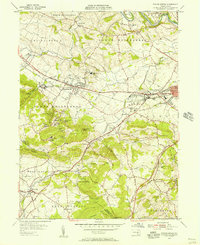 1955 Sinking Spring1956 Print · USGSBerks and Lancaster counties are shown during a period of steady mid-century growth along the Reading railroad line. Researchers can trace the layout of the Wernersville State Hospital or locate historic local churches like Hains Ch and Olive Leaf Chapel.6 unique versions available
 - 1957 Map of Harrisburg
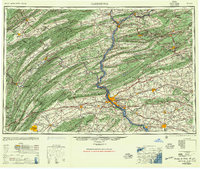 1957 Harrisburg1957 Print · USGSMid-century Central Pennsylvania comes into focus as a bustling network of rail, river, and mountain ridges. Genealogists and historians can trace the development of the State Capitol and surrounding hubs like Middletown, Columbia, and Pottsville.7 unique versions available
 - 1961 Map of Harrisburg
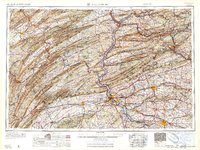 1961 Harrisburg1961 Print · USGSCentral Pennsylvania is shown at a mid-century peak of industrial and military activity, from the Susquehanna water gaps to the fertile Dutch Country. Genealogists and historians can trace the rail corridors of the Pennsylvania RR and find landmarks like Carlisle Barracks or the Anthracite Coal Fields.2 unique versions available
 - 1963 Map of Wernersville
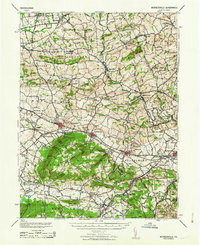 1963 Wernersville1963 Print · USGSBerks County and Lebanon County are captured here in the early 1960s, showing a landscape defined by ridgelines and Pennsylvania Dutch heritage. Researchers can trace historic local institutions like the Bethany Orphans Home, the Jesuit College, and the winding Reading RR.
 - 1964 Map of Harrisburg
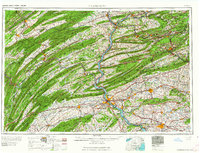 1964 Harrisburg1964 Print · USGSCentral Pennsylvania in the mid-fifties reveals a landscape shaped by ridge-and-valley geology and critical Cold War infrastructure. Researchers can trace the massive Indiantown Gap Military Reservation or the rail corridors of the Pennsylvania RR and Reading RR.
 - 1984 Map of Harrisburg, 1985 Print
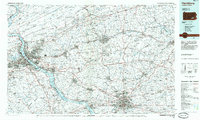 1984 Harrisburg1985 Print · USGSCentral Pennsylvania in the mid-eighties shows a landscape defined by the winding Susquehanna River and the industrial growth of its river towns. Researchers can trace the rail corridors of Amtrak and Conrail or explore the bounds of Fort Indiantown Gap Military Reservation.2 unique versions available
 - 1999 Map of Sinking Spring, 2001 Print
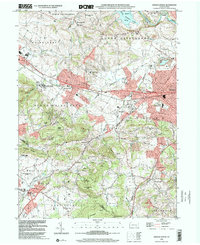 1999 Sinking Spring2001 Print · USGSSinking Spring and the South Mountain slopes are shown at the turn of the millennium, as suburban expansion meets historic institutions. Researchers can trace the grounds of the Wernersville State Hospital, old burial sites like Pleasant View Cem, and the path of the CONRAIL line.
End of results
Showing maps 1-11 of 11
Top cities near Villa Maria Infirmary
- Reading historical maps
- Muhlenberg Park historical maps
- Ephrata historical maps
- Wyomissing historical maps
- Lititz historical maps
- East Earl Township historical maps
See more
Frequently asked questions
- What are the different types of historical maps available for Villa Maria Infirmary?
- What is the oldest map of Villa Maria Infirmary?
- Where can I purchase historical maps of Villa Maria Infirmary for my home or office?
- Where can I download high-res historical maps of Villa Maria Infirmary?
- Are there historical topographic maps available for Villa Maria Infirmary?
- Is there historical aerial imagery available for Villa Maria Infirmary?
- Where are historical maps of Villa Maria Infirmary sourced from?