Old Maps of Karns City, Pennsylvania for Hiking & Exploration
Hike through history with 27 historic maps of Karns City. Explore old trails, ghost towns, and forgotten backroads — perfect for outdoor adventurers and local explorers.
- Rediscover forgotten places: Map out old mining camps, roads, and footpaths that no longer exist on modern maps.
- Layer with modern tools: Combine with LiDAR or satellite views to plan hikes through historical terrain.
- Made for exploration: Popular among hikers, overlanders, and local history lovers.
Use these maps to find adventure and explore the hidden past of Karns City.
Karns City, PA maps
(27)- 1900 Map of Kittanning, 1963 Print
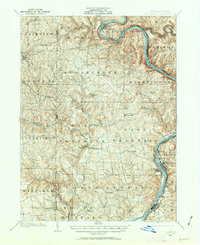 1900 Kittanning1963 Print · USGSThe Allegheny River valley was a bustling corridor of rail and river industry at the turn of the century. Genealogists and researchers can trace family landmarks and early industrial sites like Redbank Furnace, Laceys Store, and Buffalo Mills.
 - 1902 Map of Kittanning
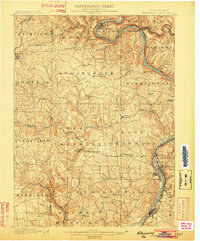 1902 Kittanning1902 Print · USGSThe Allegheny River corridor at the start of the twentieth century shows a region shaped by heavy rail and early industry. Trace family roots and old commercial sites like Redbank Furnace, East Brady, and the milling hub at Worthington.6 unique versions available
 - 1907 Map of Foxburg, 1953 Print
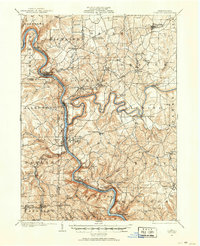 1907 Foxburg1953 Print · USGSThe river-and-rail economies of Clarion and Armstrong counties are on full display in this early 1900s survey. Genealogists and industrial historians can trace vanished post offices like Perryville Pollock PO, early iron works at Canoe Furnace, and the riverside tracks of the Pennsylvania railroad.2 unique versions available
 - 1908 Map of Foxburg
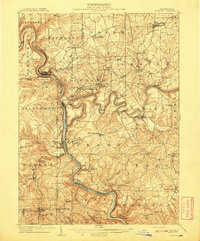 1908 Foxburg1908 Print · USGSThe Pennsylvania river valleys thrive during the early twentieth-century industrial boom, as river traffic and railroads intersect in the heart of the coal and iron region. Researchers can locate early post offices at New Salem Lamartine PO, industrial sites like Sarah Furnace, and the Blue Goose Mine.5 unique versions available
 - 1953 Map of Pittsburgh
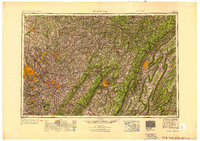 1953 Pittsburgh1953 Print · USGSWestern Pennsylvania's industrial landscape at the start of the fifties shows the steel and rail corridors between Pittsburgh and Altoona. Trace family roots in river towns like Tarentum or follow the Pennsylvania Turnpike across Laurel Hill.
 - 1954 Map of Pittsburgh
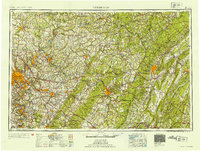 1954 Pittsburgh1954 Print · USGSWestern Pennsylvania in the early fifties remains a powerhouse of heavy industry and vital transit corridors. Genealogists and historians can trace the rail-and-river network connecting Pittsburgh, Johnstown, and Altoona via the Pennsylvania RR and the Lincoln Highway.2 unique versions available
 - 1957 Map of Warren, 1964 Print
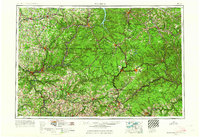 1957 Warren1964 Print · USGSThe northern Pennsylvania oil and timber country comes into focus in the mid-fifties, showing the region before modern highway expansions. Trace the industrial rail networks of the Pennsylvania RR and the early Allegheny River Reservoir near Warren and Oil City.4 unique versions available
 - 1958 Map of Pittsburgh
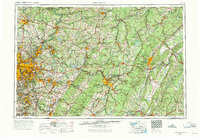 1958 Pittsburgh1958 Print · USGSWestern Pennsylvania in the late fifties shows an industrial heartland defined by the confluence of the Allegheny River and Monongahela River. Researchers can trace the sprawling rail networks of the Pennsylvania RR and find established towns like Butler, Latrobe, and Windber.5 unique versions available
 - 1958 Map of Warren
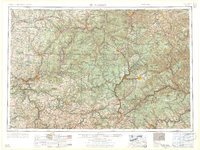 1958 Warren1958 Print · USGSNorthern Pennsylvania’s timber and oil country is captured here during the late fifties, showing the interplay of industrial valleys and vast state forests. Genealogists can trace family connections across the Cornplanter Indian Reservation or through rail hubs like Oil City and Saint Marys.
 - 1959 Map of Warren
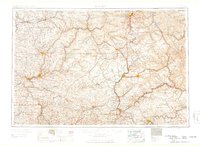 1959 Warren1959 Print · USGSNorthern Pennsylvania's oil and timber country comes alive in this late-fifties study of the forest-clad plateaus. Trace the historic Cornplanter (Indian Reservation), the sprawling Oil Field, and the rail lines of the Pennsylvania RR.2 unique versions available
 - 1959 Map of Pittsburgh
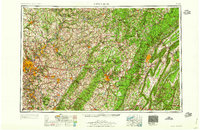 1959 Pittsburgh1959 Print · USGSWestern Pennsylvania in the late fifties is captured here at the height of its industrial era. Genealogists and historians can trace the riverfront growth of Pittsburgh, the rail works at Altoona, and the mountain gaps of Laurel Hill.
 - 1963 Map of Parker, 1965 Print
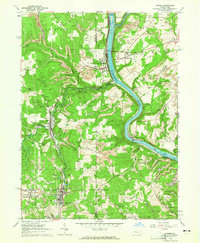 1963 Parker1965 Print · USGSThe river-and-rail corridor of northern Armstrong and Butler counties is captured here in the early sixties, showing an active landscape of energy extraction. Genealogists and historians can locate family landmarks such as Bear Creek Cemetery or Griswell Ch and trace the rail path through Petrolia and Bruin.5 unique versions available
 - 1964 Map of Pittsburgh
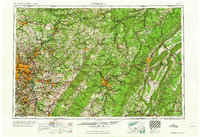 1964 Pittsburgh1964 Print · USGSWestern Pennsylvania in the late fifties and early sixties shows a landscape of powerful river industries and expanding highways. Genealogists and historians can trace the rail corridors of the Pennsylvania RR through industrial hubs like Johnstown, Altoona, and Nanty Glo.
 - 1964 Map of Chicora, 1965 Print
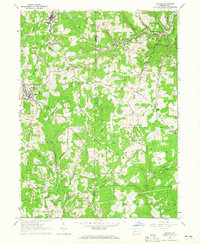 1964 Chicora1965 Print · USGSAcross Butler and Armstrong counties in the mid-sixties, this area reveals a landscape shaped by mining and rail. Genealogists can trace family names and landmarks like White Oak Cem, Kepples Corners, and the old Home for the Aged.3 unique versions available
 - 1971 Map of Warren
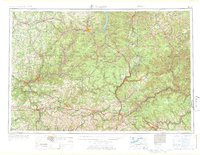 1971 Warren1971 Print · USGSNorth Central Pennsylvania is captured here in the early seventies, showing a landscape defined by industrial centers and massive state forests. Genealogists and historians can trace the rail lines of the Penn Central and Erie Lackawanna connecting towns like Warren, Kane, and Du Bois.
 - 1983 Map of Indiana
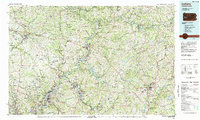 1983 Indiana1983 Print · USGSWestern Pennsylvania in the early eighties shows a landscape of industrial river towns and expanding university campuses. Genealogists can trace family roots through Lucernemines and Spring Church, or locate ancestors in Oakland Cemetery.
 - 1983 Map of Oil City, 1984 Print
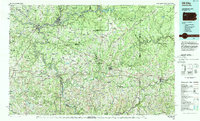 1983 Oil City1984 Print · USGSThe Allegheny and Clarion river valleys are shown in the early eighties as a hub of rail lines and conservation lands. Genealogists can trace family connections in Oil City and Franklin or locate rural sites like the Pennsylvania State Hospital and School and Coal City.
 - 2010 Map of Chicora, 2010 Print
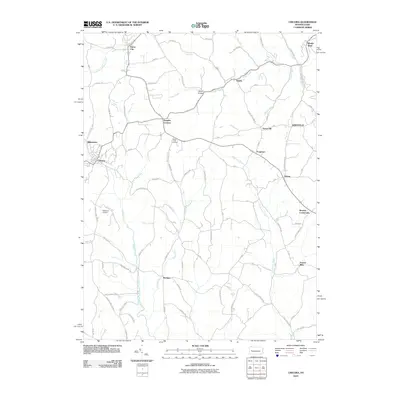 2010 Chicora2010 Print · USGSButler and Armstrong Counties are captured here in a moment of modern rural continuity, showing the persistent settlement patterns of the Pennsylvania plateau. Researchers can trace family sites near White Oak Cemetery and locate historic hamlets like Rattigan, Fosters Mills, and Kepples Corners.
 - 2010 Map of Parker, 2010 Print
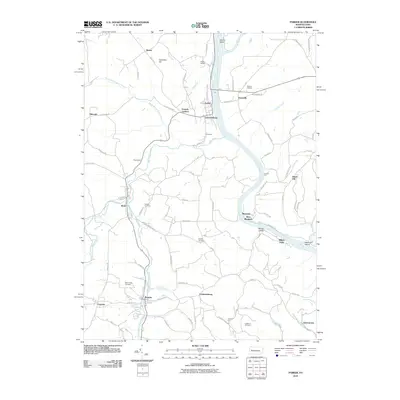 2010 Parker2010 Print · USGSIn the river valleys of northern Pennsylvania, this survey shows the confluence of the Allegheny River and Clarion River as it appeared in 2010. Genealogists and historians can trace old homesteads and local landmarks from Parkers Landing to the burial grounds at Shakley Cemetery and Crawford Cemetery.
 - 2013 Map of Parker, 2013 Print
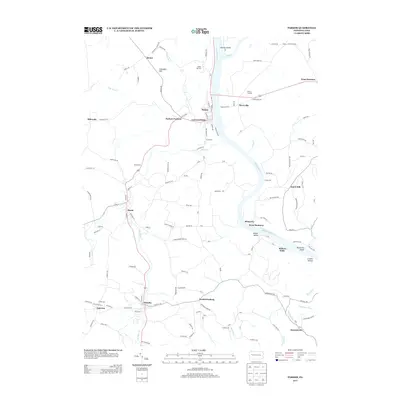 2013 Parker2013 Print · USGSThe confluence of the Allegheny and Clarion rivers defines this Pennsylvania landscape in the early 2010s. Researchers can trace historic river points and upland communities like Parkers Landing, Millers Eddy, and Happy Retreat.
 - 2013 Map of Chicora, 2013 Print
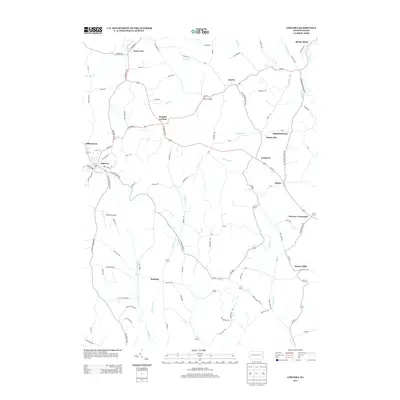 2013 Chicora2013 Print · USGSButler County's rural character is well-preserved here in the years following the millennium, showing a network of small settlements and creek-side hamlets. Researchers can trace family ties through Karns City, Chicora, and the quiet corner of Fosters Mills.
 - 2016 Map of Chicora, 2016 Print
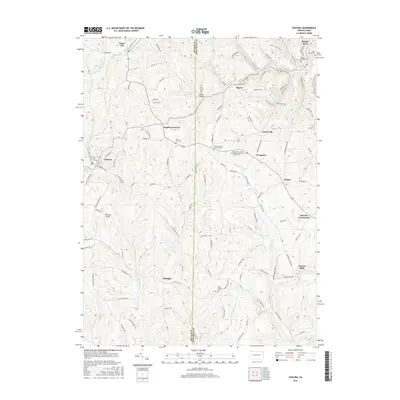 2016 Chicora2016 Print · USGSThe border of Butler and Armstrong counties comes into focus in this recent survey. Local historians can trace the roads connecting Karns City and Chicora or locate family plots at White Oak Cem and Saint Patricks Cem.
 - 2016 Map of Parker, 2016 Print
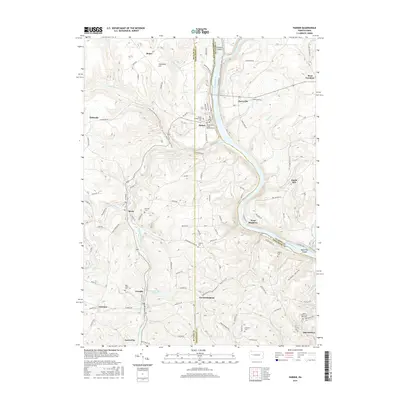 2016 Parker2016 Print · USGSWestern Pennsylvania in the mid-2010s shows a landscape of river-bend settlements and deep valleys at the junction of the Allegheny and Clarion rivers. Researchers can locate many burial sites such as Grand Army of the Republic Cem and Shakley Cem, or trace the path of the N Country National Scenic Trail.
 - 2019 Map of Chicora, 2019 Print
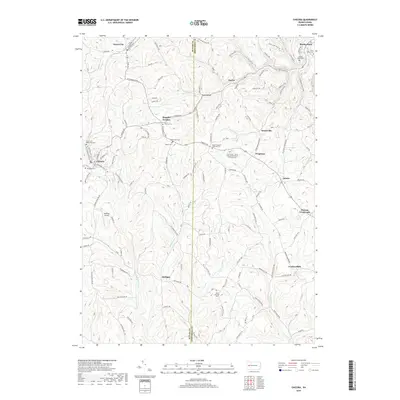 2019 Chicora2019 Print · USGSThe uplands of Butler and Armstrong counties appear here in modern detail, showing a landscape defined by deep valleys and rural crossroads. Genealogists and historians can trace lineage through White Oak Cem, Hillview Cem, and old settlements like Kaylor and Somerville.
 - 2019 Map of Parker, 2019 Print
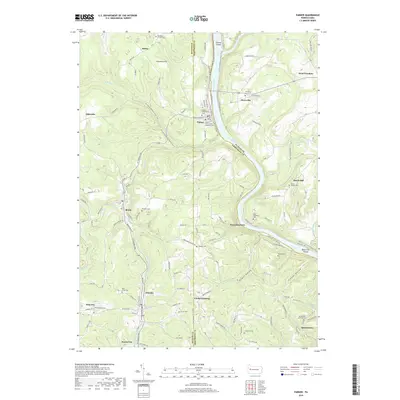 2019 Parker2019 Print · USGSThe river valleys of Clarion, Armstrong, and Butler counties come alive in this detailed recent survey of the Pennsylvania oil region. Researchers can trace numerous family burial grounds and small-town centers like Grand Army of the Republic Cem, Petrolia, and West Monterey.
Showing maps 1-25 of 27
Frequently asked questions
- What are the different types of historical maps available for Karns City?
- What is the oldest map of Karns City?
- Where can I purchase historical maps of Karns City for my home or office?
- Where can I download high-res historical maps of Karns City?
- Are there historical topographic maps available for Karns City?
- Is there historical aerial imagery available for Karns City?
- Where are historical maps of Karns City sourced from?