1900s (20th Century) Maps of Cleveland Township, Pennsylvania
Explore 16 historic maps of Cleveland Township from the 1900s (20th Century). These maps offer a rare glimpse into what life looked like during the 1900s — showing old roads, neighborhoods, homes, and landmarks that have changed or disappeared over time.
Whether you're researching your family's past, planning a metal detecting trip, or studying how Cleveland Township's landscape evolved across the 1900s, these high-resolution maps are a powerful tool for exploring the history of this region.
- Focus on a specific era: All maps on this page are from the 1900s, giving you a focused view of this time period.
- See what’s changed: Compare century-old streets, trails, and buildings to today's modern landscape using overlays and satellite layers.
- Research with precision: Use these maps for genealogy, historical research, land use analysis, or educational projects.
- View, download, or print: Maps are fully viewable online in high resolution, and can be downloaded or printed for your own records.
Start exploring Cleveland Township's history through authentic maps from the 1900s. This is your window into the past.
Cleveland Township, PA maps
(16)- 1943 Map of Shamokin
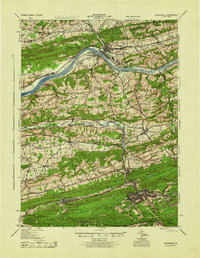 1943 Shamokin1943 Print · USGSNorthumberland and Montour Counties were hubs of industry and river trade in the 1940s. Genealogists and historians can trace rail-era landmarks like Wolverton Station and coal-country staples such as the Trevorton Colliery and Zion Church.
 - 1947 Map of Mt. Carmel
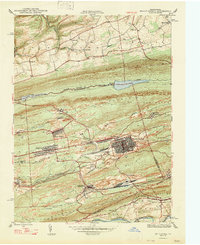 1947 Mt. Carmel1947 Print · USGSThe Pennsylvania coal region is shown here at its post-war industrial peak, bounded by the ridges of Big Mountain and Locust Mountain. Genealogists and historians can trace the intricate rail networks and compact neighborhoods of Mount Carmel, Kulpmont, and Locust Summit.2 unique versions available
 - 1947 Map of Catawissa
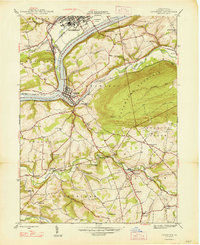 1947 Catawissa1947 Print · USGSColumbia County at the dawn of the post-war era reveals a bustling river valley shaped by coal-hauling railroads and rural industry. Genealogists can trace family names at Parrs Mill, Mt Zion Cem, and many local schools like Clayton Sch.2 unique versions available
 - 1950 Map of Harrisburg, 1952 Print
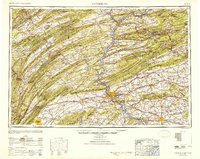 1950 Harrisburg1952 Print · USGSMid-century Central Pennsylvania comes alive through its dense rail networks and river valley settlements during the post-war industrial era. Genealogists and historians can trace family roots through hubs like Harrisburg, locate Carlisle Barracks, or follow the Pennsylvania RR through the Lebanon Valley.
 - 1952 Map of Shamokin, 1954 Print
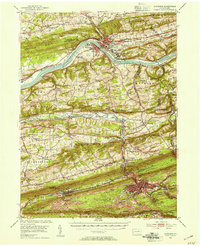 1952 Shamokin1954 Print · USGSNorthumberland County in the early 1950s shows a landscape defined by the Susquehanna River and the coal-rich ridges of Big Mountain. Genealogists can locate family names at Pine Hill Cem or trace landmarks like the Slovac Academy and Geisinger Hospital.3 unique versions available
 - 1955 Map of Mount Carmel, 1956 Print
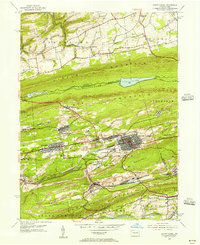 1955 Mount Carmel1956 Print · USGSNorthumberland County's coal-country landscape is meticulously detailed here in the mid-fifties, showing the rail-dependent corridor between Kulpmont and Mount Carmel. Genealogists and historians can trace the foundations of local life through the Township Sch, Mount Carmel Cemetery, and the Drive-in Theater at Natalie.5 unique versions available
 - 1955 Map of Catawissa, 1956 Print
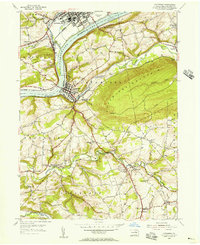 1955 Catawissa1956 Print · USGSThe Susquehanna River and its rail corridors dominate this Columbia County landscape in the mid-fifties. Researchers can trace ancestral connections at Old Quaker Ch, locate the historic Pensyls Mill, or explore the rail hubs of Catawissa and Bloomsburg.5 unique versions available
 - 1955 Map of Catawissa, 1960 Print
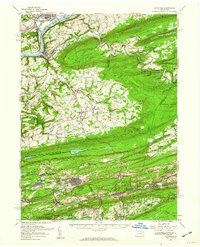 1955 Catawissa1960 Print · USGSThe coal and river valleys of Columbia and Schuylkill counties are shown here in the mid-1950s. Genealogists and historians can trace family roots through numerous sites like Centralia, St Marys Cem, and Parrs Mill.2 unique versions available
 - 1957 Map of Harrisburg
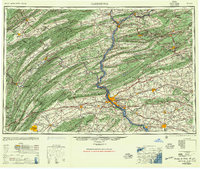 1957 Harrisburg1957 Print · USGSMid-century Central Pennsylvania comes into focus as a bustling network of rail, river, and mountain ridges. Genealogists and historians can trace the development of the State Capitol and surrounding hubs like Middletown, Columbia, and Pottsville.7 unique versions available
 - 1961 Map of Harrisburg
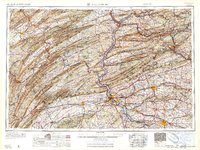 1961 Harrisburg1961 Print · USGSCentral Pennsylvania is shown at a mid-century peak of industrial and military activity, from the Susquehanna water gaps to the fertile Dutch Country. Genealogists and historians can trace the rail corridors of the Pennsylvania RR and find landmarks like Carlisle Barracks or the Anthracite Coal Fields.2 unique versions available
 - 1964 Map of Harrisburg
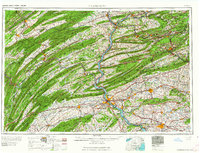 1964 Harrisburg1964 Print · USGSCentral Pennsylvania in the mid-fifties reveals a landscape shaped by ridge-and-valley geology and critical Cold War infrastructure. Researchers can trace the massive Indiantown Gap Military Reservation or the rail corridors of the Pennsylvania RR and Reading RR.
 - 1969 Map of Shamokin, 1972 Print
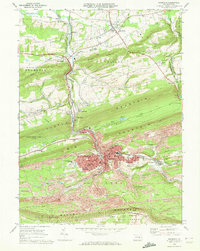 1969 Shamokin1972 Print · USGSNorthumberland County coal country is captured here in the late sixties, showing the dense industrial and residential growth of Shamokin and its surrounding boroughs. Trace the extensive rail networks of the Penn Central and find local landmarks like the Shamokin State Hospital and Kemp Stadium.2 unique versions available
 - 1969 Map of Danville, 1972 Print
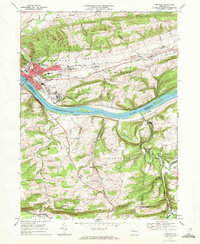 1969 Danville1972 Print · USGSDanville and the Susquehanna River valley are shown in the late sixties as the region's healthcare and rail legacy remained central to local life. Genealogists and historians can trace the foundations of Geisinger Hospital, find rural landmarks like the Riegel Covered Bridge, or locate family sites near Mechanicsville and Knoebels Grove.4 unique versions available
 - 1977 Map of Mount Carmel, 1979 Print
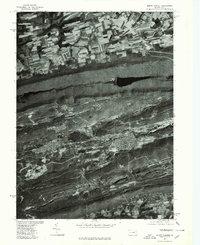 1977 Mount Carmel1979 Print · USGSMount Carmel and the anthracite coal region appear here in the late seventies, captured in detailed aerial imagery. Genealogists and historians can trace the gridded streets of Mount Carmel, Kulpmont, and Locust Gap against the ridges of Big Mountain.
 - 1984 Map of Sunbury, 1985 Print
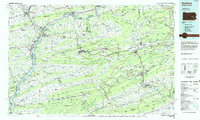 1984 Sunbury1985 Print · USGSPennsylvania coal country and the Susquehanna valley appear here in the early eighties, showcasing a landscape defined by industrial ridges and river towns. Genealogists and historians can trace rail corridors like Conrail and explore mountain settlements from Mahanoy City to Elizabethville.2 unique versions available
 - 1994 Map of Danville, 1996 Print
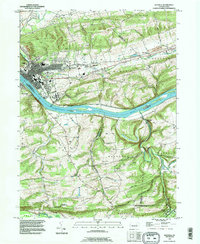 1994 Danville1996 Print · USGSDanville and the winding Susquehanna River corridor appear in the mid-1990s, revealing a landscape of ridge-top farms and riverbank industry. Genealogists can locate family landmarks like Wilson Cem, Straub Ch, and the grounds of the State Hospital.
End of results
Showing maps 1-16 of 16
Top cities near Cleveland Township
- Bloomsburg historical maps
- Pottsville historical maps
- Berwick historical maps
- Shamokin historical maps
- Mount Carmel historical maps
- Minersville historical maps
See more
Top neighborhoods of Cleveland Township
Frequently asked questions
- What are the different types of historical maps available for Cleveland Township?
- What is the oldest map of Cleveland Township?
- Where can I purchase historical maps of Cleveland Township for my home or office?
- Where can I download high-res historical maps of Cleveland Township?
- Are there historical topographic maps available for Cleveland Township?
- Is there historical aerial imagery available for Cleveland Township?
- Where are historical maps of Cleveland Township sourced from?