Old Maps of Greene Township, Pennsylvania for Academic Research
Study the evolution of Greene Township with 63 high-resolution historic maps. Whether you're teaching, researching, or modeling changes in land use, these maps provide essential visual documentation of urban, environmental, and geographic change.
- Analyze long-term change: Track patterns in development, transportation, and natural features.
- Ideal for environmental or urban studies: Support academic projects with primary historical map data.
- Use in the classroom or lab: Educators and researchers rely on these maps to bring historical context to life.
These maps are a powerful tool for teaching, research, and visualizing how Greene Township has changed over the decades.
Greene Township, PA maps
(63)- 1902 Map of Chambersburg
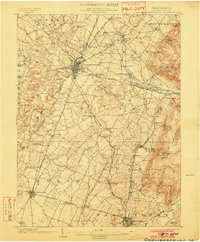 1902 Chambersburg1902 Print · USGSFranklin County at the dawn of the new century shows a thriving valley dominated by the rail lines connecting Chambersburg, Greencastle, and Waynesboro. Genealogists and historians can trace long-gone stops and industrial sites like Guilford Siding, Browns Mills, and the Pond Bank iron area.7 unique versions available
 - 1909 Map of Fairfield
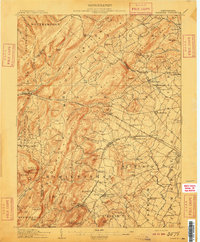 1909 Fairfield1909 Print · USGSAdams County at the turn of the century shows a landscape of mountain sanitaria, early iron works, and a dense network of country schoolhouses. Genealogists and researchers can trace the old Western Maryland Railroad route and locate landmarks like Maria Furnace, Cashtown, and the South Mountain Sanatorium.6 unique versions available
 - 1923 Map of Shippensburg
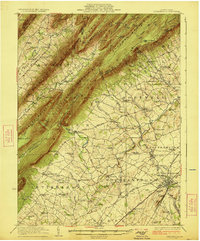 1923 Shippensburg1923 Print · USGSShippensburg and its surrounding valley floor were defined by the rail lines and agricultural networks of the early twentieth century. Genealogists can locate dozens of country schools and churches, including Brookside School, Lurgan Sta, and the State Normal School campus.3 unique versions available
 - 1942 Map of Hagerstown
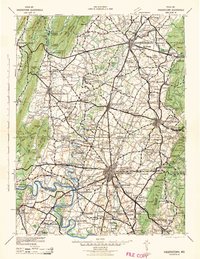 1942 Hagerstown1942 Print · USGSThe Cumberland Valley and Potomac corridor are captured here at the height of the Second World War rail-and-river era. Genealogists and historians can trace the industrial landscape of Richmond Furnace, the route of the Chesapeake and Ohio Canal, and the grounds of Camp Ritchie.
 - 1942 Map of Gettysburg, 1944 Print
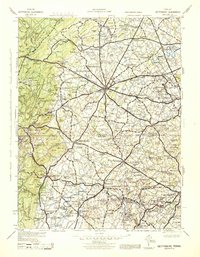 1942 Gettysburg1944 Print · USGSGettysburg and its surrounding borderlands are shown in great detail during the early 1940s, capturing the region's dense network of rural schools and mills. Genealogists can trace family-named landmarks such as Galt Kump PO, Hafers Mill, and Philips Delight Sch.
 - 1943 Map of Hagerstown
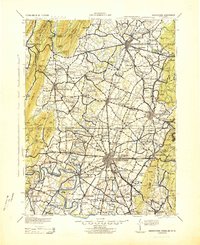 1943 Hagerstown1943 Print · USGSThe Cumberland Valley was a critical wartime logistics hub in the 1940s, teeming with rail traffic and new military installations. Genealogists and historians can trace the Chesapeake and Ohio Canal or locate local landmarks like Richmond Furnace and Camp Ritchie.
 - 1943 Map of Chambersburg, 1955 Print
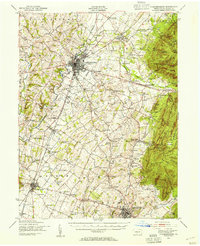 1943 Chambersburg1955 Print · USGSChambersburg and the Cumberland Valley are seen here during the war years, dominated by the massive Letterkenny Ordnance Depot and active rail lines. Genealogists can trace family names through dozens of rural landmarks like Salem Ch and the Pennsylvania Soldiers Orphan Sch.3 unique versions available
 - 1943 Map of Shippensburg, 1965 Print
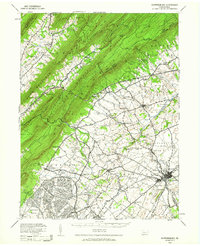 1943 Shippensburg1965 Print · USGSCumberland and Franklin Counties are captured here during the Second World War as modern infrastructure began to pierce the ridges. Researchers can trace family roots through dozens of rural landmarks like State Normal Sch, Orrstown, and the Union Ch.
 - 1944 Map of Scotland
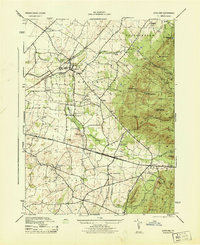 1944 Scotland1944 Print · USGSFranklin County at the height of the war years reveals a landscape of tight-knit rail towns and mountain forest reserves. Genealogists can locate specific homesteads and institutions like the Soldiers Orphan School, the Stone Quarry, and schools like Mt Vernon School.7 unique versions available
 - 1944 Map of Flat Ridge
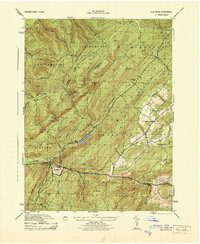 1944 Flat Ridge1944 Print · USGSThe South Mountain high country in the mid-1940s is defined by vast state forests and conservation lands. Hikers and historians can trace the Appalachian Trail past Caledonia Park, Strasbaugh School, and the Chambersburg Reservoir.6 unique versions available
 - 1944 Map of Chambersburg
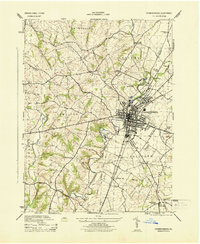 1944 Chambersburg1944 Print · USGSFranklin County at the height of the Second World War shows a landscape defined by industrial centers and burgeoning military infrastructure. Researchers can trace the dual rail lines serving Chambersburg or locate rural landmarks like U S Paper Mill and Social Island.6 unique versions available
 - 1944 Map of Iron Springs
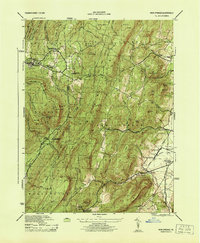 1944 Iron Springs1944 Print · USGSThe South Mountain highlands of Adams and Franklin Counties are captured during the mid-forties, highlighting the Appalachian Trail and early medical facilities. Trace the rail-and-valley economy through Fairfield Sta, Maria Furnace, and the Roofing Plant.2 unique versions available
 - 1945 Map of Shippensburg
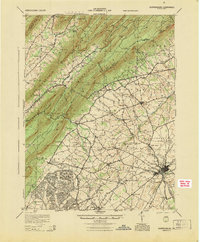 1945 Shippensburg1945 Print · USGSCumberland and Franklin counties meet at the base of the ridges in the mid-1940s, just as modern infrastructure begins to reshape the valley. Genealogists and historians can trace numerous rural schoolhouses like Clay Hill Sch and early infrastructure like the Kittatinny Tunnel and State Normal Sch.
 - 1948 Map of Baltimore
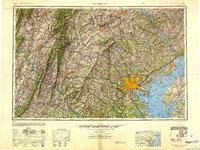 1948 Baltimore1948 Print · USGSMaryland and Pennsylvania crossroads are captured in the late 1940s, showing a landscape defined by historic rail lines and major military installations. Genealogists can trace family connections in Gettysburg, Westminster, and near the U.S. Naval Academy in Annapolis.2 unique versions available
 - 1950 Map of Harrisburg, 1952 Print
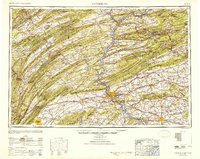 1950 Harrisburg1952 Print · USGSMid-century Central Pennsylvania comes alive through its dense rail networks and river valley settlements during the post-war industrial era. Genealogists and historians can trace family roots through hubs like Harrisburg, locate Carlisle Barracks, or follow the Pennsylvania RR through the Lebanon Valley.
 - 1951 Map of Fairfield, 1954 Print
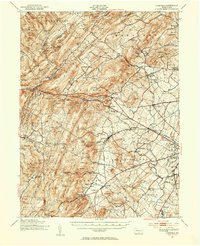 1951 Fairfield1954 Print · USGSSouth Mountain and the Adams County fruit belt are captured here in the early fifties. Genealogists can trace family footprints through numerous rural schools like Pitzer Sch and settlements such as Arendtsville and Maria Furnace.3 unique versions available
 - 1953 Map of Iron Springs, 1954 Print
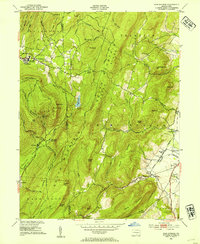 1953 Iron Springs1954 Print · USGSAdams County in the early fifties shows a landscape of mountain ridges and valley farms. Genealogists can locate old family landmarks like Chamberlains Hill, trace the Appalachian Trail, or find the historic Maria Furnace site.5 unique versions available
 - 1954 Map of Baltimore
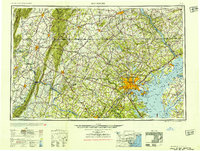 1954 Baltimore1954 Print · USGSThe Mid-Atlantic region in the early fifties shows a landscape of growing suburban centers and heavy rail corridors. Trace mid-century transit networks and military landmarks from the Aberdeen Proving Ground to the Gettysburg National Military Park.
 - 1956 Map of Baltimore
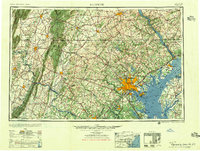 1956 Baltimore1956 Print · USGSMid-century Maryland and Pennsylvania are captured here during a period of massive suburban and military growth across the Chesapeake region. Genealogists and historians can trace the rail corridors of the Baltimore & Ohio RR and locate landmarks like Fort McHenry or the Aberdeen Proving Ground.
 - 1957 Map of Harrisburg
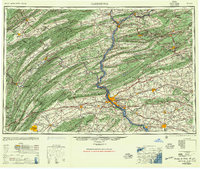 1957 Harrisburg1957 Print · USGSMid-century Central Pennsylvania comes into focus as a bustling network of rail, river, and mountain ridges. Genealogists and historians can trace the development of the State Capitol and surrounding hubs like Middletown, Columbia, and Pottsville.7 unique versions available
 - 1957 Map of Baltimore, 1964 Print
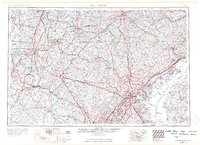 1957 Baltimore1964 Print · USGSMaryland and Southern Pennsylvania are shown during the mid-century expansion of the Baltimore-Washington corridor. Researchers can trace the extensive rail lines of the Baltimore & Ohio RR and locate sites like Fort Detrick and Gettysburg National Military Park.5 unique versions available
 - 1961 Map of Harrisburg
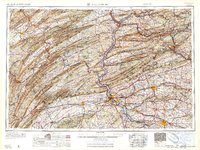 1961 Harrisburg1961 Print · USGSCentral Pennsylvania is shown at a mid-century peak of industrial and military activity, from the Susquehanna water gaps to the fertile Dutch Country. Genealogists and historians can trace the rail corridors of the Pennsylvania RR and find landmarks like Carlisle Barracks or the Anthracite Coal Fields.2 unique versions available
 - 1961 Map of Baltimore
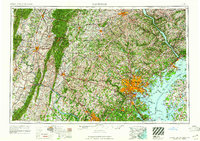 1961 Baltimore1961 Print · USGSMaryland and Pennsylvania are captured at a mid-century peak of industrial and military expansion. Genealogists and historians can trace rail corridors like the Western Maryland Ry or locate regional landmarks such as Camp Detrick and Kent Island.
 - 1964 Map of Harrisburg
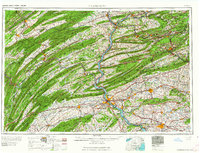 1964 Harrisburg1964 Print · USGSCentral Pennsylvania in the mid-fifties reveals a landscape shaped by ridge-and-valley geology and critical Cold War infrastructure. Researchers can trace the massive Indiantown Gap Military Reservation or the rail corridors of the Pennsylvania RR and Reading RR.
 - 1966 Map of Roxbury, 1968 Print
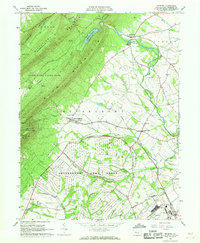 1966 Roxbury1968 Print · USGSFranklin County's landscape in the mid-1960s reveals a unique mix of high-altitude forests and strategic military infrastructure. Genealogists can trace family roots through the valley's Township Sch, Emmanuel Ch, and the extensive grounds of the Letterkenny Army Depot.4 unique versions available
Showing maps 1-25 of 63
Top cities near Greene Township
- Chambersburg historical maps
- Waynesboro historical maps
- Quincy Township historical maps
- Shippensburg historical maps
- Greencastle historical maps
- Carroll Valley historical maps
See more
Top neighborhoods of Greene Township
- Nyesville historical maps
- Green Village historical maps
- Greenwood historical maps
- Smoketown historical maps
- Woodstock historical maps
- Brownsville historical maps
See more
Frequently asked questions
- What are the different types of historical maps available for Greene Township?
- What is the oldest map of Greene Township?
- Where can I purchase historical maps of Greene Township for my home or office?
- Where can I download high-res historical maps of Greene Township?
- Are there historical topographic maps available for Greene Township?
- Is there historical aerial imagery available for Greene Township?
- Where are historical maps of Greene Township sourced from?