Old Maps of Coal Run, Young Township for Academic Research
Study the evolution of Coal Run with 14 high-resolution historic maps. Whether you're teaching, researching, or modeling changes in land use, these maps provide essential visual documentation of urban, environmental, and geographic change.
- Analyze long-term change: Track patterns in development, transportation, and natural features.
- Ideal for environmental or urban studies: Support academic projects with primary historical map data.
- Use in the classroom or lab: Educators and researchers rely on these maps to bring historical context to life.
These maps are a powerful tool for teaching, research, and visualizing how Coal Run has changed over the decades.
Coal Run, Young Township maps
(14)- 1902 Map of Elders Ridge, 1957 Print
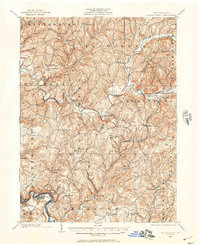 1902 Elders Ridge1957 Print · USGSWestern Pennsylvania at the turn of the century reveals a landscape of deep valleys and rising industrial rail lines. Genealogists can trace family roots through rural hubs like Brick Church, Elderton, and the namesake village of Elders Ridge.2 unique versions available
 - 1904 Map of Elders Ridge
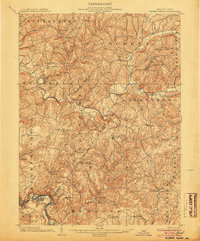 1904 Elders Ridge1904 Print · USGSArmstrong and Indiana Counties are shown here during the early 1900s, when the river-and-rail economy dominated the valley floor. Researchers can trace ancestral roots through rural hamlets like Elders Ridge, Cochran Mills, and Shelocta, or follow the Western Pennsylvania Division (P. R. R.) along the Kiskiminitas River.5 unique versions available
 - 1953 Map of Pittsburgh
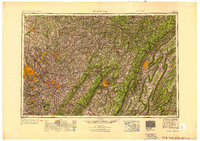 1953 Pittsburgh1953 Print · USGSWestern Pennsylvania's industrial landscape at the start of the fifties shows the steel and rail corridors between Pittsburgh and Altoona. Trace family roots in river towns like Tarentum or follow the Pennsylvania Turnpike across Laurel Hill.
 - 1954 Map of Pittsburgh
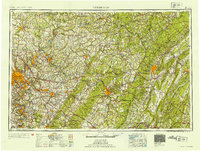 1954 Pittsburgh1954 Print · USGSWestern Pennsylvania in the early fifties remains a powerhouse of heavy industry and vital transit corridors. Genealogists and historians can trace the rail-and-river network connecting Pittsburgh, Johnstown, and Altoona via the Pennsylvania RR and the Lincoln Highway.2 unique versions available
 - 1958 Map of Pittsburgh
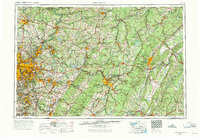 1958 Pittsburgh1958 Print · USGSWestern Pennsylvania in the late fifties shows an industrial heartland defined by the confluence of the Allegheny River and Monongahela River. Researchers can trace the sprawling rail networks of the Pennsylvania RR and find established towns like Butler, Latrobe, and Windber.5 unique versions available
 - 1959 Map of Pittsburgh
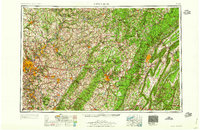 1959 Pittsburgh1959 Print · USGSWestern Pennsylvania in the late fifties is captured here at the height of its industrial era. Genealogists and historians can trace the riverfront growth of Pittsburgh, the rail works at Altoona, and the mountain gaps of Laurel Hill.
 - 1964 Map of Pittsburgh
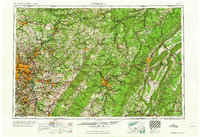 1964 Pittsburgh1964 Print · USGSWestern Pennsylvania in the late fifties and early sixties shows a landscape of powerful river industries and expanding highways. Genealogists and historians can trace the rail corridors of the Pennsylvania RR through industrial hubs like Johnstown, Altoona, and Nanty Glo.
 - 1964 Map of Mc Intyre, 1966 Print
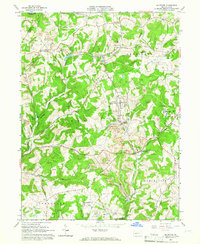 1964 Mc Intyre1966 Print · USGSIndiana and Armstrong counties in the mid-sixties reveal a landscape defined by coal and gas extraction. Genealogists and historians can trace the rail-linked mining towns of Mc Intyre and Coal Run or locate the West Lebanon Cem and Ebenezer Ch.4 unique versions available
 - 1983 Map of Indiana
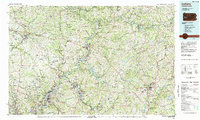 1983 Indiana1983 Print · USGSWestern Pennsylvania in the early eighties shows a landscape of industrial river towns and expanding university campuses. Genealogists can trace family roots through Lucernemines and Spring Church, or locate ancestors in Oakland Cemetery.
 - 2010 Map of McIntyre, 2010 Print
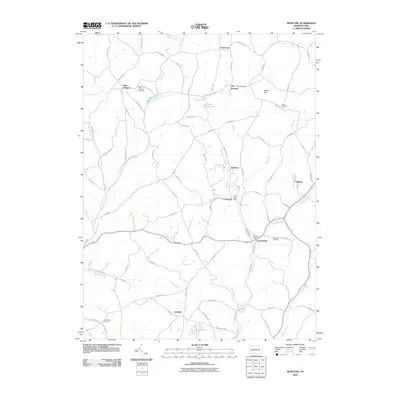 2010 McIntyre2010 Print · USGSIndiana County's coal and postal history comes to life in this detailed study of the area's rural landscape at the start of the century. Genealogists can locate family sites at West Lebanon Cemetery or trace the early mail routes through Clune Post Office and Kent Post Office.
 - 2013 Map of McIntyre, 2013 Print
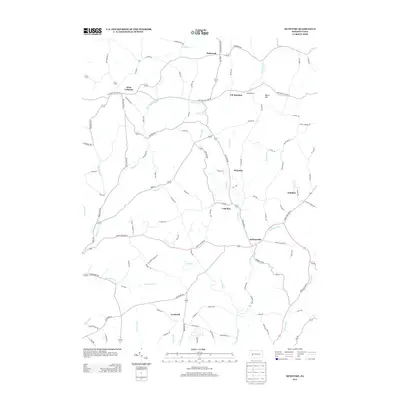 2013 McIntyre2013 Print · USGSWestern Pennsylvania’s coal-country heritage is on full display in the early twenty-first century, showing the enduring layout of company towns and rural crossroads. Researchers can trace family sites and local landmarks from McIntyre and Stewardsville to the banks of Blacklegs Cr.
 - 2016 Map of McIntyre, 2016 Print
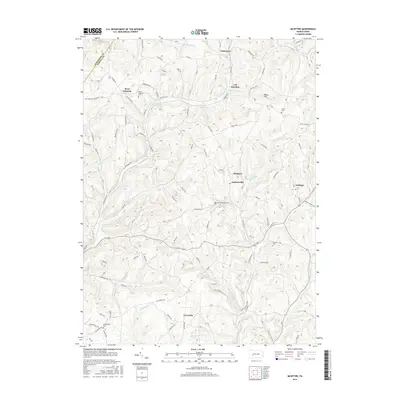 2016 McIntyre2016 Print · USGSIndiana County communities like McIntyre and Aultman are shown here as they appeared in the early twenty-first century. Genealogists and local historians can trace the locations of West Lebanon Cem, Conemaugh Cem, and the rural road network connecting these historic settlements.
 - 2019 Map of McIntyre, 2019 Print
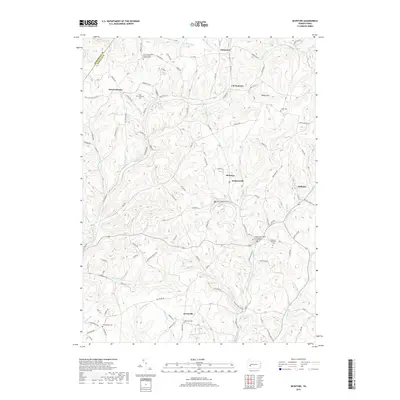 2019 McIntyre2019 Print · USGSIndiana County, Pennsylvania, is shown in this contemporary study of its coal-country terrain and scattered settlements. Genealogists can locate family names at the West Union United Presbyterian Church Cem or trace the industrial history of McIntyre along the Old Railroad Grade.
 - 2023 Map of McIntyre, 2023 Print
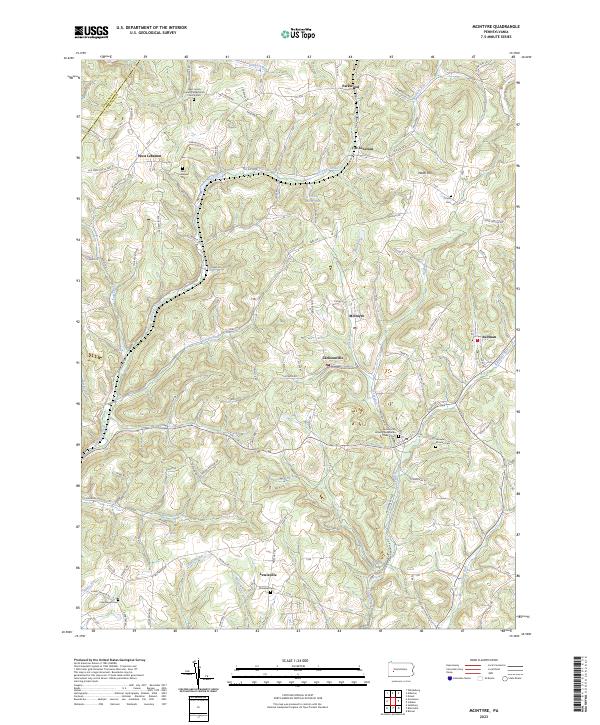 2023 McIntyre2023 Print · USGSIndiana County's coal and rail country is detailed here during the early twenty-first century. Genealogists can trace family roots at Ebenezer Cem or explore the settlements of Jacksonville and West Lebanon.
End of results
Showing maps 1-14 of 14
Top cities near Coal Run
- White historical maps
- Indiana historical maps
- Blairsville historical maps
- Rayne Township historical maps
- Derry historical maps
- North Buffalo Township historical maps
See more
Frequently asked questions
- What are the different types of historical maps available for Coal Run?
- What is the oldest map of Coal Run?
- Where can I purchase historical maps of Coal Run for my home or office?
- Where can I download high-res historical maps of Coal Run?
- Are there historical topographic maps available for Coal Run?
- Is there historical aerial imagery available for Coal Run?
- Where are historical maps of Coal Run sourced from?