Old Maps of Moore Township, Pennsylvania for Academic Research
Study the evolution of Moore Township with 46 high-resolution historic maps. Whether you're teaching, researching, or modeling changes in land use, these maps provide essential visual documentation of urban, environmental, and geographic change.
- Analyze long-term change: Track patterns in development, transportation, and natural features.
- Ideal for environmental or urban studies: Support academic projects with primary historical map data.
- Use in the classroom or lab: Educators and researchers rely on these maps to bring historical context to life.
These maps are a powerful tool for teaching, research, and visualizing how Moore Township has changed over the decades.
Moore Township, PA maps
(46)- 1894 Map of Allentown
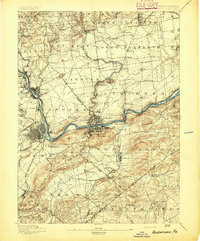 1894 Allentown1894 Print · USGSThe Lehigh Valley's industrial heartland is caught in a moment of rapid Victorian-era growth along the river and canal corridor. Genealogists and local historians can trace the early footprints of Allentown and Nazareth, or locate vanished rail stops along the Lehigh Valley R.R. and Central R.R. of N.J.10 unique versions available
 - 1914 Map of Wind Gap, 1956 Print
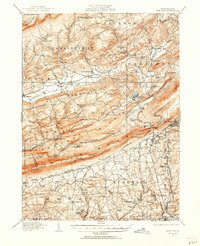 1914 Wind Gap1956 Print · USGSNorthampton and Monroe Counties are captured here just before the First World War, dominated by the industrial rail corridor at Wind Gap. Genealogists can locate dozens of named schools like Michael Valley School and early quarries at Chapman Quarries.
 - 1916 Map of Wind Gap
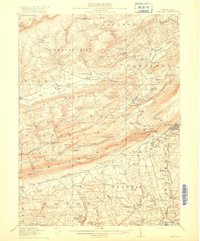 1916 Wind Gap1916 Print · USGSThe Pocono foothills and Blue Mountain ridge are captured here at the height of the steam-rail era. Genealogists can trace family names through dozens of rural landmarks like St. Joseph School, Haynes Mill, and the busy rail junction at Wind Gap.7 unique versions available
 - 1939 Map of Allentown
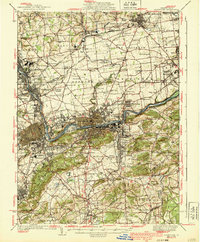 1939 Allentown1939 Print · USGSThe Lehigh Valley thrives as an industrial and aviation hub in the mid-1930s, where rail lines and early airfields meet historic Pennsylvania townships. Researchers can trace family roots through dozens of rural landmarks like Washington Sch, Christian Springs, and the Vera Cruz Sta.4 unique versions available
 - 1943 Map of Wind Gap
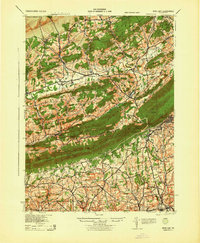 1943 Wind Gap1943 Print · USGSThe Pennsylvania countryside near the Monroe and Northampton county line is captured here during the wartime era. Researchers can trace the path of the Lehigh and New England railroad through the Wind Gap pass or locate local landmarks like St Joseph Sch and Ross Common.
 - 1943 Map of Bethlehem
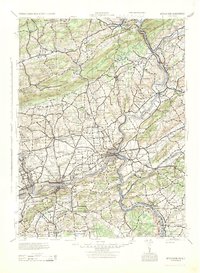 1943 Bethlehem1943 Print · USGSNorthampton and Lehigh counties hummed with industry and river commerce during the early war years. Researchers can trace the path of the Lehigh Valley RR, locate family-named landmarks like Chief Tatamy, and find rural schools such as Mexico School and Poplar Valley Sch.
 - 1944 Map of Newark, 1971 Print
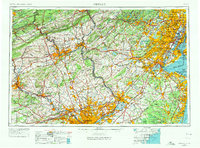 1944 Newark1971 Print · USGSThe industrial corridor from Philadelphia to New York was in a period of massive transition during the mid-forties. Genealogists and researchers can trace the rail lines of the Lehigh Valley RR, locate military installations like Picatinny Arsenal, and explore the early sprawl near Levittown.5 unique versions available
 - 1949 Map of Newark
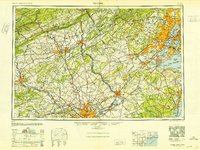 1949 Newark1949 Print · USGSThe industrial corridor between Philadelphia and New York comes alive in this post-war survey. Genealogists and historians can trace the massive rail networks of the Reading Railroad and locate major installations like Fort Dix or Picatinny Arsenal.2 unique versions available
 - 1956 Map of Newark
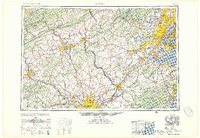 1956 Newark1956 Print · USGSThe industrial heart of the Mid-Atlantic is captured here at the dawn of the highway era, tracing the dense corridors between Newark and Philadelphia. Genealogists and local historians can map the rail networks of the Reading RR or locate mid-century military life at Fort Dix Military Reservation.2 unique versions available
 - 1957 Map of Newark
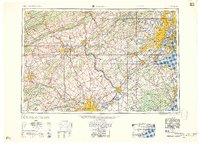 1957 Newark1957 Print · USGSThe industrial and military heart of the Mid-Atlantic is mapped during its post-war suburban boom. Genealogists and historians can trace the intricate rail corridors of the Reading Railroad and locate key landmarks from Princeton University to Fort Hancock.
 - 1957 Map of Allentown, 1960 Print
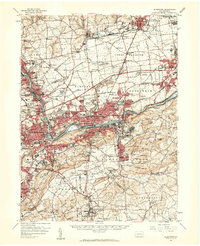 1957 Allentown1960 Print · USGSThe Lehigh Valley in the late fifties was a powerhouse of rail and industry centered on the river's winding path. Genealogists and local historians can trace the footprint of the State Hospital, early schools like Moravian College, and rural markers like Christ Springs Ch.3 unique versions available
 - 1960 Map of Newark
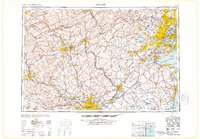 1960 Newark1960 Print · USGSThe industrial heart of the Mid-Atlantic is shown at mid-century, stretching from the dense urban centers of Newark and Philadelphia to the Blue Mountain ridges. Researchers can trace historic rail lines, coastal defenses at Fort Hancock, and the riverfront growth of Trenton and Easton.3 unique versions available
 - 1960 Map of Wind Gap, 1962 Print
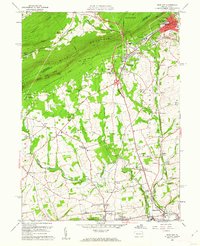 1960 Wind Gap1962 Print · USGSNorthampton County during the early sixties is shown as a landscape of slate quarries and ridge-top crossings. You can trace the Erie-Lackawanna Railroad through industrial hubs like Pen Argyl or locate family sites near St Peters Union Ch and the Township Sch.5 unique versions available
 - 1960 Map of Kunkletown, 1962 Print
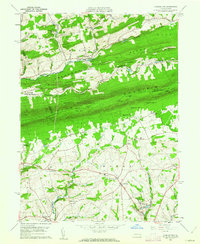 1960 Kunkletown1962 Print · USGSNorthampton and Monroe counties are divided by the steep ridge of Blue Mountain in the early 1960s, a landscape defined by valley farming and upland ridges. Genealogists can trace family names at Fairview Cem or locate rural hubs like Klecknersville and the industries at the Clay Pits.3 unique versions available
 - 1964 Map of Newark
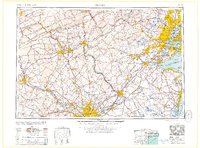 1964 Newark1964 Print · USGSGreater New Jersey and eastern Pennsylvania appear at the peak of their industrial and rail-centered development in the mid-sixties. Genealogists and historians can trace the paths of the Pennsylvania RR, identify mid-century landmarks like CAMP KILMER, or follow the Schuylkill River through READING.2 unique versions available
 - 1964 Map of Nazareth, 1966 Print
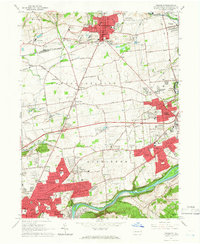 1964 Nazareth1966 Print · USGSThe Northampton County landscape in the mid-sixties reveals the steady growth between Bethlehem and Nazareth. Local historians can trace the development of Hecktown, locate the Gracedale County Home, and identify the various Quarries that shaped the regional economy.6 unique versions available
 - 1964 Map of Catasauqua, 1966 Print
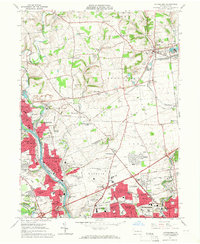 1964 Catasauqua1966 Print · USGSThe Lehigh Valley in the mid-sixties reveals a landscape of industrial river towns and emerging suburban developments near the regional airport. Genealogists and historians can trace family roots through numerous sites like Cedar Hill Memorial Park, Schoenersville, and the State Hospital Farm.6 unique versions available
 - 1976 Map of Wind Gap, 1978 Print
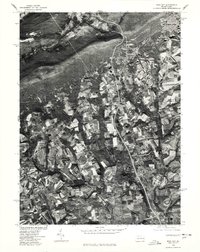 1976 Wind Gap1978 Print · USGSNorthampton County land use and mountain-gap settlements are captured in high detail in the mid-seventies. Trace the 1976 development of rural Moorestown and Stockertown, or the industrial footprint of Penn Argyl and Wind Gap.
 - 1976 Map of Kunkletown, 1978 Print
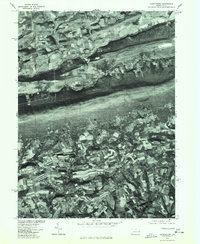 1976 Kunkletown1978 Print · USGSThe northern Pennsylvania countryside is frozen in time in the mid-1970s, showcasing the agricultural patterns of Northampton County. Local historians can trace the rural layouts of Kunkletown, Point Phillip, and Petersville.
 - 1984 Map of Allentown, 1985 Print
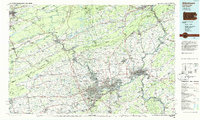 1984 Allentown1985 Print · USGSThe Lehigh Valley and southern Poconos are captured in the mid-eighties as industry and academic life converge along the river corridor. Trace the rail-and-water networks connecting Jim Thorpe and Bethlehem, or explore landmarks like Lehigh University and the Delaware Water Gap.3 unique versions available
 - 1992 Map of Kunkletown, 1995 Print
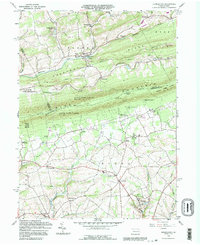 1992 Kunkletown1995 Print · USGSNorthampton and Monroe counties are shown in the 1990s as rural communities nestled against the Blue Mountain ridge. Trace ancestral roots through Salem Ch, find the old Township Sch, or locate former extraction sites like the Quarries and Claypits.
 - 1997 Map of Wind Gap, 1999 Print
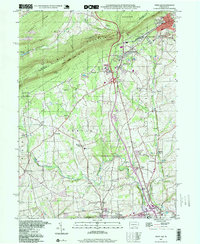 1997 Wind Gap1999 Print · USGSThe Slate Belt of Northampton County meets the Blue Mountain ridge in the late nineties, showcasing a landscape of industry and nature. Trace the legacy of extraction and transit at the Pen Argyl Yards, numerous Quarries, and landmarks like the Mt View Park Racetrack.
 - 1997 Map of Kunkletown, 1999 Print
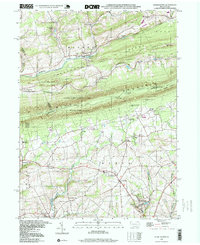 1997 Kunkletown1999 Print · USGSNorthampton County at the end of the century reflects a landscape of ridge-top trails and deep-seated industrial roots. Genealogists and historians can trace the foundations of Kunkletown, family-named sites like Arndts, and local landmarks like Fairview Cem.
 - 1999 Map of Wind Gap, 2001 Print
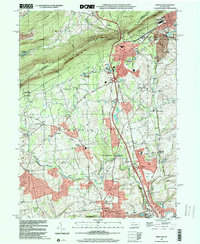 1999 Wind Gap2001 Print · USGSNorthampton County at the close of the twentieth century shows a landscape defined by the gap in Blue Mountain and a legacy of slate quarrying. Genealogists and hikers can trace the National Scenic Appalachian Trail or locate family sites like St Peters Union Ch and Evergreen Cem.
 - 1999 Map of Catasauqua, 2001 Print
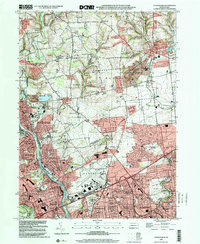 1999 Catasauqua2001 Print · USGSThe Lehigh Valley at the close of the millennium shows the dense urban integration of Allentown and Bethlehem. Genealogists can trace family sites at Allen Union Cem or Fairview Cem while following the historic tracks of the Lehigh Valley RR.
Showing maps 1-25 of 46
Top cities near Moore Township
- Allentown historical maps
- Bethlehem historical maps
- Easton historical maps
- Fullerton historical maps
- Phillipsburg historical maps
- Lower Saucon Township historical maps
See more
Top neighborhoods of Moore Township
- Point Phillip historical maps
- Summit Station historical maps
- Youngsville historical maps
- Arndts historical maps
- Benders Junction historical maps
- Crossroads historical maps
See more
Frequently asked questions
- What are the different types of historical maps available for Moore Township?
- What is the oldest map of Moore Township?
- Where can I purchase historical maps of Moore Township for my home or office?
- Where can I download high-res historical maps of Moore Township?
- Are there historical topographic maps available for Moore Township?
- Is there historical aerial imagery available for Moore Township?
- Where are historical maps of Moore Township sourced from?