1900s (20th Century) Maps of East Oak Lane, Philadelphia
Explore 14 historic maps of East Oak Lane from the 1900s (20th Century). These maps offer a rare glimpse into what life looked like during the 1900s — showing old roads, neighborhoods, homes, and landmarks that have changed or disappeared over time.
Whether you're researching your family's past, planning a metal detecting trip, or studying how East Oak Lane's landscape evolved across the 1900s, these high-resolution maps are a powerful tool for exploring the history of this region.
- Focus on a specific era: All maps on this page are from the 1900s, giving you a focused view of this time period.
- See what’s changed: Compare century-old streets, trails, and buildings to today's modern landscape using overlays and satellite layers.
- Research with precision: Use these maps for genealogy, historical research, land use analysis, or educational projects.
- View, download, or print: Maps are fully viewable online in high resolution, and can be downloaded or printed for your own records.
Start exploring East Oak Lane's history through authentic maps from the 1900s. This is your window into the past.
East Oak Lane, Philadelphia maps
(14)- 1942 Map of Norristown
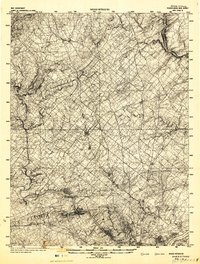 1942 Norristown1942 Print · USGSSoutheastern Pennsylvania at the onset of World War II shows a landscape of busy industrial river towns and expanding rail suburbs. Genealogists and historians can trace the early transit networks connecting Norristown, Doylestown, and the riverfront at New Hope.
 - 1944 Map of Newark, 1971 Print
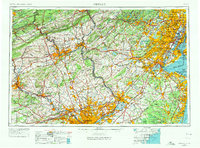 1944 Newark1971 Print · USGSThe industrial corridor from Philadelphia to New York was in a period of massive transition during the mid-forties. Genealogists and researchers can trace the rail lines of the Lehigh Valley RR, locate military installations like Picatinny Arsenal, and explore the early sprawl near Levittown.5 unique versions available
 - 1949 Map of Newark
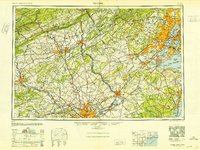 1949 Newark1949 Print · USGSThe industrial corridor between Philadelphia and New York comes alive in this post-war survey. Genealogists and historians can trace the massive rail networks of the Reading Railroad and locate major installations like Fort Dix or Picatinny Arsenal.2 unique versions available
 - 1950 Map of Frankford, 1953 Print
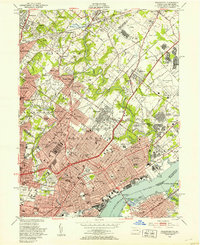 1950 Frankford1953 Print · USGSPhiladelphia in the mid-twentieth century shows a bustling industrial and institutional corridor along the Delaware River. Genealogists and historians can trace neighborhood growth through local landmarks like Montefiore Cemetery, Frankford High Sch, and the historic Frankford Arsenal.2 unique versions available
 - 1952 Map of Germantown, 1954 Print
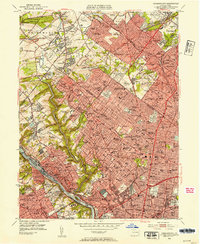 1952 Germantown1954 Print · USGSNorthwest Philadelphia and its Montgomery County suburbs are shown here in the early fifties as the region's rail-and-park network reached its peak maturity. Genealogists and local historians can locate neighborhood landmarks like Wayne Junction, Beaver College, and the many historic burial grounds including Holy Sepulchre Cemetery.2 unique versions available
 - 1956 Map of Newark
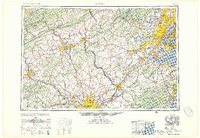 1956 Newark1956 Print · USGSThe industrial heart of the Mid-Atlantic is captured here at the dawn of the highway era, tracing the dense corridors between Newark and Philadelphia. Genealogists and local historians can map the rail networks of the Reading RR or locate mid-century military life at Fort Dix Military Reservation.2 unique versions available
 - 1957 Map of Newark
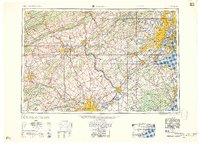 1957 Newark1957 Print · USGSThe industrial and military heart of the Mid-Atlantic is mapped during its post-war suburban boom. Genealogists and historians can trace the intricate rail corridors of the Reading Railroad and locate key landmarks from Princeton University to Fort Hancock.
 - 1960 Map of Newark
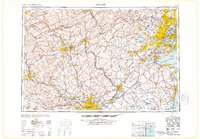 1960 Newark1960 Print · USGSThe industrial heart of the Mid-Atlantic is shown at mid-century, stretching from the dense urban centers of Newark and Philadelphia to the Blue Mountain ridges. Researchers can trace historic rail lines, coastal defenses at Fort Hancock, and the riverfront growth of Trenton and Easton.3 unique versions available
 - 1964 Map of Newark
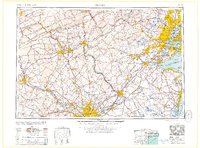 1964 Newark1964 Print · USGSGreater New Jersey and eastern Pennsylvania appear at the peak of their industrial and rail-centered development in the mid-sixties. Genealogists and historians can trace the paths of the Pennsylvania RR, identify mid-century landmarks like CAMP KILMER, or follow the Schuylkill River through READING.2 unique versions available
 - 1967 Map of Germantown, 1969 Print
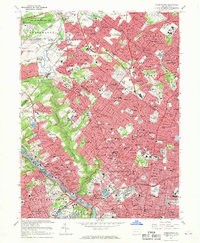 1967 Germantown1969 Print · USGSPhiladelphia's northern neighborhoods and the adjacent Montgomery County suburbs are shown in detail during the late sixties. Genealogists and historians can trace family locations near Germantown, locate burials in Holy Sepulchre Cemetery, or follow the rail lines through Chestnut Hill.4 unique versions available
 - 1967 Map of Frankford, 1970 Print
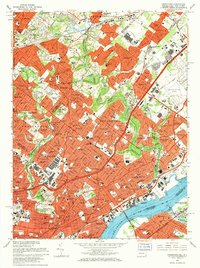 1967 Frankford1970 Print · USGSPhiladelphia's northeast reaches and the riverfront are captured here in the late sixties as urban density met heavy industry. Researchers can trace the massive Frankford Arsenal site, family plots in William Penn Cemetery, and the busy Reading Railroad corridor.5 unique versions available
 - 1984 Map of Reading, 1986 Print
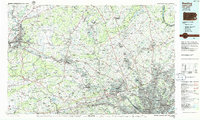 1984 Reading1986 Print · USGSSoutheastern Pennsylvania in the mid-eighties shows a landscape of established industrial hubs and rapid suburban expansion. Trace local history through landmarks like Valley Forge National Historical Park, the Willow Grove Naval Air Station, and Kutztown University.2 unique versions available
 - 1997 Map of Germantown, 1998 Print
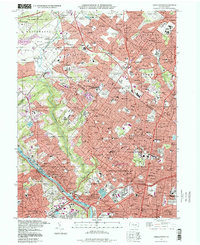 1997 Germantown1998 Print · USGSNorthwest Philadelphia and its Montgomery County suburbs are shown in the late twentieth century as a dense network of rail-linked neighborhoods. Researchers can trace family history through massive burial grounds like West Laurel Hill Cemetery or locate local landmarks such as Germantown Hospital.
 - 1997 Map of Frankford, 1998 Print
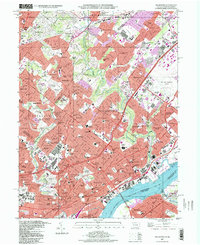 1997 Frankford1998 Print · USGSNortheast Philadelphia and its bordering Montgomery County suburbs are shown in high detail during the late nineties. Genealogists and local historians can trace legacy sites like Montefiore Cemetery, the Aviation Supply Office, and neighborhoods from Rockledge to Torresdale.
End of results
Showing maps 1-14 of 14
Frequently asked questions
- What are the different types of historical maps available for East Oak Lane?
- What is the oldest map of East Oak Lane?
- Where can I purchase historical maps of East Oak Lane for my home or office?
- Where can I download high-res historical maps of East Oak Lane?
- Are there historical topographic maps available for East Oak Lane?
- Is there historical aerial imagery available for East Oak Lane?
- Where are historical maps of East Oak Lane sourced from?