Old Maps of Lehigh Township, Pennsylvania for Genealogy
Trace your family roots with 51 historic maps of Lehigh Township. These high-res maps reveal old neighborhoods, homesites, landmarks, and streets — helping you uncover where your ancestors lived and how the area evolved over time.
- Explore historic neighborhoods: Identify where your relatives may have lived in the 1800s or 1900s.
- Compare maps over time: Trace the changes in streets, buildings, and landmarks for multi-generational research.
- Perfect for genealogy & ancestry research: Used by family historians and researchers to map out lineage and migration.
These maps are an incredible resource for exploring your personal connection to Lehigh Township's past.
Lehigh Township, PA maps
(51)- 1919 Map of Pocono
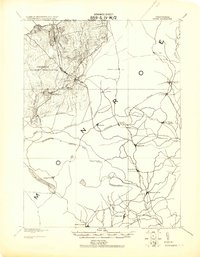 1919 Pocono1919 Print · USGSMonroe County was a critical military and rail corridor at the close of the Great War. Researchers can trace the massive Tobyhanna Military Reservation and the early rail-centered footprints of Mount Pocono, Tannerville, and Cresco.
 - 1921 Map of Pocono, 1962 Print
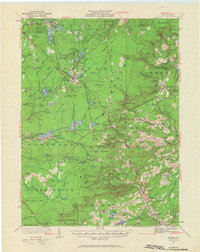 1921 Pocono1962 Print · USGSThe Pocono Mountains at the start of the 1920s reveal a landscape of military training grounds, remote mountain schools, and early summer resorts. Trace the rail lines of the Wilkes-Barre and Eastern RR or locate rural landmarks like Cherry Lane Church and Beaver Brook School.
 - 1922 Map of Stoddartsville, 1958 Print
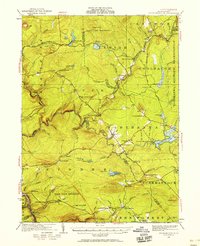 1922 Stoddartsville1958 Print · USGSThe Pennsylvania Poconos at the turn of the century show a landscape of high timber ridges and early mountain resorts. Genealogists and hikers can trace the original paths to Stoddartsville, identify the old Fayette School, or follow the Wilkes-Barre and Eastern rail line.2 unique versions available
 - 1923 Map of Pocono
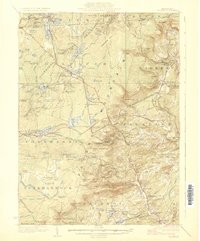 1923 Pocono1923 Print · USGSMonroe County was evolving into a mountain retreat in the early twenties, connected by the Delaware Lackawanna and Western RR. Researchers can trace early resort life at Lake Naomi, find rural schools like Butz School, and locate the expansive Artillery Reservation.5 unique versions available
 - 1924 Map of Stoddartsville
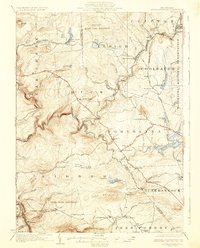 1924 Stoddartsville1924 Print · USGSUpper Carbon and Monroe counties are shown in the early twenties as a landscape of timbered hills and headwater streams. Genealogists can locate old rural landmarks like Bradys Switch, the Leonardsville settlement, and the Locust Ridge School.5 unique versions available
 - 1928 Map of Ariel, 1953 Print
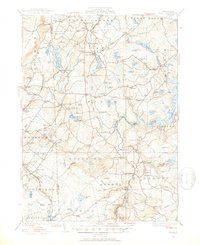 1928 Ariel1953 Print · USGSWayne County was undergoing a significant transformation in the late twenties as the waters of Lake Wallenpaupack rose. Genealogists and historians can trace local family roots through sites like Haags Mill, German Valley Sch, and the Erie RR corridor.4 unique versions available
 - 1932 Map of Ariel
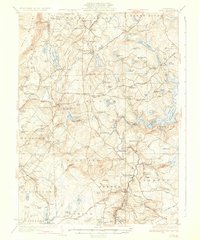 1932 Ariel1932 Print · USGSWayne and Pike counties are seen here in the early 1930s as the regional landscape adjusted to the presence of Lake Wallenpaupack. Trace family roots at Ammerman Sch or follow the Erie RR past Gravity and Lake Ariel.3 unique versions available
 - 1943 Map of Scranton
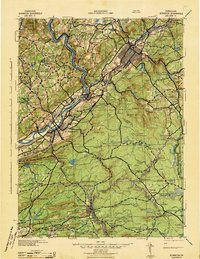 1943 Scranton1943 Print · USGSNortheastern Pennsylvania’s coal and rail corridor comes to life in the 1940s, showcasing the dense urban industrial centers of the Wyoming Valley. Genealogists can locate family landmarks like the Fayette School and Locust Ridge School or trace the early paths of the DL & W and Erie railroads.
 - 1943 Map of Stoddartsville
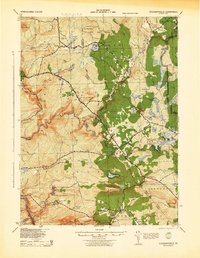 1943 Stoddartsville1943 Print · USGSThe Pocono Plateau at the height of the Second World War shows a landscape defined by river valleys and developing recreation preserves. Genealogists and local historians can trace rural schoolhouses and small settlements like Stoddartsville, Albrightsville, and the Fishery Sch.
 - 1943 Map of Pocono
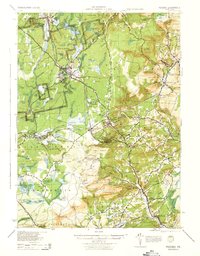 1943 Pocono1943 Print · USGSMonroe County was a well-established retreat and transportation hub in the early 1940s, centered around the Delaware Lackawanna and Western railroad. Researchers can trace old mountain roads and family-named landmarks like Camelback Mountain, Naomi Pines Sch, and the Mount Pocono Airport.
 - 1950 Map of Scranton, 1952 Print
 1950 Scranton1952 Print · USGSMid-century Northeast Pennsylvania and the Hudson Valley come alive in this survey of the tri-state region. Genealogists and historians can trace the dense rail networks of the Erie RR and DL&W RR between industrial hubs like Scranton and Wilkes-Barre.
 - 1953 Map of Scranton
 1953 Scranton1953 Print · USGSNortheastern Pennsylvania and the Catskills are shown in great detail during the early fifties, a time when rail lines and river valleys dictated the region's growth. Genealogists and historians can trace the industrial hearts of Scranton and Wilkes-Barre or locate remote landmarks like High Point and Lake Wallenpaupack.
 - 1959 Map of Scranton
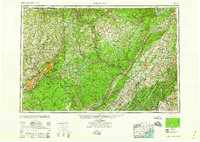 1959 Scranton1959 Print · USGSThe northern coalfields and the Hudson Valley meet in this mid-century survey of the Pennsylvania and New York borderlands. Genealogists and historians can trace the intricate rail networks of the Erie Railroad and the vast waters of Lake Wallenpaupack.2 unique versions available
 - 1959 Map of Pocono
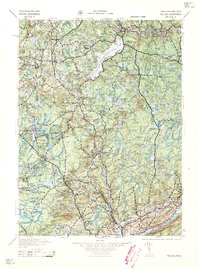 1959 Pocono1959 Print · USGSThe Pocono Mountains region is captured here in the late fifties, showcasing its evolution from a railway-dependent timber and ice landscape to a premier resort destination. Researchers can locate dozens of country schoolhouses like Maplewood Sch and trace the paths of the Erie RR through Hawley and Kimbles.
 - 1962 Map of Scranton, 1977 Print
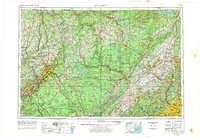 1962 Scranton1977 Print · USGSThe industrial heart of eastern Pennsylvania and the New York Catskills are captured here in the early sixties. Genealogists and historians can trace the dense valley settlements from Scranton to Wilkes-Barre and the rail lines of the Erie Lackawanna Railroad.2 unique versions available
 - 1965 Map of Scranton
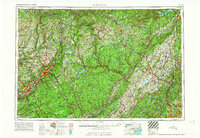 1965 Scranton1965 Print · USGSThe tri-state highlands of Pennsylvania, New York, and New Jersey come alive in the mid-sixties as industry and recreation converge. Trace the intricate rail lines of the Erie Lackawanna RR or locate landmarks like the U S Military Academy.2 unique versions available
 - 1965 Map of Sterling, 1967 Print
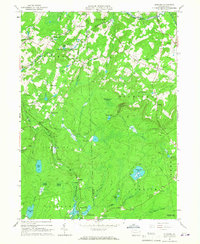 1965 Sterling1967 Print · USGSWayne and Lackawanna Counties are seen here in the mid-sixties as the ERIE-LACKAWANNA railroad still shaped the rural landscape. Genealogists can locate family sites near Freytown Cem, Madisonville, and the small settlement of Jericho.3 unique versions available
 - 1965 Map of Tobyhanna, 1967 Print
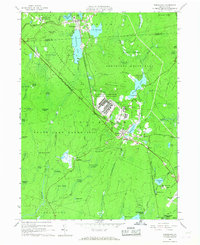 1965 Tobyhanna1967 Print · USGSMonroe County was a hub of military logistics and emerging lakeside communities in the mid-sixties. Researchers can trace the sprawling Tobyhanna Army Depot, the Erie Lackawanna rail line, and early developments at Stillwater Lake Estates.3 unique versions available
 - 1965 Map of Thornhurst, 1967 Print
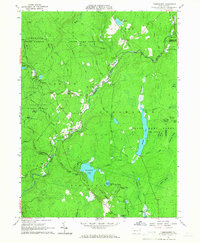 1965 Thornhurst1967 Print · USGSThe Lehigh River corridor near Thornhurst shows a landscape of public forests and wetlands in the mid-1960s. Researchers can locate burial grounds like Pine Grove Cem and explore named swales such as City of Rome Dark Swamp.6 unique versions available
 - 1966 Map of Buck Hill Falls, 1968 Print
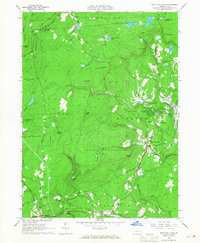 1966 Buck Hill Falls1968 Print · USGSThe Pocono plateau comes alive in the mid-1960s, showing a region balanced between recreation and rail infrastructure. Locate landmarks like Buck Hill Falls and Pocono Playhouse or trace the ERIE-LACKAWANNA rail line through Cresco.4 unique versions available
 - 1976 Map of Tobyhanna, 1978 Print
 1976 Tobyhanna1978 Print · USGSThe Monroe County landscape near the border of Lackawanna County is shown through detailed 1970s aerial photography. Researchers can examine the physical layout of Tobyhanna and Gouldsboro or trace the water levels of Tobyhanna Lake.
 - 1976 Map of Buck Hill Falls, 1978 Print
 1976 Buck Hill Falls1978 Print · USGSThe Monroe County resort region is seen in detail during the mid-seventies through this precise orthophotographic survey. Trace the layout of mountain communities and forest clearings around Mount Pocono, Buck Hill Falls, and Mountainhome.
 - 1976 Map of Thornhurst, 1979 Print
 1976 Thornhurst1979 Print · USGSThe Lehigh Valley highlands are captured in the mid-seventies, showing the intersection of river geography and mountain development. Local historians can trace the settlement footprints of Thornhurst and Clifton or the shorelines of Bradys Lake and Arrowhead Lake.2 unique versions available
 - 1986 Map of Scranton
 1986 Scranton1986 Print · USGSNortheastern Pennsylvania in the mid-eighties shows an era of transition between its deep-rooted mining history and modern transit growth. Researchers can trace the industrial footprint of a Strip Mine, locate the Tobyhanna Army Depot, or find family sites near St Marys Cem and Wilkes College.2 unique versions available
 - 1994 Map of Sterling, 1995 Print
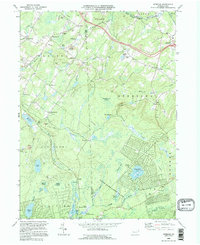 1994 Sterling1995 Print · USGSWayne and Lackawanna counties transitioned from traditional farming and mining to recreational residential hubs by the mid-1990s. Researchers can trace old family landmarks and local institutions like Peoples Ch, Drinker Sch, and the quiet Jericho Cem.
Showing maps 1-25 of 51
Top cities near Lehigh Township
- Scranton historical maps
- Dunmore historical maps
- Tobyhanna historical maps
- Blakely historical maps
- Dickson City historical maps
- Scott Township historical maps
See more
Top neighborhoods of Lehigh Township
Frequently asked questions
- What are the different types of historical maps available for Lehigh Township?
- What is the oldest map of Lehigh Township?
- Where can I purchase historical maps of Lehigh Township for my home or office?
- Where can I download high-res historical maps of Lehigh Township?
- Are there historical topographic maps available for Lehigh Township?
- Is there historical aerial imagery available for Lehigh Township?
- Where are historical maps of Lehigh Township sourced from?