1900s (20th Century) Maps of Bass Crossroads, South Carolina
Explore 6 historic maps of Bass Crossroads from the 1900s (20th Century). These maps offer a rare glimpse into what life looked like during the 1900s — showing old roads, neighborhoods, homes, and landmarks that have changed or disappeared over time.
Whether you're researching your family's past, planning a metal detecting trip, or studying how Bass Crossroads's landscape evolved across the 1900s, these high-resolution maps are a powerful tool for exploring the history of this region.
- Focus on a specific era: All maps on this page are from the 1900s, giving you a focused view of this time period.
- See what’s changed: Compare century-old streets, trails, and buildings to today's modern landscape using overlays and satellite layers.
- Research with precision: Use these maps for genealogy, historical research, land use analysis, or educational projects.
- View, download, or print: Maps are fully viewable online in high resolution, and can be downloaded or printed for your own records.
Start exploring Bass Crossroads's history through authentic maps from the 1900s. This is your window into the past.
Bass Crossroads, SC maps
(6)- 1946 Map of Hyman
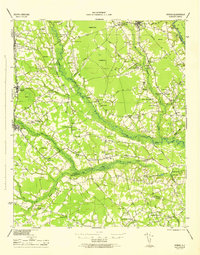 1946 Hyman1946 Print · USGSCoastal plain settlements and river landings define this mid-1940s survey of the Florence and Williamsburg county line. Researchers can trace family history through numerous rural landmarks like the Leo Post Office, Gause Cem, and Prosser Tabernacle.
 - 1949 Map of Georgetown, 1953 Print
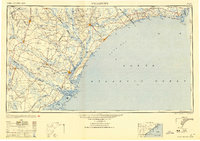 1949 Georgetown1953 Print · USGSThe South Carolina coast and North Carolina borderlands appear here in the mid-century, prior to the major modern development of the Grand Strand. Genealogists and historians can trace the rail networks of the Seaboard Air Line Railroad and locate coastal landmarks from Fort Caswell to McClellanville.
 - 1967 Map of Georgetown
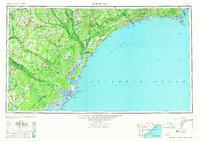 1967 Georgetown1967 Print · USGSThe South Carolina Lowcountry and Grand Strand meet in the late sixties, showcasing a coastal landscape transitioning from river-based industry to seaside tourism. Researchers can trace the Intracoastal Waterway past Georgetown or locate historical sites like Fort Fisher and Murrells Inlet.
 - 1974 Map of Georgetown, 1978 Print
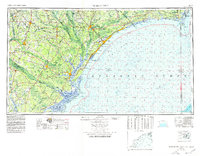 1974 Georgetown1978 Print · USGSThe Carolina coast and Pee Dee region are shown here in the mid-seventies, just as the Grand Strand was maturing into a premier destination. Researchers can trace the inland rail corridors of the Seaboard Coast Line Railroad or explore the coastal reaches of the Cape Romain National Wildlife Refuge and Myrtle Beach State Park.2 unique versions available
 - 1986 Map of Kingstree
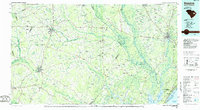 1986 Kingstree1986 Print · USGSThe South Carolina Lowcountry in the mid-eighties shows a landscape defined by the Black River and the growing coastal communities of the Grand Strand. Researchers can trace historic river settlements and rail stops like Salters Depot, Pamplico, and Hemingway.2 unique versions available
 - 1990 Map of Scranton
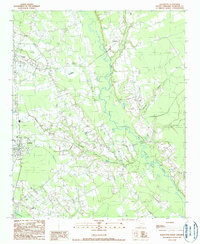 1990 Scranton1990 Print · USGSFlorence County life in the early nineties is centered on the railroad corridor and the wetlands of the Lynches River. Genealogists and local historians can trace family roots through several Cem locations and the settlements of Scranton, Coward, and Friendfield.
End of results
Showing maps 1-6 of 6
Top cities near Bass Crossroads
- Florence historical maps
- Lake City historical maps
- Johnsonville historical maps
- Pamplico historical maps
- Scranton historical maps
- Coward historical maps
See more
Frequently asked questions
- What are the different types of historical maps available for Bass Crossroads?
- What is the oldest map of Bass Crossroads?
- Where can I purchase historical maps of Bass Crossroads for my home or office?
- Where can I download high-res historical maps of Bass Crossroads?
- Are there historical topographic maps available for Bass Crossroads?
- Is there historical aerial imagery available for Bass Crossroads?
- Where are historical maps of Bass Crossroads sourced from?