Old Maps of Pickens County, South Carolina
Explore 137 old maps of Pickens County, spanning from 1888 to today. These high-resolution historic maps reveal how streets, neighborhoods, landmarks, and natural features evolved over time — perfect for genealogy, metal detecting, research, and local history exploration.
What you can do with these maps:
- See how Pickens County changed over time: Compare historical maps to modern-day views to trace roads, homesites, rail lines & more.
- View detailed metadata: Each map includes creators, publishers, year, scale, and archive source.
- Overlay maps with satellite & LiDAR: Visualize the past alongside modern tools to explore terrain & human change.
- Trusted historical sources: Maps sourced from the USGS, Library of Congress, and other archives.
- Access maps your way: View online, download high-res files, or order prints for personal or research use.
Start exploring old maps of Pickens County to uncover forgotten places, hidden landmarks, and the deep history beneath your feet.
Pickens County, SC maps
(137)- 1888 Map of Pickens
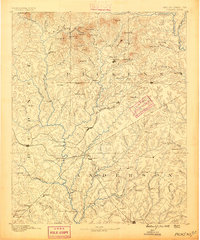 1888 Pickens1888 Print · USGSThe South Carolina Piedmont comes alive in the late nineteenth century, showing the rural communities of Pickens and Anderson. Genealogists can trace family landmarks like Sutton's Mill, Six Mile Church, and river crossings at Cherry's Ferry.
 - 1894 Map of Pickens
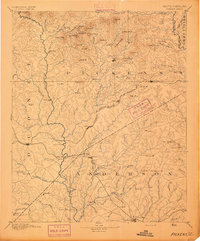 1894 Pickens1894 Print · USGSNorthwest South Carolina in the late nineteenth century was a landscape of river-driven industry and emerging rail lines. Researchers can trace ancestral roots through family landmarks like Watson Mill, the community at Old Pickens, and the rural New Hope Church.6 unique versions available
 - 1905 Map of Pisgah, 1956 Print
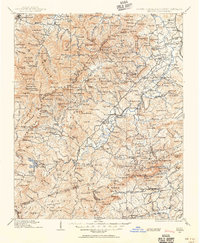 1905 Pisgah1956 Print · USGSThe North Carolina high country around the turn of the century reveals a land of timber tracts and emerging mountain retreats. Genealogists and hikers can trace early routes to Buck Spring Lodge, follow the Southern RR tracks, and locate vanished settlements like Angeline and Calhoun.
 - 1906 Map of Pisgah, 1934 Print
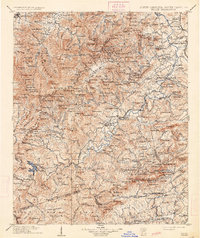 1906 Pisgah1934 Print · USGSThe Blue Ridge highlands at the turn of the century reveal a landscape of mountain river valleys and early timber frontiers. Genealogists and historians can trace family-named bridges and crossings like Graham Bridge or locate vanished settlements such as Grange and Retreat.2 unique versions available
 - 1935 Map of Eastatoe Gap
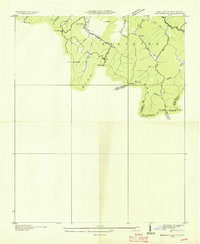 1935 Eastatoe Gap1935 Print · USGSThe Blue Ridge mountain crest and state borderlands are captured in this mid-1930s survey of the French Broad River headwaters. Genealogists and hikers can trace historic crossings at Eastatoe Gap, locate the Middle Fork Ch, and find the Fire Tower on Sassafras Mtn.
 - 1935 Map of Reid
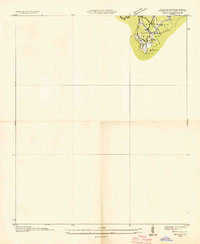 1935 Reid1935 Print · USGSThe high ridges of Transylvania County are captured here in the mid-1930s as federal surveyors first mapped the area using aerial photography. Researchers can trace the early mountain roads like State No 28 near the settlement of Reid and the headwaters of Morton Creek.
 - 1935 Map of Greenville
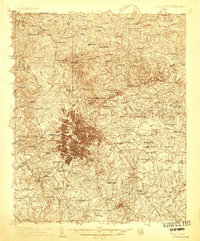 1935 Greenville1935 Print · USGSGreenville and its surrounding Piedmont communities are shown in detail during the mid-1930s as the textile and rail economy expanded. Researchers can find numerous local landmarks like Chick Springs, the Judson Cemetery, and Travelers Rest.
 - 1935 Map of Table Rock
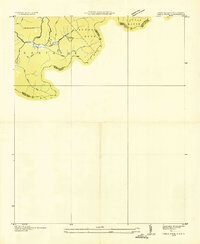 1935 Table Rock1935 Print · USGSThe Carolina borderlands and the upper reaches of the French Broad River are captured here in the mid-1930s. Genealogists and researchers can trace family-named watercourses like Bradley Creek and Cantrell Creek near Dunns Rock.
 - 1938 Map of Greenville
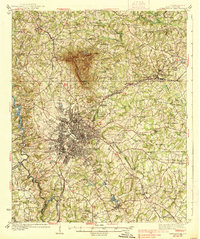 1938 Greenville1938 Print · USGSGreenville and its surrounding textile communities thrive in the mid-1930s as a major Piedmont industrial and rail hub. Researchers can locate numerous rural landmarks like the Rosenwald Sch, trace the Southern RR, or find family sites near Saluda Lake.2 unique versions available
 - 1946 Map of Eastatoe Gap
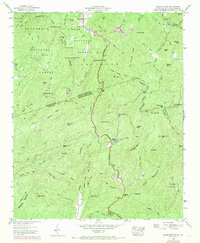 1946 Eastatoe Gap1946 Print · USGSThe high ridges of the Carolinas met here during the mid-twentieth century as timber and water shaped the local economy. Researchers can locate remote mountain churches like Old Toxaway Ch, the community of Rocky Bottom, and the Lookout Tower atop Sassafras Mtn.4 unique versions available
 - 1946 Map of Reid, 1956 Print
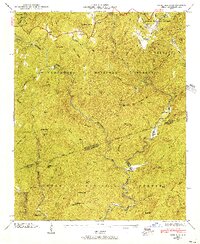 1946 Reid1956 Print · USGSThe high mountain country of the Blue Ridge is documented here in the mid-1940s, just as the national forests were maturing. Genealogists and hikers can trace the remote Oakland Cem, the tiny settlement of Cane Brake, and the old rail path of the Southern Railway.4 unique versions available
 - 1946 Map of Table Rock, 1965 Print
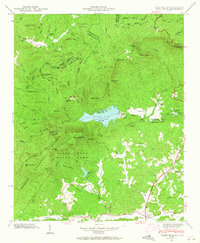 1946 Table Rock1965 Print · USGSPickens County and the Blue Ridge escarpment are documented here in the mid-1940s, showing the early infrastructure of Table Rock State Park. Researchers can trace old mountain schoolhouses like Rock Sch and family burial sites at Cassell Cems.5 unique versions available
 - 1947 Map of Reid
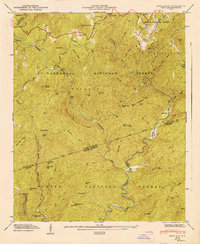 1947 Reid1947 Print · USGSThe Blue Ridge mountains at the North and South Carolina border are captured here in the late 1940s, showing a land defined by national forests and river gorges. Researchers can locate the Oakland Cem, trace the Thompson River, and find remote landmarks like Musterground Mtn.
 - 1947 Map of Eastatoe Gap
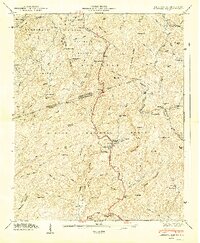 1947 Eastatoe Gap1947 Print · USGSThe South Carolina and North Carolina borderlands meet in the late 1940s at this crossroads of three national forests. Researchers can locate the Rocky Bottom Sch, find ancestors at Masters Cem, and trace the path of the Memorial Highway through the gap.
 - 1947 Map of Table Rock
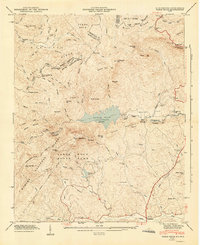 1947 Table Rock1947 Print · USGSPickens County and the Blue Ridge escarpment appear here just after the war, showing the mountain landscape before modern development. Genealogists can locate family landmarks like Cassell Cems or trace rural education at Rock Sch and New Town Sch.2 unique versions available
 - 1950 Map of La France, 1964 Print
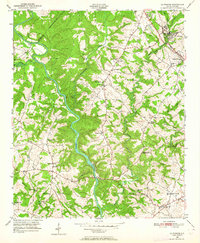 1950 La France1964 Print · USGSAnderson County's rural communities and river crossings are captured here at the start of the 1950s. Genealogists and local historians can trace family roots through numerous sites like Holly Springs Ch, Portman Dam, and the Blue Ridge RR.2 unique versions available
 - 1951 Map of La France
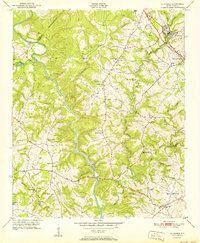 1951 La France1951 Print · USGSAnderson County in the early fifties is captured here as a landscape of tight-knit rural communities and vital river crossings. Researchers can trace ancestral locations through numerous sites like Sandy Springs, Asbury Clark Memorial Ch, and Earles Bridge.2 unique versions available
 - 1951 Map of Clemson, 1952 Print
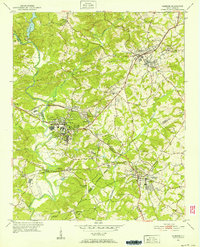 1951 Clemson1952 Print · USGSThe foothills of South Carolina come to life in the early fifties, centered on the growing campus of Clemson Agricultural College. Researchers can trace the Southern rail line through Central or locate family landmarks like Lawrence Chapel and Mt Zion Cem.6 unique versions available
 - 1954 Map of Greenville, 1965 Print
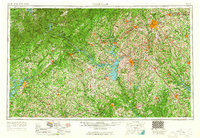 1954 Greenville1965 Print · USGSThe Upstate and Northeast Georgia are captured here during a decade of massive transformation as new reservoirs reshaped the Piedmont. Genealogists and hikers can trace the Appalachian Trail over Brasstown Bald or locate old community centers like Demorest, Westminster, and Royston.3 unique versions available
 - 1955 Map of Knoxville
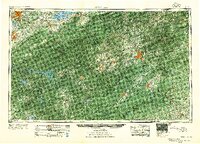 1955 Knoxville1955 Print · USGSThe Southern Appalachians and the Smoky Mountains are shown here at a peak of mid-century development and conservation. Genealogists and historians can trace the early road networks connecting Gatlinburg, Waynesville, and the Cherokee Indian Reservation across the high ridges.
 - 1957 Map of Greenville, 1958 Print
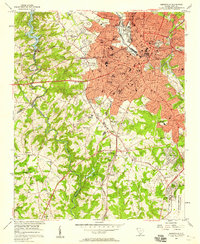 1957 Greenville1958 Print · USGSGreenville in the late fifties is a thriving textile and education center surrounded by growing suburbs and military activity. Researchers can locate historic mill communities like Monaghan, the Furman University (Womens College), and the sprawling Donaldson Air Force Base.2 unique versions available
 - 1957 Map of Anderson, 1958 Print
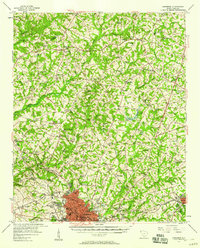 1957 Anderson1958 Print · USGSUpstate South Carolina during the late fifties centers on the growth of Anderson and its surrounding textile and agricultural communities. Genealogists and local historians can trace family roots through numerous rural landmarks like McElmoyle Sch, Willis Chapel, and Sandy Springs.2 unique versions available
 - 1957 Map of Easley, 1958 Print
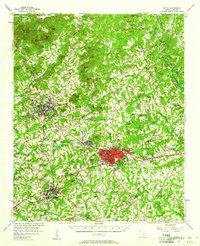 1957 Easley1958 Print · USGSIn the mid-1950s, the textile and rail corridor between Easley and Liberty hummed with Piedmont industry. Genealogists and local historians can trace family roots through numerous rural sites like Bruce-Hagood Cem, Dacusville, and the historic Pickensville settlement.2 unique versions available
 - 1957 Map of Greenville, 1959 Print
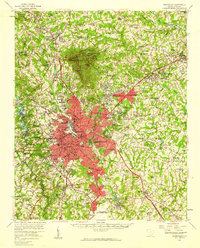 1957 Greenville1959 Print · USGSGreenville and its industrial suburbs are captured during a period of rapid mid-century expansion and military prominence. Genealogists and historians can locate established mill communities like Monaghan, the sprawling Donaldson Air Force Base, and the campuses of Furman University and Bob Jones University.
 - 1957 Map of Knoxville, 1966 Print
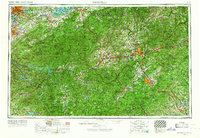 1957 Knoxville1966 Print · USGSThe Southern Appalachians of Tennessee and North Carolina are mapped here during the mid-twentieth century as new highways reached the high country. Genealogists and historians can trace the topography between Knoxville and Asheville, locating family landmarks near Fontana Lake or along the Blue Ridge Parkway.4 unique versions available
Showing maps 1-25 of 137
Top cities of Pickens County
- Easley historical maps
- Clemson historical maps
- Central historical maps
- Liberty historical maps
- Pickens historical maps
- Norris historical maps
See more
Frequently asked questions
- What are the different types of historical maps available for Pickens County?
- What is the oldest map of Pickens County?
- Where can I purchase historical maps of Pickens County for my home or office?
- Where can I download high-res historical maps of Pickens County?
- Are there historical topographic maps available for Pickens County?
- Is there historical aerial imagery available for Pickens County?
- Where are historical maps of Pickens County sourced from?