1960s Maps of Clay County, South Dakota
Explore 12 historic maps of Clay County from the 1960s. These maps offer a rare glimpse into what life looked like during the 1960s — showing old roads, neighborhoods, homes, and landmarks that have changed or disappeared over time.
Whether you're researching your family's past, planning a metal detecting trip, or studying how Clay County's landscape evolved across the 1960s, these high-resolution maps are a powerful tool for exploring the history of this region.
- Focus on a specific era: All maps on this page are from the 1960s, giving you a focused view of this time period.
- See what’s changed: Compare century-old streets, trails, and buildings to today's modern landscape using overlays and satellite layers.
- Research with precision: Use these maps for genealogy, historical research, land use analysis, or educational projects.
- View, download, or print: Maps are fully viewable online in high resolution, and can be downloaded or printed for your own records.
Start exploring Clay County's history through authentic maps from the 1960s. This is your window into the past.
Clay County, SD maps
(12)- 1964 Map of Burbank, 1966 Print
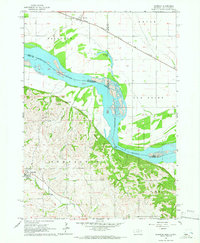 1964 Burbank1966 Print · USGSThe Missouri River valley at the South Dakota and Nebraska border is captured here in the mid-1960s, showing the intersection of river transport and rail. Researchers can trace family history at Ionia Cem or locate the South Bend Sch and Lembke Landing.
 - 1964 Map of Maskell, 1966 Print
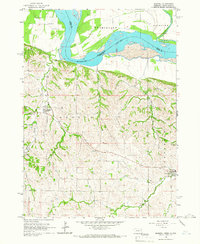 1964 Maskell1966 Print · USGSNorthern Dixon County and the Missouri River bluffs are captured in the 1960s, showing a landscape of upland farms and river bottomlands. Researchers can trace rural lineages through Maskell, Newcastle, and local burial sites like Maskell Cem.
 - 1968 Map of St. Helena, 1971 Print
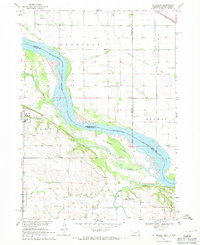 1968 St. Helena1971 Print · USGSThe Nebraska-South Dakota borderlands along the Missouri River come alive in the late sixties, showing the river's path around St Helena Island. Genealogists can trace local roots at Bow Valley Mills, St Marys Sch, and St Helena Cem.
 - 1968 Map of Beresford, 1971 Print
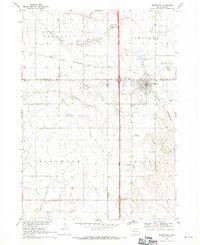 1968 Beresford1971 Print · USGSBeresford and the surrounding prairie townships are captured in the late sixties as modern highway interchanges began to reshape the rural landscape. Researchers can locate numerous country schools and cemeteries like Glenwood Sch, St Johns Cem, and Brooklyn Ch.
 - 1968 Map of Wakonda, 1971 Print
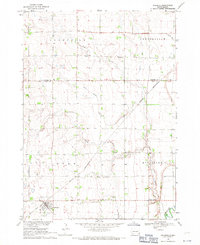 1968 Wakonda1971 Print · USGSDakota farmland near Wakonda comes into focus during the late sixties, revealing the organized grid of townships and rural waterways. Genealogists and historians can trace family locations near Columkill Cem, Holland Cem, and the quiet crossroads of Colfax Corner.
 - 1968 Map of Meckling, 1971 Print
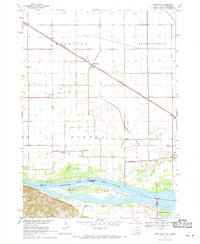 1968 Meckling1971 Print · USGSThe Missouri River bottomlands in the late sixties are anchored by the settlement of Meckling and the prominent Goat Island. Trace local family history through the sites of Bergen Ch, Norway Sch, and multiple country cemeteries.
 - 1968 Map of Centerville, 1971 Print
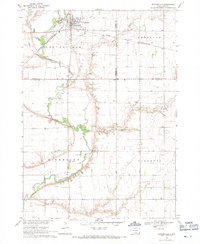 1968 Centerville1971 Print · USGSCenterville was a bustling agricultural hub in the late sixties, where the railroad and the Vermillion River intersect. Genealogists can trace family roots through the rural townships to find Ivey Sch, Komstad Ch, and Hovde Cem.
 - 1969 Map of Hub City, 1971 Print
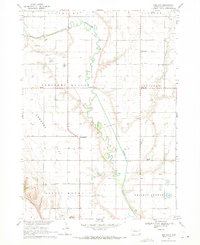 1969 Hub City1971 Print · USGSClay County farming life in the late sixties is centered here on the winding Vermillion River. Genealogists can trace ancestral sites at Lodi Cem, the Dalesburg Sch, and the landmark Spirit Mound.
 - 1969 Map of Vermillion, 1971 Print
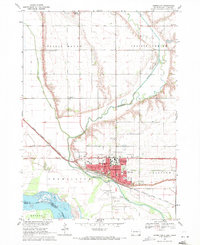 1969 Vermillion1971 Print · USGSThe university campus and Missouri River floodplain meet in this late-sixties portrait of Vermillion. Genealogists and historians can trace local landmarks like Spirit Mound, Bluff View Cemetery, and the University of South Dakota.2 unique versions available
 - 1969 Map of Gayville NE, 1971 Print
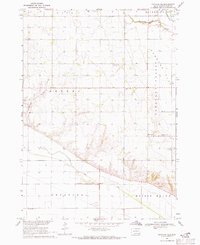 1969 Gayville NE1971 Print · USGSClay County's rural townships are captured here in the late sixties, showcasing a landscape of section-line roads and family-centered landmarks. Genealogists can trace property roots through features like Westreville, St Patricks Cem, and the historic townhall.
 - 1969 Map of Alsen, 1971 Print
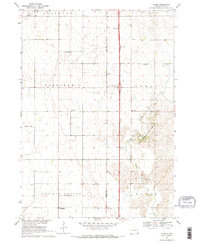 1969 Alsen1971 Print · USGSSoutheast South Dakota's prairie townships are captured here in the late sixties as the new interstate era began to reshape the rural landscape. Genealogists and local researchers can trace the locations of the Rockfield Cem, Roseni Ch, and multiple schoolhouses including Brule Sch.2 unique versions available
 - 1969 Map of Vermillion SE, 1971 Print
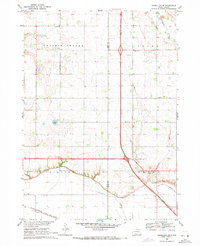 1969 Vermillion SE1971 Print · USGSSoutheast of Vermillion in the late sixties, this survey shows the rural settlements of Junction City and Midway along the county line. Genealogists can locate several remote burial grounds and churches, including St Peters Cem, St Peter Ch, and Ahlsborg Ch Cem.
End of results
Showing maps 1-12 of 12
Frequently asked questions
- What are the different types of historical maps available for Clay County?
- What is the oldest map of Clay County?
- Where can I purchase historical maps of Clay County for my home or office?
- Where can I download high-res historical maps of Clay County?
- Are there historical topographic maps available for Clay County?
- Is there historical aerial imagery available for Clay County?
- Where are historical maps of Clay County sourced from?