1900s (20th Century) Maps of Miller, South Dakota
Explore 6 historic maps of Miller from the 1900s (20th Century). These maps offer a rare glimpse into what life looked like during the 1900s — showing old roads, neighborhoods, homes, and landmarks that have changed or disappeared over time.
Whether you're researching your family's past, planning a metal detecting trip, or studying how Miller's landscape evolved across the 1900s, these high-resolution maps are a powerful tool for exploring the history of this region.
- Focus on a specific era: All maps on this page are from the 1900s, giving you a focused view of this time period.
- See what’s changed: Compare century-old streets, trails, and buildings to today's modern landscape using overlays and satellite layers.
- Research with precision: Use these maps for genealogy, historical research, land use analysis, or educational projects.
- View, download, or print: Maps are fully viewable online in high resolution, and can be downloaded or printed for your own records.
Start exploring Miller's history through authentic maps from the 1900s. This is your window into the past.
Miller, SD maps
(6)- 1950 Map of Ree Heights SE
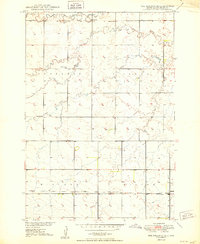 1950 Ree Heights SE1950 Print · USGSHand County at the midpoint of the century shows a landscape of small townships and rural school districts organized around the rail line. Genealogists can locate family landmarks like Greenleaf Ch, Odd Fellows Cem, and several local schools including Moncur Sch and Spiers Sch.2 unique versions available
 - 1953 Map of Huron, 1959 Print
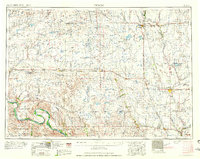 1953 Huron1959 Print · USGSCentral South Dakota comes alive in the mid-1950s as a thriving rail and agricultural corridor between the Missouri and James Rivers. Trace the legacy of family farms and prairie towns like Huron, Faulkton, and Wessington Springs along the historic Chicago and North Western rail lines.3 unique versions available
 - 1954 Map of Huron, 1977 Print
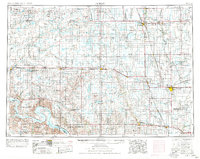 1954 Huron1977 Print · USGSCentral South Dakota was a landscape of grain elevators and river bends during the mid-fifties. Genealogists and historians can trace the development of the James River valley through railroad towns like Redfield and the sprawling Crow Creek Indian Reservation.
 - 1967 Map of Miller, 1968 Print
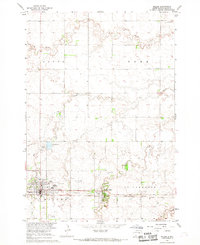 1967 Miller1968 Print · USGSMiller and St. Lawrence appear at a mid-century peak in the late sixties, anchored by the busy Chicago and North Western rail line. Genealogists and local historians can trace family roots through the St Anns Cem, GAR Cemetery, and the Drive-in Theater.
 - 1985 Map of Highmore, 1986 Print
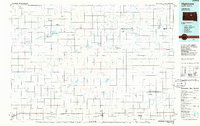 1985 Highmore1986 Print · USGSThe central South Dakota plains in the mid-1980s are defined by the Chicago and North Western rail line and a mosaic of waterfowl production areas. Researchers can trace the layout of prairie towns like Blunt, Holabird, and Highmore, and find family-named landmarks such as Schaefer Lake and Huss Spring.3 unique versions available
 - 1985 Map of Redfield, 1986 Print
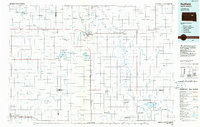 1985 Redfield1986 Print · USGSSpink and Hand counties are captured here in the mid-1980s, revealing a landscape of rail-dependent prairie towns and extensive waterfowl conservation areas. Genealogists and historians can trace the Chicago and North Western rail lines through Redfield to outlying settlements like Tulare and Frankfort.
End of results
Showing maps 1-6 of 6
Top cities near Miller
- St. Lawrence historical maps
- Saint Lawrence historical maps
- Ree Heights historical maps
- Burdette historical maps
Frequently asked questions
- What are the different types of historical maps available for Miller?
- What is the oldest map of Miller?
- Where can I purchase historical maps of Miller for my home or office?
- Where can I download high-res historical maps of Miller?
- Are there historical topographic maps available for Miller?
- Is there historical aerial imagery available for Miller?
- Where are historical maps of Miller sourced from?