Old Maps of Meigs County, Tennessee for Metal Detecting
Plan your next treasure hunt with 132 historic maps of Meigs County. Find old homesites, ghost towns, trails, and gathering spots that may be lost to time — perfect for identifying promising metal detecting locations.
- Locate forgotten sites: Uncover places like long-lost settlements, abandoned rail lines, or gathering spots.
- Plan better hunts: Use map overlays combined with LiDAR or satellite views to narrow in on historically rich areas.
- Made for detectorists: Thousands of hobbyists use these maps to discover relics, coins, and hidden history.
Use these historic maps to boost your research and find new opportunities beneath the surface of Meigs County.
Meigs County, TN maps
(132)- 1886 Map of Cleveland
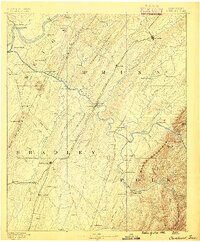 1886 Cleveland1886 Print · USGSSoutheast Tennessee in the mid-1880s was a landscape defined by the iron rails and winding rivers that fueled the region's growth. You can trace early river crossings like Savannah Ford and Kincannons Ferry or locate old community centers like Chestua Mills.
 - 1887 Map of Kingston
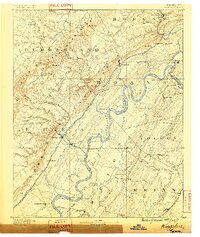 1887 Kingston1887 Print · USGSCentral Tennessee in the late nineteenth century was a world of river landings and new rail lines. Genealogists can trace family roots through riverside sites like Sevier's Ferry or rural hubs like Bogges X Roads and Ten Mile Stand.
 - 1888 Map of Chattanooga
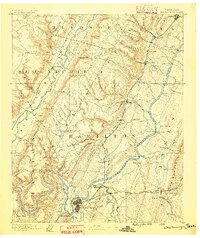 1888 Chattanooga1888 Print · USGSSoutheast Tennessee in the late nineteenth century was a landscape of river ferries and mountain mining. Trace family roots and vanished landmarks near Chattanooga, from the Aetna Mines to historic river crossings like Harrison Ferry.
 - 1891 Map of Kingston
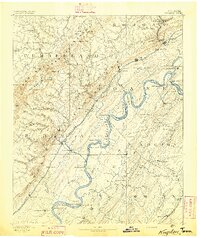 1891 Kingston1891 Print · USGSEastern Tennessee in the 1890s reveals a river-driven economy at the edge of the Cumberland Plateau. Genealogists can trace early crossings and landings such as Mc Elwee's Ferry and Pinhook Landing, or locate vanished crossroads like Kemmers Old Stand.2 unique versions available
 - 1892 Map of Cleveland
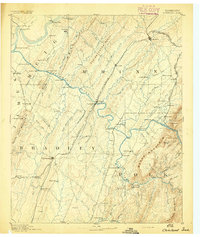 1892 Cleveland1892 Print · USGSSoutheast Tennessee is captured in the late nineteenth century as a landscape of river ferries and emerging rail junctions. Genealogists and historians can locate early settlements like Charleston and Riceville or trace the original river crossings at Kincannons Ferry and Helderbrand Ford.
 - 1893 Map of Chattanooga
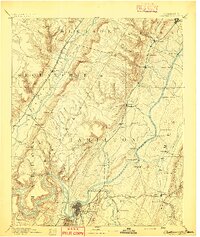 1893 Chattanooga1893 Print · USGSSoutheast Tennessee is shown here in the 1890s, when river ferries and coal mines defined the landscape around the booming hub of Chattanooga. Genealogists and researchers can trace family lands near Eldridge Landing, the Mc Nabb Mines, or old settlements like Ooltewah.9 unique versions available
 - 1893 Map of Kingston, 1905 Print
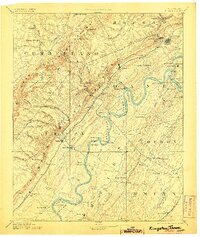 1893 Kingston1905 Print · USGSEastern Tennessee at the end of the nineteenth century is a landscape of mountain gaps and vital river landings. Researchers can trace early river crossings like Jackson Ferry, the path of the Cincinnati Southern Railroad, and settlements like Rhea Springs and Kingston.5 unique versions available
 - 1895 Map of Cleveland
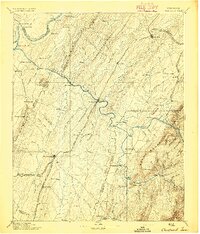 1895 Cleveland1895 Print · USGSSoutheast Tennessee thrived along the Hiwassee River and its rail corridors during the 1890s. Genealogists and historians can trace defunct river crossings like Bunker Hill Ferry and milling sites including Chestuee Mills and Longs Mills.
 - 1901 Map of Cleveland
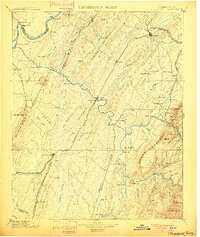 1901 Cleveland1901 Print · USGSSoutheast Tennessee was a thriving hub of river and rail commerce at the dawn of the twentieth century. Genealogists can trace family homesteads near vanished landmarks like Marble Switch, Bunker Hill Ferry, or the early settlements of Riceville and Benton.4 unique versions available
 - 1935 Map of Rockwood
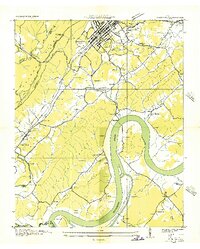 1935 Rockwood1935 Print · USGSMid-century Roane County comes into focus as a rail and river crossroads before the landscape was altered by large-scale TVA projects. Genealogists can trace family connections through numerous landmarks like Oak Grove Cem, Eureka, and the Winten Sch.
 - 1935 Map of Goodfield
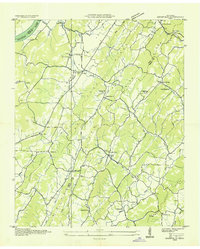 1935 Goodfield1935 Print · USGSMeigs and McMinn Counties are captured here in the mid-1930s as the TVA began transforming the Tennessee River valley. Genealogists can locate community landmarks like Shiloh Sch, Allen Store, and Clear Springs Ch among the ridges.
 - 1935 Map of Evensville
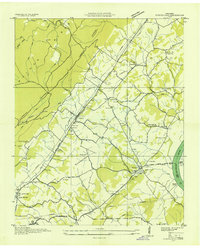 1935 Evensville1935 Print · USGSRhea County is captured in the mid-1930s as the Tennessee Valley Authority begins modernizing the region's infrastructure. Researchers can locate numerous rural landmarks including Henry Ferry, Evens Cem, and old schoolhouses like Locke Sch and Oak Hill Sch.
 - 1935 Map of Decatur
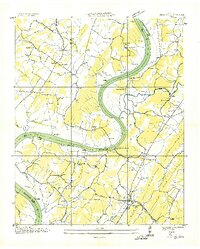 1935 Decatur1935 Print · USGSThe Tennessee River valley in Meigs County was undergoing significant change in the mid-1930s as the TVA began modernizing the region. Local researchers can trace family roots through numerous river landmarks like Vineyard Landing and rural centers such as Bogles Chapel or Decatur.
 - 1935 Map of Charleston
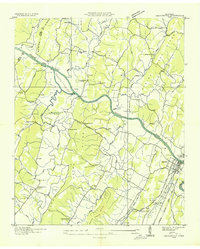 1935 Charleston1935 Print · USGSSoutheast Tennessee is captured here in the mid-1930s as the river-and-rail economy centered on the Hiwassee flourished. Genealogists and researchers can locate family landmarks like Bethel Ch, trace the old route of the Raht Ferry, or find rural schoolhouses such as Mouse Creek Sch.
 - 1935 Map of Birchwood
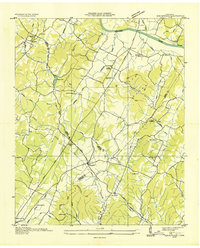 1935 Birchwood1935 Print · USGSSoutheastern Tennessee rural life is documented here during the mid-1930s as the regional power grid began to expand across the ridges. Genealogists can trace early homesteads near Georgetown, Birchwood, and country landmarks like St Elmo Sch or New Union Ch.
 - 1935 Map of Big Spring
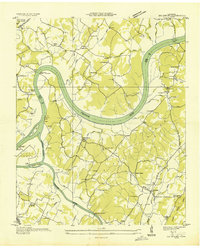 1935 Big Spring1935 Print · USGSThe Tennessee and Hiwassee rivers define the landscape in the mid-thirties, when ferries were the primary links between Meigs and Rhea counties. Genealogists can trace family roots through labels for Big Spring, Salem Ch, and the Garrison Cem.
 - 1935 Map of Soddy Island
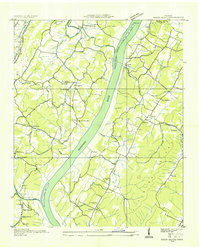 1935 Soddy Island1935 Print · USGSHamilton County communities along the Tennessee River are shown here in the mid-1930s just as TVA development began. Researchers can trace rural life through landmarks like Mt Tabor Community, Bakewell Sch, and the Bald Hill Cem near the riverbanks.
 - 1935 Map of Graysville
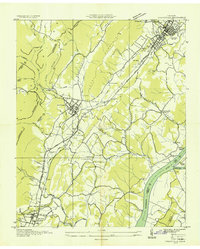 1935 Graysville1935 Print · USGSRhea and Hamilton counties are shown in detail during the mid-1930s, caught between the ridge-and-valley terrain and the river. Genealogists can locate family landmarks like Welch Cem, trace the historic Blythe Ferry, or find CCC Camp No 3470.
 - 1936 Map of Spring City
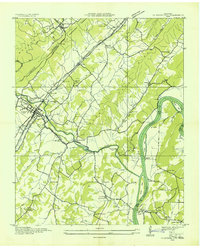 1936 Spring City1936 Print · USGSRhea County is captured here in the mid-1930s as the Tennessee Valley Authority began modernizing the river valley. Genealogists and historians can trace family locations near Rhea Springs, visit the Pinhook Ferry, or locate rural landmarks like Wolf Creek Ch.
 - 1936 Map of Pattie Gap
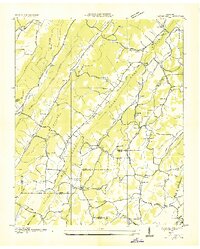 1936 Pattie Gap1936 Print · USGSRoane County and its neighboring valleys are captured in detail during the mid-1930s as the Tennessee Valley Authority began its regional work. Genealogists and historians can trace the foundations of rural life through family-named landmarks like Morrison Store, Gage Hill, and Cook Mill.
 - 1936 Map of Ten Mile
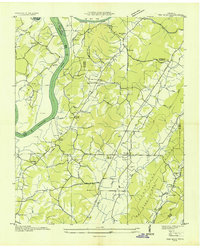 1936 Ten Mile1936 Print · USGSMeigs County and the surrounding ridges come alive in this mid-1930s survey, showing the valley before the full impact of the TVA. Genealogists can trace family landmarks like Baldwin Cem, Hornsby Chapel, and the old Ten Mile Post Office.
 - 1936 Map of Tranquillity
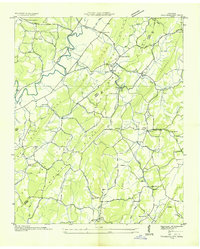 1936 Tranquillity1936 Print · USGSMcMinn County is captured here in the mid-1930s, showing a landscape defined by ridge-and-valley farming and small rural school districts. Genealogists can trace family roots through numerous sites like Turkey Pen Sch, Collins Mill, and the settlement of Tranquillity.
 - 1939 Map of Soddy Island
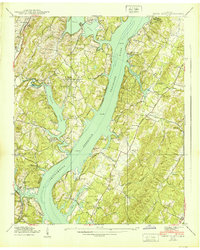 1939 Soddy Island1939 Print · USGSAs the Tennessee Valley Authority reshaped the landscape in the late thirties, this area was caught between its rural past and a new era of hydroelectric power. Trace family roots and submerged landmarks through Bakewell, Thatcher Cem, and the winding Birchwood Pike.4 unique versions available
 - 1940 Map of Rockwood
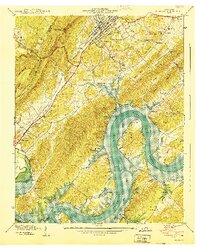 1940 Rockwood1940 Print · USGSThe Tennessee River valley at Rockwood is shown here during the transition to the reservoir era in the early 1940s. Genealogists can locate family sites like Odd Fellows Cem, trace the railroad to Glen Alice, or find old schools like New Hope Sch.
 - 1940 Map of Spring City
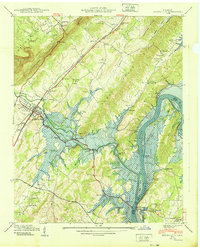 1940 Spring City1940 Print · USGSRhea County at the start of the 1940s captures a landscape on the brink of transformation as the Watts Bar Reservoir prepared to flood the valley. Genealogists and historians can trace soon-to-be-submerged sites like Rhea Springs and Mc Elwee Landing, or explore the upland reaches of Grandview and Gum Gap.2 unique versions available
Showing maps 1-25 of 132
Top cities of Meigs County
Frequently asked questions
- What are the different types of historical maps available for Meigs County?
- What is the oldest map of Meigs County?
- Where can I purchase historical maps of Meigs County for my home or office?
- Where can I download high-res historical maps of Meigs County?
- Are there historical topographic maps available for Meigs County?
- Is there historical aerial imagery available for Meigs County?
- Where are historical maps of Meigs County sourced from?