Old Maps of Idle Oaks, Tennessee for Hiking & Exploration
Hike through history with 18 historic maps of Idle Oaks. Explore old trails, ghost towns, and forgotten backroads — perfect for outdoor adventurers and local explorers.
- Rediscover forgotten places: Map out old mining camps, roads, and footpaths that no longer exist on modern maps.
- Layer with modern tools: Combine with LiDAR or satellite views to plan hikes through historical terrain.
- Made for exploration: Popular among hikers, overlanders, and local history lovers.
Use these maps to find adventure and explore the hidden past of Idle Oaks.
Idle Oaks, TN maps
(18)- 1887 Map of Kingston
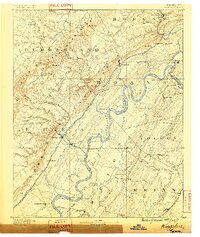 1887 Kingston1887 Print · USGSCentral Tennessee in the late nineteenth century was a world of river landings and new rail lines. Genealogists can trace family roots through riverside sites like Sevier's Ferry or rural hubs like Bogges X Roads and Ten Mile Stand.
 - 1891 Map of Kingston
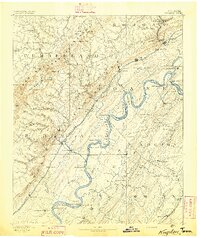 1891 Kingston1891 Print · USGSEastern Tennessee in the 1890s reveals a river-driven economy at the edge of the Cumberland Plateau. Genealogists can trace early crossings and landings such as Mc Elwee's Ferry and Pinhook Landing, or locate vanished crossroads like Kemmers Old Stand.2 unique versions available
 - 1893 Map of Kingston, 1905 Print
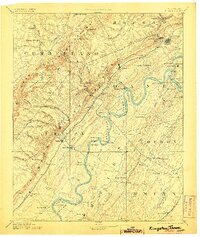 1893 Kingston1905 Print · USGSEastern Tennessee at the end of the nineteenth century is a landscape of mountain gaps and vital river landings. Researchers can trace early river crossings like Jackson Ferry, the path of the Cincinnati Southern Railroad, and settlements like Rhea Springs and Kingston.5 unique versions available
 - 1936 Map of Bacon Gap
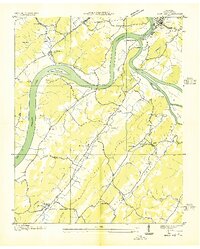 1936 Bacon Gap1936 Print · USGSRoane County in the mid-1930s shows a landscape shaped by its great river junction and rural ridge communities. Genealogists can locate family landmarks like Bethel Cem, Barnetts Narrows, and river crossings such as James Ferry and Hood Landing Ferry.2 unique versions available
 - 1940 Map of Bacon Gap
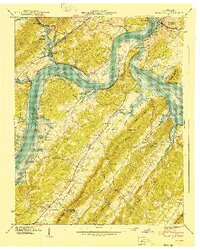 1940 Bacon Gap1940 Print · USGSThe Roane County riverfront is captured here just before the Watts Bar Reservoir floodwaters arrived in the early 1940s. Genealogists can trace family-named sites like Barnardsville and Bacon Ridge or locate community anchors such as Fairview Sch and Caney Ford Ch.2 unique versions available
 - 1952 Map of Bacon Gap, 1955 Print
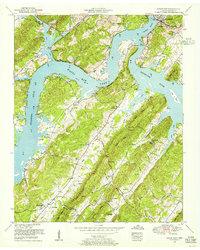 1952 Bacon Gap1955 Print · USGSIn the early fifties, the convergence of the Clinch and Tennessee Rivers at Kingston was being transformed by the waters of Watts Bar Lake. Researchers can trace ancestral sites like Bowman Cemetery, the historic Old Walton Road, and the rural Midway School.
 - 1953 Map of Chattanooga
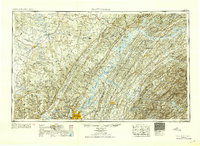 1953 Chattanooga1953 Print · USGSSoutheast Tennessee in the early fifties shows a landscape reshaped by river management and rail power. Trace the rail lines of the Southern Ry through riverside towns or locate the preserved grounds of the Chickamauga and Chattanooga National Military Park.
 - 1957 Map of Chattanooga, 1966 Print
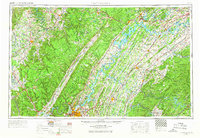 1957 Chattanooga1966 Print · USGSEast Tennessee in the mid-1960s shows a landscape of massive hydroelectric reservoirs and emerging industrial sites like the Atomic Energy Commission (Oak Ridge Area). Trace the rail networks of the Southern Ry through Chattanooga or locate family-named ridges across the Cumberland Plateau.3 unique versions available
 - 1959 Map of Chattanooga
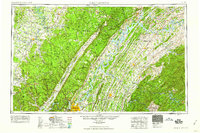 1959 Chattanooga1959 Print · USGSSoutheast Tennessee is shown here during a decade of industrial growth and hydroelectric development. Trace the regional rail networks of the Southern Ry and find landmark sites like Lookout Mountain, Fall Creek Falls State Park, and Chattanooga.
 - 1960 Map of Chattanooga
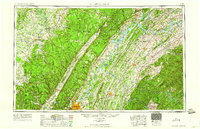 1960 Chattanooga1960 Print · USGSSoutheast Tennessee and the southern Appalachians are shown here at the height of the river-management era. You can trace the valley rail lines and locate Lookout Mountain and the expansive waters of Chickamauga Reservoir.
 - 1964 Map of Chattanooga
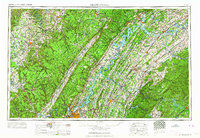 1964 Chattanooga1964 Print · USGSSoutheast Tennessee and the western Carolinas appear in the mid-sixties as a powerhouse of river-driven industry and mountain wilderness. Genealogists and historians can trace rail-town lineages along the Southern Ry or locate family landmarks near Watts Bar Lake and Tellico Plains.
 - 1968 Map of Bacon Gap, 1971 Print
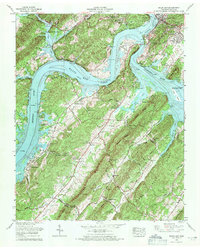 1968 Bacon Gap1971 Print · USGSThe confluence of the Clinch and Tennessee Rivers is captured here in the late sixties as the Roane County landscape evolved around the waters of Watts Bar Lake. Genealogists can locate numerous family burial sites such as Bacon Cem and De Armond Cem, alongside the historic Walton Road.4 unique versions available
 - 1981 Map of Watts Bar Lake, 1984 Print
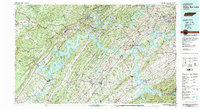 1981 Watts Bar Lake1984 Print · USGSEast Tennessee's river valleys and industrial corridors are captured here during the expansion of the TVA power system in the early eighties. Researchers can trace the legacy of the Southern Railway and the development of Watts Bar Lake and Tellico Lake.2 unique versions available
 - 2010 Map of Bacon Gap, 2010 Print
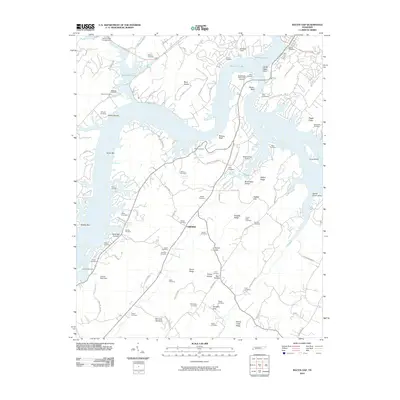 2010 Bacon Gap2010 Print · USGSThe Tennessee River valley near Kingston is shown here in the early twenty-first century as a landscape of interconnected lakes and ridges. Genealogists can trace family heritage through numerous sites including Shields Cemetery, Isham Cemetery, and the Slave Cemetery.
 - 2013 Map of Bacon Gap, 2013 Print
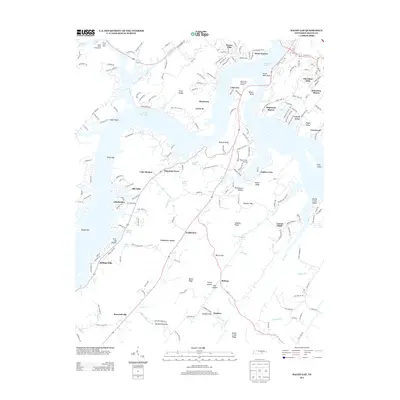 2013 Bacon Gap2013 Print · USGSRoane County's lakeside landscape is captured here in the early twenty-first century as modern residential growth meets traditional Tennessee ridge country. Researchers can find numerous springs and family-named hollows, from Ambrose Spring to Suck-egg Hollow and Stowe Station.
 - 2016 Map of Bacon Gap, 2016 Print
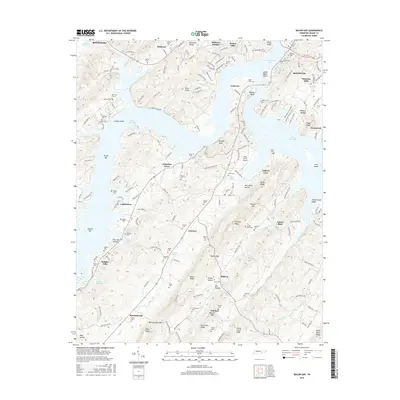 2016 Bacon Gap2016 Print · USGSIn the Tennessee River valley during the 2010s, this area showcases the intersection of the sprawling Watts Bar Lake and the ridgeline terrain of the River Knobs. Genealogists and researchers can locate numerous historic burial sites such as Slave Cem, Shiloh Cem, and Bacon Cem.
 - 2019 Map of Bacon Gap, 2019 Print
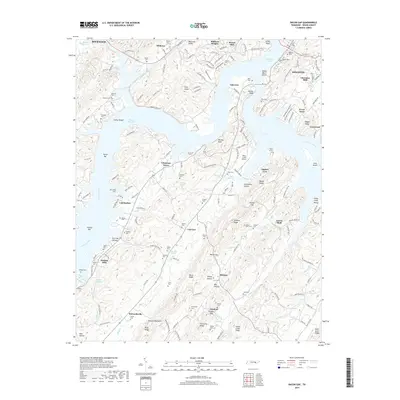 2019 Bacon Gap2019 Print · USGSRoane County, Tennessee, is captured here in the modern era, showing the intersection of deep-rooted settlements and the Tennessee River shoreline. Genealogists can trace family heritage across numerous sites like Bacon Cem, Barnardsville, and the historic South West Point.
 - 2023 Map of Bacon Gap, 2023 Print
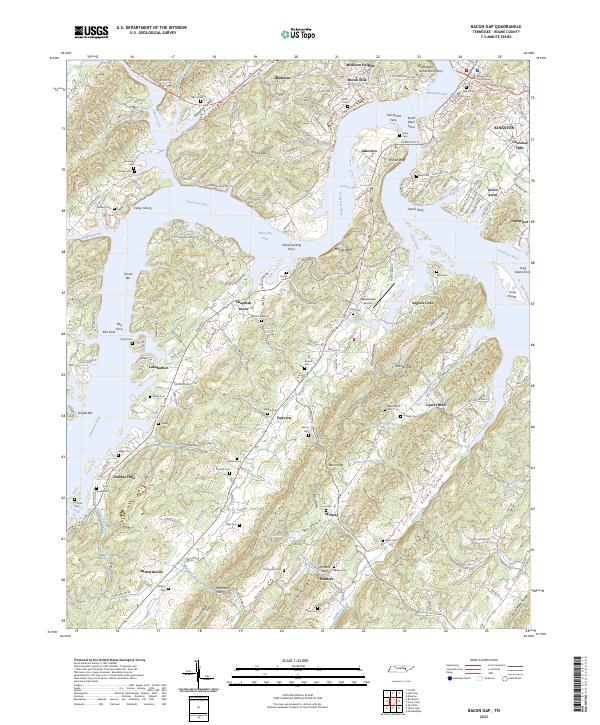 2023 Bacon Gap2023 Print · USGSRoane County near Kingston is mapped here in the early twenty-first century, showcasing a landscape of river-bend settlements and ridge-top views. Researchers can locate numerous family burial grounds like Bacon Cem and the historical Slave Cem, or trace old crossings at Hood Landing Ferry.
End of results
Showing maps 1-18 of 18
Top cities near Idle Oaks
- Oak Ridge historical maps
- Kingston historical maps
- Harriman historical maps
- Loudon historical maps
- Sweetwater historical maps
- Rockwood historical maps
See more
Frequently asked questions
- What are the different types of historical maps available for Idle Oaks?
- What is the oldest map of Idle Oaks?
- Where can I purchase historical maps of Idle Oaks for my home or office?
- Where can I download high-res historical maps of Idle Oaks?
- Are there historical topographic maps available for Idle Oaks?
- Is there historical aerial imagery available for Idle Oaks?
- Where are historical maps of Idle Oaks sourced from?