Old Maps of Johnson City, Tennessee
Explore 55 old maps of Johnson City, spanning from 1891 to today. These high-resolution historic maps reveal how streets, neighborhoods, landmarks, and natural features evolved over time — perfect for genealogy, metal detecting, research, and local history exploration.
What you can do with these maps:
- See how Johnson City changed over time: Compare historical maps to modern-day views to trace roads, homesites, rail lines & more.
- View detailed metadata: Each map includes creators, publishers, year, scale, and archive source.
- Overlay maps with satellite & LiDAR: Visualize the past alongside modern tools to explore terrain & human change.
- Trusted historical sources: Maps sourced from the USGS, Library of Congress, and other archives.
- Access maps your way: View online, download high-res files, or order prints for personal or research use.
Start exploring old maps of Johnson City to uncover forgotten places, hidden landmarks, and the deep history beneath your feet.
Johnson City, TN maps
(55)- 1891 Map of Roan Mountain
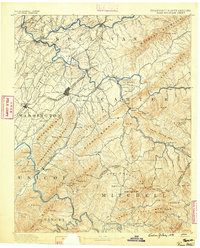 1891 Roan Mountain1891 Print · USGSThe Tennessee-North Carolina border country comes alive in the 1890s, when narrow-gauge railroads and mountain ferries still moved the region's goods. Genealogists and historians can trace early crossings like Shipley's Ferry, industrial sites at Embreeville, and high-country settlements like Cloudland.
 - 1892 Map of Greeneville
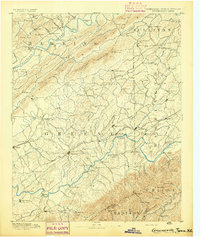 1892 Greeneville1892 Print · USGSEast Tennessee in the late nineteenth century was a landscape of river-crossing ferries and mountain gaps centered on Greeneville. Genealogists and historians can trace the early rail corridor of the East Tennessee Virginia and Georgia R. R. and locate family-named sites like Britton Ferry and Evans X Rds.
 - 1894 Map of Roan Mountain
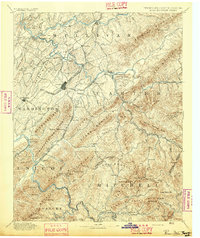 1894 Roan Mountain1894 Print · USGSNortheast Tennessee and Western North Carolina are mapped here in the late nineteenth century as the rail network expands through the Unaka Range. Trace early industrial footprints and family lands near Elizabethton, Terry Furnace, and the high summit at Cloudland.3 unique versions available
 - 1896 Map of Greeneville
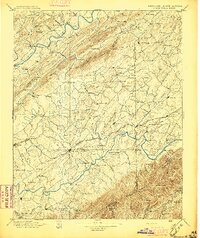 1896 Greeneville1896 Print · USGSUpper East Tennessee thrives in the late nineteenth century as a hub of rail travel and river commerce centered around the county seat. Genealogists can trace family roots through numerous crossroads and post offices like Chissolms P. O., Hawes X Roads, and Britton Ferry.2 unique versions available
 - 1904 Map of Roan Mountain
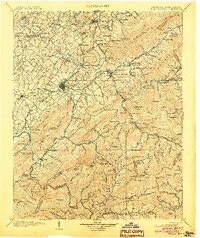 1904 Roan Mountain1904 Print · USGSUpper East Tennessee and Western North Carolina are documented here at a time when river fords and narrow-gauge railroads still connected mountain hollows. Trace the paths to Hodge Ore Bank, find old Poplar Ridge Church, or locate river crossings like Yoakley Ferry.4 unique versions available
 - 1904 Map of Greeneville
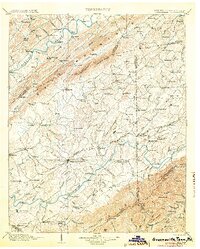 1904 Greeneville1904 Print · USGSEast Tennessee at the turn of the century reveals a land of ridge-valley farms and early educational centers. Genealogists can trace family roots through historic settlements like Surgoinsville, early institutions like Washington College, and landmarks such as Bashors Mill.4 unique versions available
 - 1935 Map of Sullivan Gardens
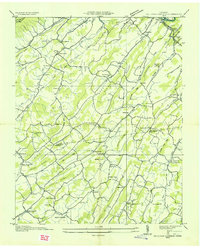 1935 Sullivan Gardens1935 Print · USGSSullivan County in the mid-1930s shows a landscape of ridge-top schools and creek-side mills before the expansion of modern highways. Researchers can locate the Kincheloe Mill, trace the Clinchfield RR through Kendricks Tunnel, and find family sites at Harmony Cem.
 - 1935 Map of Spurgeon
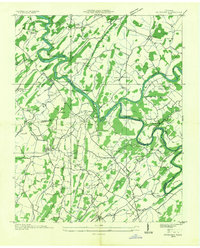 1935 Spurgeon1935 Print · USGSNortheast Tennessee's river valleys come alive in the mid-1930s, showing the intricate landscape where the Holston and Watauga rivers meet. Genealogists and local historians can trace family locations near the Ladies Academy, Boone Creek Mill, and the Clinchfield RR line.
 - 1935 Map of Bluff City
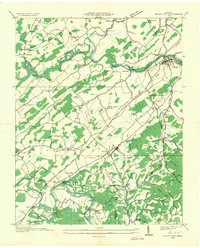 1935 Bluff City1935 Print · USGSBluff City and Piney Flats thrive during the mid-1930s along the rail-and-river corridors of Upper East Tennessee. Genealogists can trace family landmarks like Allison Mill, Poplar Ridge Ch, and the many islands along the Watauga River.2 unique versions available
 - 1935 Map of Fall Branch
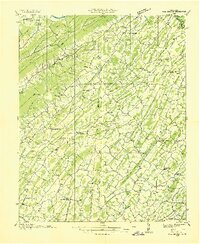 1935 Fall Branch1935 Print · USGSNortheast Tennessee in the mid-thirties shows a rural landscape of ridges and crossroads at the junction of four counties. Trace family history through dozens of local landmarks like Kincheloe Mill, Evening Star Sch, and Cedar Chapel.
 - 1935 Map of Jonesboro
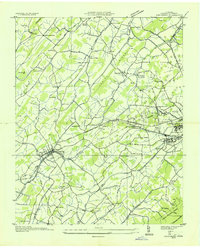 1935 Jonesboro1935 Print · USGSEastern Tennessee valley life comes into focus during the mid-thirties, centered on the settlement of Jonesboro. Genealogists can trace family footprints at Knob Creek Mill, Columbia Institute, and many small churches like Antioch Ch.
 - 1935 Map of Johnson City
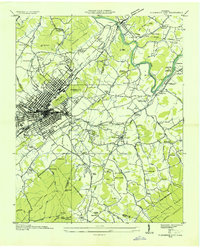 1935 Johnson City1935 Print · USGSJohnson City and the Watauga River valley thrive as a railroad and collegiate center in the years before the second world war. Genealogists and researchers can trace family landmarks like Simmons Cem, old schoolhouses such as Range Sch, and the early St John Landing Field.
 - 1939 Map of Jonesboro
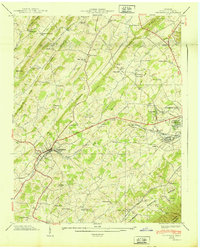 1939 Jonesboro1939 Print · USGSBefore the rapid post-war expansion, this area of Washington County centered on the rails and ridges around Jonesboro and Johnson City. Genealogists and historians can trace family landmarks like the Miller Cem, the Columbia Institute, and the Knob Creek Mill.2 unique versions available
 - 1939 Map of Sullivan Gardens
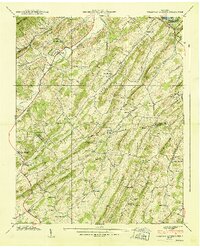 1939 Sullivan Gardens1939 Print · USGSSullivan and Washington counties were a patchwork of ridge-top schools and creek-side mills in the years before the war. You can trace the Clinchfield Railroad through Kendrick Tunnel or locate ancestral sites like Kincheloe Mill and Harmony Cemetery.
 - 1939 Map of Bluff City, 1954 Print
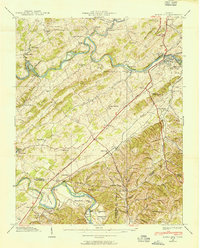 1939 Bluff City1954 Print · USGSSullivan County at the dawn of the 1940s reveals a landscape defined by the winding South Fork Holston and Watauga rivers. You can trace the sites of early industry and education at Shaver Mill, Austin Springs, and the Poplar Ridge Sch.2 unique versions available
 - 1940 Map of Johnson City
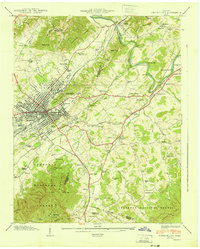 1940 Johnson City1940 Print · USGSJohnson City and its surrounding valleys are captured here at the start of the 1940s, showing a vital rail junction and industrial center. Genealogists can locate family landmarks like Taylor Chapel Cem, Milligan College, and the National Soldiers Home.2 unique versions available
 - 1940 Map of Bluff City
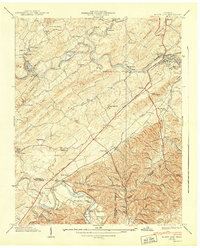 1940 Bluff City1940 Print · USGSSullivan County at the dawn of the 1940s reveals a landscape of river-bottom farms and milling towns connected by the Southern railroad. Researchers can locate family landmarks like Mottern Cem and historic sites such as Galloway Mill or Piney Flats.2 unique versions available
 - 1940 Map of Spurgeon
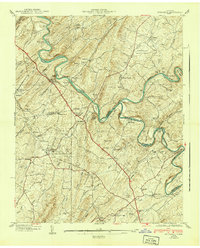 1940 Spurgeon1940 Print · USGSSullivan and Washington Counties are shown just before the war as a landscape of sharp river bends and early aviation. Genealogists can locate family landmarks like the Buffalo Cem, Mt Zion Ch, and the vanished Ladies Academy.4 unique versions available
 - 1955 Map of Johnson City
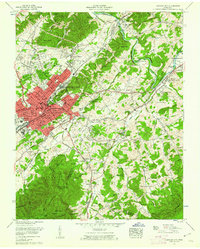 1955 Johnson City1955 Print · USGSJohnson City and the surrounding hills of Washington and Carter Counties are shown in meticulous detail during the late fifties. Genealogists and historians can trace family ties at Monte Vista Cem, locate the campus of Milligan College, or follow the industrial lines of the Clinchfield Railroad and E T & W N C RR.
 - 1955 Map of Johnson City
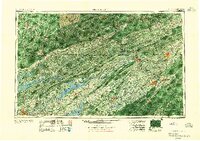 1955 Johnson City1955 Print · USGSEast Tennessee and the bordering highlands of Virginia and Kentucky appear here during the post-war industrial boom. You can trace the complex network of mountain ridges and new TVA lakes, from Johnson City to the coalfields near Middlesboro and Lynch.
 - 1957 Map of Johnson City, 1966 Print
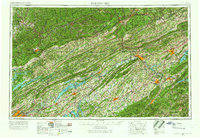 1957 Johnson City1966 Print · USGSUpper East Tennessee and Southwest Virginia are shown here during the mid-sixties transition of the Appalachians. Researchers can trace the industrial rail hubs of Kingsport, the sprawling waters of Cherokee Lake, and the historic Cumberland Gap.
 - 1959 Map of Jonesboro, 1960 Print
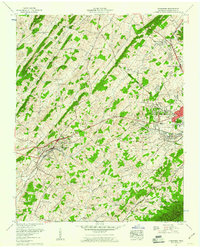 1959 Jonesboro1960 Print · USGSWashington County at the close of the 1950s shows the historic town of Jonesboro alongside the industrial and institutional growth of JOHNSON CITY. Researchers can trace family history through local sites like Knob Creek Mill, the Veterans Administration Center, and numerous rural churches like Marvin Chapel.5 unique versions available
 - 1959 Map of Boone Dam, 1960 Print
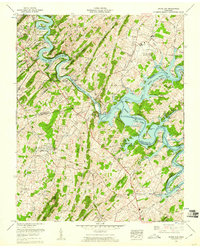 1959 Boone Dam1960 Print · USGSSullivan and Washington Counties are captured in a period of major change as the TVA dam projects reshaped the Holston Valley. Researchers can trace family roots at Hales Chapel, explore the early footprint of Tri-City Airport, or locate the submerged bends of the Watauga River.3 unique versions available
 - 1959 Map of Sullivan Gardens, 1962 Print
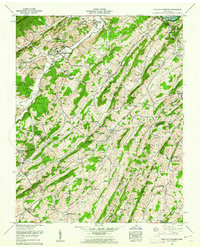 1959 Sullivan Gardens1962 Print · USGSSullivan County and Washington County meet here during the late fifties, where the river landscape was being reshaped by modern infrastructure. Researchers can locate dozens of family burial sites like Easley Cem and early landmarks such as Kincheloe Mill and Pactolus Ch.3 unique versions available
 - 1959 Map of Bluff City, 1962 Print
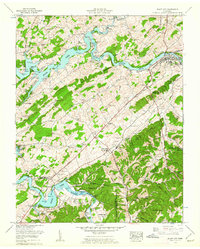 1959 Bluff City1962 Print · USGSSullivan County and the convergence of the Holston and Watauga Rivers are captured here in the late fifties. Researchers can trace family history through dozens of rural landmarks, from New Bethel Cem to the Mary Hughes High School and Galloway Mill.3 unique versions available
Showing maps 1-25 of 55
Top cities near Johnson City
- Kingsport historical maps
- Bristol historical maps
- Elizabethton historical maps
- Bloomingdale historical maps
- Erwin historical maps
- Jonesborough historical maps
See more
Top neighborhoods of Johnson City
- Green Valley historical maps
- Carnegie historical maps
- Glen Ridge historical maps
- Gomp Addition historical maps
- Rolling Hills historical maps
- Wayfield historical maps
See more
Frequently asked questions
- What are the different types of historical maps available for Johnson City?
- What is the oldest map of Johnson City?
- Where can I purchase historical maps of Johnson City for my home or office?
- Where can I download high-res historical maps of Johnson City?
- Are there historical topographic maps available for Johnson City?
- Is there historical aerial imagery available for Johnson City?
- Where are historical maps of Johnson City sourced from?