Old Maps of Hampton Reserve, Brentwood
Explore 18 old maps of Hampton Reserve, spanning from 1909 to today. These high-resolution historic maps reveal how streets, neighborhoods, landmarks, and natural features evolved over time — perfect for genealogy, metal detecting, research, and local history exploration.
What you can do with these maps:
- See how Hampton Reserve changed over time: Compare historical maps to modern-day views to trace roads, homesites, rail lines & more.
- View detailed metadata: Each map includes creators, publishers, year, scale, and archive source.
- Overlay maps with satellite & LiDAR: Visualize the past alongside modern tools to explore terrain & human change.
- Trusted historical sources: Maps sourced from the USGS, Library of Congress, and other archives.
- Access maps your way: View online, download high-res files, or order prints for personal or research use.
Start exploring old maps of Hampton Reserve to uncover forgotten places, hidden landmarks, and the deep history beneath your feet.
Hampton Reserve, Brentwood maps
(18)- 1909 Map of Franklin
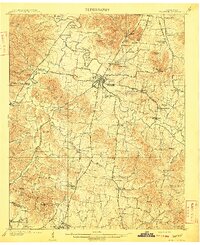 1909 Franklin1909 Print · USGSWilliamson County at the start of the twentieth century remains a landscape of historic pikes and rail-side villages. Genealogists can locate family homesteads near landmarks like Thompsons Station, Leipers Fork, and the Boiling Spring Academy.2 unique versions available
 - 1942 Map of Lebanon, 1944 Print
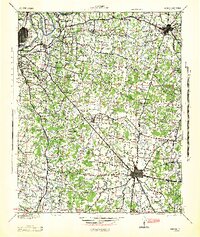 1942 Lebanon1944 Print · USGSMiddle Tennessee at the start of the war years reveals a landscape of historic homesteads and burgeoning military infrastructure. Genealogists and historians can trace family locations near The Hermitage, follow the Tennessee Central rail lines, or locate the newly established Smyrna Air Base.
 - 1949 Map of Franklin
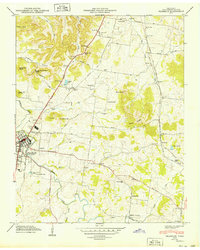 1949 Franklin1949 Print · USGSMid-century Williamson County centers on the thriving town of Franklin and the winding Harpeth River valley before the era of modern subdivision. Genealogists can trace family heritage through dozens of sites like Confederate Cem, Mallory Sch, and the Rest Haven Cem.3 unique versions available
 - 1956 Map of Columbia, 1960 Print
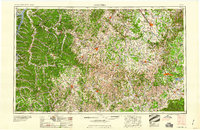 1956 Columbia1960 Print · USGSMiddle Tennessee in the mid-fifties presents a landscape of established river towns and critical rail hubs before the arrival of the modern interstate system. Researchers can trace the routes of the Louisville and Nashville railroad or locate historic landmarks like Stones River National Military Park and the Tennessee National Wildlife Refuge.6 unique versions available
 - 1957 Map of Nolensville, 1958 Print
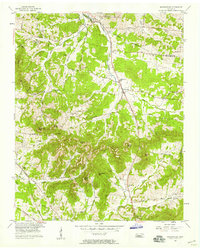 1957 Nolensville1958 Print · USGSMid-century Williamson and Davidson Counties reveal a landscape of family farms and rural churches before modern development. Genealogists can trace ancestral ties through Battle Cem, Pettus Cem, and community centers like Nolensville School.4 unique versions available
 - 1981 Map of Franklin
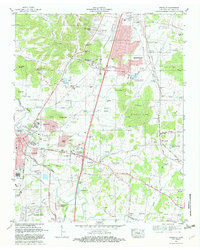 1981 Franklin1981 Print · USGSFranklin and Brentwood appear during a transformative era of growth south of Nashville in the early eighties. Family historians can trace numerous pioneer burial sites such as Primm Cem and McConnico Cem alongside landmarks like Ropers Knob.2 unique versions available
 - 1985 Map of Murfreesboro, 1986 Print
 1985 Murfreesboro1986 Print · USGSMiddle Tennessee in the mid-1980s shows a landscape of growing towns and deep-rooted rural outposts. Local researchers can trace old family lines near Bell Buckle, locate landmarks like Donnel Chapel, or explore the grounds of Henry Horton State Park and Hoovers Gap.
 - 1997 Map of Franklin, 2002 Print
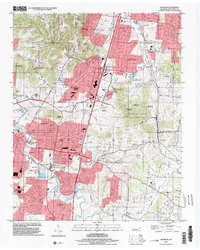 1997 Franklin2002 Print · USGSFranklin and Brentwood underwent significant growth in the late nineties as residential estates expanded across the Tennessee hills. Genealogists can trace family heritage through numerous burial grounds including Owen Cem, Crockett Cem, and the Confederate Cem.
 - 2010 Map of Nolensville, 2010 Print
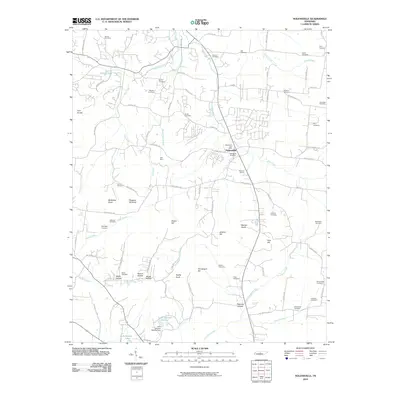 2010 Nolensville2010 Print · USGSNolensville and its surrounding hills are captured in this 2010 survey during a period of steady residential growth. Genealogists can trace family heritage across more than twenty burial sites, including the Battle Cemetery, McFarlin Cemetery, and Hamor Cemetery.
 - 2010 Map of Franklin, 2010 Print
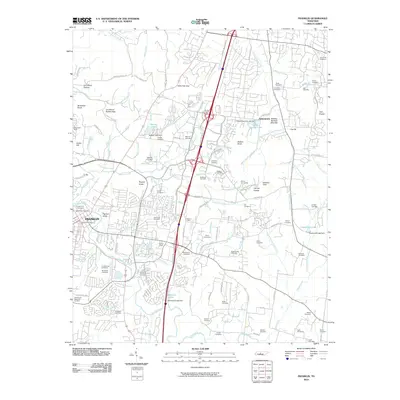 2010 Franklin2010 Print · USGSFranklin and the surrounding Williamson County hills are shown in detail during a period of rapid modern growth. Genealogists can trace dozens of family burial sites like McConnico Cemetery and Primm Cemetery or locate historic points such as Boiling Springs Mounds.
 - 2013 Map of Nolensville, 2013 Print
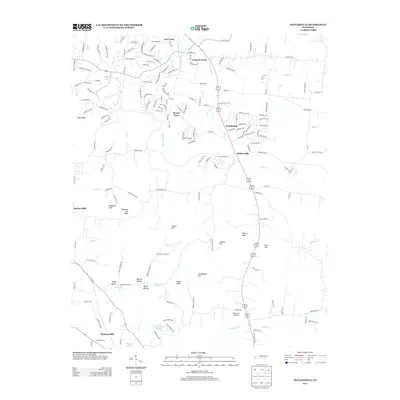 2013 Nolensville2013 Print · USGSNolensville and its surrounding knobs and hollows are captured here during a season of suburban growth south of Nashville. Researchers can trace the layout of Stonebrook and Sunset Acres alongside local landmarks like Molly Hollow and Polk Hill.
 - 2013 Map of Franklin, 2013 Print
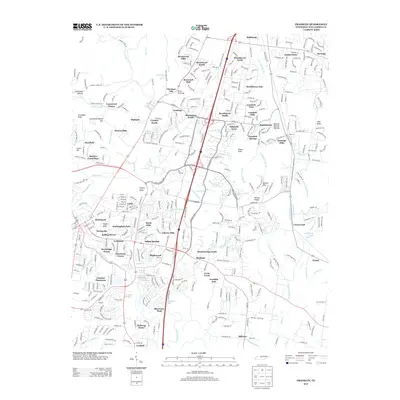 2013 Franklin2013 Print · USGSThe Brentwood and Franklin areas are shown here during a period of rapid suburban growth in the early twenty-first century. Researchers can trace the intersection of modern development with ancient geography, from Boiling Springs Mounds and Ropers Knob to the banks of the Harpeth River.
 - 2016 Map of Franklin, 2016 Print
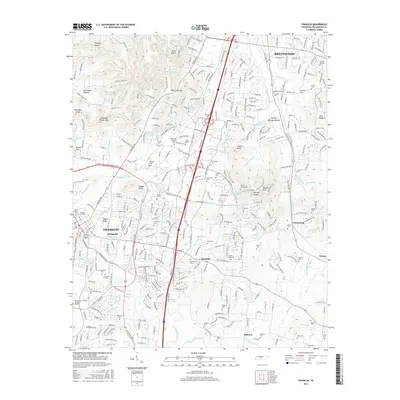 2016 Franklin2016 Print · USGSThe corridor between Brentwood and Franklin is documented here during a period of rapid suburban growth that surrounds ancient sites and family graveyards. Researchers can locate many small burial grounds like Crockett Cem or Walker Cem and landmarks such as the Boiling Springs Mounds.
 - 2016 Map of Nolensville, 2016 Print
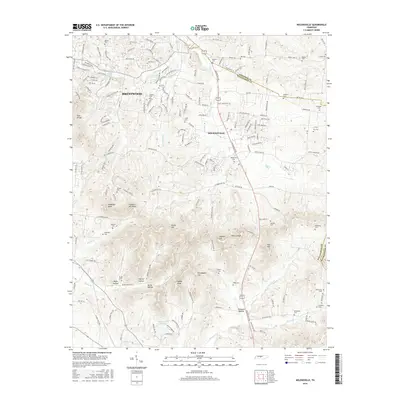 2016 Nolensville2016 Print · USGSGreater Nashville's southern reaches are captured here in the mid-2010s as suburban expansion meets traditional Tennessee knob country. Genealogists and historians can trace dozens of local family burial sites, including Battle Cem, Ozburn Cem, and the Nolensville Cem near Mill Creek.
 - 2019 Map of Franklin, 2019 Print
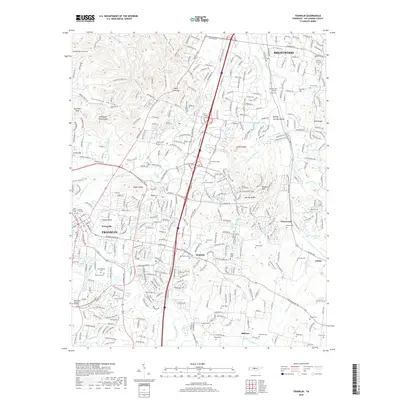 2019 Franklin2019 Print · USGSFranklin and Brentwood appear in this modern era as suburban growth begins to surround the area's deep-rooted history. Genealogists can trace family landmarks across dozens of sites including the Confederate Cem, Boiling Springs Mounds, and Donelson Cem.
 - 2019 Map of Nolensville, 2019 Print
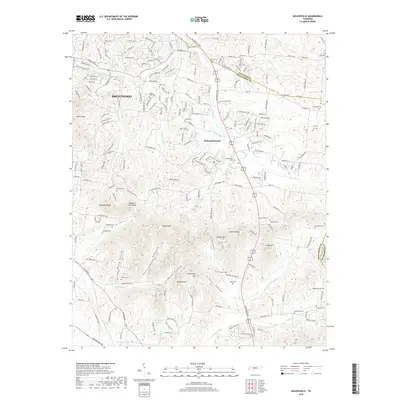 2019 Nolensville2019 Print · USGSNolensville and the Brentwood outskirts are captured here during a period of modern suburban growth into the rural hills south of Nashville. Genealogists can trace family heritage through numerous burial sites like Hailey-Rash Cem, McFarlin Cem, and Nolensville Cem.
 - 2022 Map of Franklin, 2022 Print
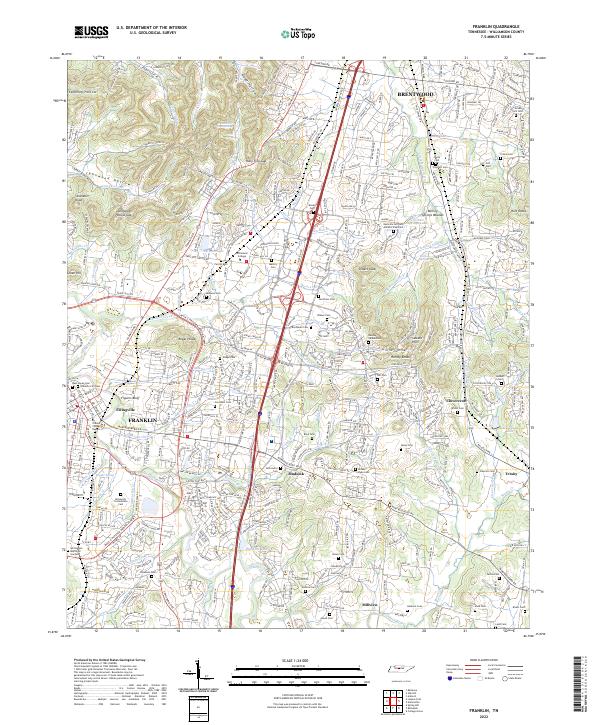 2022 Franklin2022 Print · USGSWilliamson County at the start of the 2020s shows the suburban growth of Brentwood and Franklin. Researchers can locate dozens of family-named burial sites, from Primm Cem to the McGavock Confederate Cem, and trace landmarks like Boiling Springs Mounds.
 - 2022 Map of Nolensville, 2022 Print
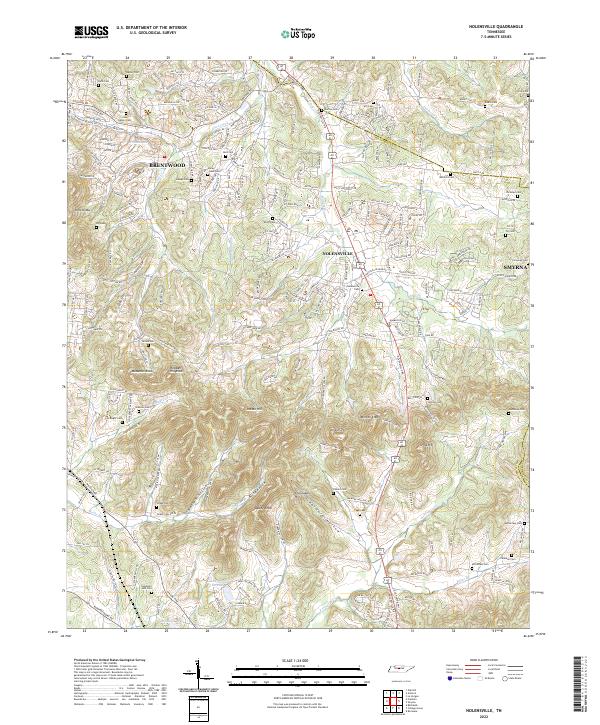 2022 Nolensville2022 Print · USGSNolensville and its surrounding ridges come into focus in this contemporary study of the Williamson County landscape. Researchers can locate dozens of family-named burial sites such as Jane Hamer Cem and McCanless Cem, alongside landmarks like McMahan Knob.
End of results
Showing maps 1-18 of 18
Frequently asked questions
- What are the different types of historical maps available for Hampton Reserve?
- What is the oldest map of Hampton Reserve?
- Where can I purchase historical maps of Hampton Reserve for my home or office?
- Where can I download high-res historical maps of Hampton Reserve?
- Are there historical topographic maps available for Hampton Reserve?
- Is there historical aerial imagery available for Hampton Reserve?
- Where are historical maps of Hampton Reserve sourced from?