1960s Maps of Baylor County, Texas
Explore 20 historic maps of Baylor County from the 1960s. These maps offer a rare glimpse into what life looked like during the 1960s — showing old roads, neighborhoods, homes, and landmarks that have changed or disappeared over time.
Whether you're researching your family's past, planning a metal detecting trip, or studying how Baylor County's landscape evolved across the 1960s, these high-resolution maps are a powerful tool for exploring the history of this region.
- Focus on a specific era: All maps on this page are from the 1960s, giving you a focused view of this time period.
- See what’s changed: Compare century-old streets, trails, and buildings to today's modern landscape using overlays and satellite layers.
- Research with precision: Use these maps for genealogy, historical research, land use analysis, or educational projects.
- View, download, or print: Maps are fully viewable online in high resolution, and can be downloaded or printed for your own records.
Start exploring Baylor County's history through authentic maps from the 1960s. This is your window into the past.
Baylor County, TX maps
(20)- 1962 Map of Antelope Creek NE, 1965 Print
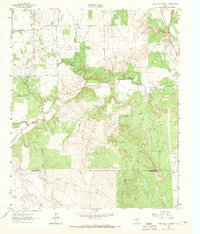 1962 Antelope Creek NE1965 Print · USGSBaylor and Throckmorton counties meet along the breaks of the Brazos River in the early sixties. Petroleum researchers and genealogists can trace the footprint of the local Oil Field and family-named watercourses like Millers Creek and Louise Run.
 - 1962 Map of Antelope Creek NW, 1965 Print
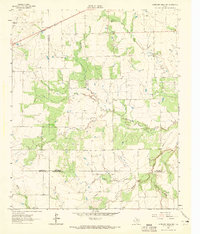 1962 Antelope Creek NW1965 Print · USGSThe Baylor and Knox County line in the early sixties shows a landscape where ranching met the growing oil industry. Researchers can trace family ties at the Bomarton Cem or follow the path of the Fort Worth and Denver railroad and Millers Creek.2 unique versions available
 - 1963 Map of Dundee, 1967 Print
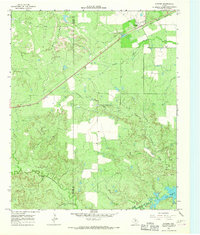 1963 Dundee1967 Print · USGSArcher and Baylor counties are shown during the mid-sixties as the local oil and rail economy shaped the landscape. Genealogists can locate the Dundee Cem and trace the Fort Worth and Denver railroad line as it passes through Dundee.
 - 1963 Map of Dundee SW, 1967 Print
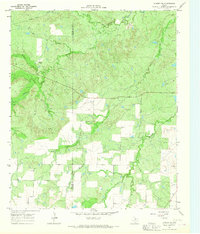 1963 Dundee SW1967 Print · USGSThe ranchlands of the Baylor and Archer County line are shown here in the 1960s as the local oil industry expanded. Researchers can trace family landmarks like Boone Ranch and Kickapoo Cem among the drainages of Godwin Creek and Kickapoo Creek.
 - 1963 Map of Megargel, 1967 Print
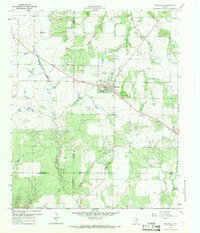 1963 Megargel1967 Print · USGSMegargel was a bustling center of oil production and rural life in North Texas during the early sixties. Genealogists and historians can locate the High Sch, the local PO, and numerous Oil Wells scattered along Kickapoo Creek.
 - 1966 Map of Franklin Bend, 1968 Print
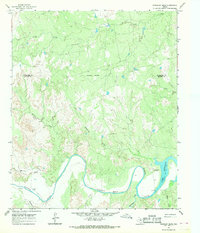 1966 Franklin Bend1968 Print · USGSNorth Texas ranching country in the mid-1960s is defined by the winding course of the Wichita River. Researchers can locate isolated ranching outposts such as Sweet La Cruz Cow Camp and the notable horseshoe curve at Franklin Bend.
 - 1966 Map of Seymour West, 1968 Print
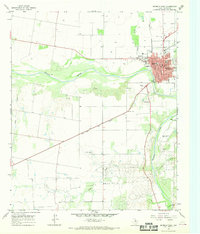 1966 Seymour West1968 Print · USGSMid-century Baylor County comes into focus as the community of Seymour expands near the Brazos River. Genealogists and historians can trace local landmarks like the Cache Creek Cem, the High Sch, and the rail corridor of the Fort Worth and Denver.
 - 1966 Map of Rock Canyon, 1968 Print
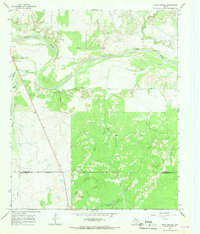 1966 Rock Canyon1968 Print · USGSThe Brazos River valley along the Baylor and Throckmorton county line is captured here in the mid-1960s. Researchers can trace land boundaries and industrial sites like Oil Wells, Horseshoe Bend, and the distinctive Twin Mountain.2 unique versions available
 - 1966 Map of Fulda, 1968 Print
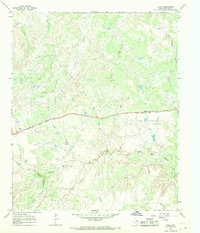 1966 Fulda1968 Print · USGSThe Baylor County ranchlands are captured here in the mid-1960s, showing the intersection of railroad transit and petroleum production. Researchers can trace the path of the Fort Worth and Denver line past Fulda and the active Seymour Oil Field.
 - 1966 Map of Santa Rosa Lake SW, 1968 Print
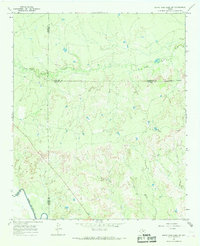 1966 Santa Rosa Lake SW1968 Print · USGSThe Rolling Plains of North Texas are captured here in the mid-1960s, showing the rugged ranch lands where Baylor, Foard, and Wilbarger counties intersect. Genealogists and researchers can trace local landmarks like Corral and Waggoner or follow the paths of South Beaver Creek and the North Wichita River.
 - 1966 Map of Soap Creek, 1968 Print
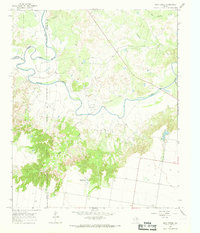 1966 Soap Creek1968 Print · USGSThe confluence of the Wichita River forks in North Texas is captured here in the mid-1960s. Family historians and researchers can locate the Henson Cem and trace the Arledge Ranch Landing Strip among the drainage of Soap Creek.
 - 1966 Map of Lake Diversion, 1968 Print
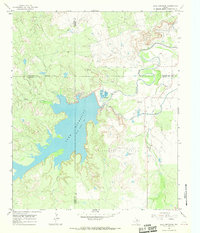 1966 Lake Diversion1968 Print · USGSThe North Texas plains meet the industrial waterworks of the mid-sixties in this survey of the Archer and Wichita county lines. Trace the local economy through petroleum landmarks like the Potts Oil Field and the technical operations at the Dundee Fish Hatchery.
 - 1966 Map of Northeast Lake Kemp, 1968 Print
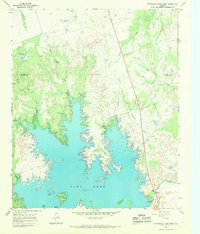 1966 Northeast Lake Kemp1968 Print · USGSThe northern waters of Baylor County are captured here in the mid-1960s, showing the complex shoreline of the local reservoir. Trace early ranching footprints at Coffee Creek Cow Camp or explore the inlets around Goat Island and Whiskey Creek.
 - 1966 Map of Southeast Lake Kemp, 1969 Print
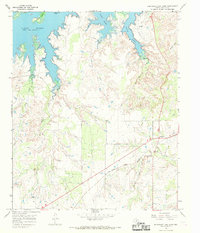 1966 Southeast Lake Kemp1969 Print · USGSBaylor County ranching and water management are captured here in the mid-1960s as the reservoir and railroad shape the local economy. Trace the course of the Fort Worth and Denver rail line near Mabelle or explore the inlets of Lake Kemp.
 - 1966 Map of Bomarton, 1969 Print
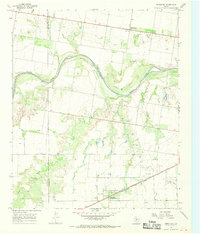 1966 Bomarton1969 Print · USGSThe Baylor and Knox County line comes alive in the mid-1960s as a landscape of winding riverbanks and railroad commerce. Trace the path of the Fort Worth and Denver railroad past Bomarton or explore the drainage of the Brazos River and Lake Creek.
 - 1966 Map of Northwest Lake Kemp, 1969 Print
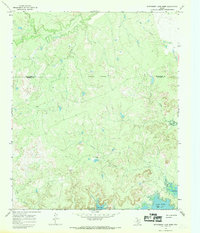 1966 Northwest Lake Kemp1969 Print · USGSThe ranchlands of Baylor and Wilbarger Counties come into focus in the mid-1960s, centered on the drainage systems feeding the reservoir. Researchers can trace land use through the Indian Creek Pens and the winding paths of Beaver Creek and West Coffee Creek.
 - 1966 Map of Southwest Lake Kemp, 1969 Print
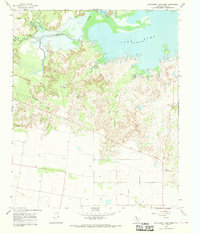 1966 Southwest Lake Kemp1969 Print · USGSBaylor County ranchlands and the expanding southern shores of the reservoir are documented here in the late sixties. Researchers can trace land use through Jones Cow Camp, the Seymour Municipal Airfield, and landmarks like Tabletop Mtn.
 - 1966 Map of Seymour East, 1969 Print
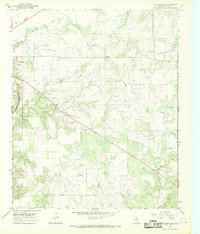 1966 Seymour East1969 Print · USGSBaylor County in the mid-sixties shows a landscape of cattle ranching and rail transit at the edge of the Brazos River. Genealogists and local historians can locate Riverside Cem, the settlement at Lively, and traces of an Old Railroad Grade.
 - 1966 Map of Cope Branch, 1969 Print
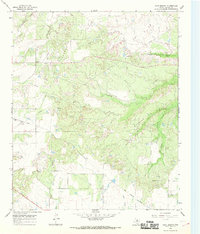 1966 Cope Branch1969 Print · USGSBaylor County oil country is captured here during the mid-sixties, showing the intersection of petroleum production and rural ranch land. Researchers can trace the Old Railroad Grade and locate family history at England Cem.
 - 1966 Map of Westover, 1969 Print
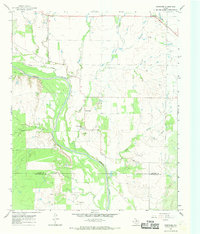 1966 Westover1969 Print · USGSThe Brazos River valley in North Texas comes alive in the mid-1960s, showing the rural landscape where Baylor and Throckmorton counties meet. Researchers can trace the layout of the Westover community or locate family sites near Round Timber Cem and Polk.2 unique versions available
End of results
Showing maps 1-20 of 20
Top cities of Baylor County
Frequently asked questions
- What are the different types of historical maps available for Baylor County?
- What is the oldest map of Baylor County?
- Where can I purchase historical maps of Baylor County for my home or office?
- Where can I download high-res historical maps of Baylor County?
- Are there historical topographic maps available for Baylor County?
- Is there historical aerial imagery available for Baylor County?
- Where are historical maps of Baylor County sourced from?