Old Maps of Downtown, Houston for Academic Research
Study the evolution of Downtown with 27 high-resolution historic maps. Whether you're teaching, researching, or modeling changes in land use, these maps provide essential visual documentation of urban, environmental, and geographic change.
- Analyze long-term change: Track patterns in development, transportation, and natural features.
- Ideal for environmental or urban studies: Support academic projects with primary historical map data.
- Use in the classroom or lab: Educators and researchers rely on these maps to bring historical context to life.
These maps are a powerful tool for teaching, research, and visualizing how Downtown has changed over the decades.
Downtown, Houston maps
(27)- 1915 Map of Park Place
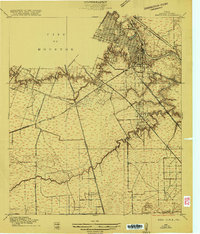 1915 Park Place1915 Print · USGSSoutheast Houston and the thriving ship channel districts are captured here just before the first World War. Genealogists and industrial historians can trace the early residential blocks of Magnolia and Park Place or the rail yards at South Yards.2 unique versions available
 - 1916 Map of Settegast
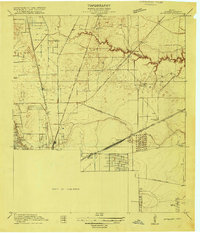 1916 Settegast1916 Print · USGSNortheast Houston was a burgeoning rail and industrial corridor during the mid-1910s, prior to its full integration into the modern metropolis. Genealogists and historians can trace early neighborhood plats like Brooks Smith Addition and Fidelity Addition alongside the massive Tank Farm and local schoolhouses.2 unique versions available
 - 1922 Map of Park Place
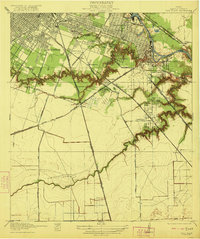 1922 Park Place1922 Print · USGSSoutheastern Harris County is seen here during its industrial transformation in the years following the 1915 survey. Genealogists and researchers can trace early residential tracts like Park Place and Forest Hills or locate old railway sidings such as Sheets Switch and Rambler Switch.3 unique versions available
 - 1922 Map of Settegast
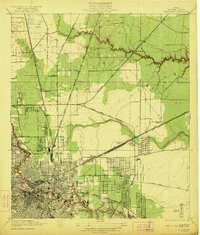 1922 Settegast1922 Print · USGSHouston and its surrounding Harris County townships are captured here during a period of intense industrial growth and residential expansion. Researchers can trace the early footprints of the Brooke-Smith Addition and Settegast, or locate rural landmarks like Berry School and the Tank Farm.2 unique versions available
 - 1946 Map of Settegast
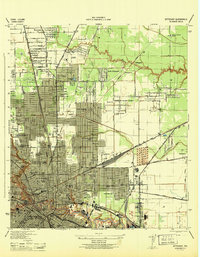 1946 Settegast1946 Print · USGSNortheast Houston and the industrial ship channel areas are captured here at the height of the mid-forties boom. Researchers can trace ancestral locations and civic growth through sites like Kashmere Gardens School, Evergreen Cem, and the neighborhoods bordering Halls Bayou.
 - 1950 Map of Houston, 1953 Print
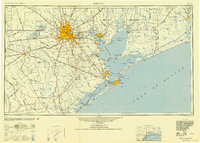 1950 Houston1953 Print · USGSCoastal Texas in the early fifties reveals a landscape of massive civil engineering and industrial transit. Genealogists and researchers can trace the growth of the Houston suburbs and the maritime infrastructure of Galveston Bay, including the Gulf Freeway and the Texas City Dike.
 - 1955 Map of Park Place, 1957 Print
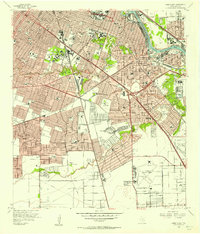 1955 Park Place1957 Print · USGSSoutheast Houston expanded rapidly during the mid-fifties as shipping and aviation infrastructure matured. Researchers can trace the development of neighborhood hubs like Park Place, the sprawling Houston International Airport, and dozens of local schools including Yates High Sch.
 - 1955 Map of Settegast, 1957 Print
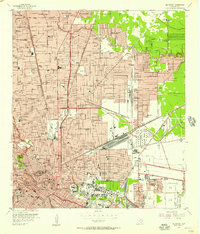 1955 Settegast1957 Print · USGSNortheast Houston transitioned from residential pockets to a massive rail and industrial corridor during the mid-fifties. Genealogists and historians can locate dozens of neighborhood landmarks, including Settegast Yards, Settegast Sch, and Hollywood Cemetery.
 - 1956 Map of Houston, 1963 Print
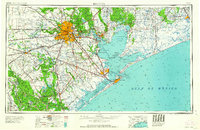 1956 Houston1963 Print · USGSSoutheast Texas in the mid-fifties is captured here as a powerhouse of oil and maritime trade. Genealogists and historians can trace the foundations of Houston and its ports, alongside landmarks like the Rice Institute and the Spindletop Oil Field.2 unique versions available
 - 1967 Map of Park Place, 1969 Print
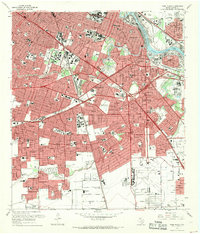 1967 Park Place1969 Print · USGSSoutheast Houston in the late sixties is captured here as a major hub of aviation, industry, and higher education. Genealogists and historians can trace the growth of Park Place, locate Jackson Cem, and explore the campuses of the University of Houston and Texas Southern University.
 - 1967 Map of Settegast, 1970 Print
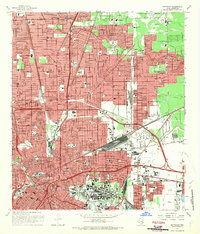 1967 Settegast1970 Print · USGSNortheast Houston's rail-and-bayou landscape is captured here during a period of significant mid-century growth. Researchers can trace historic neighborhood boundaries in Settegast and Sherwood Place or locate family sites at Oak Park Cem and Hollywood Cemetery.2 unique versions available
 - 1975 Map of Houston, 1977 Print
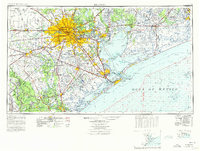 1975 Houston1977 Print · USGSThe Texas Gulf Coast in the mid-seventies shows a sprawling Houston metropolis linked to the sea by the massive Houston Ship Channel. Researchers can trace the mid-century industrial landscape from the Astrodome to the Lyndon B. Johnson Space Center.2 unique versions available
 - 1982 Map of Park Place, 1983 Print
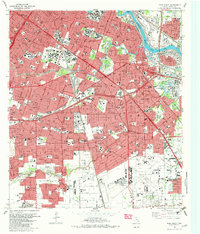 1982 Park Place1983 Print · USGSSoutheastern Houston and the Ship Channel area are shown in high detail during the early eighties, reflecting a period of intense industrial and suburban growth. Researchers can trace local history through the William P Hobby Airport, the University of Houston campus, and the Municipal Prison Farm.2 unique versions available
 - 1982 Map of Settegast, 1983 Print
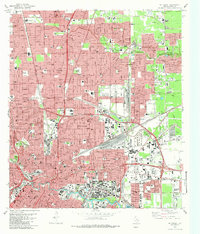 1982 Settegast1983 Print · USGSHouston and its industrial rail corridors are captured in the early eighties as neighborhoods expanded around the massive Settegast Yards. Trace local family history through dozens of landmarks like Oak Park Cemetery and St Elizabeth Hospital.2 unique versions available
 - 1992 Map of Houston
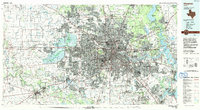 1992 Houston1992 Print · USGSThe Houston metropolitan area reached its modern sprawl in the early nineties, centered on the Buffalo Bayou and a massive regional rail network. Genealogists and historians can trace the development of satellite cities like Sugar Land and Pasadena, or locate legacy sites like the Humble Oil Field and the NASA Lyndon B Johnson Space Center.
 - 1995 Map of Park Place, 1998 Print
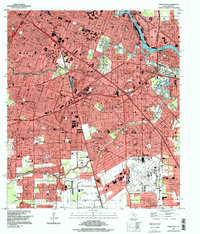 1995 Park Place1998 Print · USGSSoutheast Houston is seen here during a period of significant urban density in the mid-1990s. Researchers can trace the layout of Texas Southern University, find local family records at Evergreen Cem, and locate the historic Park Place neighborhood.
 - 1995 Map of Settegast, 1999 Print
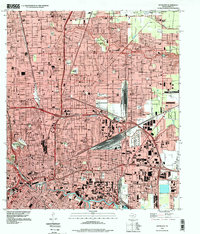 1995 Settegast1999 Print · USGSEastern Houston and the Settegast region are captured in the mid-nineties, showing a landscape defined by heavy rail and bayou corridors. Researchers can trace historical footprints at Hollywood Cemetery or explore the massive layout of the Settegast Yards and the busy Turning Basin.
 - 2010 Map of Settegast, 2010 Print
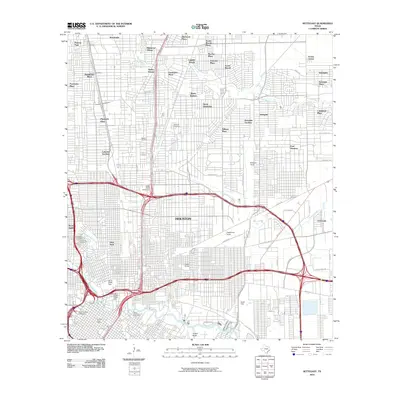 2010 Settegast2010 Print · USGSHouston’s northeast side reveals a landscape of industrial power and evolving neighborhoods just after the turn of the millennium. Genealogists and historians can trace significant sites like Holy Cross Cemetery and the sprawling rail networks of Englewood Yards and Settegast Yards.
 - 2010 Map of Park Place, 2010 Print
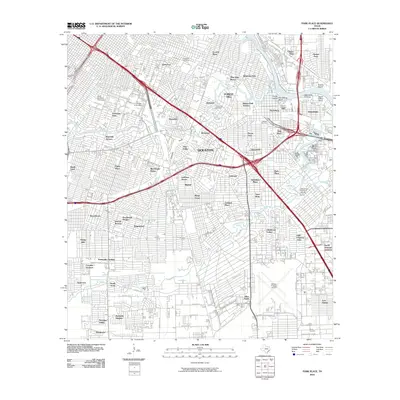 2010 Park Place2010 Print · USGSSoutheast Houston and the industrial ship channel corridor are shown here in the early twenty-first century. Researchers can trace historic neighborhood boundaries from Harrisburg to Park Place and locate family sites near Evergreen Cemetery or William P Hobby Airport.
 - 2013 Map of Settegast, 2013 Print
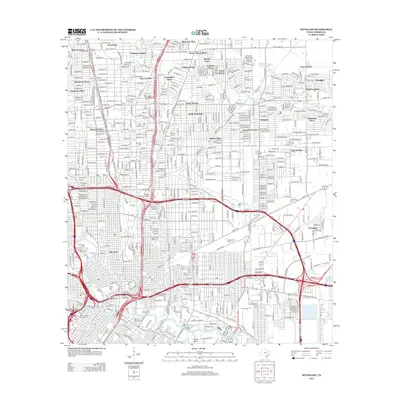 2013 Settegast2013 Print · USGSNortheast Houston in the early twenty-first century reveals a landscape shaped by massive rail yards and a dense network of neighborhoods. Genealogists and local historians can locate several major burial grounds like Holy Cross Cem and trace the rail-industrial corridors around Settegast Yards and Englewood Yards.
 - 2013 Map of Park Place, 2013 Print
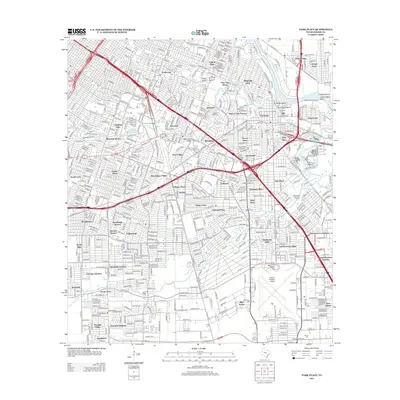 2013 Park Place2013 Print · USGSHouston’s southeastern industrial and residential corridors are frozen in time just after the first decade of the new millennium. Researchers can trace historic cemeteries like Evergreen Cem and Glendale Cem alongside the runways of William P Hobby Airport.
 - 2016 Map of Settegast, 2016 Print
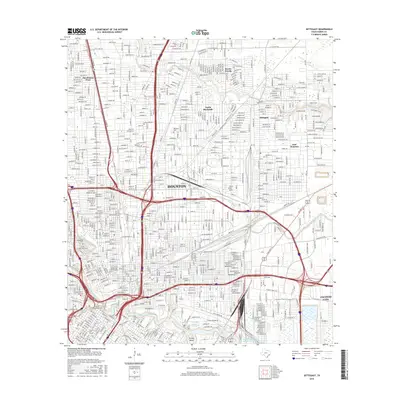 2016 Settegast2016 Print · USGSHouston and its eastern suburbs are shown in high detail during the mid-2010s, revealing the dense intersection of bayou waterways and heavy rail. Researchers can trace historic cemeteries like Holy Cross Cem or follow the Houston Belt and Terminal RR through Settegast.
 - 2016 Map of Park Place, 2016 Print
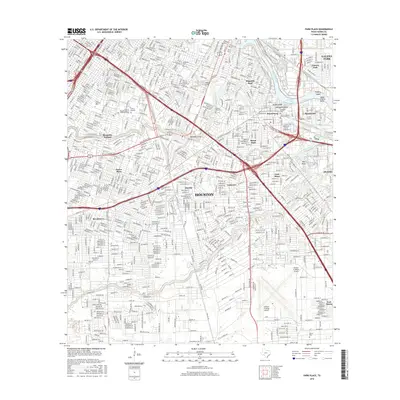 2016 Park Place2016 Print · USGSSoutheast Houston in the mid-2010s reveals a landscape where major aviation and maritime hubs meet established residential wards. Genealogists and local historians can trace the development of Harrisburg and Manchester or locate family plots in Forest Park Cem and Jackson Cem.
 - 2019 Map of Park Place, 2019 Print
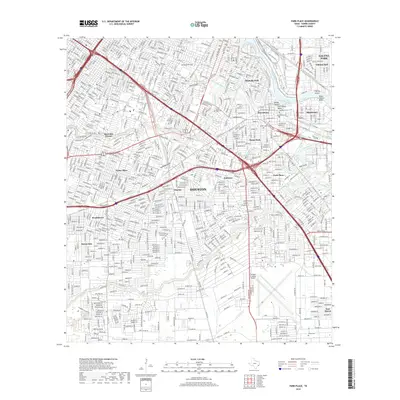 2019 Park Place2019 Print · USGSSoutheast Houston and its industrial ship channel corridor are shown here in recent detail. Researchers can trace the layout of historic neighborhoods like Harrisburg and Pecan Park alongside major landmarks like William P Hobby Airport and Forest Park Cem.
 - 2019 Map of Settegast, 2019 Print
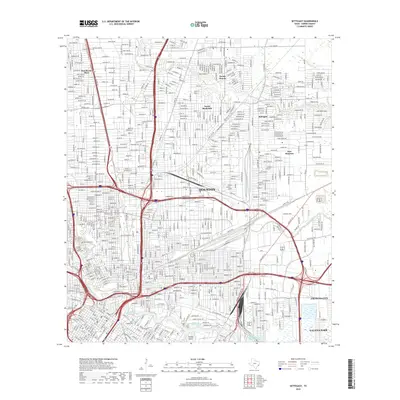 2019 Settegast2019 Print · USGSNortheast Houston and surrounding Harris County are captured here in the late twenty-teens, showing the city's dense urban footprint. Researchers can locate numerous historic burial sites like Hollywood Cem and Saint Vincent Cem or trace neighborhoods from Settegast to Galena Park.
Showing maps 1-25 of 27
Frequently asked questions
- What are the different types of historical maps available for Downtown?
- What is the oldest map of Downtown?
- Where can I purchase historical maps of Downtown for my home or office?
- Where can I download high-res historical maps of Downtown?
- Are there historical topographic maps available for Downtown?
- Is there historical aerial imagery available for Downtown?
- Where are historical maps of Downtown sourced from?