Old Maps of Gulf Palms, Houston
Explore 26 old maps of Gulf Palms, spanning from 1915 to today. These high-resolution historic maps reveal how streets, neighborhoods, landmarks, and natural features evolved over time — perfect for genealogy, metal detecting, research, and local history exploration.
What you can do with these maps:
- See how Gulf Palms changed over time: Compare historical maps to modern-day views to trace roads, homesites, rail lines & more.
- View detailed metadata: Each map includes creators, publishers, year, scale, and archive source.
- Overlay maps with satellite & LiDAR: Visualize the past alongside modern tools to explore terrain & human change.
- Trusted historical sources: Maps sourced from the USGS, Library of Congress, and other archives.
- Access maps your way: View online, download high-res files, or order prints for personal or research use.
Start exploring old maps of Gulf Palms to uncover forgotten places, hidden landmarks, and the deep history beneath your feet.
Gulf Palms, Houston maps
(26)- 1915 Map of Deepwater
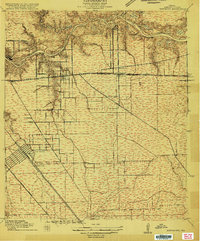 1915 Deepwater1915 Print · USGSSoutheast of Houston during the early twentieth-century boom, this area shows the vital transformation of the coastal prairie into an industrial hub. Trace the early footprints of Pasadena, South Houston, and Genoa alongside the Ship Channel and the Penn City School.
 - 1916 Map of Genoa
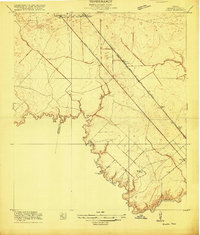 1916 Genoa1916 Print · USGSSoutheast Texas coastal prairie development is captured here during the First World War era, showing the intersection of early electric rail and county life. Trace the old routes of the Galveston Houston Electric or locate the Friendswood Bridge and Genoa Sta along the Harris County line.2 unique versions available
 - 1919 Map of Deepwater
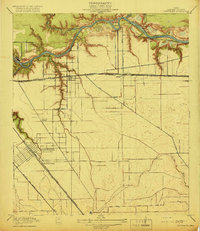 1919 Deepwater1919 Print · USGSHarris County at the height of the early shipping boom shows the transformation of the bayou into an industrial corridor. Trace family roots and early infrastructure in Pasadena and South Houston, or locate the Penn City Ferry and Dumont Sta.2 unique versions available
 - 1920 Map of Genoa
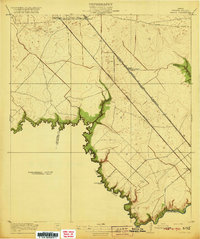 1920 Genoa1920 Print · USGSSoutheast Texas at the end of the Great War shows a landscape defined by new airfields and electric transit. Genealogists and historians can trace the early rail corridor serving Genoa, the initial layout of Ellington Field, and the crossing at Friendswood Bridge.
 - 1932 Map of Genoa
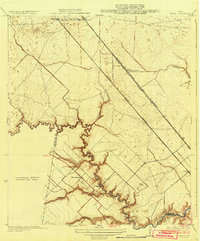 1932 Genoa1932 Print · USGSSoutheast Texas coastal prairie life in the early thirties is defined by emerging aviation and rail corridors. Genealogists can trace family footprints near Genoa or find the early layout of Olcott (Ellington Field) and the Friendswood Bridge.3 unique versions available
 - 1950 Map of Houston, 1953 Print
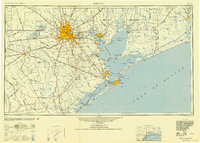 1950 Houston1953 Print · USGSCoastal Texas in the early fifties reveals a landscape of massive civil engineering and industrial transit. Genealogists and researchers can trace the growth of the Houston suburbs and the maritime infrastructure of Galveston Bay, including the Gulf Freeway and the Texas City Dike.
 - 1955 Map of Friendswood, 1957 Print
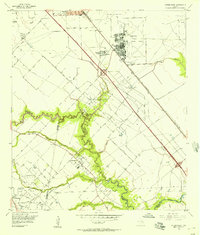 1955 Friendswood1957 Print · USGSSoutheastern Texas in the mid-fifties reveals an landscape of emerging aviation and oil production. Trace family landmarks and industrial roots at Ellington Air Force Base, the Friendswood Oil Field, and Whitcomb Cem.3 unique versions available
 - 1955 Map of Pasadena, 1957 Print
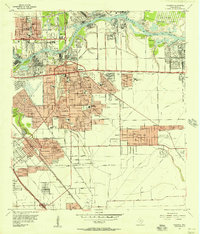 1955 Pasadena1957 Print · USGSSoutheast Texas industrial growth is on full display during the mid-fifties as the ship channel corridor rapidly expands. Genealogists and researchers can trace neighborhood development near Pasadena schools or find the footprint of the San Jacinto Ordnance Depot.
 - 1956 Map of Houston, 1963 Print
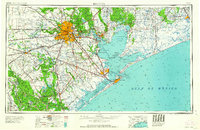 1956 Houston1963 Print · USGSSoutheast Texas in the mid-fifties is captured here as a powerhouse of oil and maritime trade. Genealogists and historians can trace the foundations of Houston and its ports, alongside landmarks like the Rice Institute and the Spindletop Oil Field.2 unique versions available
 - 1967 Map of Pasadena, 1970 Print
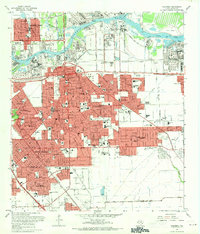 1967 Pasadena1970 Print · USGSSoutheast of Houston in the late sixties, this area shows a dense industrial and suburban landscape emerging along the Houston Ship Channel. Genealogists and local historians can locate established schools like Pearl Hall Sch and landmarks like the Texas Chiropractic College or the crossroads at Genoa.
 - 1975 Map of Houston, 1977 Print
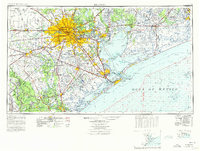 1975 Houston1977 Print · USGSThe Texas Gulf Coast in the mid-seventies shows a sprawling Houston metropolis linked to the sea by the massive Houston Ship Channel. Researchers can trace the mid-century industrial landscape from the Astrodome to the Lyndon B. Johnson Space Center.2 unique versions available
 - 1982 Map of Freindswood, 1983 Print
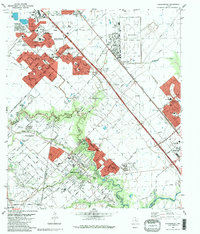 1982 Freindswood1983 Print · USGSSoutheast Texas at the start of the eighties shows a landscape of rapid suburban growth and active energy production. Genealogists and local historians can trace the development of Wedgewood Village and Forest Bend alongside the Hastings Oil Field and Ellington Air Force Base.2 unique versions available
 - 1982 Map of Pasadena, 1983 Print
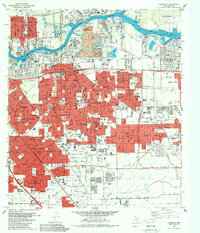 1982 Pasadena1983 Print · USGSGreater Houston experienced significant industrial and suburban maturation by the early eighties, centered on the vital shipping corridors. Researchers can trace family roots through neighborhood landmarks like Crown Hill Cem or locate former aviation sites such as Genoa Airport.
 - 1992 Map of Houston
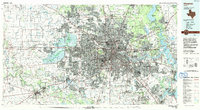 1992 Houston1992 Print · USGSThe Houston metropolitan area reached its modern sprawl in the early nineties, centered on the Buffalo Bayou and a massive regional rail network. Genealogists and historians can trace the development of satellite cities like Sugar Land and Pasadena, or locate legacy sites like the Humble Oil Field and the NASA Lyndon B Johnson Space Center.
 - 1995 Map of Friendswood, 1999 Print
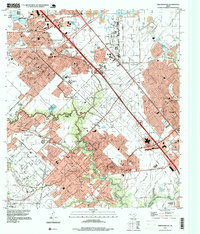 1995 Friendswood1999 Print · USGSCoastal Texas industry and suburban growth converge south of Houston in the mid-1990s as oil fields meet new residential subdivisions. Genealogists and historians can trace the development of Friendswood and Pearland alongside Whitcomb Cem and the Friendswood Oil Field.
 - 1995 Map of Pasadena, 2000 Print
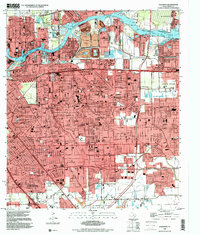 1995 Pasadena2000 Print · USGSThe industrial heart of the Gulf Coast is on full display in the mid-1990s as the suburbs of Houston expand around the shipping lanes. Genealogists and historians can locate specific neighborhood institutions like St Frances Cabrini Sch and Southmore Hosp or trace the path of the Port Terminal RR.
 - 2010 Map of Friendswood, 2010 Print
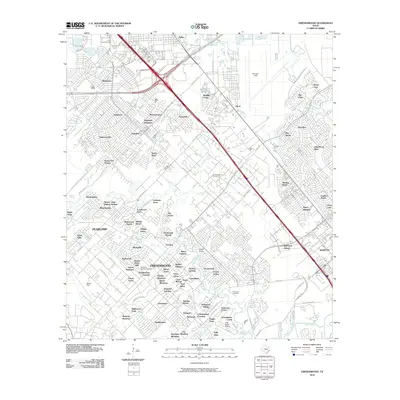 2010 Friendswood2010 Print · USGSSoutheast Texas at the start of the decade shows a suburban landscape woven into the coastal bayous and prairies. Researchers can trace the development around Ellington Field, the legacy of the Friendswood Oil Field, and the quiet grounds of Whitcomb Cemetery.
 - 2010 Map of Pasadena, 2010 Print
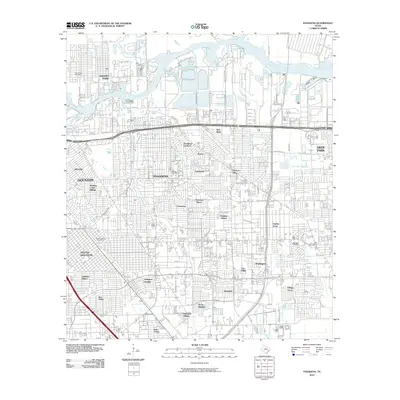 2010 Pasadena2010 Print · USGSSoutheast Texas near the bay is shown here during a period of significant suburban density and industrial activity. Genealogists and local historians can trace neighborhood growth in Golden Acres, Easthaven, and Parkview Manor or locate the Pasadena Post Office.
 - 2013 Map of Pasadena, 2013 Print
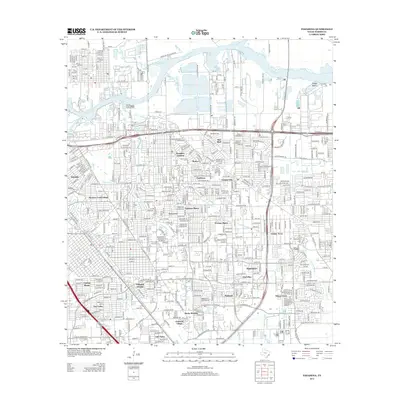 2013 Pasadena2013 Print · USGSThe Houston suburbs show their modern layout in this decade-old survey, where bayous meet dense residential grids. Genealogists and local historians can map out family homes in Pasadena Gardens, Golden Acres, or Freeway Manor.
 - 2013 Map of Friendswood, 2013 Print
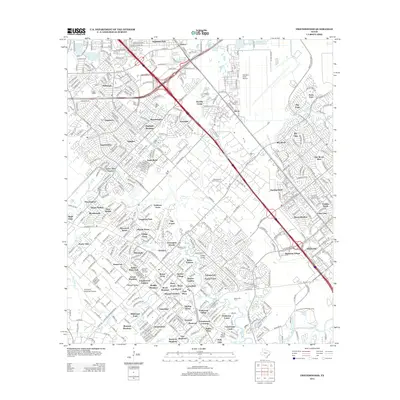 2013 Friendswood2013 Print · USGSCoastal Texas suburbs and aviation hubs are caught in a moment of rapid growth during the early 2010s. Researchers can trace local landmarks like Whitcomb Cem and the Friendswood Oil Field alongside Ellington Field Airport.
 - 2016 Map of Friendswood, 2016 Print
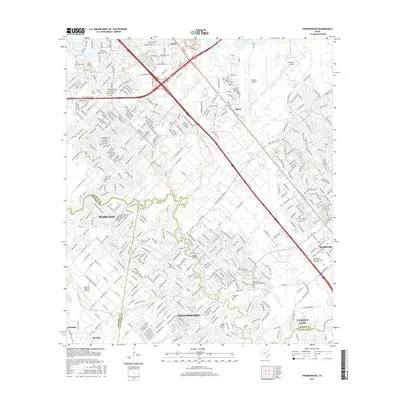 2016 Friendswood2016 Print · USGSCoastal Texas development south of Houston is documented here during a period of rapid suburban expansion. Genealogists and local historians can trace the paths of Clear Creek and locate family landmarks like the Whitcomb Cem or Ellington Airport.
 - 2016 Map of Pasadena, 2016 Print
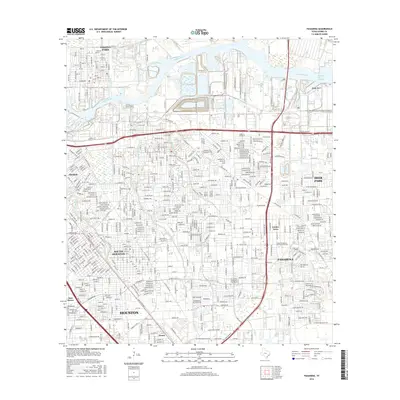 2016 Pasadena2016 Print · USGSSoutheast Texas in the mid-2010s shows the continued growth and industrial density surrounding the Houston Ship Channel. Genealogists and local historians can trace the developments of Pasadena, Deer Park, and South Houston alongside landmarks like the San Jacinto Community Coll District.
 - 2019 Map of Friendswood, 2019 Print
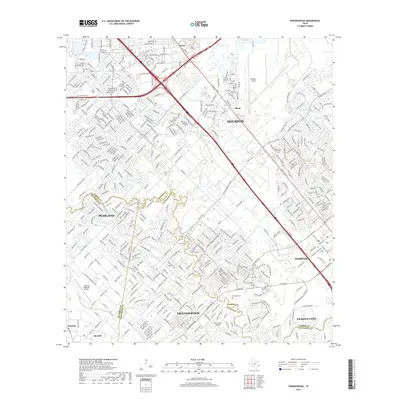 2019 Friendswood2019 Print · USGSCovers Gulf Palms, including Houston, Pearland, and other nearby areas
 - 2019 Map of Pasadena, 2019 Print
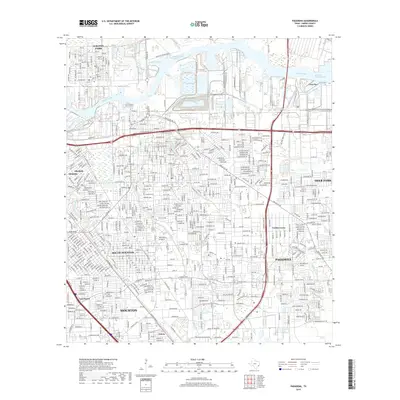 2019 Pasadena2019 Print · USGSSoutheast Harris County is shown at its modern industrial peak, centered on the critical Houston Ship Channel and the city of Pasadena. Researchers can trace the sprawling street grids of South Houston and Deer Park alongside historic waterways like Buffalo Bayou.
 - 2022 Map of Pasadena, 2022 Print
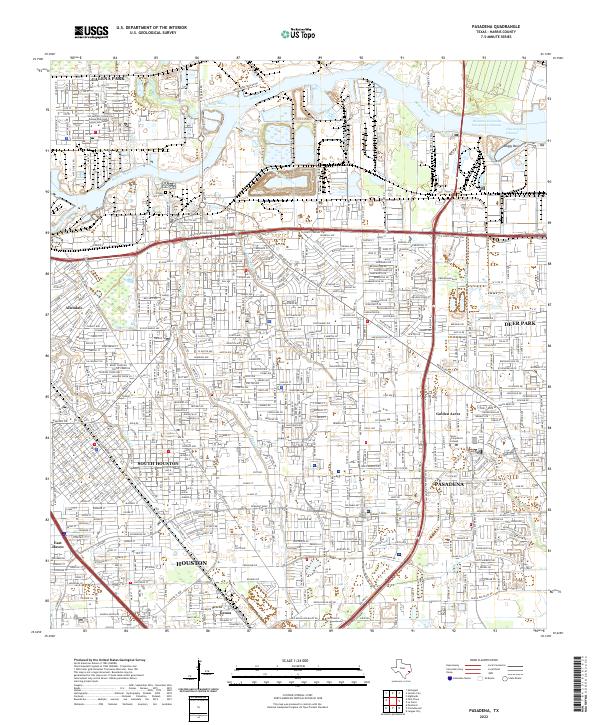 2022 Pasadena2022 Print · USGSPasadena and the industrial heart of Harris County appear here during the early 2020s. Researchers can trace the modern growth of Golden Acres and locate institutions like Texas Chiropractic College and Crown Hill.
Showing maps 1-25 of 26
Frequently asked questions
- What are the different types of historical maps available for Gulf Palms?
- What is the oldest map of Gulf Palms?
- Where can I purchase historical maps of Gulf Palms for my home or office?
- Where can I download high-res historical maps of Gulf Palms?
- Are there historical topographic maps available for Gulf Palms?
- Is there historical aerial imagery available for Gulf Palms?
- Where are historical maps of Gulf Palms sourced from?