Old Maps of Hutto, Texas
Explore 35 old maps of Hutto, spanning from 1885 to today. These high-resolution historic maps reveal how streets, neighborhoods, landmarks, and natural features evolved over time — perfect for genealogy, metal detecting, research, and local history exploration.
What you can do with these maps:
- See how Hutto changed over time: Compare historical maps to modern-day views to trace roads, homesites, rail lines & more.
- View detailed metadata: Each map includes creators, publishers, year, scale, and archive source.
- Overlay maps with satellite & LiDAR: Visualize the past alongside modern tools to explore terrain & human change.
- Trusted historical sources: Maps sourced from the USGS, Library of Congress, and other archives.
- Access maps your way: View online, download high-res files, or order prints for personal or research use.
Start exploring old maps of Hutto to uncover forgotten places, hidden landmarks, and the deep history beneath your feet.
Hutto, TX maps
(35)- 1885 Map of Taylor
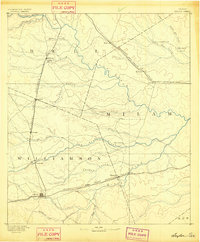 1885 Taylor1885 Print · USGSCentral Texas in the late nineteenth century was a landscape in transition as railroads redefined the old cotton frontier. Genealogists and historians can trace the early growth of rail towns like Taylor and Granger, or find vanished rural outposts such as Ad Hall and Davilla.
 - 1887 Map of Taylor
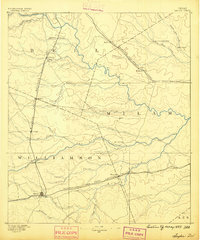 1887 Taylor1887 Print · USGSCentral Texas is captured in the late nineteenth century as the railroad began to redefine the blackland prairie. Genealogists can locate early settlements like Davilla and Granger or trace family lands near the San Gabriel River and Taylor.
 - 1893 Map of Georgetown
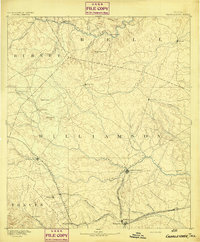 1893 Georgetown1893 Print · USGSCentral Texas in the late 1800s was a landscape in flux as rail lines reshaped old frontier settlements. Genealogists can trace the shift from riverside villages like Bagdad and Old Round Rock to new rail hubs such as Leander and Hutto.5 unique versions available
 - 1894 Map of Taylor, 1902 Print
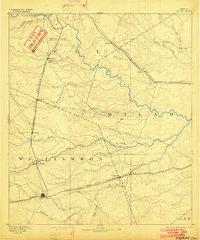 1894 Taylor1902 Print · USGSCentral Texas at the end of the nineteenth century was a landscape of expanding rail lines and established river settlements. Genealogists and historians can trace the growth of Taylor and Granger, or locate smaller junctions like Ad Hall and Buckholts along the Gulf Colorado and Santa Fe Railroad.4 unique versions available
 - 1896 Map of Austin
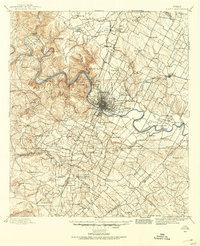 1896 Austin1896 Print · USGSAustin and its surrounding counties are shown in the mid-1890s, capturing the transition from frontier river crossings to a rail-centered regional hub. Researchers can trace historic river access points like Cameron Ferry alongside vanished landmarks such as Johnson's Institute and Moore & Berry's Store.
 - 1897 Map of Austin
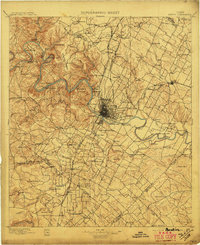 1897 Austin1897 Print · USGSTexas in the late 1890s reveals a capital city defined by its river and an expanding railroad network. Genealogists and historians can trace family-named landmarks and early centers of learning like Saint Edward's College, Johnson's Institute, and Anderson Mill.
 - 1910 Map of Austin
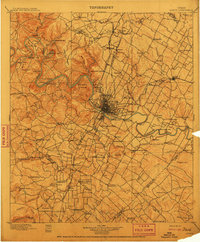 1910 Austin1910 Print · USGSAustin and the surrounding Travis County hill country are captured here at the start of the twentieth century. Genealogists and researchers can locate pioneer landmarks like Anderson Mill, Mc.Kinney Falls, and numerous river crossings including Lohmann Ford.3 unique versions available
 - 1925 Map of Georgetown 4-d
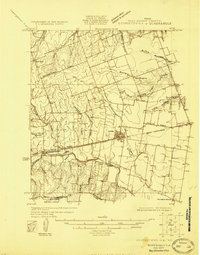 1925 Georgetown 4-d1925 Print · USGSWilliamson County in the mid-1920s shows a landscape of developing prairie towns and rural cotton gins. Genealogists can trace early homesteads and landmarks like Stony Point School, Bell Gin, and the historic Hutto townsite.
 - 1928 Map of Round Rock
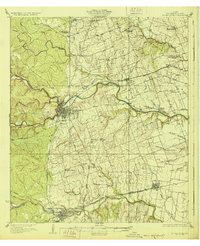 1928 Round Rock1928 Print · USGSWilliamson County in the mid-twenties shows a landscape of developing rail hubs and scattered rural school districts. Genealogists can locate family landmarks like Bell Gin, Old Round Rock, and the Strickland Grove Church.2 unique versions available
 - 1949 Map of Round Rock, 1967 Print
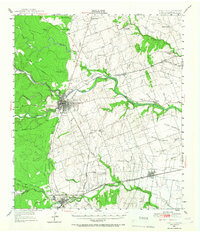 1949 Round Rock1967 Print · USGSCentral Texas in the late 1940s reveals a landscape defined by cotton ginning and the heavy influence of competing rail lines. Genealogists can locate family landmarks like Palm Valley Ch, the Bell Gin, and rural schools such as Palacky Sch or Bell Sch.2 unique versions available
 - 1951 Map of Round Rock
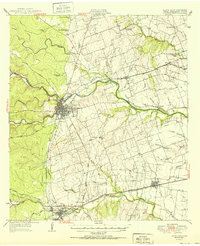 1951 Round Rock1951 Print · USGSWilliamson County at mid-century reveals a landscape of thriving rural communities and intersecting rail lines before the era of modern suburban expansion. Local researchers can pinpoint family landmarks like Palm Valley Ch, trace the old settlement at Old Round Rock, or locate the Bell Gin.
 - 1954 Map of Austin, 1964 Print
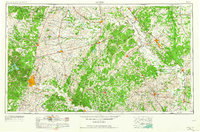 1954 Austin1964 Print · USGSCentral Texas is captured during a period of steady growth as the capital city and its neighboring farm towns began to modernize. Researchers can trace historic rail corridors like the Southern Pacific RR or locate landmarks such as Bergstrom Air Force Base and Pilot Knob.4 unique versions available
 - 1955 Map of Austin, 1956 Print
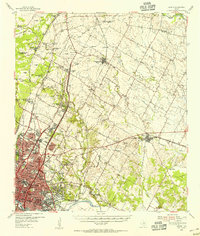 1955 Austin1956 Print · USGSAustin and its northern Travis County neighbors appear here in the mid-1950s, just as suburban growth began to reach toward the Williamson County line. Researchers can trace historic family locations and vanished institutions like the Travis County Tuberculosis Sanitarium, McNeil, and New Sweden.
 - 1964 Map of Taylor, 1966 Print
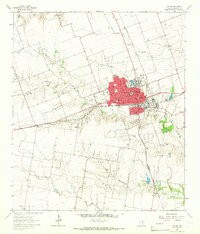 1964 Taylor1966 Print · USGSTaylor was a thriving railroad and medical hub in the mid-1960s, centered on the crossing of two major rail lines. Genealogists and local historians can trace the town's social fabric through the St Marys Cem, The Johns Hospital, and the outlying settlement of Frame Switch.3 unique versions available
 - 1968 Map of Pflugerville East, 1971 Print
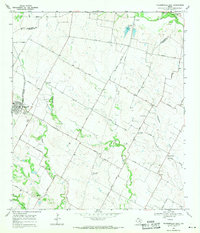 1968 Pflugerville East1971 Print · USGSThe rural countryside east of Pflugerville in the late sixties reveals a landscape of family farms and Swedish-German heritage. Trace early roads and burial sites like New Sweden, Germania Hall, and Pfluger Cem.3 unique versions available
 - 1982 Map of Hutto
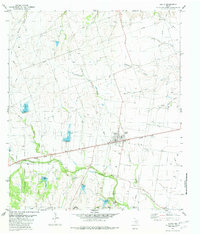 1982 Hutto1982 Print · USGSHutto was a developing rail-and-creek town in the early 1980s, anchored by the Missouri Pacific line and the fertile banks of Brushy Creek. Genealogists can trace family footprints across Old Shiloh Cem, Saul Cem, and Smith Chapel.
 - 1985 Map of Austin
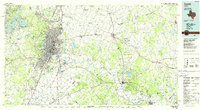 1985 Austin1985 Print · USGSCentral Texas in the mid-eighties reveals a region in transition, balancing rapid urban growth in Austin with deep-rooted rural landscapes. Genealogists and historians can trace family locations near St Johns Ch, the Science Hall schoolhouse, and long-standing communities like Webberville and Manchaca.3 unique versions available
 - 1985 Map of Taylor, 1986 Print
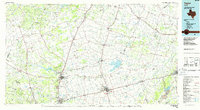 1985 Taylor1986 Print · USGSWilliamson and Bell counties in the mid-eighties reveal a landscape where the cattle and cotton economy met burgeoning rail infrastructure. Genealogists and historians can trace the paths of the Missouri Pacific railroad through unique hamlets like Ding Dong, Frame Switch, and Beyersville.2 unique versions available
 - 1987 Map of Hutto
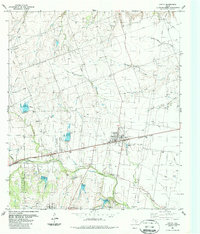 1987 Hutto1987 Print · USGSHutto and the surrounding Williamson County ranch lands are captured here in the late eighties as the area maintained its rural character. Genealogists can trace family names through landmarks like Hutto City Cem, Saul Cem, and Smith Chapel.
 - 1987 Map of Pflugerville East, 1988 Print
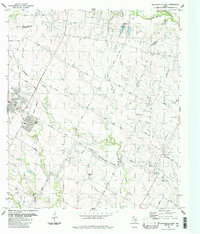 1987 Pflugerville East1988 Print · USGSThe rural stretches between Pflugerville and New Sweden are shown here just as the Austin suburbs began to expand in the late eighties. Researchers can locate family landmarks like Pfluger Cem, trace the Missouri Pacific line, and find small communities like Cele.
 - 2010 Map of Hutto, 2010 Print
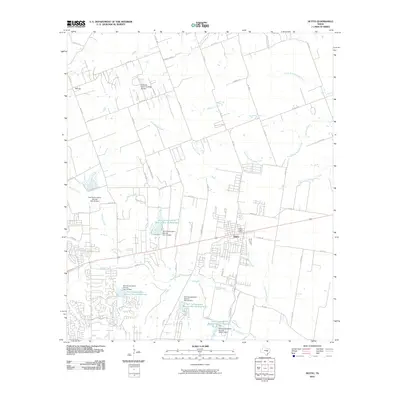 2010 Hutto2010 Print · USGSHutto and the surrounding Williamson County blackland prairie are captured here during a period of modern expansion. Researchers can trace the rural roots of the area through landmarks like Bell Gin and the extensive water management system including Soil Conservation Service Site 18 Reservoir.
 - 2010 Map of Taylor, 2010 Print
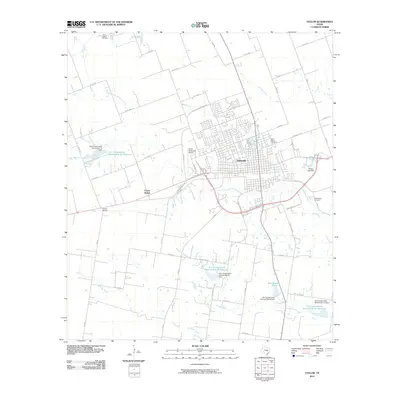 2010 Taylor2010 Print · USGSTaylor and the surrounding Williamson County plains are documented here in the early twenty-first century. Family historians can locate Saint Marys Cemetery, trace Mustang Creek, and explore the rural road network near Frame Switch.
 - 2010 Map of Pflugerville East, 2010 Print
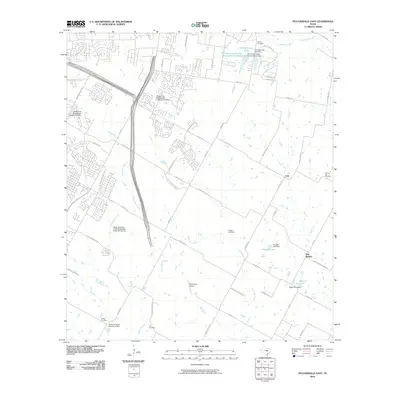 2010 Pflugerville East2010 Print · USGSNortheast Travis County is captured here during a pivotal shift from historic farming communities to suburban expansion. Genealogists can locate several family-named burial sites including Shiloh and Pfluger Cemetery, or trace the heritage of New Sweden and Cele.
 - 2013 Map of Hutto, 2013 Print
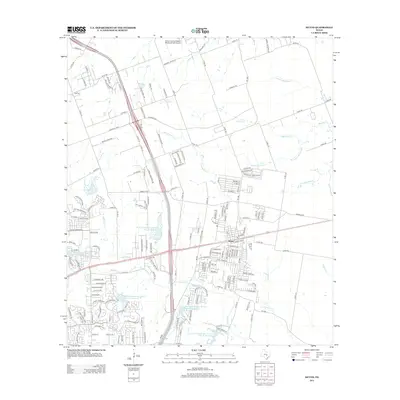 2013 Hutto2013 Print · USGSHutto and its surrounding Williamson County prairies are seen here during a period of rapid suburban expansion in the early twenty-first century. Researchers can trace the local drainage systems of Brushy Creek and find legacy landmarks like Bell Gin and the central Post Office.
 - 2013 Map of Taylor, 2013 Print
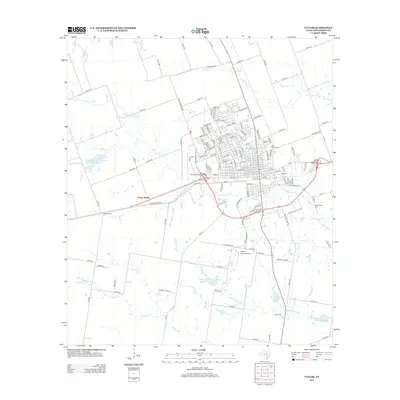 2013 Taylor2013 Print · USGSThe Taylor area in the early twenty-first century showcases a mix of established neighborhoods and expansive agricultural lands. Researchers can trace local heritage through Saint Marys Cem, find the rural settlement of Frame Switch, and follow the winding course of Mustang Cr.
Showing maps 1-25 of 35
Top cities near Hutto
- Austin historical maps
- Round Rock historical maps
- Georgetown historical maps
- Pflugerville historical maps
- Cedar Park historical maps
- Taylor historical maps
See more
Top neighborhoods of Hutto
Frequently asked questions
- What are the different types of historical maps available for Hutto?
- What is the oldest map of Hutto?
- Where can I purchase historical maps of Hutto for my home or office?
- Where can I download high-res historical maps of Hutto?
- Are there historical topographic maps available for Hutto?
- Is there historical aerial imagery available for Hutto?
- Where are historical maps of Hutto sourced from?