Old Maps of Moon Lake Resort, Utah
Explore 14 old maps of Moon Lake Resort, spanning from 1885 to today. These high-resolution historic maps reveal how streets, neighborhoods, landmarks, and natural features evolved over time — perfect for genealogy, metal detecting, research, and local history exploration.
What you can do with these maps:
- See how Moon Lake Resort changed over time: Compare historical maps to modern-day views to trace roads, homesites, rail lines & more.
- View detailed metadata: Each map includes creators, publishers, year, scale, and archive source.
- Overlay maps with satellite & LiDAR: Visualize the past alongside modern tools to explore terrain & human change.
- Trusted historical sources: Maps sourced from the USGS, Library of Congress, and other archives.
- Access maps your way: View online, download high-res files, or order prints for personal or research use.
Start exploring old maps of Moon Lake Resort to uncover forgotten places, hidden landmarks, and the deep history beneath your feet.
Moon Lake Resort, UT maps
(14)- 1885 Map of Uinta
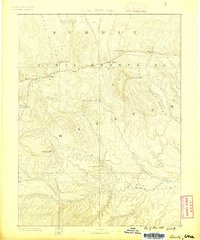 1885 Uinta1885 Print · USGSThe high wilderness of northern Utah is documented during the early surveying era of the 1880s. Geologists and historians can trace the headwaters of the Duchesne River and locate landmarks like Gilbert Peak and Rhodes Plateau.6 unique versions available
 - 1905 Map of Gilbert Peak, 1953 Print
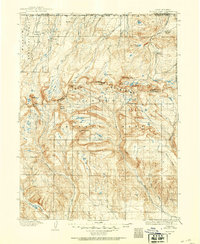 1905 Gilbert Peak1953 Print · USGSThe High Uintas at the turn of the century show a wilderness of massive peaks and early mountain ranching. Genealogists and researchers can trace the locations of isolated outposts like Smiths Ranch or Edwards Ranch and name specific summits like Mt Emmons.2 unique versions available
 - 1906 Map of Gilbert Peak
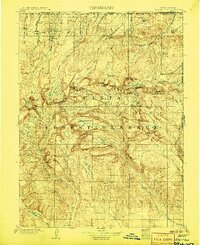 1906 Gilbert Peak1906 Print · USGSThe high Uinta Mountains are captured in the early 1900s, showing a remote wilderness of glacial lakes and pioneer outposts. Local historians can trace early mountain life through Smiths Ranch, Gilbert Meadows, and Edwards Ranch.4 unique versions available
 - 1954 Map of Salt Lake City, 1964 Print
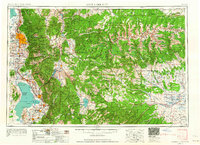 1954 Salt Lake City1964 Print · USGSThe Wasatch Front and Uinta Mountains are captured here in the mid-fifties, showing the industrial heart of Utah and its high mountain wilderness. Researchers can locate vanished infrastructure and landmarks like the Geneva Steel Plant, Bingham Canyon Mine, and the Utah State Prison.4 unique versions available
 - 1958 Map of Salt Lake City
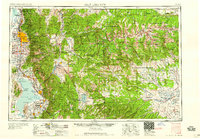 1958 Salt Lake City1958 Print · USGSThe Wasatch Front and Uinta Basin are captured during a period of significant post-war growth and industrial development. Researchers can trace the mid-century rail lines of the Bamberger RR and locate sites like the Kiegley Limestone Quarry and Camp Williams Military Reservation.
 - 1960 Map of Salt Lake City
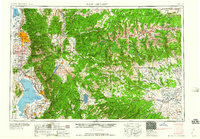 1960 Salt Lake City1960 Print · USGSThe Wasatch Front and High Uintas are captured mid-century as the Salt Lake Valley underwent significant postwar expansion. Genealogists and historians can trace rail lines like the Union Pacific and locate established landmarks such as Fort Douglas, Camp Williams, and the Bingham Canyon Mine.
 - 1967 Map of Lake Fork Mtn, 1969 Print
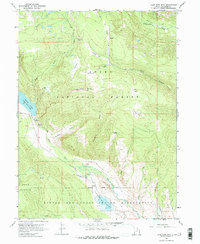 1967 Lake Fork Mtn1969 Print · USGSDuchesne County’s high country is captured here in the late sixties, where national forest lands meet tribal reservation boundaries. Researchers can trace the water-management history of Twin Pots Reservoir and locate family landmarks like Fisher Ranch or the Lake Fork Corral.
 - 1982 Map of Kings Peak, 1985 Print
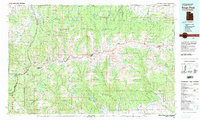 1982 Kings Peak1985 Print · USGSThe high Uinta wilderness is captured in the early eighties, showing the intersection of three national forests at the Wyoming-Utah border. Hikers and historians can trace the high trails near Kings Peak, Moon Lake, and Iron Mine Mountain.2 unique versions available
 - 1996 Map of Lake Fork Mountain, 1999 Print
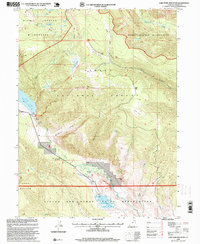 1996 Lake Fork Mountain1999 Print · USGSDuchesne County is captured here in the mid-1990s as the high wilderness meets the reservation and forest lands. Researchers can trace irrigation history through the Farnsworth Canal and find local landmarks like the Lake Fork Corral and Twin Pots Reservoir.
 - 2011 Map of Lake Fork Mountain, 2011 Print
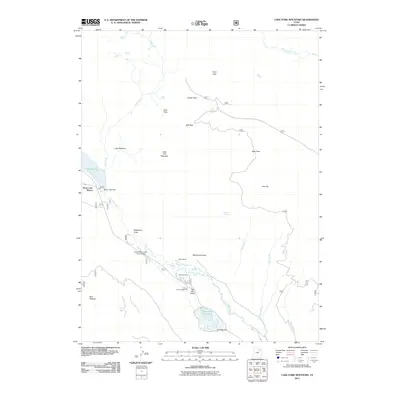 2011 Lake Fork Mountain2011 Print · USGSThe High Uintas backcountry near Moon Lake is documented here during the early twenty-first century. Researchers can trace the water systems and seasonal camps of Duchesne County through landmarks like the Moon Lake Dam, Fisher Ranch, and Twin Pots Reservoir.
 - 2014 Map of Lake Fork Mountain, 2014 Print
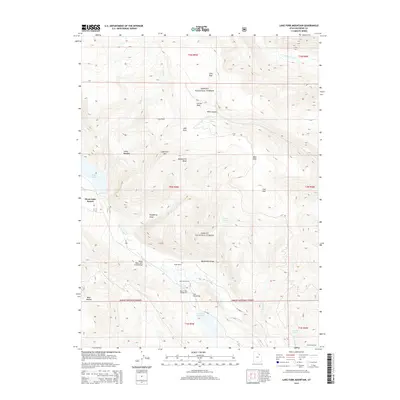 2014 Lake Fork Mountain2014 Print · USGSDuchesne County is captured here in the early twenty-first century, showcasing the intersection of high-country recreation and ranching life. Researchers can trace land use patterns near Moon Lake Resort or locate specific sites like Fisher Ranch and the Beaver Dam Campground.
 - 2017 Map of Lake Fork Mountain, 2017 Print
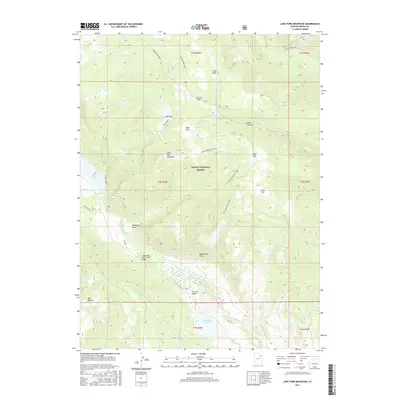 2017 Lake Fork Mountain2017 Print · USGSDuchesne County’s high-country wilderness and water systems are on display in the years following the turn of the millennium. Hikers and historians can trace high-country paths like the Yellowstone Trail or locate landmarks such as the Upper Moon Lake Canal Bridge and Moon Lake.
 - 2020 Map of Lake Fork Mountain, 2020 Print
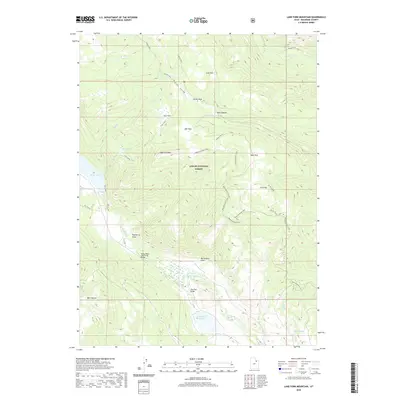 2020 Lake Fork Mountain2020 Print · USGSThe high Uinta backcountry of Duchesne County comes into focus in this recent survey of the wilderness near Moon Lake. Researchers and outdoorsmen can trace the complex network of forest roads and water features like the Upper Moon Lake Canal Bridge and Twin Pots Reservoir.
 - 2023 Map of Lake Fork Mountain, 2023 Print
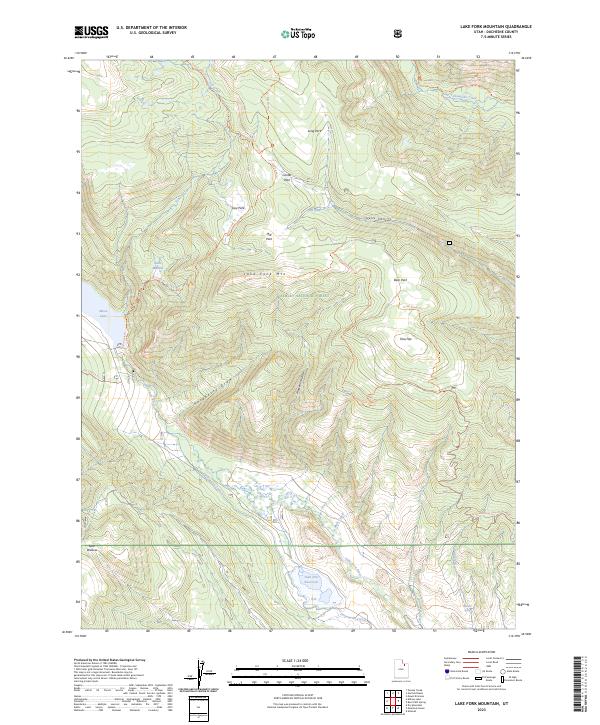 2023 Lake Fork Mountain2023 Print · USGSThe high alpine country of Duchesne County is documented here in the early twenty-first century, showing the rugged intersection of wilderness and water management. Trace established backcountry routes like the Yellowstone Trl past landmarks such as Lake Fork Mtn and Hells Canyon.
End of results
Showing maps 1-14 of 14
Top cities near Moon Lake Resort
Frequently asked questions
- What are the different types of historical maps available for Moon Lake Resort?
- What is the oldest map of Moon Lake Resort?
- Where can I purchase historical maps of Moon Lake Resort for my home or office?
- Where can I download high-res historical maps of Moon Lake Resort?
- Are there historical topographic maps available for Moon Lake Resort?
- Is there historical aerial imagery available for Moon Lake Resort?
- Where are historical maps of Moon Lake Resort sourced from?